Opposition Deputies Denounce Brazil at UN for Torture in Pará State Prisons
RIO DE JANEIRO, BRAZIL – The ten federal deputies from the Socialism and Liberty Party (PSOL) in the Chamber signed on Tuesday, October 15th, a letter denouncing the Government of Jair Bolsonaro at the United Nations for the torture scandal in prisons in Pará.

The document was addressed to the UN special rapporteurs for torture, women and extrajudicial execution – bodies that comprise the Office of the High Commissioner for Human Rights and the Human Rights Council in Geneva.
In it, they describe the daily routine of torture and violence “on a massive scale” that they claim have been implemented by federal agents of the Task Force for Penitentiary Intervention (FTIP), commanded by the Ministry of Justice of Sérgio Moro since a riot in Altamira prison ended with over 60 deaths in late July.
The deputies rely on an administrative misconduct lawsuit signed by 17 of the 28 prosecutors of the Federal Prosecutor’s Office (MPF) who work in the state. They also call on the UN authorities to deal with the matter urgently and to give their official opinion, given the severity of the issue, in addition to demanding explanations from the Brazilian delegation at the General Assembly.
The document was also sent directly to Michelle Bachelet, UN High Commissioner for Human Rights and former president of Chile. Legislator Fernanda Melchionna, from Rio Grande do Sul State, traveled to Geneva on an official mission of the Chamber and will meet with representatives of the United Nations on Wednesday
The denunciation takes place on the eve of the vote, scheduled for this Thursday at the General Assembly in New York, of the countries that are expected to join the Human Rights Council between 2020 and 2022.
Latin America has two openings in the body, but Venezuela and Costa Rica are also candidates to join. Brazil needs at least 97 of the 194 votes to be elected. On other occasions, Brazil has had unanimous support from other countries to join the body, but this support has suffered significant setbacks this year.
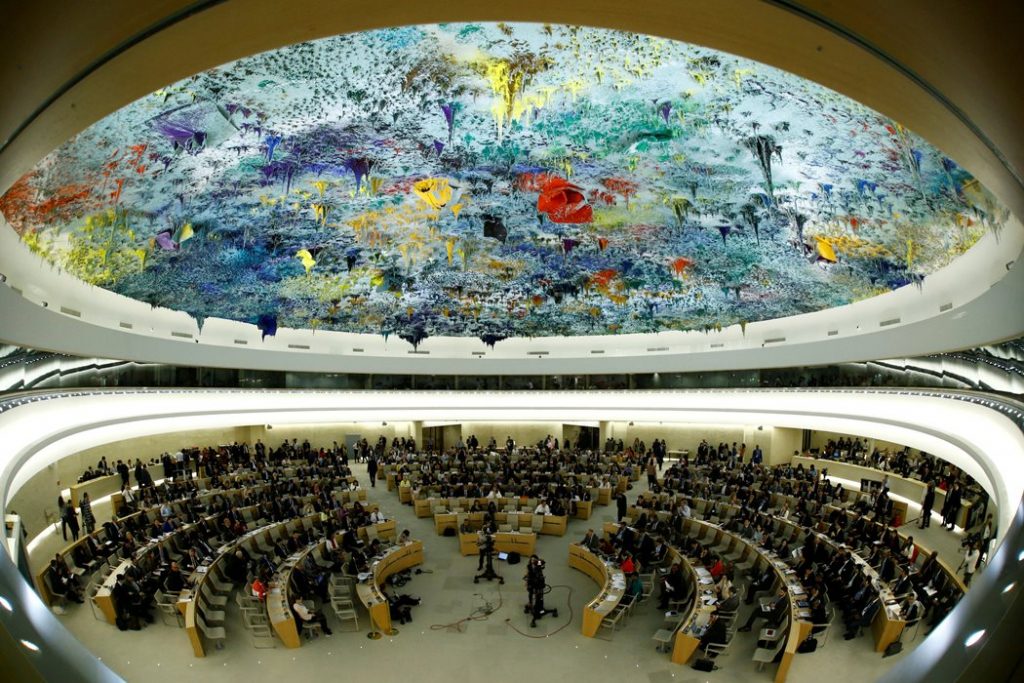
More than a hundred organizations – indigenous people, human rights activists, the black movement, the landless movement, the LGBT movement, judges, Catholics, among others – have come together in an unprecedented move against this choice, according to journalist Jamil Chad. Bolsonaro‘s government has been viewing the elections as a test to its popularity in the international sphere, even though members of the Foreign Office guarantee they have sufficient votes, according to the same journalist.
The next step is to take the case to the Inter-American Human Rights Committee (IACHR) of the Organization of American States, according to federal deputy Marcelo Freixo, of Rio de Janeiro, to El País.
“We have been living with torture for a long time. But what happened in Pará was very serious because it was commanded by the Ministry of Justice in a federal intervention made after a rebellion. And the result, denounced by several public servants, including the Federal Prosecutor’s Office, is a commanded, orchestrated, planned torture,” explained the legislator, who throughout his life has worked in prisons teaching and knows firsthand the serious violations of human rights that have always been committed.
“It is different from the widespread torture that you find in the prison system throughout Brazil. Torture commanded in a federal action under the auspices of the Ministry of Justice cannot be treated as a form of discipline,” he added, referring to Moro’s statement that “the intervention has brought discipline into the prisons”.
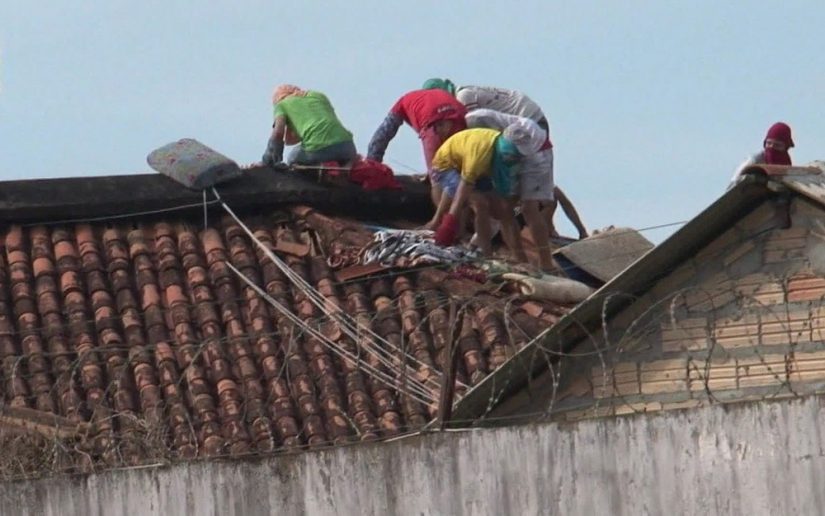
The MPF’s action, disclosed by the newspaper O Globo and to which El País had access, states that detainees in the prison system of Pará are submitted to a routine that includes beatings with brooms, daily attacks with rubber bullets and pepper spray, anus impalement, perforation of the feet with nails, among other atrocities, according to the report of released individuals, inmate family members and state employees.
The prosecutors also relied on reports from representatives of the Brazilian Bar Association (OAB), the Pará Society for the Defense of Human Rights (SDDH) and the National Preventive Action and Fight against Torture – an organization linked to the Ministry of Women, Family and Human Rights – who visited the prison facilities.
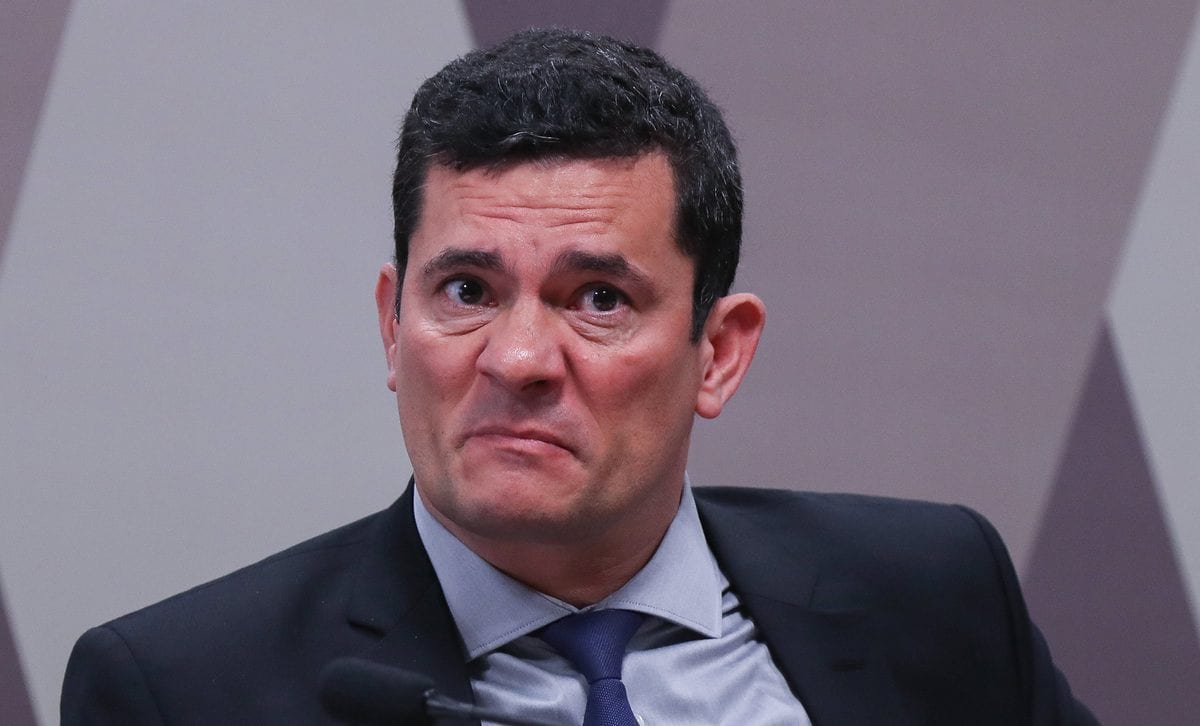
The MPF’s administrative misconduct action targeted the federal penitentiary agent Maycon Cesar Rottava, appointed to be the task force’s coordinator. In a preliminary injunction on October 2nd, the Federal Court of Pará ordered the cautionary removal of the agent from his position. Still, he emerged five days later alongside Justice Minister Sérgio Moro during a visit to the city of Ananindeua in Pará State to investigate the work of federal intervention.
The Minister of Justice and the National Penitentiary Department (DEPEN) issued a statement saying they do not acknowledge the charges of “widespread torture”. They further assured that if any case of torture or mistreatment is proven, the agents involved will be removed from their duties and punished.
Moro also stated that the charges lodged by the MPF was a “misunderstanding”. “I think that the grounds that led to this action are inaccurate. I firmly believe that, once the facts are fully clarified, this issue will be resolved. The intervention brought discipline into penitentiaries,” he said during his visit to Pará on October 7th. Asked at the time by journalists, President Jair Bolsonaro confined himself to saying that professionals “ask rubbish all the time”.
Comprised of federal criminal execution agents and state penitentiary agents, FTIP was authorized in late July by Moro at the request of the governor of Pará, Helder Barbalho. The intervention came as a reaction from Bolsonaro’s Government to the crisis in the local prison system.
On July 29th, a faction clash resulted in the death of 58 people in the Altamira prison facility. Two days later, another four people died during a transfer of prisoners. The federal officers assigned by Moro have been active in the Pará prison system ever since.
“They seem to have made a selection of psychopaths, and given them the right to indulge on prisoners – what we see is the vulgarization of evil. Was there torture before? Yes, there was, but it was occasional, isolated. After federal intervention, it’s generalized,” said a state official heard anonymously by the prosecutors.
“Torture is not discipline, it is not compliance with the law. On the contrary. Torture is a crime, it is criminalized. Women being placed on anthills, prisoners being impaled, pepper spray being thrown on starving prisoners… This is not a deviation, this is an order, a collective orientation of public action. It is completely unacceptable,” Freixo argued.
Deterioration of the international image
This is not the first time that international bodies have been activated this year. In September, the OAB and the Vladimir Herzog Institute also denounced Bolsonaro’s government to the UN Human Rights Council for regressions in democracy and for condoning torture, according to journalist Jamil Chad.
They also asked the UN to monitor the actions of the Federal Executive in relation to the crimes committed by the military dictatorship (1964-1985). In the same month, Michelle Bachelet, UN High Commissioner for Human Rights, criticized Brazil for “reducing the civil and democratic space”. Bolsonaro accused the former center-left commander of “interference” and insulted the memory of her father, a general assassinated by the Pinochet dictatorship.
In addition, representatives of the black movement have been working with the Inter-American Commission on Human Rights against the anti-crime package sent by Moro to Congress.
In an article published in El País, they wrote that the project represents “a threat to the life and dignity of the black population,” since it increases “the likelihood of the application of the exclusion of illegality, which justifies the murder of young black people through questionable police actions”. In an interview with El País in September, the rapporteur of the Organization of American States for freedom of expression stated that there is an attack “on democratic and pluriform Brazil built on the Constitution”.
The NGO EDUCAFRO lodged a motion for a precautionary measure at the IACHR last week and a petition at the UN “denouncing state violence against the black population, pointing out how the numbers of police homicide increased this year, without the public safety-index necessarily corresponding to an improvement,” explained Irapuã Santana, the lawyer who signs the documents. Both demand that the organizations urge Brazil to abandon the safety policy based on confrontation and begin to invest a percentage of GDP in police intelligence, among other measures that they deem necessary.
The governor of Rio de Janeiro, Wilson Witzel, has also been denounced at the UN and the OAS over the hardening, both rhetorical and operational, of public safety policy in the state. The author of the denunciations, made in May, was the state deputy Renata Souza, of the PSOL. Elected pledging to “shoot at the head” of criminals, Witzel increased police operations in the shantytowns, including those that use helicopters as a shooting platform. His government has received harsh criticism from social organizations, specialists and authorities for stimulating police violence and ending the lives of hundreds of people, whether innocent or criminal.
Source: El País
More: Brazil news in English, every day from The Rio Times.
This article was produced by The Rio Times’ automated newsroom system. How we use AI · Report an error
Read More from The Rio Times