
NORTH KOREA · ANALYSIS
Key Facts
- What is happening North Korea rejected a joint US, South Korean and Japanese call for complete denuclearisation and UN sanctions enforcement in October 2026.
- Why it matters Pyongyang now treats nuclear weapons as a permanent constitutional guarantee, not a negotiable programme, which changes what diplomacy can achieve.
- The numbers North Korea amended its constitution in 2023 to enshrine nuclear-weapons policy.
- Who is who Kim Jong Un leads North Korea and frames nuclear expansion as a permanent strategic mission; the United States, South Korea and Japan maintain the goal of complete denuclearisation.
- What to watch Monitor whether Pyongyang shifts from constitutional permanence toward a test moratorium or fissile-material freeze, and whether Russia continues to shield it from sanctions monitoring.
- What it means for you US investors and policy readers should expect continued sanctions risk, cyber threats and regional military tension rather than a near-term diplomatic opening.
North Korea rejects denuclearisation because it treats nuclear weapons as the central guarantee of regime survival and diplomatic leverage, not as a negotiable programme. For US readers, this means the goal of complete, verifiable and irreversible disarmament is now effectively blocked by Pyongyang’s constitutional and strategic posture.
North Korea sits at the centre of one of the world’s most militarised regions, facing US troops in South Korea and a trilateral alliance with Japan. This analysis explains why Pyongyang refuses to give up its arsenal and what changed after the failed 2018-19 summit process, drawing on the Asia Intelligence Brief.
The Core Logic of Regime Survival
North Korea’s leadership draws a direct lesson from governments that surrendered strategic weapons or accepted intrusive disarmament arrangements. Nuclear weapons reduce the risk that the United States and its allies could attempt regime change, while ballistic missiles raise the potential cost of military intervention.
For Pyongyang, the relevant comparison is not simply the Korean Peninsula but Iraq, Libya and other cases in which governments lacked a credible nuclear deterrent. North Korea therefore views denuclearisation as potentially existential: once its weapons are dismantled, its bargaining power and ability to deter a superior coalition would disappear.
The practical implication is that sanctions relief, economic aid or diplomatic recognition are unlikely to persuade North Korea to surrender its entire arsenal unless they are accompanied by a much broader restructuring of the regional security system. That restructuring would have to address the US military presence and alliance structure that Pyongyang cites as the original threat.
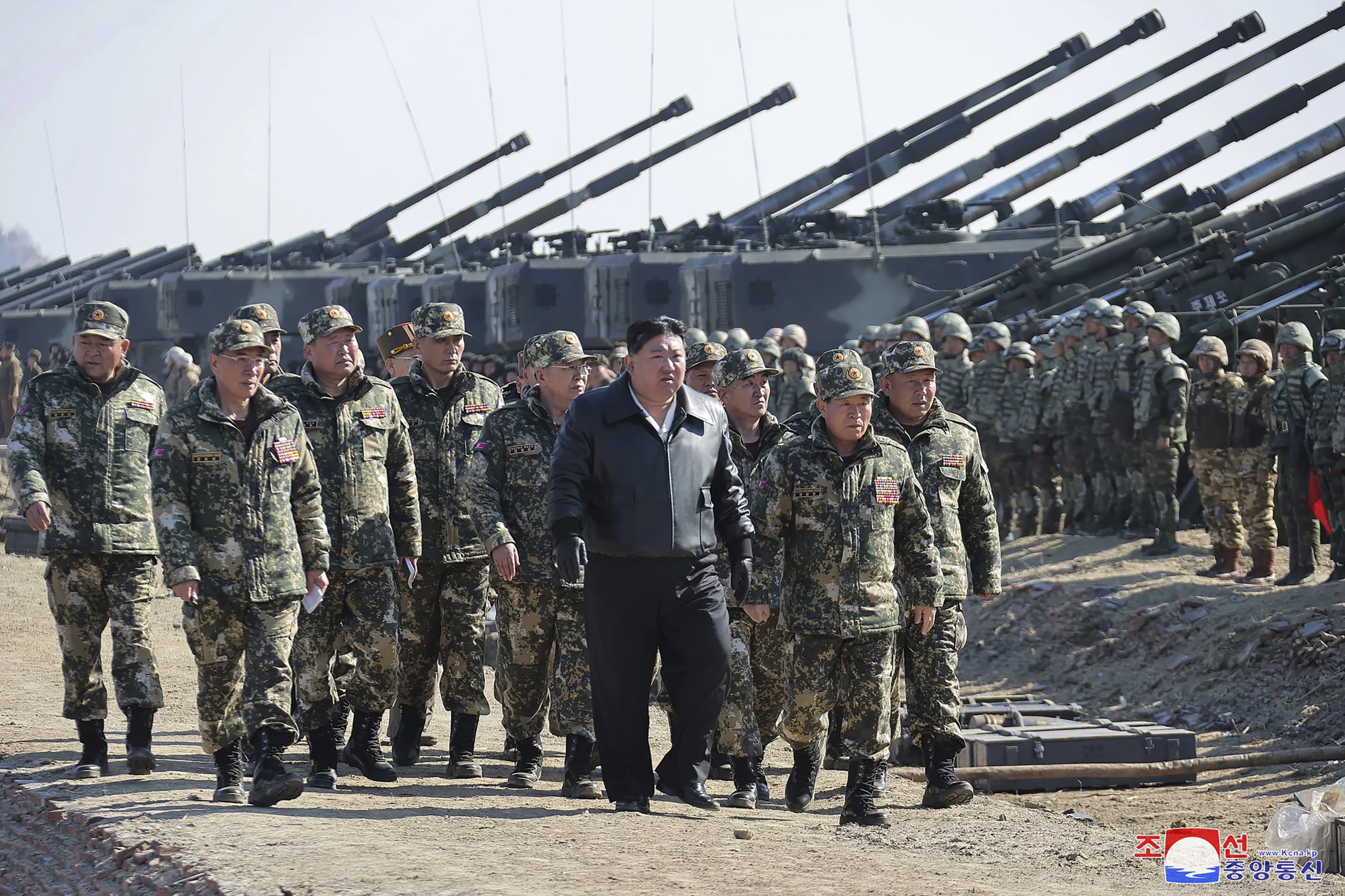
Constitutional Status Changes the Calculus
North Korea has moved beyond describing nuclear weapons as temporary bargaining assets. Its 2022 law on nuclear forces established rules governing nuclear use and authorised pre-emptive use in specified circumstances, and in 2023 the country amended its constitution to enshrine its nuclear-weapons policy.
That constitutionalisation matters because it raises the political cost of reversal. Giving up nuclear weapons would no longer mean abandoning a policy choice by the leadership; it would require dismantling a declared constitutional pillar of national defence.

The Sanctions State and Its Limits
UN sanctions remain in force under the Security Council’s Resolution 1718 framework, which includes an arms embargo and restrictions on goods, finance, shipping and items that could contribute to North Korea’s nuclear, ballistic-missile or other weapons-of-mass-destruction programmes. The sanctions regime has constrained North Korea’s access to foreign currency, energy, industrial equipment and international trade.
But it has not stopped weapons development. The UN’s political affairs leadership said sanctions had slowed progress by constraining finance and access to resources, while stressing that their effectiveness depends on universal implementation.
Three developments have weakened enforcement. Russia vetoed renewal of the UN sanctions-monitoring panel’s mandate in 2024, and a Multilateral Sanctions Monitoring Team was subsequently established to document violations and evasion.
UN discussions have cited ship-to-ship transfers, prohibited cargo movements and techniques including maritime spoofing. North Korea increasingly relies on cyber operations, overseas workers, illicit shipping and foreign military cooperation to generate funds or obtain technology.
A 2026 US, EU and Australian statement specifically cited overseas workers, malicious cyber activity and unlawful DPRK-Russia cooperation as sources supporting weapons programmes. Sanctions therefore remain a major economic constraint but a weaker diplomatic lever than during the earlier talks.
Russia Has Changed the Strategic Calculation
Russia-North Korea ties have become the most important change since the 2018-19 diplomacy. The United States says North Korea has transferred arms and military materiel to Russia.
This relationship benefits both sides. For Russia, North Korean artillery, missiles, ammunition and personnel can support Russia’s war effort while reducing dependence on other suppliers.
For North Korea, Russia offers diplomatic cover and economic channels.For both governments, cooperation weakens the US-led sanctions coalition and challenges the assumption that international isolation will eventually force Pyongyang back to negotiations.Russia’s opposition to renewing the UN expert panel also reduced transparency around sanctions violations.The partnership does not make North Korea economically secure.
Russia cannot fully replace North Korea’s broader trade and supply networks. But it gives Pyongyang enough strategic breathing room to reject talks that demand immediate disarmament.

Why the Trilateral Alliance Reinforces Defiance
The United States, South Korea and Japan have deepened their trilateral coordination. From the allies’ perspective, this is a rational response to North Korea’s missile tests, nuclear expansion and growing Russia relationship.
From Pyongyang’s perspective, however, trilateral cooperation confirms its argument that it faces an integrated hostile bloc. The more closely Washington, Seoul and Tokyo coordinate, the more North Korea can present nuclear weapons as the only reliable counterweight.
This creates a security dilemma. North Korean missile development prompts stronger allied cooperation, which prompts Pyongyang to expand and diversify its arsenal, which produces more sanctions and exercises, which makes a return to the pre-2018 negotiating environment increasingly unlikely.
The immediate risk is not necessarily deliberate war. It is miscalculation involving missile launches, military exercises, maritime incidents, cyberattacks or an assumption that the other side will back down.
What North Korea Might Negotiate
A complete surrender of its nuclear arsenal is improbable under present conditions. More realistic negotiating outcomes would be limited or phased arrangements: a test moratorium, limits on intercontinental ballistic missiles, a freeze on fissile-material production, international monitoring at selected facilities, restrictions on exports of missile technology, hotlines and military risk-reduction measures, or partial sanctions relief for verifiable steps.
North Korea could also seek recognition as a de facto nuclear state without receiving formal acceptance as a legitimate nuclear-weapon state under the Non-Proliferation Treaty. That would resemble a managed-arms-control approach rather than denuclearisation.
The major obstacle is sequencing. Washington and its allies want irreversible concessions; Pyongyang wants benefits before surrendering capabilities.
The longer North Korea modernises, the less attractive complete disarmament becomes and the more likely future diplomacy will focus on arms control.
What It Means for You
For US investors and executives, the practical consequences are sanctions compliance risk, exposure to North Korean cyber operations and continued regional military tension. Companies with supply chains, data or personnel in East Asia should treat North Korea-linked cyber threats as a persistent operational risk rather than a geopolitical abstraction.
Policy readers should understand that the goal of complete denuclearisation is now largely rhetorical. The realistic near-term question is whether any arms-control arrangement can be reached, not whether Pyongyang will surrender its arsenal.
For Latin American governments and businesses, the relevance is indirect but real. North Korean sanctions evasion has historically involved shipping and financial networks that touch multiple jurisdictions, and any tightening of enforcement could affect port and trade compliance far from the Korean Peninsula.
What Is Not Known
No verified official North Korean estimate of warhead numbers, nuclear spending or GDP is available as of October 2026. The Congressional Research Service notes that North Korea publishes no official figure for its nuclear inventory or related expenditure.
The precise scale and nature of Russia-North Korea military technology transfers remain contested. The United States asserts that transfers have occurred, but independent verification is limited because Russia blocked the UN expert panel that previously documented such activity.
It is also unclear whether any internal North Korean debate exists about the costs of constitutional nuclear status. The available evidence points only to public reaffirmation of permanence, not to signals of flexibility.
What to Watch
Watch whether Pyongyang continues to describe nuclear weapons as a permanent national-defence policy or instead reopens language about a conditional moratorium. Any move away from constitutional permanence would be significant, but the available evidence points in the opposite direction.
Monitor the IAEA’s reporting on Yongbyon and fissile-material production. Track the Multilateral Sanctions Monitoring Team’s findings on maritime evasion and cyber-enabled revenue.
Any documented increase in ship-to-ship transfers or overseas worker remittances would indicate that sanctions are weakening further as a lever.Finally, watch Russia’s diplomatic behaviour at the UN.If Moscow continues to shield Pyongyang from new sanctions or monitoring mechanisms, North Korea’s incentives to negotiate will remain low through 2027.
Frequently Asked Questions
Why does North Korea refuse to give up nuclear weapons?
North Korea treats nuclear weapons as the central guarantee of regime survival, military deterrence and diplomatic leverage, not as a negotiable programme that can be exchanged for sanctions relief.
What changed after the 2018-19 summit process?
After the Hanoi summit failed over sanctions relief and dismantlement scope, Pyongyang concluded it had more to gain from expanding its deterrent than from trading pieces of it away, and it resumed weapons development.
Is North Korea’s nuclear status written into its constitution?
Yes, North Korea amended its constitution in 2023 to enshrine its nuclear-weapons policy, following a 2022 law that established rules governing nuclear use and authorised pre-emptive use in specified circumstances.
How has Russia changed North Korea’s calculation?
Russia provides diplomatic cover and economic channels, while North Korea supplies arms and personnel to Russia, weakening the US-led sanctions coalition and reducing Pyongyang’s isolation.
What would North Korea be willing to negotiate?
More realistic outcomes than complete denuclearisation include a test moratorium, limits on intercontinental ballistic missiles, a fissile-material freeze, or partial sanctions relief for verifiable steps.
What should US investors watch for in 2027?
Watch IAEA reporting on fissile-material production, the Multilateral Sanctions Monitoring Team’s findings on evasion, and any shift in Pyongyang’s constitutional language toward a conditional moratorium.
Sources: riotimesonline.com, state.gov, state.gov, news.un.org, peacekeeping.un.org, transcripts.un.org. Retrieved 31 October 2026.
This article was produced by The Rio Times’ automated newsroom system. How we use AI · Report an error · Editorial responsibility: Matthias Camenzind, Editor-in-Chief
LatAm Markets: Live Signals → — real-time movers, turnover leaders and FX across Latin America.