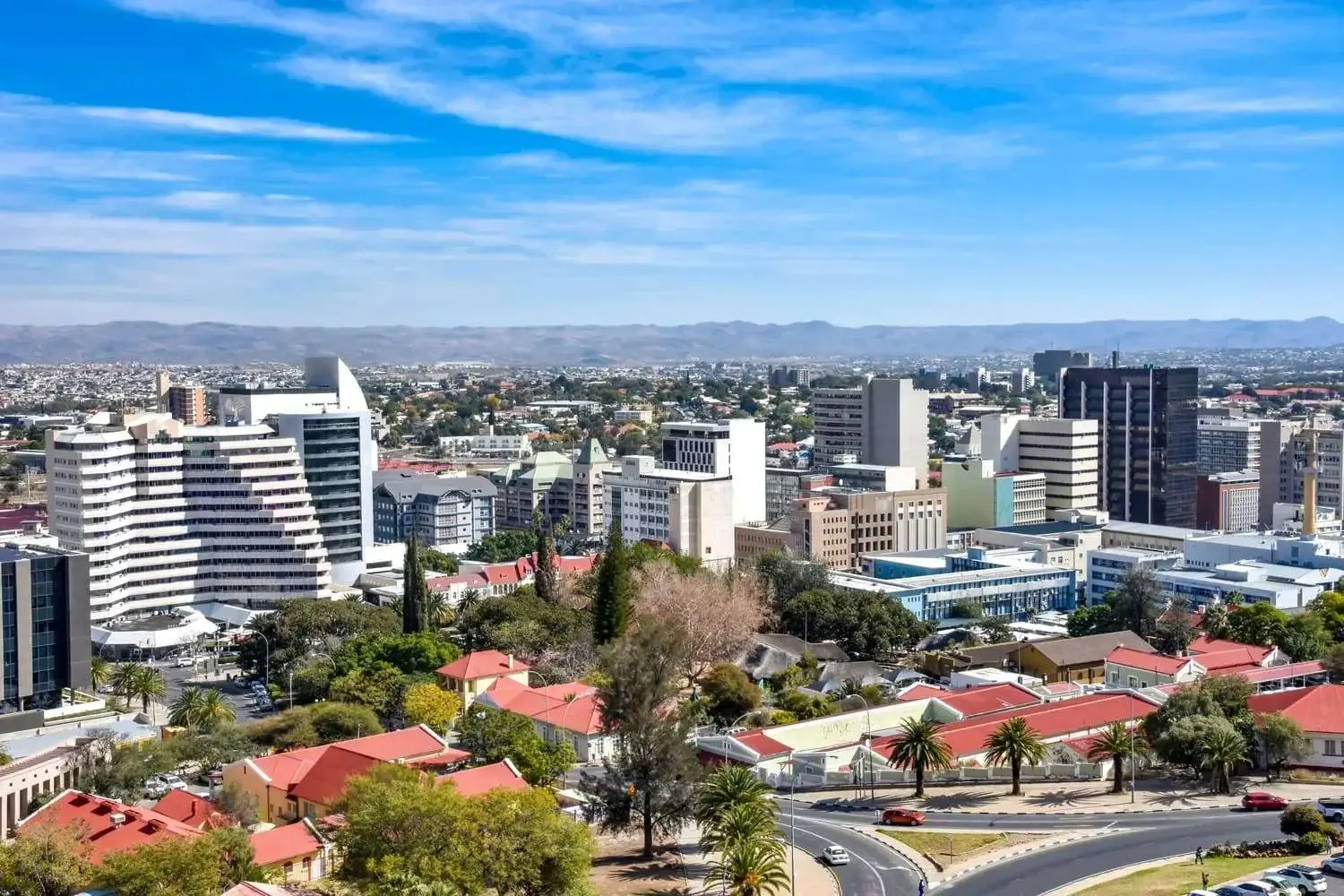
NAMIBIA · LOCAL GOVERNMENT
Key Facts
- The country Namibia is a mining and farming nation in southwestern Africa, led by President Netumbo Nandi-Ndaitwah.
- What happened Rundu Town Council told staff in a 23 October 2026 memorandum that October salaries are delayed.
- The reason The council blames financial constraints that hit its cash flow, so it cannot pay on time.
- The debts Residents owed the council about N$588 million (about US$35.3 million) by June 2025, its chief executive said.
- What is next No new pay date has been published, and the council says it is working to pay as soon as possible.
Rundu Town Council in northern Namibia has told its employees that their October 2026 salaries will be paid late. Rundu Town Council says a squeeze on its cash flow, which it calls financial constraints, makes on-time payment impossible.
The warning went to staff in an internal memorandum dated Friday 23 October 2026, and the delay became public on Friday 30 October. It matters beyond one town because late pay is a sign of how stretched Namibia’s local governments are.
Where Rundu Is and Who Runs the Council
Rundu is the main town of the Kavango East Region, on the Okavango River in northern Namibia, across the water from Angola. A town council is the elected local authority that collects property rates, sells water and runs roads, sewers and street lights.
Rundu Town Council is led by an elected mayor, and it earns its money from rates, water and sanitation charges and fees. The Ministry of Urban and Rural Development in Windhoek, the capital, oversees all town councils in the country.
What the Council Told Its Staff
In the memorandum, Rundu Town Council’s management said the current financial situation had made it difficult to process salary payments on time. It apologised to employees and said it understood that workers depend on their monthly pay for essential expenses.
Rundu Town Council also said it knew the delay may cause considerable inconvenience, uncertainty and hardship to staff and their families. It promised to improve its financial position and to make the payments as soon as possible.
The memorandum, as quoted, gives no new payment date and does not say how many employees are affected. It also does not say whether the delay covers every worker or only part of the payroll.
Why the Money Runs Short
Olavi Nathanael, the council’s chief executive at the time, said in October 2025 that residents owed about N$588 million (about US$35.3 million) by June 2025. He blamed a culture of non-payment and said the debt grows by almost N$500 million (about US$30.0 million) a year.
The council also owes money to NamWater, the state water supplier. NamWater put the council’s bill at about N$333.9 million (about US$20.0 million) in March 2025, the largest among five indebted towns.
In June 2026 the council’s assistant spokesperson, Prisca Marembo, said government offices owed Rundu N$34 million (about US$2.0 million) as of 3 June. She said business areas owed N$62.6 million (about US$3.8 million) and industrial areas N$66.7 million (about US$4.0 million).
A Council Under Pressure Since Spring
In March 2026 the Minister of Urban and Rural Development, James Sankwasa, rejected a contract extension for the council’s chief executive. His letter, dated 14 March, cited a chaotic financial management situation and an unpaid water debt of N$254 million (about US$15.2 million).
The minister also said the town’s accounts had not been audited for seven straight financial years, from 2017/2018 through 2024/2025. The council resolved on 30 March to follow his directive, and the chief executive’s notice said his contract would lapse on 3 May 2026.
A Wider Squeeze on Namibia’s Towns
Rundu is not alone, because many Namibian councils owe large sums to NamWater and to the power utility NamPower. In a 21 May 2026 circular, Minister Sankwasa told councils to cut water and power to ministries and firms that missed a 5 June deadline.
The minister’s circular said some local authorities were owed more than N$162 million (about US$9.7 million) by government bodies and businesses. He said this left many councils unable to provide services.
Namibia’s mid-year budget review, published in October 2026, lowered expected 2026 growth to 2.3 percent from the 3.1 percent forecast in February. The review put the cut down to weaker first-half performance in the main parts of the economy, including softer diamond demand.
What It Means for US Readers
Rundu’s late salaries are a small story with a signal about Namibia’s local finances. For wider background, see our guide to Namibia’s economy and its key players.
Weak town governments can slow the water, power and road services that any investment project needs. The sums are small, so this is not a market-moving event.
US firms that sell to Namibian towns should expect slower payments. Aid groups active in Kavango East should plan for the same.
What Is Not Known
Rundu Town Council has not said when the October salaries will be paid or how many staff are waiting. It has also not said whether September pay was on time, or whether the central government will step in with a grant or loan.
The town’s latest audited accounts are years out of date, so the true size of its assets and liabilities is not public. The figures in this report come from the council’s chief executive, its spokesperson and the minister, and they date from different months.
More: Namibia news in English, every day from The Rio Times.
Frequently Asked Questions
What did Rundu Town Council announce?
It told staff in a memorandum dated 23 October 2026 that October salaries will be paid late. The council blames financial constraints that hurt its cash flow.
Where is Rundu?
Rundu is the main town of the Kavango East Region in northern Namibia. It lies on the Okavango River, on the border with Angola.
When will the staff be paid?
The council has not given a date. It says it is working to improve its finances and will pay as soon as possible.
How much do residents owe the council?
The chief executive said residents owed about N$588 million (about US$35.3 million) by June 2025. He said the debt grows by almost N$500 million (about US$30.0 million) a year.
Does this affect travellers to northern Namibia?
Travellers may see slower council services in Rundu, but no strike or shutdown has been announced. Check the US State Department travel page for current advice.
Sources: Ministry of Urban and Rural Development, Namibia, 31 October 2026; Ministry of Finance and Public Enterprises, Namibia (mid-year budget review), 31 October 2026.
Editorial responsibility: Matthias Camenzind, Editor-in-Chief · Editorial standards · Report an error
LatAm Markets: Live Signals → — real-time movers, turnover leaders and FX across Latin America.