Moro’s Decision Made Before Bolsonaro Announced Federal Police Change
RIO DE JANEIRO, BRAZIL – Six minutes late, despondent and forlorn, ex-Minister of Justice Sérgio Moro walked in through the right-hand access to the Tancredo Neves Auditorium of the Palace of Justice to bring to an end his 478-day term in the government of President Jair Bolsonaro, which began on January 2nd, 2019.

The picture contrasts with his elation on November 1st, 2018, when the then-judge of Lava Jato arrived in Bolsonaro’s residential condominium in Barra da Tijuca, west side of Rio de Janeiro, to leave behind his 22 years as a magistrate – five of them at the head of the country’s largest corruption investigation – and agree to lend his name and his image to the newly elected government.
The farewell statement last Friday, April 24th, lasted 37 minutes and 55 seconds and was followed by a 44-second round of applause -but it had not been written the day before.
Moro, since the weekend before, had already decided to leave the government should the President persist in interfering with the Federal Police.
The ex-Minister of Justice had already alerted advisors and close subordinates, among them Maurício Valeixo, then director-general of the Federal Police, that interference in the body was an insurmountable line and he would not accept that the President cross it.
Moro was already anticipating that would happen.
In recent weeks, in reaction to the former judge’s support for the social isolation measures advocated by the then-Health Minister, Luiz Henrique Mandetta, Bolsonaro had once again insistently demanded Valeixo’s removal.
The demand had become a monothematic topic for the President at his weekly meetings with Moro on Thursdays at the Planalto Palace.
The last meeting took place at 9 AM on Thursday, April 23rd, in the cabinet room of the Presidency. Bolsonaro announced that he would replace Valeixo by the end of the week and warned that he would decide on his replacement.
Moro tried to appoint Detective Inspector Disney Rosseti, of the PF executive directorate, the number 2 position in the force’s hierarchy. Bolsonaro declined. The conversation lasted less than ten minutes and, at the end, Moro resigned.
On his way from the Planalto to the Palace of Justice, where he notified his assistants that he was out of government, the Minister told his wife, attorney Rosângela Moro, of his decision. She stayed in Curitiba last week. From afar, she tried to monitor, give strength and console her husband in his last hours in office.
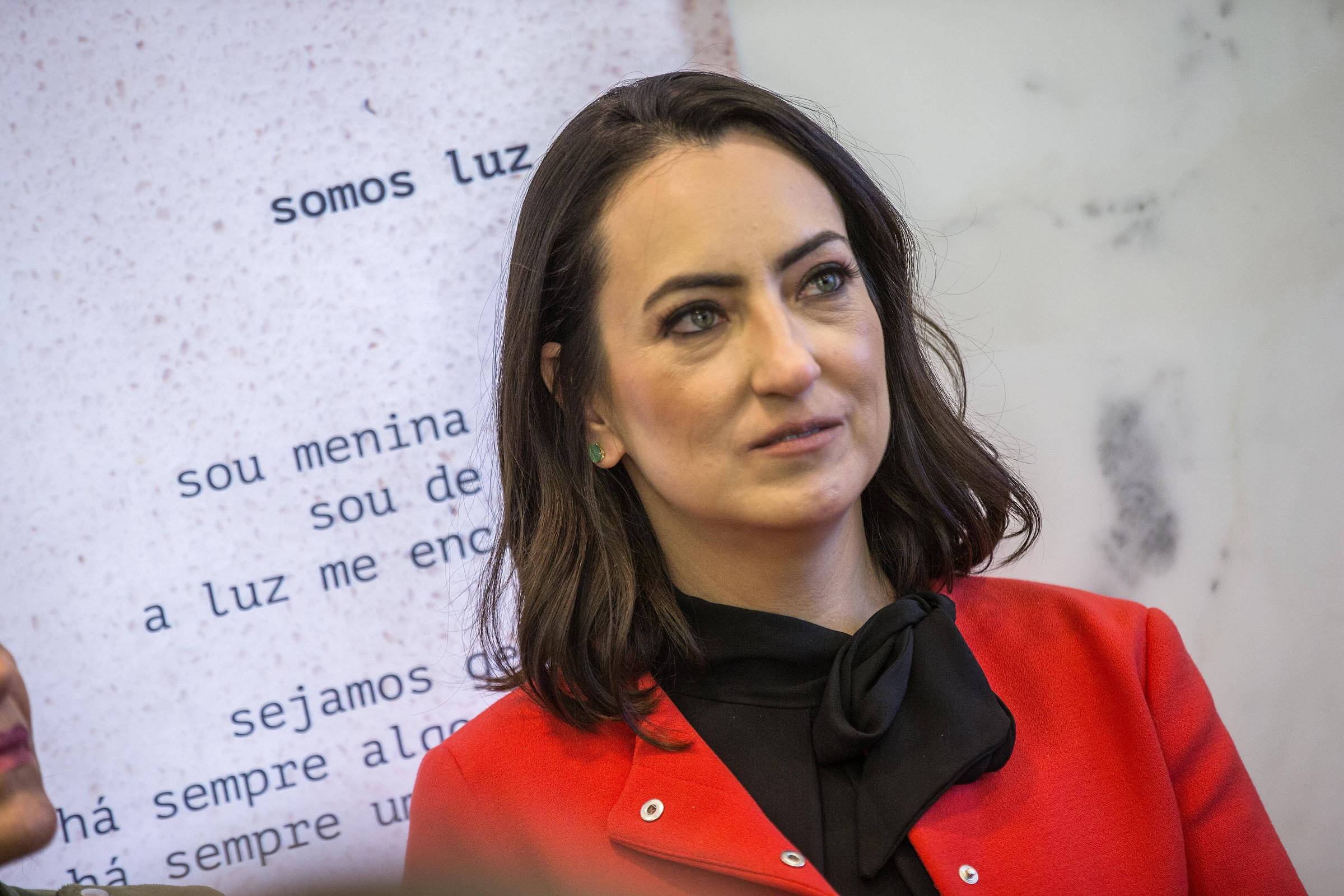
In a text published on the attorney’s social media – sent personally to the ex-Minister by WhatsApp-, Rosângela used the poem “Ausências”, by Vinícius de Moraes, to comfort Moro.
The verses refer to the end of a relationship. “I will let the desire to love your sweet eyes die in me. For I can give you nothing but the sorrow of seeing me eternally exhausted,” begins the poem.
In another passage, Moraes says: “I only want you to emerge in me as the faith in the desperate. So that I may carry a drop of dew on this cursed land”.
The poem was deleted from Rosângela’s social media shortly after Moro announced the reasons for his resignation. And it was precisely when he spoke of his family that the Minister’s voice faltered only once when leaving the government.
Moro’s last week at the head of the Ministry of Justice was marked by self-isolation. The ex-Minister traveled alone to Brasília. During the final days, he was quieter and more withdrawn than usual since he joined the government.
For some of his allies, his behavior during those days was reminiscent of that of the former Operation Lava Jato judge. One of his advisors on the PF team at the time told the story that Moro was as tense as he had been on the day of ex-President Luiz Inácio Lula da Silva’s arrest in March 2016.
On Tuesday, April 21st, then in Brasília, Moro was told that Bolsonaro would corner him about the change in the PF. In the following days, the Minister appealed to allies, friends, and advisors to assess the pros and cons of a resignation request and the impacts on his image. Moro was concerned about not sending the wrong message and the perception that he was abandoning ship in the midst of the coronavirus pandemic.
The ex-Minister also wanted to convey a message about his future, keeping open the possibility of returning to work for Brazil. Moro is constantly considered as a potential presidential candidate in 2022, although he has always denied any intention to be a candidate.
Even before formalizing his exit, on Thursday, the ex-Minister was probed by governors and also by private businessmen. Moro told interlocutors that, for now, he only wanted to go home to Curitiba and rest listening to Fagner, his favorite singer.
The day before his resignation, Moro instructed close advisors to copy personal files on their computers and on their working cell phones. Moro spent Thursday night alone at home, following the news and exchanging views with advisors over the phone.
He also received a call from Maurício Valeixo confirming that his resignation would come out the next day. Bolsonaro’s decision put an end to a relationship marked by highs and lows. The first meeting between the two took place in 2017 and, in fact, it was a mismatch. In March that year, the then judge ignored Bolsonaro at the airport in Brasília.
The President, then a federal deputy, saluted him and tried to greet him. In 2018, after the judge’s visit to Rio de Janeiro, Bolsonaro declared more than once that the future Minister would have “total freedom” to choose the first, second, and third ranks of the ministry.
The pledge was short-lived. In August 2019, unbeknownst to the PF leadership, Bolsonaro announced the change of the superintendent in Rio de Janeiro and there was a reaction at the corporation’s head. Faced with the negative response, the President retreated but began to ask for Valeixo’s head.
The last chapter of the alliance took place on Friday. After being called a liar by Bolsonaro, Moro released an exchange of messages between the two in which he demonstrates the President’s attempt to interfere in the PF.
Source: Folhapress
More: Brazil news in English, every day from The Rio Times.
This article was produced by The Rio Times’ automated newsroom system. How we use AI · Report an error
Read More from The Rio Times