Milei Opens Skies: Foreign Airlines Allowed on Domestic Routes in Argentina
The Argentine government has taken a dramatic step in its ongoing battle with Aerolíneas Argentinas. President Javier Milei’s administration has authorized foreign crews and aircraft for domestic flights.
This decision comes amid a heated salary dispute with the state-owned airline’s unions. The decree, published on Monday, will take effect in 60 days.
Under the new rules, foreign companies can operate domestic routes without registering their aircraft in Argentina.
This move aims to counter the impact of union strikes that have disrupted hundreds of flights. Transport Secretary Franco Mogetta defended the decision on social media platform X.
The conflict began in late August when unions rejected the government’s salary proposal as insufficient. Argentina’s soaring inflation rate, exceeding 230% annually, has intensified the wage debate.
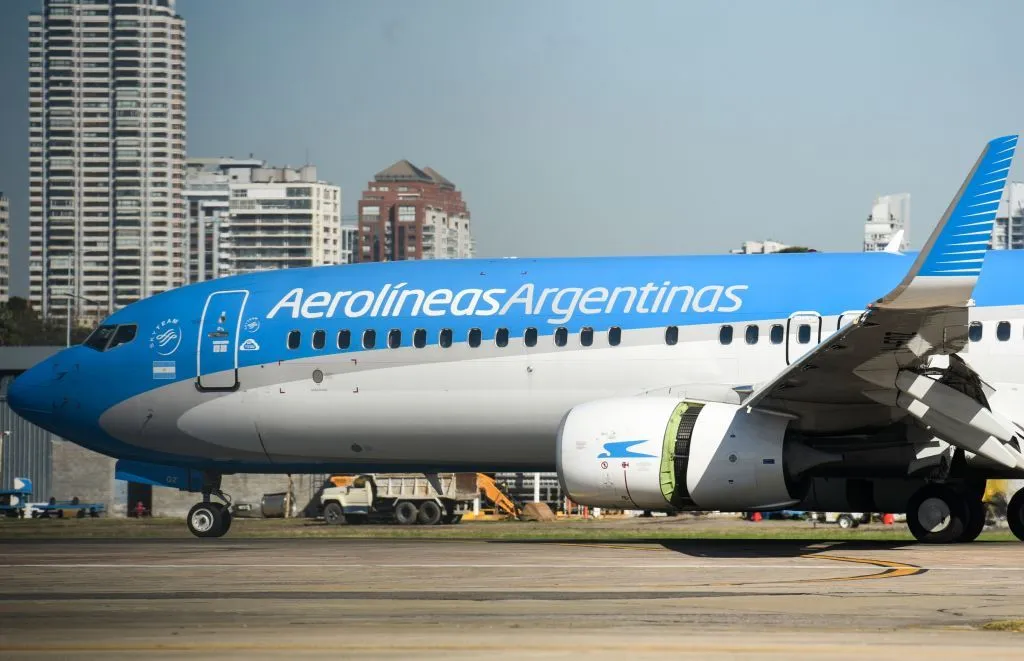
Unions launched a series of strikes and work stoppages in response. These actions have affected thousands of passengers and caused significant financial losses.
President Milei‘s administration has also declared air transport an “essential service.” This designation requires unions to maintain 50% of services during strikes.
The government’s actions align with its broader goal of privatizing Aerolíneas Argentinas. However, this plan faces opposition in Congress, which must approve such a measure.
Unions accuse the government of deliberately undermining the airline to justify privatization. They argue that salaries have fallen far behind inflation rates.
The unions demand at least a 25% increase, while the government offers only 11%. This standoff has led to a tense atmosphere in Argentina’s aviation sector.
The Complex History of Aerolíneas Argentinas
Aerolíneas Argentinas has a complex history of ownership changes. Founded in 1950 under President Juan Perón, it was privatized in 1989 during Carlos Menem’s presidency.
The airline was later renationalized in 2008 after facing bankruptcy under Spanish ownership. Since then, it has been a contentious topic in Argentine politics.
The government criticizes what it sees as excessive labor privileges in the airline. Some employees reportedly earn between $3,000 and $20,300 per month.
This claim has fueled public debate about the airline’s efficiency and cost to taxpayers. The conflict is part of Milei’s larger agenda of economic reforms and deregulation.
The recent decree allowed foreign operators to challenge the unions’ leverage. It could potentially reshape Argentina’s domestic air travel market.
However, it also raises concerns about job security for current Aerolíneas Argentinas employees. The future of the national carrier hangs in the balance as this situation unfolds.
As the dispute continues, it remains a focal point in discussions about Argentina’s economic direction. Milei’s administration faces the challenge of balancing economic reforms with labor rights and national interests.
The outcome of this conflict could set a precedent for future labor disputes and privatization efforts in Argentina. The situation highlights the complex interplay between government policy, labor rights, and economic reform.
As Argentina grapples with these issues, the aviation industry serves as a microcosm of broader national debates. The coming months will likely see further developments in this high-stakes conflict over the future of Argentine air travel.
More: Argentina news in English, every day from The Rio Times.
In depth
This article was produced by The Rio Times’ automated AI newsroom. Editorial responsibility: Matthias Camenzind, Publisher and Editor-in-Chief. How we use AI · Report an error