
ARGENTINA · INFLATION
Key Facts
- October rate Prices in the city of Buenos Aires rose 1.9% in October, up from 1.8% in September.
- Since January Cumulative inflation for the first ten months of 2026 reached 26.1%.
- Yearly rate Inflation over the last twelve months was 32.5%, 0.4 points lower than in September.
- Biggest mover Vegetables, tubers and legumes jumped 12.9% in a single month.
- National view Economists polled by the central bank expected 1.8% for the whole country in October.
- Power Index Argentina ranks 4th of 14 in The Rio Times Latin America Power Index, with 60.2 points (November 2026 edition).
Buenos Aires inflation rose to 1.9% in October, up from 1.8% in September, according to the city’s own statistics institute. The figure, released on Friday 6 November 2026, shows prices in Argentina’s capital speeding up slightly.
Over twelve months the city’s price index is up 32.5%, which is 0.4 points slower than a month earlier. For a US reader, that mix of a small monthly rise and a slower yearly rate shows how bumpy Argentina’s fight against inflation still is.
What Happened to Prices in October
The Instituto de Estadística y Censos de la Ciudad Autónoma de Buenos Aires, the city government’s statistics office, publishes its own monthly price index. In October that index, known as the IPCBA, rose 1.9% and brought the total for the first ten months of 2026 to 26.1%.
Goods and services both rose 1.9% in the month. Over twelve months, services are up 35.7% and goods are up 27.1%, so services are still getting dearer faster.
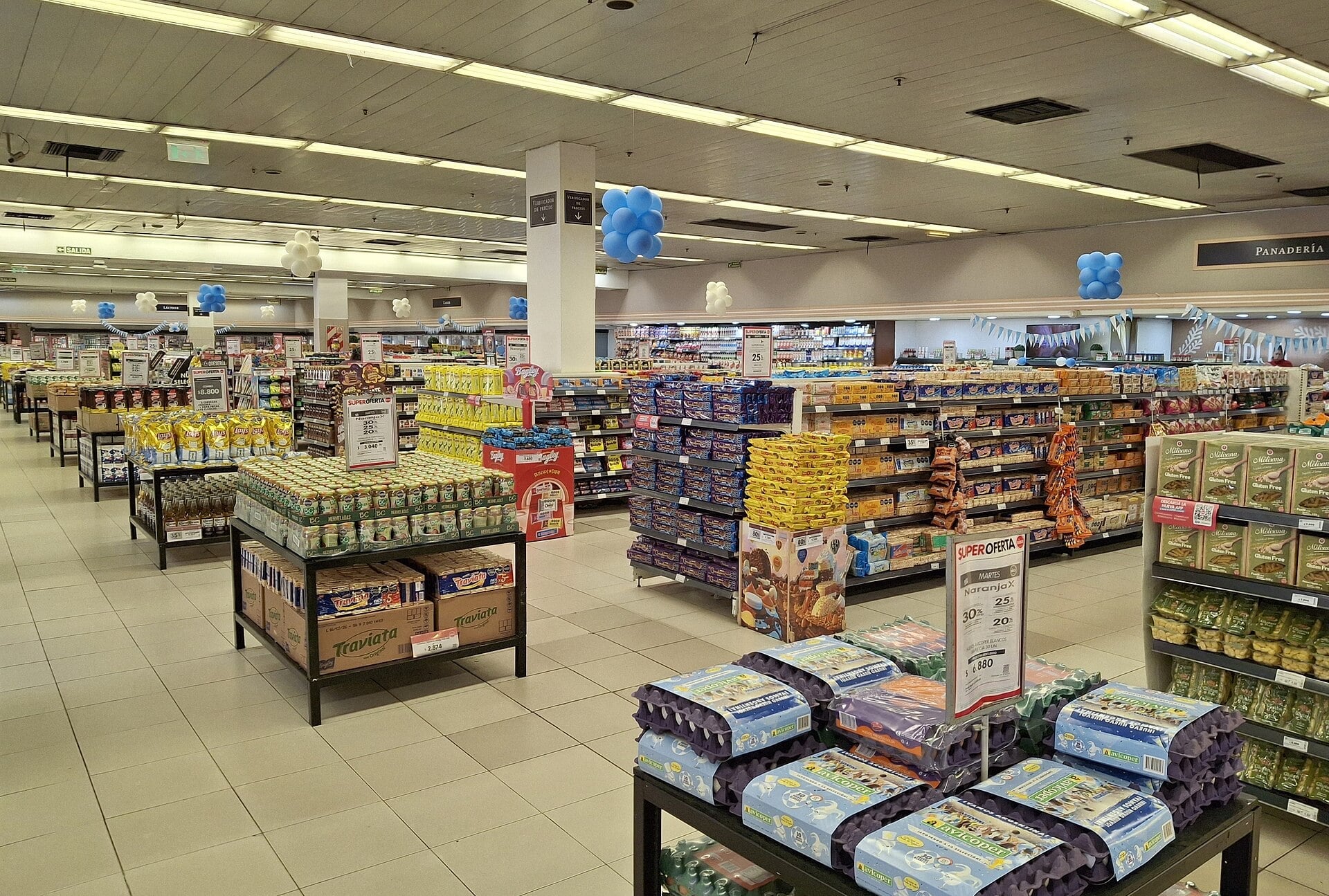
Vegetables and Housing Led the Rise
Vegetables, tubers and legumes rose 12.9% in October, the biggest jump among food items, while fruit prices fell 3.2%. Bread and cereals rose 1.8% and meat rose 0.8%.
Housing, water, electricity, gas and fuels rose 2.2% and added 0.45 points to the monthly total, the largest push of any group. The city office points to higher building fees and rents, followed by residential gas and water tariffs.
Live Market IntelligenceArgentina — Live Market Board
Rio Times · Live Market Intelligence
Argentina — Live Market Board
—
168,481.49
+1.38%
71,087.56
+0.38%
10,536.40
+0.68%
2,848,945
—
2,466.03
-0.74%
| Instrument | Last | Change | YoY | Prev. | High | Low | Volume |
|---|---|---|---|---|---|---|---|
| MERVAL | 2,848,945 | — | -4.19% | 2,859,051 | — | — | — |
| USD/ARS | 1,545 | +0.00% | +6.50% | 1,545 | 1,545 | 1,545 | — |
| YPF | 6,505 | +0.46% | +17.89% | 6,475 | 6,675 | 6,360 | 708,971 |
| GGAL | 4,950 | -0.95% | -42.85% | 4,998 | 5,140 | 4,933 | 548,462 |
| PAMPA | 4,290 | +0.29% | -16.78% | 4,278 | 4,390 | 4,235 | 351,604 |
| TXAR | 693.00 | -1.28% | -11.88% | 702.00 | 709.50 | 673.50 | 619,637 |
| ALUAR | 774.50 | +0.58% | -19.82% | 770.00 | 784.50 | 771.00 | 192,215 |
| TGS | 7,240 | -0.55% | -16.98% | 7,280 | 7,450 | 7,120 | 44,794 |
| CEPU | 1,678 | +1.76% | -24.72% | 1,649 | 1,678 | 1,600 | 129,716 |
| MIRGOR | 1,740 | -0.57% | -91.98% | 1,750 | 1,780 | 1,695 | 3,417 |
| COME | 31.18 | +2.20% | -47.95% | 30.51 | 31.40 | 30.76 | 3,810,293 |
| LOMA NEGRA | 2,978 | +1.79% | -9.67% | 2,925 | 3,003 | 2,853 | 34,896 |
| BYMA | 198.00 | +0.00% | -36.59% | 198.00 | 201.25 | 193.50 | 2,776,937 |
| TELECOM ARG | 3,340 | -1.18% | -7.86% | 3,380 | 3,490 | 3,293 | 11,295 |
| GLOBANT | 47.58 | -3.37% | -18.81% | 49.24 | 47.64 | 46.35 | 616,989 |
| MERCADOLIBRE | 1,510 | -1.31% | -29.04% | 1,530 | 1,558 | 1,502 | 677,425 |
Four Groups Explain Most of the Increase
Housing, food and non-alcoholic drinks, health, and restaurants and hotels together explained 63% of the October rise. Food rose 2.2%, health rose 2.2% because of higher prepaid medical plan fees, and restaurants and hotels rose 1.6%.
The office’s measure of underlying inflation, called Resto IPCBA, rose 1.8%, and prices set by regulation rose 1.8%. Seasonal items, led by vegetables, rose 3.3%.
In Plain English, Who Is Who
The city statistics institute measures prices only inside the city of Buenos Aires, the capital district. The national statistics institute, known as INDEC, measures the whole country and reported 1.9% for September, with 33.4% over twelve months.
The central bank’s monthly market survey, called the REM, collects forecasts from 45 banks and consultancies. Its latest edition, published on Thursday 5 November, expected 1.8% for October nationally.
What It Means for You
If you hold Argentine bonds or plan a trip, the city figure is an early hint of the national number. Higher rents and gas bills can squeeze household spending, which matters for companies selling in Argentina.
Visitors from the United States will see restaurants and hotels up 1.6% in a month, a smaller rise than the average. Our guide to Buenos Aires explains how the city works for newcomers.
More Argentina Economy Coverage
Argentina’s labour market also moved this week, as our report on the jobless rate rising to 7.9% shows. Prices and jobs together shape how voters judge the government of President Javier Milei.
Security is also in the news, because Argentina has set up a large security operation for Pope Leo’s visit. The pope arrives in Buenos Aires on Sunday 8 November.
What Is Not Known
The national October figure from INDEC is the next data point, and it will show whether the whole country matched the city. Economists polled by the central bank expected 1.8%, so a higher number would be a surprise.
The city institute will publish November prices in early December. That release will show whether the vegetable jump was a one-off or the start of a longer climb.
More: Latin America news in English, every day from The Rio Times.
Frequently Asked Questions
How much did Buenos Aires prices rise in October 2026?
Prices in the city rose 1.9% in October, up from 1.8% in September. Over twelve months the rise was 32.5%.
Which prices rose the most in Buenos Aires?
Vegetables, tubers and legumes jumped 12.9% in the month. Housing costs, mainly building fees, rents and gas tariffs, rose 2.2% and added the most to the total.
Is the city figure the same as national inflation?
No, the city index covers only the capital and uses its own basket. The national figure comes from INDEC, which reported 1.9% for September.
Who publishes the Buenos Aires price index?
The Instituto de Estadística y Censos de la Ciudad Autónoma de Buenos Aires, the city government’s statistics office. It publishes the index monthly under the name IPCBA.
Sources: Instituto de Estadística y Censos de la Ciudad de Buenos Aires, IPCBA Octubre de 2026 (informe de resultado 2064), November 2026; Banco Central de la República Argentina, Relevamiento de Expectativas de Mercado, October 2026, 5 November 2026; INDEC consumer price index, September 2026, 13 October 2026.
In depth
Editorial responsibility: Matthias Camenzind, Editor-in-Chief · Editorial standards · Report an error
Living in or visiting Buenos Aires? See this month's events and our Buenos Aires city guide with rents, safety and upcoming concerts.