List of ‘Anti-Fascist’ Names Prompts Tensions and Resistance on Eve of Pro-Democracy Rally
RIO DE JANEIRO, BRAZIL – Overnight, hundreds of people woke up to the information that they were on a list. With photos, social media details, and their homes addresses as well as some mobile phone numbers, men and women of different ages and professions were listed with some sort of “anti-fascist” tag. This over-900-page list includes hundreds of names.
The PDF purveyed on WhatsApp includes journalists and individuals in the ranks of those who oppose President Jair Bolsonaro’s government supporters. Newspaper El País spoke to eight people who found themselves on the list. Everyone was alerted between Wednesday and Thursday by friends that they would be listed, while whoever received the document first is yet to be determined.

One of them had protested against fascism on Facebook during the 2018 election. Others campaigned against President Bolsonaro and adopted the photo filter label on the social media reading “anti-fascist” last weekend when pro-democracy protests were held on Paulista Avenue.
There is also a member of the Palmeiras’ anti-fascist soccer fan group, Gabriel Santoro, who was present at the May 31st event in São Paulo. Three pictures of him are in the file. Two of his social media, which is open, and one of his presence in the MASP rally, probably taken from the social media of some other friend. Santoro is used to being harassed by his team’s “fascists”, as he refers to the rowdy fans who have extreme positions. But they’re a minority, he says.
The anti-fascists, like Santoro, choose to take a stand because they don’t like to be tied to the image of President Bolsonaro, who has attended matches involving Palmeiras, a team he supports in São Paulo. “I’m going back to Paulista [Avenue] this weekend, and this time it will be longer,” he says, referring to the new rally scheduled for this Sunday, June 7th.
The expectation surrounding the protest is enormous. Last Sunday, the rally ended with a tear gas shower after pro-democracy members succumbed to provocations from an extremist group. The incidents led the governor of São Paulo, João Doria, to announce that there would be no more antagonistic movement rallies in the same place and time.
On Friday night, a São Paulo court followed the state government’s decision and banned the simultaneous protests of opposing groups on Paulista Avenue on Sunday.
Judge Rodrigo Galvão Medina banned “manifestly antagonistic groups” (such as “Atos Antifascismo”, “Democracia”, “Pedalada Antifascista”, “Mais Democracia”, “Ato Antifascista”, “Torcida Organizada”, “Mancha Verde”, “Torcida Independente”, “Torcida Jovem”, “Gaviões da Fiel”, “Secundaristas em Luta”, “Canal Secundaristas”, “Democracia, fascismo, racismo e Homofobia, LBTQA”, “Vidas Pretas Importam”, “BRASIL CONTRA O COMUNISMO”, “Movimento Juntos Pela Pátria”, “Damas de Aço”, “Guerreiras do Sudoeste”, among others), [….] thus preventing clashes and damage arising from this reality, with the competent administrative authorities ensuring that this undertaking may have its effective success,” says the magistrate in the ruling.
Santoro, alike all others heard by the story, had no record of attacks on social media after learning of the existence of the PDF that circulated among them. “My friends warned me between Wednesday and Thursday,” says a young woman who prefers to remain anonymous. “I have always been incisive against this government, and I have openly declared myself an anti-fascist on social media.” Despite the unease with the list, she says she hasn’t been harassed because of it. “I have always been attacked by Bolsonarists for my political positions,” she adds.
Another who recognized herself in the list was ‘Karina’, who was afraid to speak publicly and disclose her name. “I was scared at first, then I realized it was a basic, amateurish thing. Anyone with an anti-fascist filter becomes a target,” she says. Filters are the virtual strips that overlap profile photos of social media, which are replicated in campaigns that viralize the networks. She also learned of the list through friends and has no record of attacks on social media.
The list began to be disclosed through WhatsApp last Wednesday, a day after far-right federal Deputy Douglas Garcia showed a clump of pages with a list, stating he had received between 700 and 1,000 names from different sources after making a public request on his Twitter on Monday, June 1st. “If you know the full name of any self-appointed ‘anti-fascist’ and have proof that they are what they claim to be, please attach the proof to their full name and send it to my e-mail address: [email protected].,” he said in the tweet that was shared almost 13,000 times.
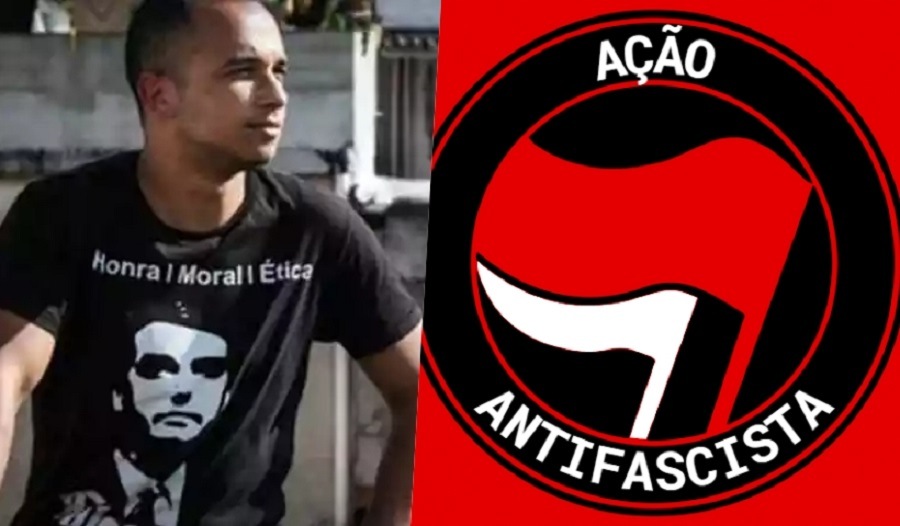
On June 2nd, the deputy recorded a video next to the file, dropping the pages from top to bottom to give an idea of how many names he had collected. He also displayed the blurred photos of people included in the list. The deputy warned that he would forward the file to the police to investigate the names and their links to terrorist activities and that he would send it to “the US embassy, and the US consulates in our country so that they would be aware of the file with the names of people in Brazilian territory with the suspected association and active involvement in these groups”.
Garcia recalled that President Donald Trump announced that he would consider the ANTIFA group as a terrorist organization, an intention that the American president has disclosed in light of the anti-racist protests in the United States. The acronym is the abbreviation for anti-fascist, but it also refers to European militants who fought against fascism in the past century.
Garcia also said he sent a letter to the Office of the Prosecutor General (PGR) along with federal deputy Eduardo Bolsonaro, and state deputy Gil Diniz, calling for an investigation into deputies who encourage “groups for the extermination of conservatives,” in a tough wordplay that suggests the curtailment of conservative voices, but entails referral to extermination groups that clandestinely exist to kill alleged thugs.
The association of the WhatsApp list of opponents to Bolsonaro with Garcia’s file was immediate. The repercussions were also felt by left-wing deputies, who responded at first by accusing Bolsonarists on social media, and by activist attorney groups advising the listed members to organize themselves and seek legal protection. Garcia then recorded a new video on Thursday, in which he strongly denied he had anything to do with the leaked profiles.
“I didn’t leak data from anyone! No file at all,” he said, suggesting that those who leaked the file disclosed between Wednesday and Thursday may have been the same “criminals” who leaked his own data days ago. The deputy had his personal data, including his family’s, disclosed by a group called Anonymous Brasil, which, incidentally, calls itself anti-fascist.
The list seemed like a reaction to the intimidation he himself suffered. But he did escape a motion for impeachment by other opposition deputies who saw in his effort to prompt denunciations and disclose an alleged file as a way to intimidate activists. “This is desperation,” says state deputy Erika Hilton of the activist group.
Garcia (who is investigated in the fake news inquiry conducted by Supreme Court Justice Alexandre de Moraes) even suggested that the file disclosed on Whatsapp was not the same one he had. But some people point out names that match the Whatsapp’s list when they freeze the distorted photos the deputy disclosed in one of his tweets.
Garcia is moving on the boundaries of legality. If he has in fact exposed innocent people, he will have commited the crimes of libel and slander, explains attorney André Wlodarczyk from Curitiba, who identified 12 people from the capital of Paraná on the list. He represents this group and is studying a collective action to protect it.
“There are many young people there, many people who own tattoo studios, for instance,” comments Wlodarczyk, who said he would file a complaint with the São Paulo Prosecutor’s Office to find out details of this intimidating list. Only the authorities and the deputy will be able to answer if the file he has announced is different from the one that reached Whatsapp.
This list includes people connected to the world of music, heavy metal, and punk, who follow anti-fascist pages. Some feature in a photo with Lula or wearing Workers’ Party (PT) T-shirts. A young man with a doctorate has no idea how he got there. There are also those who have studied social sciences, a course targeted by the far-right in Brazil. Someone in the file displays a set of brass knuckles.
But there are also people who do not fit that profile and who had already been alerted last year to such a list of anti-fascists. “Late last year, I don’t know how I was added to a WhatsApp group where people started to be alerted to this kind of list and that I would also be included in it,” recalled a young man, who works multiple jobs and has no time for social media. “I’ve never been to a protest,” he says.
One of the assumptions raised among them is that such a list began to be compiled in line with protests in Chile that began in October, and sparked a social outburst in the country, only interrupted during the coronavirus pandemic. At that time, members of the Government, Deputy Eduardo Bolsonaro and the President himself reacted strongly. “If they start radicalizing on the other side, we’ll see history repeat itself. I want to see how that will play out,” Eduardo said in yet another statement in late October.
Bolsonaro revived comparisons with the protests in Chile this week and, echoing Trump, began calling pro-democracy protesters “terrorists,” adding fuel to the fire between supporters and Bolsonarist deputies. Right after last Sunday’s protest, three Rio de Janeiro deputies tried to pass a bill to typify the so-called ANTIFAS as terrorists.
For Erika Hilton, this climate puts even greater weight on this Sunday’s act. “It will be a gamechanger,” she believes, an arena where the strength of extremists who want to prevent the protest, and the ability of anti-fascist groups to resist the temptation to fight, will be measured.
A video of someone identified as Torres, dressed in a uniform, summoned “martial arts fighters, reserve police, interventionists” to come to Paulista Avenue, outside the FIESP building, at noon, to oppose the anti-fascists. The rally will be joined by social movements, which felt provoked into reinforcing their presence after last weekend’s incidents, and not to be intimidated by the extreme labels. “It was a peaceful protest until the police reprisals after the provocations of militants,” she recalls.
Even those who are not joining the rally and find themselves on the list have decided to speak openly about it so as not to give in to the climate of fear. “We don’t commit crimes. Defending equal rights, democracy is not a crime,” says Paula Baldassarri. Karina feels the same way. “I’m tired of being afraid. This is how the far-right grows,” she says. Just in case, she is in contact with other people to take legal action in case there is any unfolding concerning the potential disclosure of the list.
Source: El País
More: Brazil news in English, every day from The Rio Times.
Read More from The Rio Times