Latin American Jet Set bathes on these beaches in Uruguay’s upscale Punta del Este resort
RIO DE JANEIRO, BRAZIL – The tourism sector contributes some 8% to the country’s GDP and directly and indirectly employs 100,000 people. In this context, the noble resort of Punta del Este is at the heart of the action.
The city, sharing a name with the surrounding municipality, has been referred to as “the Monaco of the South,” “The Pearl of the Atlantic,” “the Hamptons of South America,” and “the St. Tropez of South America.”

Punta del Este is a city and seaside resort on the Atlantic Coast in the Maldonado Department of southeastern Uruguay. Starting as a small town, Punta del Este later became internationally known as a resort for the Latin and North American jet set and tourists. Although the city has a year-round population of about 9,280, the summer season greatly adds to this number.
Punta del Este is one of the best seaside resorts in South America, bordering the River Plate and the Atlantic Ocean, its port and lagoons, the exclusivity of José Ignacio and the magic of the sunsets in Casapueblo, the iconic architecture of Uruguayan artist Carlos Páez Vilaró.
It is an ambiguous city: cultured and friendly in an endearing way. A combination that has enabled it to establish a special relationship with its visitors. Its main attraction is its coast. Miles of beaches with different variables. Each one has its own peculiarities and charm: from its geographical features to its visitors. Here is a guide for the unaware: the 7 beaches of Punta del Este not to miss.
1-Mansa
The beaches of Punta del Este combine the natural environment with sophisticated constructions.
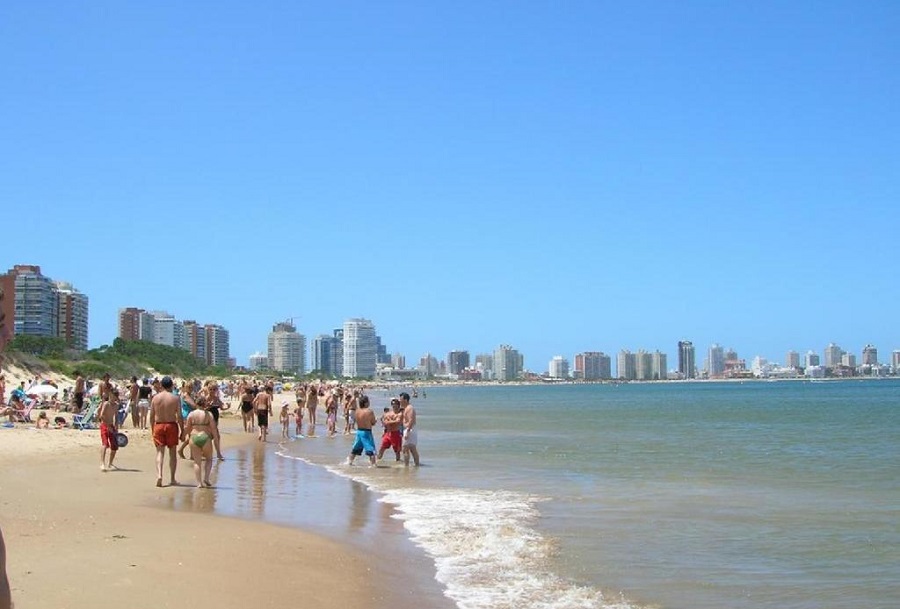
The eastern peninsula divides the beaches into two halves. On one coast, the swell is particularly intense and interacts with the shore, while on the other side it is not as strong. The motion of the waves gives the names to Punta del Este’s 2 busiest beaches: Mansa and Brava.
They are divided by the lighthouse, a landmark that illuminates the immensity of the Atlantic Ocean. The former is ideal for children and families due to its calm and peaceful waters. It is the western coast of the city by the sea, a bay surrounding the island of Gorriti, a wild refuge with nothing but beaches and vegetation, 20 minutes by boat from the port.
La Mansa stretches from the peninsula at stop 1 to stop 24, it is an ideal place for sunsets in Punta del Este, particularly when the sun sets behind Gorriti Island.
According to the most demanding users, there is no better option than Playa Mansa for tourists who like swimming. “It is wonderful, with a low swell and a unique view. From Gorriti Island to Punta del Este Port, visitors can enjoy the different attractions that characterize the island on its white sand. Do not miss a beautiful and healthy walk on its shores,” says a regular user.
There is a wide range of opinions. But all agree that it is suitable for all, ideal for children and for those wishing to take a pleasant swim in the sea, where there are few waves, mostly small. Its main features are: in Parada 1 fine sand, with rocks, calm waves, shallow depth and slope; in Parada 3 there is a fishing pier and in Parada 7 fine to medium sand, windy sea, gradual depth.
2-Brava
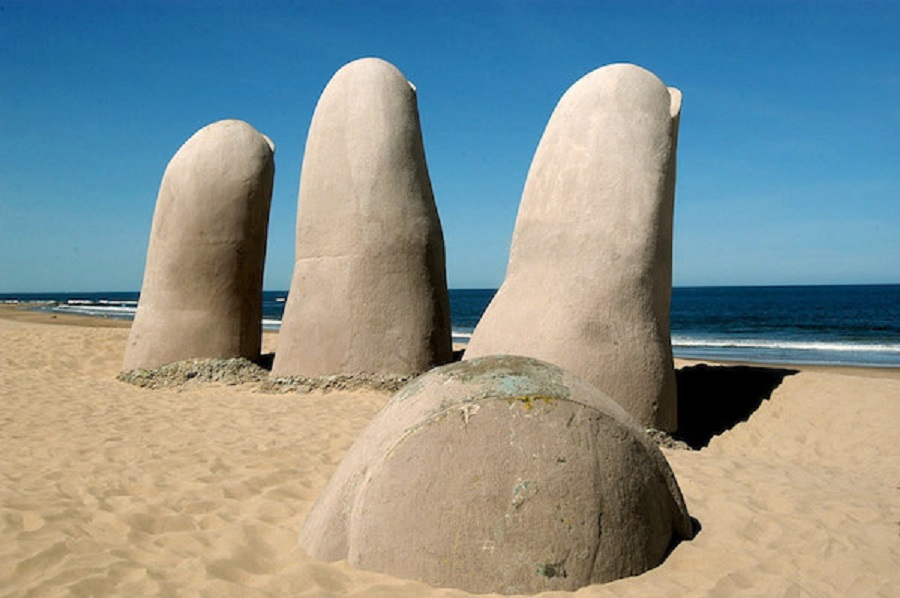
The Finger Sculpture, a work by Chilean artist Mario Irarrazabal, emerges from the Punta del Este sand and crowns a historical site of the city by the sea. The Brava starts there, extending to the Barra Bridge with the mouth of the Maldonado Stream. It takes up the eastern side of the peninsula, complementing the Mansa with other conditions and activities. La Brava receives the choppiest Atlantic waters. The waves provide ideal conditions for surfing. Over a length of 8 kilometers, it dazzles visitors.
Due to its more active atmosphere, it is busier than Mansa. It offers services such as sunshade rental on the beach, gastronomic services, a surfing zone and places for the most demanding fashionistas.
Public art, waves, surf schools and dreamlike sunrises and sunsets unite in this family beach that attracts the most visitors throughout the year. There are several stops with different services, such as beach bars and water sports equipment rentals.
A must-see? Undoubtedly Stop 1, the southernmost point of the beach, to take an emblematic picture of Punta del Este.
3-Bikini
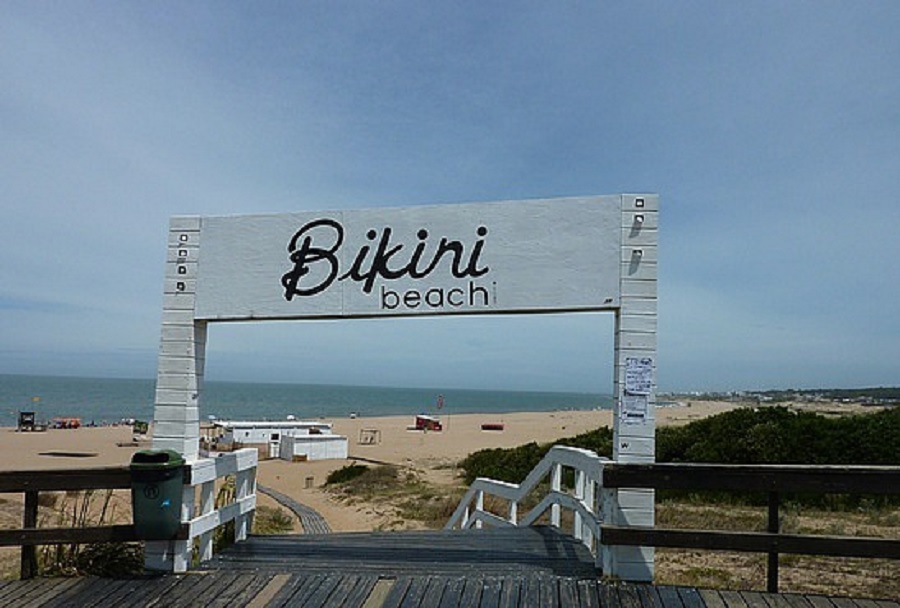
One of Punta del Este’s most authentic expressions. Bikini is a top beach located in the town of Manantiales, 12 kilometers from the peninsula. The distance lends it greater exclusivity. As a result, it is one of the most chosen shores by celebrities and is mainly visited by Argentine tourists. There is much glamor, awards, social events, fashion shows, youth, music and bars. There are many activities: surfing lessons, jet skiing and aerobic fitness. Its beach is typically dangerous and is guarded by a reinforced rescue service.
The sunset is an additional asset. Most visitors come after 3 PM, attracted by the entertainment and the exceptional sunset. The peninsula blocks the view of the sea merging with the sun: this creates a different and equally mesmerizing sunset with a unique and Instagram-worthy visual effect. For those who know it, it is a beach to see and be seen on.
ATTRACTION FOR SURFERS
This lively beach attracts surfers from all over and attractive, tanned youths with its sunset parties, DJ entertainment, fashion shows and fabulous waves.
Playa Bikini is one of the most popular places to enjoy summer in Uruguay, offering a combination of lush nature and attractive people. When choosing a quiet stay, walking along the golden sand to the southern end of the beach is advisable. Visit this area when the sun sets behind the great towers of Punta del Este, which can be seen in the distance. Finally, return to the Parador for an exuberant party as the sun sets.
4-José Ignacio
Located 40 kilometers from Punta del Este, at kilometer 182 on Route Nº 10, along the road E. Sainz Martínez, visitors will find a paradisiacal and privileged corner of the Uruguayan Atlantic coast: the José Ignacio seaside resort.
The intimacy of this exclusive beach resort is particularly appreciated by the celebrities who visit it.
Bohemian and chic merge on the second most famous peninsula in the department of Maldonado. Its exclusivity, its privilege, are the seal of belonging. Its wild, natural and native landscape harmonizes with a refined architectural background: there are boutique hotels, luxury resorts, a wide gastronomic offer, art galleries, fashion shows, top events and polo tournaments. Nature dominates in José Ignacio and invites visitors to relax in a paradisiacal corner.
It is a small peninsula that extends into the sea for 2 kilometers in length and 800 meters in width. On one side, facing west, is Playa Mansa with its small fishing boats and magical sunsets. On the other, facing east, is Playa Brava, wide and with imposing waves.
Like Punta del Este, it features a peninsula, a central lighthouse and the same split of beaches: the Mansa and the Brava, one of which is ideal to enjoy the calm sea and the other to play in the waves. The site is surrounded by water, as it is sheltered by two lagoons, the Garzón and the José Ignacio. In addition to 5-star hotels, there are inns and cottages with enough secluded beaches to enjoy a summer in the upscale style of Punta del Este.
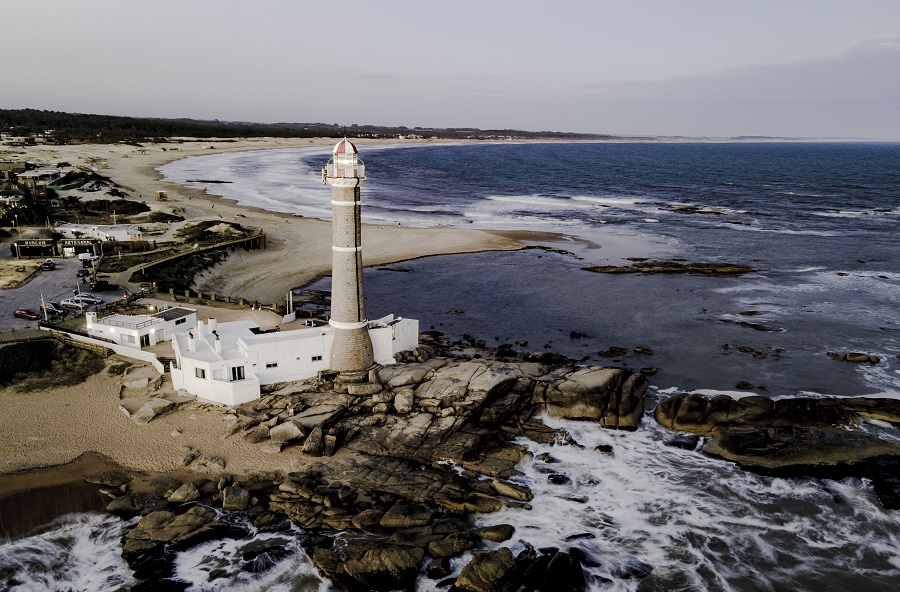
José Ignacio owes its name to a settler who inhabited the area at the time of the Spanish conquest. The lighthouse, the town’s landmark, bears the same name and was built in 1877 on the peninsula’s farthest projecting and rocky end. Its center of gravity is 32.5 meters high.
Overall, it is a place where nature revealed its overwhelming charm. A seductive and delicate village, perfect to enjoy everlasting tranquility. A seaside resort where the peace and quiet are interrupted only by the wind.
5-La Barra
La Barra is an old fishing port. It preserves a certain wild aesthetic, with original and modest constructions. Its meaning derives from the term barra, which in Uruguay means the mouth of a watercourse into the sea. The Maldonado stream flows into the Atlantic Ocean at the beaches of La Barra, with Desembocadura as one of its main resorts. The connection with Punta del Este is also iconic: it is made by the “Puente de la Barra” -also known as the “Wave Bridge”-, a structure completed in 1999 and a symbol of Uruguayan tourism.
La Barra has everything to offer: a seascape with magnificent beaches where sports as diverse as fishing, surfing, canoeing and water skiing can be practiced; a nightlife center with numerous bars and nightclubs located mainly along Route 10; an architectural style with its own identity; and a permanent cultural attraction with art galleries, flea markets and antique stores.
It is an old fishing port and summer resort for residents of Maldonado and San Carlos, as well as other areas of Uruguay. With the inauguration of the bridge over the Maldonado Stream in 1965, the city began to take on the present characteristics of an elegant seaside resort.
6-Montoya
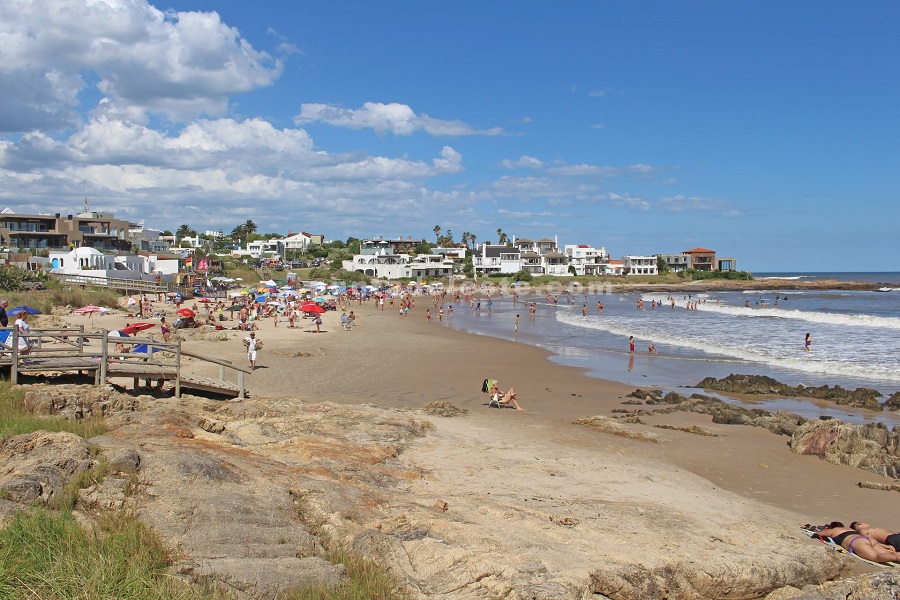
In 2012, journalist Richard Green published in The Sunday Times British newspaper a list of the world’s 10 best beaches: Montoya was among them. This jet-set resort, a 45-minute flight from Buenos Aires, is where Argentina’s “beautiful people” show how beautiful they are. “On the white sands of Montoya, there are swimmers passing before you, surfers riding the waves, and the ‘precarious’ charm of the locals of La Barra just a step away,” he described.
It’s a long beach with big waves. The surfing events are distinguished by the quality of the swell, which allows various water sports competitions throughout the year. Its sporty aspect and its young crowd make it the most active beach resort on the east coast.
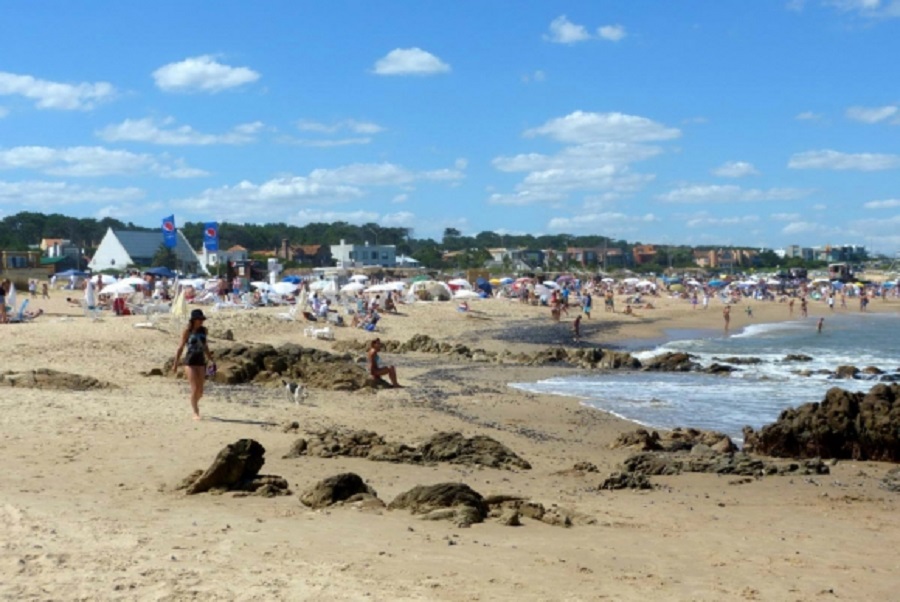
Montoya is ruled by centennials. The beach moves to their pace. Miriam has been there for 10 days and always drives down to the coast with her 2 teenage children. “Today I had to take 5 more in the car,” she said. This is the dynamic of teenagers: they go to Montoya to the beach every day without having been invited beforehand, simply because they know they will find more of their peers there.
The soccer field has always been crowded. Two teams play while the others wait for their turn. None is older than 18 and all are apparently alone. One walked by and asked another if he could leave his backpack where his parents were standing. There are adults supervising from the sidelines. On the field there are boys aged 13 to 18.
On the sand dunes, small groups of 12-year-olds run around on adventures. As the younger ones are sometimes pushed aside by the older ones, they gather at the Desembocadura, the first beach in the La Barra area, always guided by their parents.
7-Chihuahua
In a natural environment of sand, sea, forests and streams, nude tourists enjoy themselves under the protection of the law.
In Uruguay and very close to the center of Punta del Este, on the shores of Portezuelo Bay and in a natural environment of sand, sea, forest, creek and very easily accessible by car is Chihuahua, one of the world’s best nudist beaches, which also features hotels where visitors can walk around as God brought them into the world.
EXOTIC
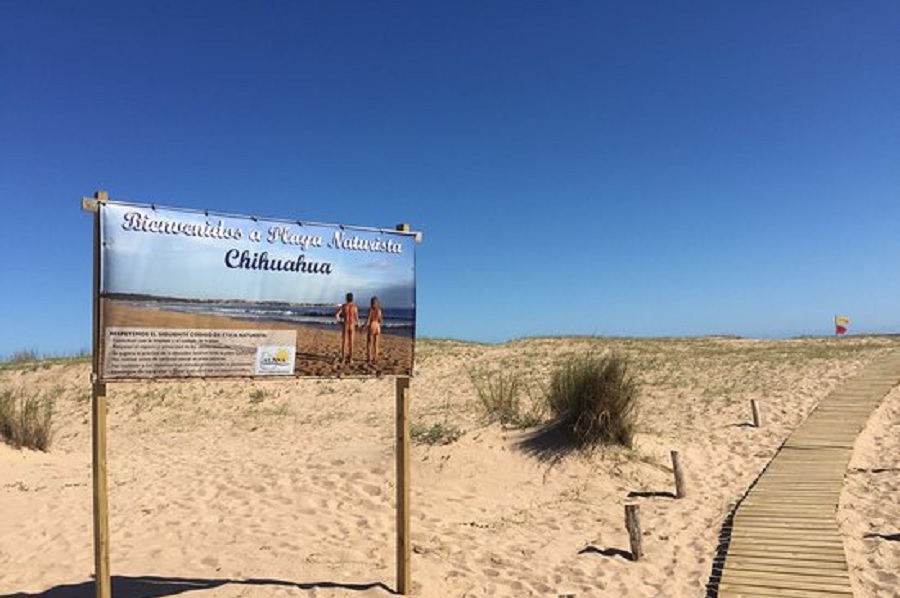
Exactly 10 kilometers east of the center of Punta del Este, this beach stretches for 2 kilometers towards El Portero River, where Laguna del Sauce flows into the sea. This is Chihuahua, a natural area that attracts about 3,000 tourists a day in high season. The beach differs from others in one peculiarity: it is a nudist beach.
This practice became popular in the 1960s. Spanish, German and Italian tourists enforced a trend that had been latent in South America. It was not until 1994 that it obtained a legal status and early this century it was legalized with the support of the city government, which deployed cleaning and security personnel to promote the activities of Playa Nudista Naturista Chihuahua. The beach and nudist culture have grown so much in the area that a hotel complex has been built where wearing clothes is not necessary.
The Chihuahua Resort Punta del Este is also characterized by a luxurious stay in a completely free environment. This accommodation offers relaxation and fun with the exclusivity of being the first naturist hotel in Uruguay dedicated to swinger tourism. Swimming pools, theme nights with must-see shows, delicious gastronomy and a relaxing spa are just some of the attractions. It is located just 100 meters from the nudist beach, 10 km from the city of Punta del Este and a few minutes from the airport.
Chihuahua Beach is located in the seaside Chihuahua resort, in the department of Maldonado, in Portezuelo Bay. It was inaugurated as a nudist beach in 2000, but nudism has been practiced since the 1960s by German, Italian and Spanish tourists, among others.
More: Latin America news in English, every day from The Rio Times.
Read More from The Rio Times