La Comer Second Quarter Profit Falls 16% as Costs Rise
Mexico · Companies
Key Facts
—Net sales. MXN 12,933 million (about US$699 million), up 5.7%; same-store sales up 2.9%.
—Net income. MXN 671 million (about US$36 million), down 16.4% from MXN 803 million a year earlier.
—EBITDA. MXN 1,331 million (about US$72 million); margin fell to 10.3% from 11.7%.
—Operating profit. MXN 932 million (about US$50 million), down 9.2%; margin 7.2%.
—Store network. 94 units: 39 La Comer, 23 Fresko, 17 City Market, 14 Sumesa and one City Market Cafe.
La Comer second quarter profit fell 16.4% from a year earlier, as the upscale Mexican supermarket operator spent heavily on new stores, wages and advertising. Net sales still rose 5.7% to MXN 12,933 million (about US$699 million), but margins narrowed across the board.
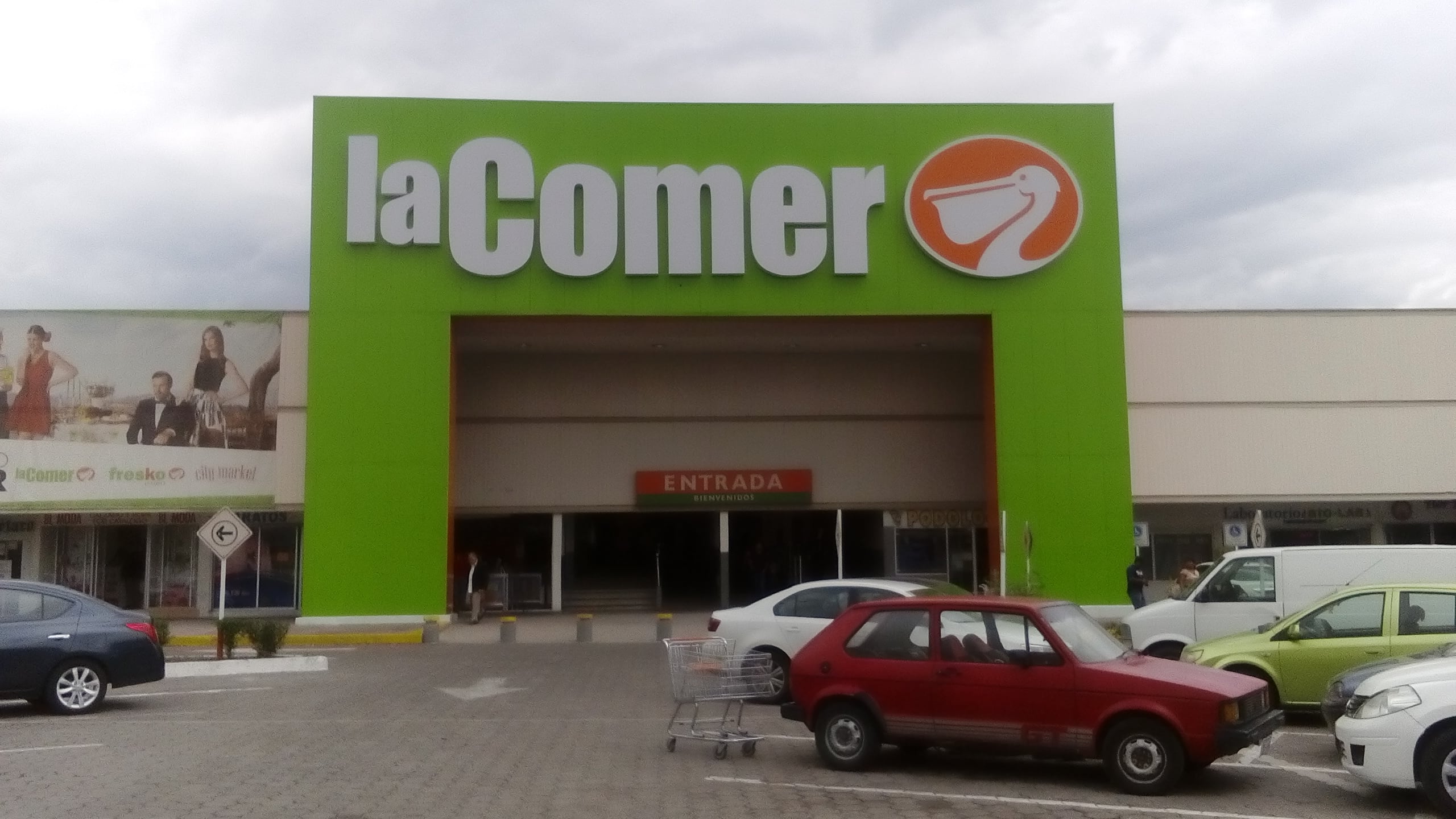
La Comer Second Quarter: Sales Grow, Profit Shrinks
Net income dropped to MXN 671 million (about US$36 million) from MXN 803 million a year earlier. Part of that fall reflects a tough comparison, because the second quarter of 2025 included a one-off gain of about MXN 162 million (about US$9 million) from a land sale.
Sales themselves held up well. Net sales rose 5.7% to MXN 12,933 million, and same-store sales, from outlets open more than a year, grew 2.9%.
For a foreign reader, it helps to understand that same-store sales strip out the effect of newly opened locations. They are a widely watched gauge of a retailer’s underlying health, because they show whether existing shops are attracting more shoppers or selling more per visit, rather than growth coming simply from adding square metres.
What La Comer Is
For readers unfamiliar with the company, La Comer is an upscale Mexican grocery operator spun off from Comercial Mexicana. It runs four banners aimed at different shopper segments.
Those are the La Comer and Fresko supermarkets, the premium City Market, and the smaller neighbourhood format Sumesa. The group competes at the higher end of Mexico’s retail market.
The spin-off from Comercial Mexicana is an important piece of context. Comercial Mexicana was once one of Mexico’s largest mass-market retailers, and the separation allowed La Comer to focus exclusively on a more affluent customer base, a strategy that typically brings higher margins but also demands constant investment in store experience and product quality.
Margins Under Pressure
EBITDA came in at MXN 1,331 million (about US$72 million), but the EBITDA margin slipped to 10.3% from 11.7% a year earlier.
Operating profit fell 9.2% to MXN 932 million (about US$50 million), leaving an operating margin of 7.2%. Higher store-opening, salary and advertising costs drove the squeeze.
Growth also cooled from the first quarter, when sales had risen 8.4% and same-store sales 5.5%. Every format and region still grew between April and June.
EBITDA, or earnings before interest, taxes, depreciation and amortisation, is a measure that many analysts use to compare profitability across companies because it removes the effects of financing and accounting decisions. A declining EBITDA margin signals that costs are growing faster than revenue, which is exactly the story here.
The First Half in Full
Over the first six months, net sales rose 7% to MXN 24,940 million (about US$1.35 billion), with same-store sales up 4.1%.
Gross profit climbed 8.9% to MXN 7,481 million (about US$404 million), lifting the gross margin to 30% from 29.5%. A better product mix and logistics efficiencies helped.
Even so, half-year net income fell 8.1% to MXN 1,413 million (about US$76 million), and half-year EBITDA slipped 3.6% to MXN 2,719 million (about US$147 million).
The improvement in gross margin is worth noting because it suggests the company is managing its direct product costs and supplier relationships effectively. The fact that net income still fell points to those rising operating expenses below the gross-profit line, namely the store-opening, wage and advertising costs already mentioned.
Betting on Expansion
The margin pressure is largely self-imposed, because La Comer is investing to grow. On June 3 it opened a new Sumesa store with an MXN 80 million (about US$4 million) investment, relaunching that format.
The smaller Sumesa outlets target frequent, local shopping trips in dense urban areas. They push La Comer into closer competition with proximity supermarkets and neighbourhood stores.
By the end of June, the company operated 94 stores with 424,037 square metres of selling space.
This expansion strategy carries a familiar trade-off. Opening and relaunching stores consumes cash upfront and depresses reported profit in the short term, but it can build a wider customer base that generates higher sales and profit in future periods.
The Sumesa relaunch is particularly significant because it signals an intention to compete for shoppers who make smaller, more frequent trips rather than the big weekly shop that larger-format stores rely on.
What to Watch in the Second Half
The key question is whether the new stores and marketing begin to pay for themselves. Management wants the investments to lift revenue enough to rebuild the profit it has given up.
For expat readers and investors, La Comer is a useful window on Mexico’s better-off consumer. Its shoppers are still spending, but the retailer is trading near-term profit for longer-term reach.
Several open questions will shape the rest of the year. Can same-store sales growth re-accelerate from the 2.9% recorded in the second quarter, or will it stay at this more moderate pace?
Will the Sumesa relaunch attract enough footfall to justify the MXN 80 million investment, and might the company open more units of that format before year-end? Another area to watch is whether the gross-margin improvement holds, because any slippage there would add further pressure to an already squeezed bottom line.
Finally, observers will be looking for any signal on how wage costs are trending, since salary pressure was one of the factors that narrowed margins in this quarter.
More: Mexico news in English, every day from The Rio Times.
Frequently Asked Questions
How did La Comer perform in the second quarter of 2026?
Net sales rose 5.7% to MXN 12,933 million (about US$699 million), with same-store sales up 2.9%. But net income fell 16.4% to MXN 671 million (about US$36 million), and the EBITDA margin slipped to 10.3% from 11.7%.
What is La Comer?
La Comer is an upscale Mexican supermarket operator spun off from Comercial Mexicana. It runs four banners, La Comer, Fresko, the premium City Market and the smaller Sumesa, across 94 stores in Mexico.
Why did La Comer’s profit fall despite higher sales?
Higher spending on store openings, salaries and advertising squeezed margins. The comparison was also tough, because the second quarter of 2025 included a one-off gain of about MXN 162 million (about US$9 million) from a land sale.
Connected Coverage
Sources: La Comer.
This article was produced by The Rio Times’ automated newsroom system. How we use AI · Report an error · Editorial responsibility: Matthias Camenzind, Editor-in-Chief
In depth
LatAm Markets: Live Signals → — real-time movers, turnover leaders and FX across Latin America.