
One of Kenya’s biggest banks earned more from phone loans and currency trades than a year ago. KCB Group, a Nairobi-listed lender, said in its results statement of 18 November 2026 that nine-month profit after tax rose 23.9% to KSh 58.6 billion (Kenyan shillings; about US$451 million).
For US readers, KCB is a window on East Africa’s mobile-money banking boom and on African bank stocks as an investment theme. Its subsidiaries outside the main Kenyan bank now earn about a third of group profit.
Key Facts
- Who. KCB Group, one of Kenya’s biggest banks, listed in Nairobi.
- What. Nine-month profit after tax rose 23.9% to KSh 58.6 billion (about US$451 million).
- Why. Mobile loans, fee income and foreign-exchange gains grew, while bad loans fell.
- Next. No dated next step is published.
- As of 18 November 2026, 15:51 GMT (UTC)
KCB’s profit growth came from lending, mobile loans and currency trading, with its subsidiaries beyond KCB Bank Kenya adding a third of the total. Bad loans fell as well.
Where This Comes From
KCB Group is one of Kenya’s biggest banks, with subsidiaries in Uganda, Burundi, South Sudan and the Democratic Republic of Congo. Its shares trade on the Nairobi Securities Exchange, Kenya’s main stock market.
Group chief executive Paul Russo summed up the result in the statement of 18 November 2026. He said: “The results demonstrate the resilience of our business.”
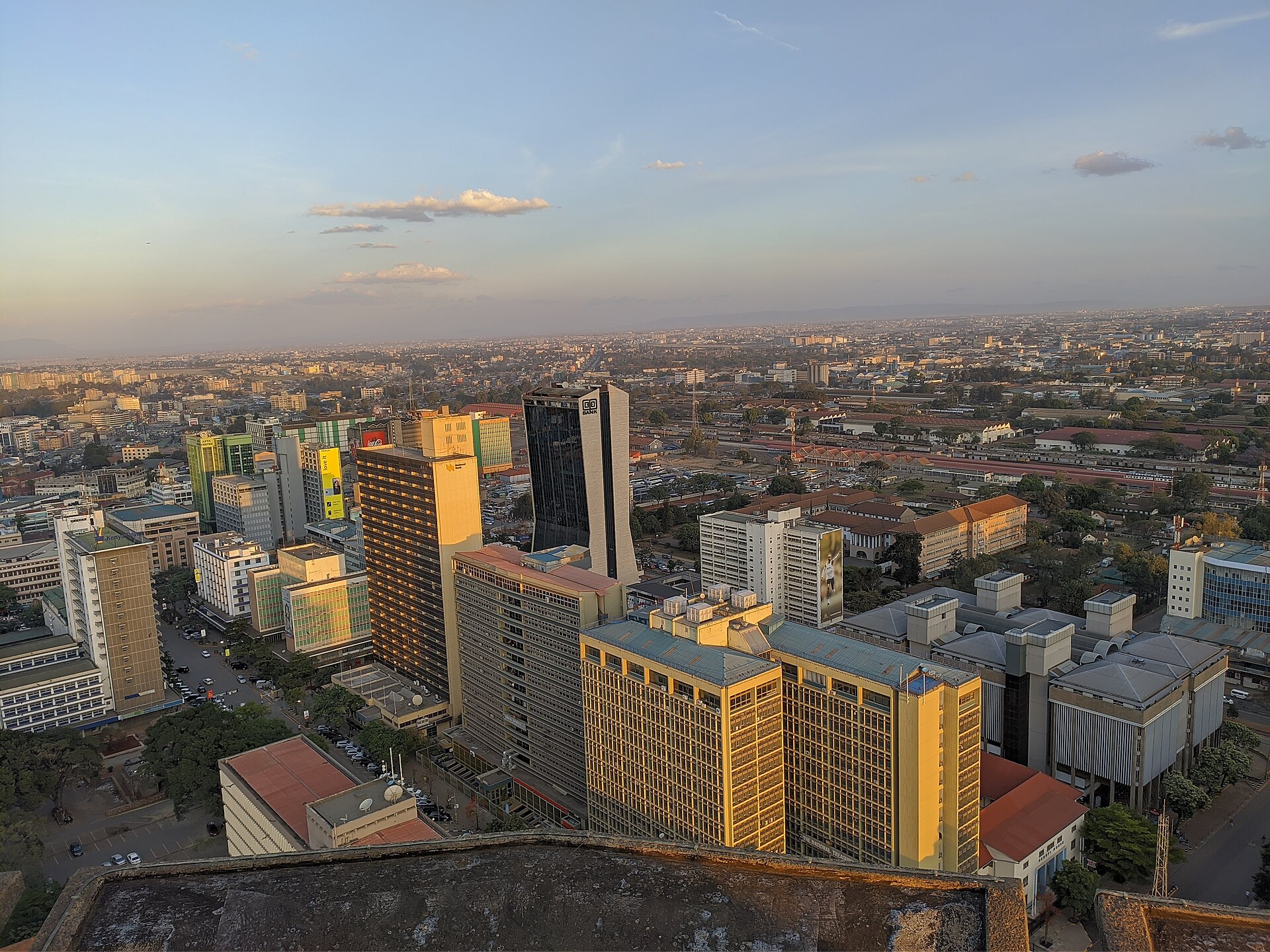
All shilling figures here use the market rate of 18 November 2026, which is KSh 129.93 per US dollar. Dollar values are rounded.
KCB said in its results statement of 18 November 2026 that nine-month profit after tax a year earlier was KSh 47.3 billion (about US$364 million). By our arithmetic, the gain is KSh 11.3 billion (about US$87 million).
Earnings per share, the profit attributable to each share, rose 24.3% to KSh 17.80 (about US$0.14) from KSh 14.32 (about US$0.11), KCB said. Total assets grew 15.4% to about KSh 2.4 trillion (about US$18.5 billion).
What Happened
Total operating income, the bank’s overall revenue, rose 12.3% to KSh 167.8 billion (about US$1.29 billion), KCB said on 18 November 2026. A year earlier it was KSh 149.4 billion (about US$1.15 billion).
Interest income, what the bank earns on its lending, rose 8.2% to KSh 112.9 billion (about US$869 million), KCB said. Non-funded income, which covers fees, commissions and foreign exchange, rose 21.8% to KSh 54.9 billion (about US$423 million).
Mobile loan disbursements rose 26% to KSh 492 billion (about US$3.79 billion), KCB said in its results statement. These are short-term loans issued on a mobile phone.
Foreign-exchange income rose 65.1%, mainly from Trust Merchant Bank (TMB), KCB’s subsidiary in the Democratic Republic of Congo, the statement said. During the period KCB raised its stake in TMB from 85% to 98%.
Why It Matters
The subsidiaries outside KCB Bank Kenya now carry real weight, with profit up 24.3% to KSh 19.6 billion (about US$151 million), about a third of group earnings. Burundi, South Sudan, Uganda and KCB Investment Bank, its investment-banking arm, led that growth, KCB said.
Credit quality improved, KCB said on 18 November 2026. Gross non-performing loans, which are loans whose borrowers stopped paying, fell 17.1% to KSh 184.1 billion (about US$1.42 billion) from KSh 222.1 billion (about US$1.71 billion).
The ratio of such loans to all loans dropped to 13.3% from 17.8%. Loan loss provisions, money set aside for bad debts, fell 9.1% to KSh 16.6 billion (about US$128 million).
Costs and Capital
Operating costs rose 6.1%, slower than income, KCB said. The cost-to-income ratio, the share of income spent on running the bank, improved to 43.7% from 46.2%.
Return on equity, profit measured against shareholders’ money, was 22.1%, KCB said. Shareholders’ equity rose 17.3% to KSh 362 billion (about US$2.79 billion).
The core capital ratio, a bank’s cushion of its strongest capital, was 18% against a regulatory minimum of 10.5%. Chairman Joseph Kinyua said the buffers give “sufficient headroom to absorb potential economic shocks,.”
What to Watch
No dated next step is published for KCB, such as a full-year results date or a dividend book closure. We therefore name none.
One thing to watch is whether mobile lending keeps growing after its 26% rise. Another is whether TMB’s currency income holds now that KCB owns 98% of it.
What It Means for You
For a US investor with exposure to African banks, the report shows one lender earning from lending, fees and currency trading at the same time. It describes one bank’s nine months and is not a signal to buy or sell.
For readers who bank or do business in Kenya, the numbers show where growth is coming from. Phone-based lending and regional operations are doing much of the work.
What Is Not Known
The figures are unaudited, so final audited numbers could differ. We also do not know the price of the larger TMB stake, the full-year profit or the dividend.
For background, see our report on KCB’s first-half profit and our piece on foreign investors cutting their KCB stake. More in Kenya news.
Frequently Asked Questions
How much did KCB earn in nine months?
KCB reported profit after tax of KSh 58.6 billion (about US$451 million) for the nine months to 30 September 2026. That is 23.9% above KSh 47.3 billion (about US$364 million) a year earlier.
What drove the rise in KCB’s profit?
KCB said income beyond interest, which covers fees, commissions and foreign exchange, rose 21.8%. Foreign-exchange income rose 65.1%, mainly from its Congolese subsidiary, and mobile loan disbursements rose 26%.
Did KCB’s bad loans fall?
Yes, gross non-performing loans fell 17.1% to KSh 184.1 billion (about US$1.42 billion). The ratio of bad loans to all loans dropped to 13.3% from 17.8%.
What is TMB and what changed this year?
Trust Merchant Bank (TMB) is KCB’s subsidiary in the Democratic Republic of Congo. During the nine months KCB raised its stake in it from 85% to 98%.
Sources
KCB Group unaudited results statement for the nine months to 30 September 2026, published 18 November 2026, including remarks by group chief executive Paul Russo and chairman Joseph Kinyua; market exchange rate of 18 November 2026 (KSh 129.93 per US$).
This article was produced by The Rio Times’ automated AI newsroom. Editorial responsibility: Matthias Camenzind, Publisher and Editor-in-Chief. The Rio Times also runs Ask Rio Times, which answers from 100,000+ of our own articles, the daily Latin America Power Map, and prediction-market odds on elections and markets.. How we use AI · Report an error
LatAm Markets: Live Signals → — real-time movers, turnover leaders and FX across Latin America.