Who Is William Ruto? Kenya’s President, the ICC Case, Gen-Z Protests and 2027
PROFILES · KENYA
Key Facts
- —The country Kenya is East Africa’s commercial hub and its main gateway for trade, finance and diplomacy. Nairobi hosts one of the United Nations’ four main headquarters.
- —Who he is William Samoei Ruto, born 21 December 1966, Kenya’s fifth president since 13 September 2022. He was deputy president from 2013 to 2022.
- —Power base The Rift Valley, his United Democratic Alliance party and, since July 2026, the backing of the Orange Democratic Movement, the late Raila Odinga’s party.
- —Record Tax rises to cut the deficit, a 2024 finance bill withdrawn after mass protests, a lapsed IMF programme, and a strong pitch to foreign investors.
- —Controversies An ICC case over the 2007–08 violence, terminated in 2016. Protest deaths in 2024–25 that rights groups blame on the police. Ruto denies personal wrongdoing.
- —Outlook He seeks a second and final term at the general election due on Tuesday 10 August 2027. He leads the polls, but well short of a majority.
Who is William Ruto? A plain-English profile of Kenya’s president: the chicken seller turned deputy president, the ICC case that did not end in a verdict, the Gen-Z protests and the race for 2027.
William Ruto runs the economy that anchors East Africa, and he wants Western capital rather than aid. How he governs decides tax rules, protest risk and debt policy for anyone investing in, trading with or moving to Kenya.
Early life and career
William Samoei Ruto was born on 21 December 1966 in Sambut village, near Kamagut in Uasin Gishu county, in the Rift Valley. He is Kalenjin, the community that dominates that region. By his own account he sold chickens by the roadside as a young man, a story that later became the heart of his political brand.
He studied at the University of Nairobi, graduating in botany and zoology in 1990. He later took a master’s degree there and completed a doctorate in plant ecology in December 2018, while serving as deputy president. Supporters still call him “Dr Ruto”.
His political start came in 1992, as treasurer of Youth for KANU ’92. That group campaigned for President Daniel arap Moi in Kenya’s first multiparty election. It gave the young Ruto access to money, networks and the ruling party’s machinery.
Rise to power
Ruto entered parliament in December 1997 as the member for Eldoret North. Moi made him home affairs minister in August 2002, a post he lost when KANU was voted out that December. He then spent five years in opposition building a following in the Rift Valley.
In 2007 he allied with Raila Odinga’s Orange Democratic Movement. The disputed election that December led to violence in which about 1,100 people died and hundreds of thousands fled their homes. The power-sharing deal that ended it made Ruto agriculture minister in April 2008, and higher education minister in April 2010.
His big break came in 2013. He formed a joint ticket with Uhuru Kenyatta, although both men faced charges at the International Criminal Court. They won, and Ruto was sworn in as deputy president on 9 April 2013. The pair were re-elected in 2017.
The partnership then collapsed. Kenyatta made peace with Odinga in 2018 and later backed him for the presidency. Ruto built his own vehicle, joining the United Democratic Alliance in December 2020. He ran as the champion of “hustlers”, the informal workers left behind, against what he called political dynasties.
In the election of August 2022 he took 50.49 percent to Odinga’s 48.85 percent. The Supreme Court upheld the result on 5 September 2022, and Ruto was sworn in on 13 September 2022.
Power base
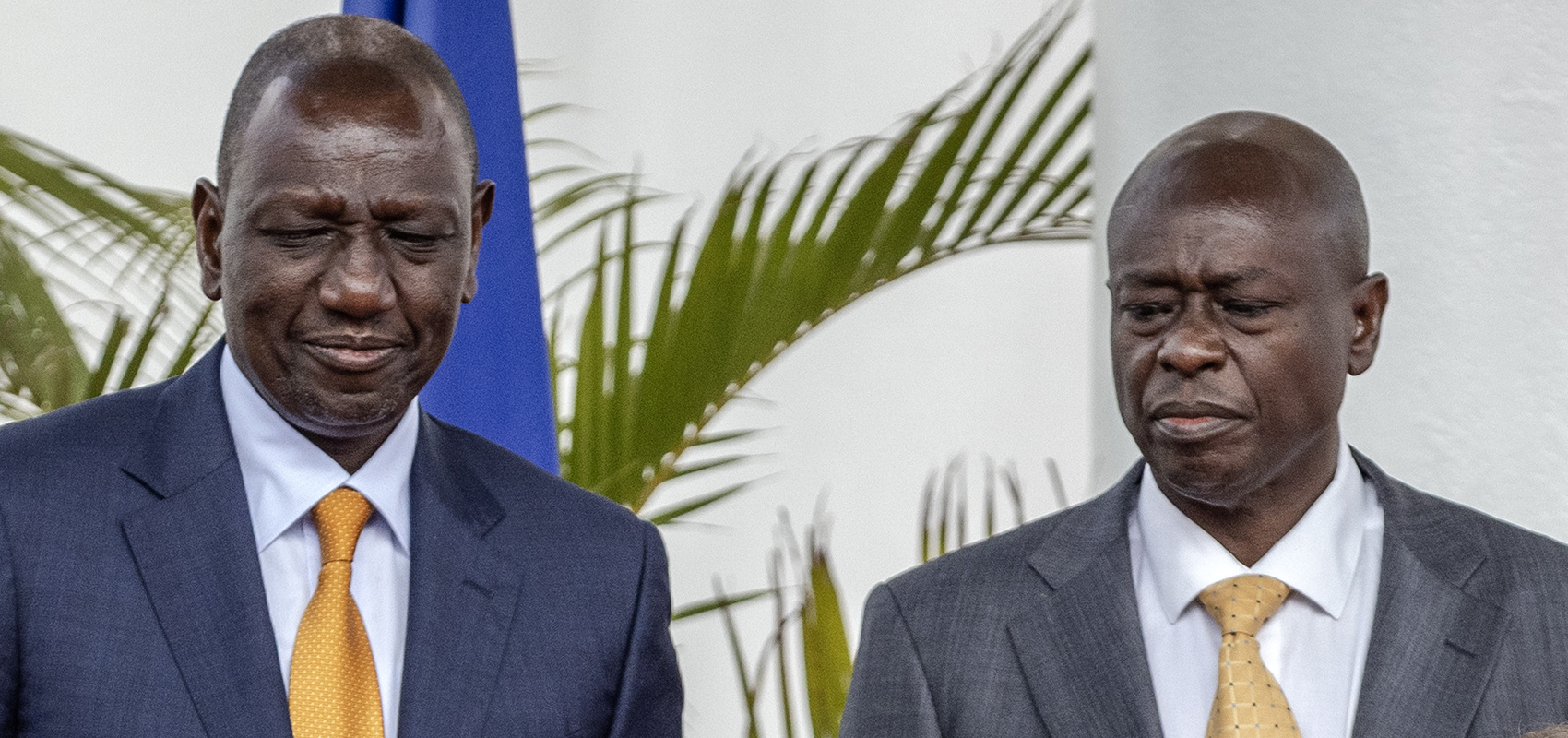
Ruto’s core is the Rift Valley. He has held the Kalenjin vote there since the 1990s. In 2022 he added the populous Mount Kenya region through his running mate, Rigathi Gachagua. That alliance won him the presidency.
It did not last. The National Assembly impeached Gachagua on 8 October 2024 and the Senate removed him on 17 October. Kithure Kindiki was sworn in as deputy president on 1 November 2024, after a court lifted an order blocking him. Gachagua now campaigns against Ruto in the opposition.
Ruto replaced the lost support with a deal on the other side. After the 2024 protests he brought Odinga’s party into what he calls a “broad-based government”, and the two parties signed a cooperation agreement in March 2025. Odinga died in India on 15 October 2025.
His brother Oburu Oginga, now leader of the Orange Democratic Movement, announced on 12 July 2026 that the party would not field a presidential candidate in 2027. “We are going to support President William Ruto for the second term,” he said. That gives Ruto a route into western Kenya and Nyanza, regions that voted against him in 2022.
Other pillars are Musalia Mudavadi, the prime cabinet secretary and foreign minister, and Moses Wetang’ula, the National Assembly speaker. Both bring votes from western Kenya. Together they give Ruto a coalition far wider than the one that elected him in 2022.
Record in office
Taxes and the debt squeeze
Ruto inherited heavy debts and a tight budget. His answer was more tax. The Finance Act 2023 doubled value-added tax on fuel to 16 percent and created a housing levy of 1.5 percent on salaries. A court upheld that levy in September 2026, foreign staff included.
The Finance Bill 2024 went further. It aimed to raise about 346 billion shillings, roughly US$2.7 billion at 129.68 shillings to the dollar (30 September 2026). Young Kenyans organised against it online, and the protests became known as the Gen-Z movement.
On 25 June 2024 protesters broke into parliament after MPs passed the bill. Police opened fire outside. The next day Ruto said he would not sign it. On 11 July 2024 he dismissed almost his entire cabinet.
The next two budgets avoided big new taxes. The Finance Bill 2026 passed on 18 June 2026 by 122 votes to 40, unlocking a budget of 4.8 trillion shillings, about US$37 billion. Ruto said it targeted “tax avoidance, not taxpayers”.
The IMF
Kenya’s US$3.6 billion programme with the International Monetary Fund ended in April 2025. The government has since asked for a new one. In August 2026, central bank governor Kamau Thugge said Kenya wanted a programme that included lending and expected an IMF visit to discuss it. As of 26 September 2026, no new deal had been announced.
Foreign policy and investment
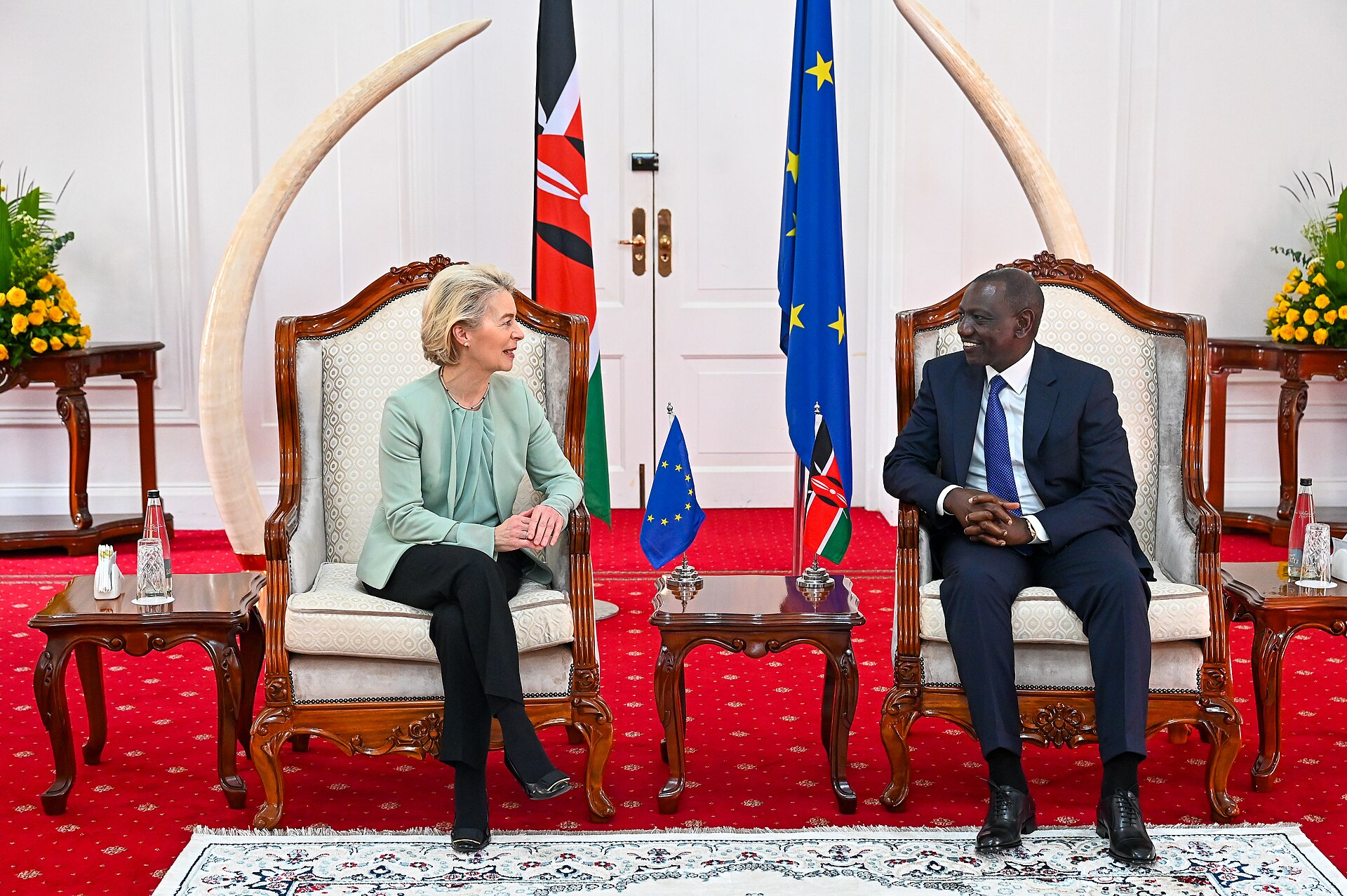
Abroad, Ruto has cast Kenya as a partner for the West and for Gulf and Asian investors. Kenya led the multinational police mission to Haiti from June 2024. In January 2024 he replaced visas with an electronic travel authorisation for most visitors.
In November 2024 he cancelled deals with India’s Adani Group for Nairobi’s main airport and power lines, after US prosecutors indicted Gautam Adani. Adani denied the charges. In March 2026 Ruto signed a law creating a National Infrastructure Fund, which his office says should raise up to US$40 billion without new public debt.
At the UN General Assembly on 23 September 2026 he told world leaders that “Africa has not come to plead” and wants investment, not aid. At home the tone is harder. In early September 2026 he ordered a shutdown of small shops and street trading run by foreigners.
Controversies
Several serious allegations have followed Ruto. None has produced a conviction. Each is set out below with who made it, where it stands and how he has responded.
The ICC case
ICC prosecutors alleged that Ruto helped organise attacks on supporters of the rival party in the Rift Valley after the 2007 election. He was charged with crimes against humanity, and judges confirmed the charges on 23 January 2012. The trial opened in September 2013.
On 5 April 2016 the trial chamber, by majority, terminated the case and vacated the charges. It did so without prejudice to a future prosecution, and did not acquit him. One of the two majority judges also pointed to witness interference and political meddling. Ruto always denied the charges, and no case against him is open today.
Land and corruption claims
In October 2010 Ruto was suspended as a minister over a fraud case linked to a land sale to the Kenya Pipeline Company. A court acquitted him in April 2011.
The Kenya Civil Aviation Authority long claimed that the Weston Hotel in Nairobi, linked to Ruto, stood on public land. The hotel contested this, including through an appeal in 2021. A settlement was filed in the Lands Court in June 2024, ending the case without a judgment. Its terms have not been published.
Protest deaths and disappearances
The Kenya National Commission on Human Rights, a state-funded watchdog, counted 62 deaths linked to protests between June 2024 and February 2025. It counted 21 more at the anniversary protests of 25 June 2025. For the Saba Saba protests of 7 July 2025 it first reported 32 deaths, then raised the toll to 38.
Rights groups accuse the police of excessive force and of abducting critics. In June 2024 Ruto called the storming of parliament “treasonous”. In July 2025 he said police should shoot people attacking police stations in the leg, a remark widely condemned.
On 27 August 2026 he changed tone. “No Kenyan should lose their life, liberty or dignity merely for criticising the government,” he said, ordering independent investigations into deaths, arrests and alleged disappearances. In August 2026 the rights group Vocal Africa asked the ICC to monitor Kenya ahead of the 2027 election. Ruto faces no charges over the protests.
What to watch
The central bank’s Monetary Policy Committee meets on Wednesday 7 October 2026, with the policy rate at 8.75 percent and inflation rising through 2026. A cut or hold will signal how much room Ruto has before the election.
The IMF is the second marker. A new programme would bring cheaper money and conditions, possibly including tax measures, which is politically awkward in a pre-election year. No date for a deal has been set.
The third is the opposition. A Swiss Poll survey published in August 2026 put Ruto on 31 percent, former vice-president Kalonzo Musyoka on 22 percent and 16 percent undecided. The united opposition has yet to pick a single candidate.
The general election is due on Tuesday 10 August 2027, the second Tuesday of August as the constitution requires. If no candidate wins more than half the vote and a quarter of the vote in at least 24 counties, a run-off follows.
What this means for foreigners and investors
For investors, Ruto is predictable in direction. He wants private capital in energy, infrastructure, minerals and technology, and he markets Kenya as the entry point to East Africa. The planned Dangote refinery at Lamu and the rare earths tender at Mrima Hill are the showcase projects.
The risk is in the detail. Tax rules change with each finance bill, and courts often rule against the government, so policies can stall. Employers pay the housing levy on foreign staff too. The September 2026 crackdown shows small-scale trade is now reserved for Kenyans.
For visitors and residents, the main practical risk is protest. Demonstrations cluster around finance bills in June and around anniversaries such as 25 June and 7 July. Before the 2027 vote it is sensible to watch travel advisories and avoid central Nairobi on protest days.
Connected Coverage
Kenya Explained: The Country, Its Politics, Its Economy and What to Watch
Kenya’s President Ruto Tells UN That Africa Wants Investment, Not Aid
Kenya Court Upholds 1.5% Housing Levy on Salaries, Foreign Staff Included
Kenya Shortlists Six Bidders for Its Rare Earths. Two Are American.
Kenya’s Exports to the UAE More Than Double After Iran War Slump
What Is Not Known
It is not known whether Kenya will agree a new IMF programme before the election, or how large it would be. The united opposition has not named its candidate, so the shape of the 2027 race is still open.
It is also unclear whether the investigations Ruto ordered in August 2026 will lead to prosecutions of police officers. The terms of the Weston Hotel settlement remain unpublished.
Sources: The International Criminal Court case record, the Kenya National Commission on Human Rights, the Central Bank of Kenya, Reuters, and Kenyan outlets. All were accessed 26 September 2026. Exchange rate from open.er-api.com.
- International Criminal Court — The Prosecutor v. William Samoei Ruto and Joshua Arap Sang
- International Criminal Court — case terminated without prejudice to re-prosecution, 5 April 2016
- Citizen Digital — KNCHR protest death figures, June 2024 to July 2025
- Citizen Digital — KNCHR: Saba Saba death toll rises to 38
- Citizen Digital — Ruto orders investigations into protest abuses, 27 August 2026
- Reuters via Polity — Kenya expects IMF visit, will discuss new programme request
- The Standard — Ruto signs Finance Bill 2026
- Capital FM — Swiss Poll on the 2027 race
- Nairobi Law Monthly — ODM backs Ruto for a second term
- Al Jazeera — Kindiki sworn in as deputy president
- The Standard — the Weston Hotel settlement
Frequently Asked Questions
Who is William Ruto?
William Ruto is the president of Kenya, in office since 13 September 2022. Born on 21 December 1966 in the Rift Valley, he was deputy president from 2013 to 2022 and won the 2022 election with 50.49 percent of the vote.
Was William Ruto convicted by the ICC?
No. He was charged with crimes against humanity over the 2007–08 post-election violence, but on 5 April 2016 the court terminated the case and vacated the charges, without prejudice to a future prosecution. He always denied the charges, and no case is open.
Why did Kenyans protest against Ruto in 2024?
Young Kenyans opposed the Finance Bill 2024, which aimed to raise about US$2.7 billion in new taxes. Protesters broke into parliament on 25 June 2024. Ruto withdrew the bill the next day and dismissed most of his cabinet on 11 July 2024.
Is Ruto running in the 2027 election?
Yes, he is seeking a second and final term. The election is due on Tuesday 10 August 2027. Odinga’s former party announced in July 2026 that it would back him rather than field its own candidate.
Does Kenya have an IMF programme under Ruto?
Not at present. The previous US$3.6 billion programme ended in April 2025. Kenya has requested a new programme with a lending component, but as of 26 September 2026 no deal had been announced.
This article was produced by The Rio Times’ automated newsroom system. How we use AI · Report an error
Read More from The Rio Times