Iran’s Leadership Transition: A New Era Begins Amidst Global Challenges
Iran’s President-elect Masoud Pezeshkian received a crucial endorsement from Supreme Leader Ayatollah Ali Khamenei.
This endorsement was delivered during a significant ceremony in Tehran. Attended by elite political and military figures, the event highlighted a smooth leadership transition.
Khamenei praised Pezeshkian as “wise, honest, popular, and scholarly.” He officially appointed him as the President of the Islamic Republic of Iran. This occurs just two days before Pezeshkian’s inauguration.
According to Iranian law, the new president must present his cabinet and plans within two weeks of office entry.
This timeframe underscores the importance of swift and efficient governance transition.
The recent elections followed the tragic death of former President Ebrahim Raisi in a helicopter accident.
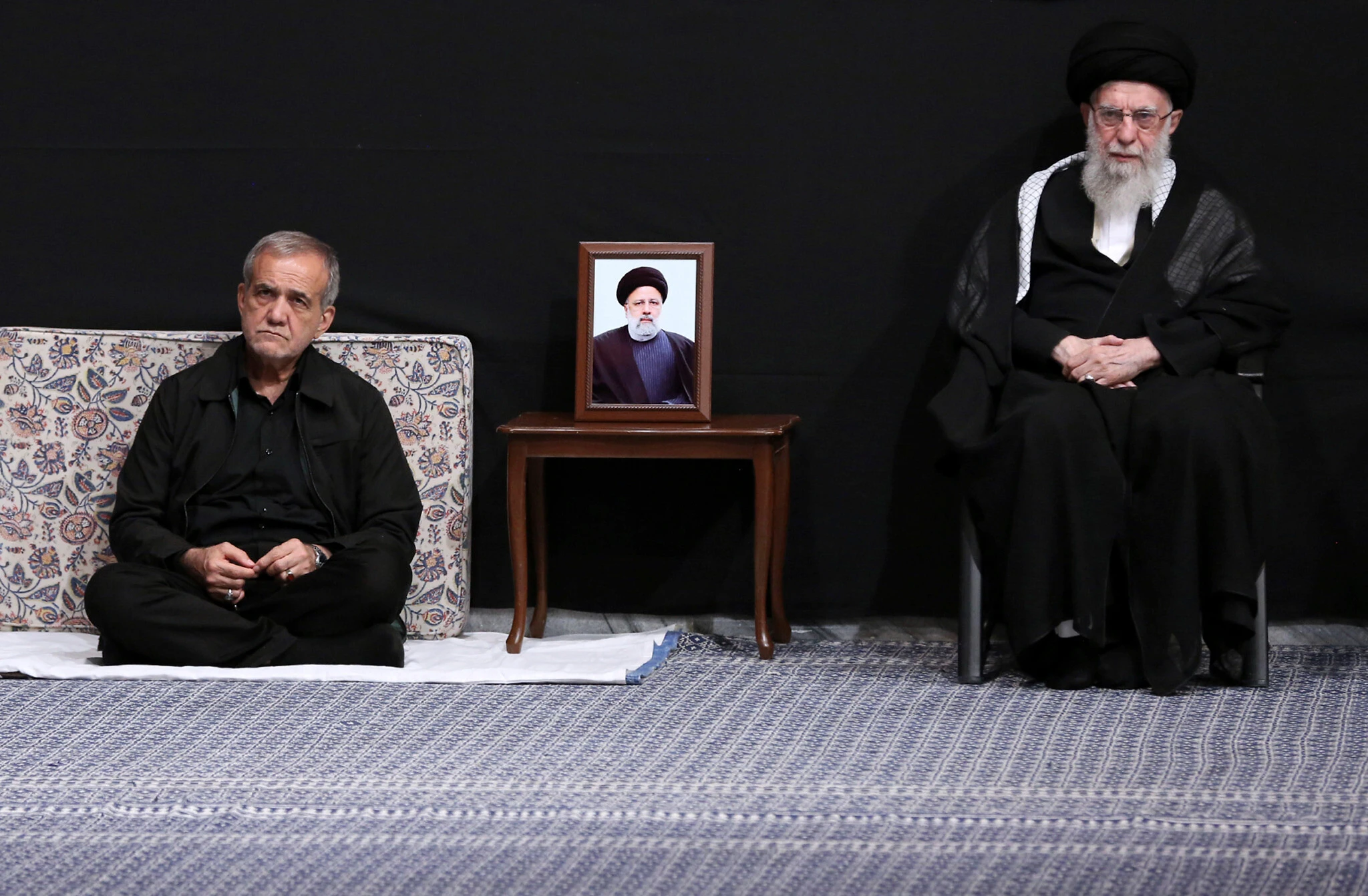
Despite the potential for turmoil, the elections were conducted peacefully and with commendable ethical conduct.
In his speech, Khamenei also addressed global issues, specifically the Palestinian situation. He criticized Israel’s actions in Gaza, labeling them barbaric.
He emphasized the growing global concern over the issue, from the U.S. Congress to the United Nations.
This leadership transition not only marks a significant change within Iran but also reflects on broader geopolitical concerns.
Pezeshkian’s presidency represents a critical moment for Iran’s internal stability and international diplomacy.
Background – A New Era Begins Amidst Global Challenges
Two weeks ago, Ali Bagheri Kani, Iran’s interim foreign minister, announced Tehran’s readiness to resume discussions on the nuclear pact with the United States.
He spoke to Newsweek before addressing the UN Security Council in New York on Tuesday. This comes after a long hiatus, underscoring the critical juncture of global nuclear diplomacy.
In 2018, under Donald Trump’s presidency, the U.S. exited the nuclear deal, which involved six major powers aiming to curtail Iran’s nuclear capabilities.
Since then, negotiations have been on ice. Despite halts, Iran has stayed part of the deal, albeit scaling back its commitments after facing renewed U.S. sanctions.
Bagheri Kani emphasized Iran’s willingness to restart talks to renew mutual engagement in the agreement. Beyond the U.S., Iran is looking to strengthen ties with China, Russia, and its neighbors.
This article was produced by The Rio Times’ automated newsroom system. How we use AI · Report an error
Read More from The Rio Times