The Election Trade Is Back on Brazilian Trading Desks
BRAZIL · MARKETS
Key Facts
- —The trade Analysts are again linking the Ibovespa’s rally to election positioning.
- —The name Seu Dinheiro analyst Matheus Spiess calls it the trade eleitoral.
- —The thesis Markets are pricing a better chance of fiscal adjustment under a change of government.
- —The second name Augusto Cury, a psychiatrist and writer running for Avante, polling around 9 percent in the first round.
- —Not a ticket Cury is a separate third candidate, not part of Flávio Bolsonaro’s campaign.
- —The catch The polling those gains are read from has barely moved.
The election trade is back, and it is being read off polling that three weeks of court crisis failed to shift.

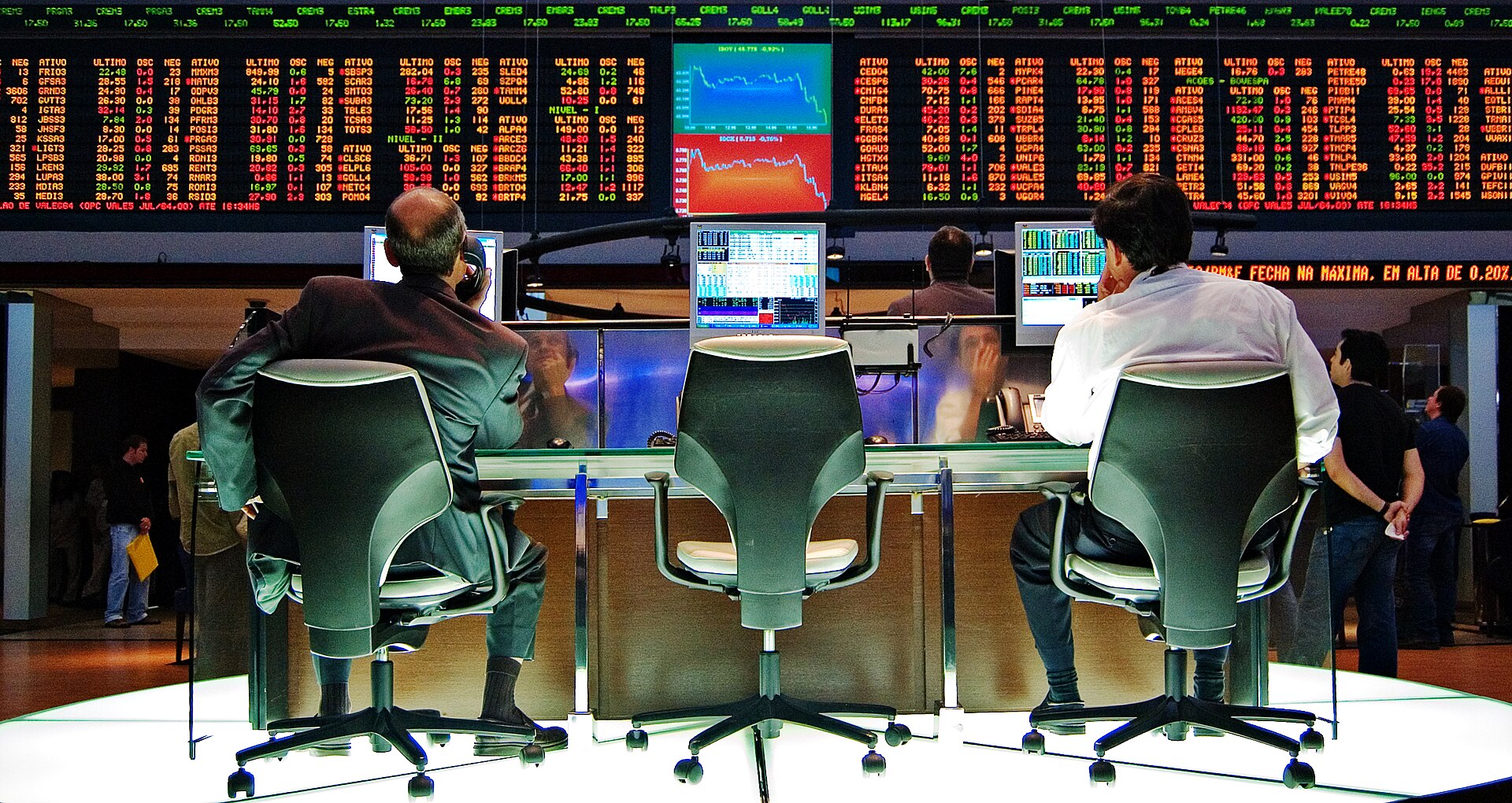
Brazilian market commentary has returned to reading the Ibovespa through the presidential race, a habit that reappears in every election year and is rarely as informative as it sounds.
What the Argument Is
Matheus Spiess, writing for Seu Dinheiro, links the recent Ibovespa rally to investors pricing in gains for Flávio Bolsonaro and for Augusto Cury.
The underlying thesis is conventional. A change of government is assumed to carry a better chance of fiscal adjustment than a third Lula term, and Brazilian equities have historically rallied on that expectation whether or not it is later borne out.
Augusto Cury is worth identifying properly, because he is frequently mistaken for part of the Bolsonaro operation. He is a psychiatrist and writer running for the Avante party, with Júlio Delgado as running mate, polling around 9 percent in the first round. He is a separate candidate.
What the Polling Actually Says
The gains being priced are modest. Datafolha has the first round at 38 to 32 and the runoff at 46 to 44, a technical tie, and its fieldwork across the worst days of the Supreme Court crisis produced no meaningful movement.
Cross-tabs show Lula level with his 2022 numbers in São Paulo, Minas Gerais and Rio de Janeiro. The one clear shift is the Northeast, where Quaest has him at 60 rather than the 69 he took in 2022.
A rally built on a narrowing that is inside the margin of error is a rally built on very little.

Live Market IntelligenceBrazil — Live Market Board
Rio Times · Live Market Intelligence
Brazil — Live Market Board
-0.56%
187,206.89
-0.56%
63,924.77
-0.28%
11,220.10
-0.16%
3,098,898
-1.87%
2,589.69
-1.41%
59,373.28
-0.32%
| Instrument | Last | Change | YoY | Prev. | High | Low | Volume |
|---|---|---|---|---|---|---|---|
| IBOV | 187,206.89 | -0.56% | +21.85% | 188,268.59 | 168,310 | 167,142 | — |
| USD/BRL | 5.16 | +0.01% | -5.13% | 5.16 | 5.18 | 5.14 | — |
| SELIC | 14.00% | — | — | — | — | — | |
| PETR4 | 41.64 | -0.05% | +35.19% | 41.66 | 41.97 | 41.15 | 41,499,400 |
| VALE3 | 72.97 | +0.83% | +30.75% | 72.37 | 73.54 | 72.66 | 17,658,000 |
| ITUB4 | 38.60 | -1.03% | +4.57% | 39.00 | 39.34 | 38.39 | 29,487,800 |
| BBDC4 | 16.85 | +0.36% | +3.50% | 16.79 | 16.90 | 16.67 | 19,416,900 |
| BBAS3 | 19.37 | +0.47% | +0.73% | 19.28 | 19.44 | 19.16 | 11,069,200 |
| B3SA3 | 14.26 | -0.21% | +12.73% | 14.29 | 14.47 | 14.11 | 33,037,800 |
| ABEV3 | 14.89 | -0.80% | +21.91% | 15.01 | 15.07 | 14.81 | 16,453,100 |
| WEGE3 | 47.59 | +0.49% | +29.99% | 47.36 | 48.08 | 47.36 | 3,364,600 |
| PRIO3 | 59.14 | -0.19% | +50.67% | 59.25 | 59.81 | 58.74 | 3,325,600 |
| SUZB3 | 41.33 | +2.35% | -23.55% | 40.38 | 41.48 | 40.35 | 3,914,900 |
| RENT3 | 34.68 | -0.09% | +0.84% | 34.71 | 34.96 | 34.35 | 7,979,100 |
| AZZA3 | 15.89 | -2.63% | -53.76% | 16.32 | 16.42 | 15.82 | 1,330,300 |
| CSNA3 | 4.30 | +0.47% | -42.65% | 4.28 | 4.41 | 4.26 | 10,076,100 |
| GGBR4 | 24.69 | +2.19% | +51.38% | 24.16 | 24.85 | 24.18 | 7,047,600 |
| ENEV3 | 24.21 | -1.38% | +70.49% | 24.55 | 24.64 | 23.99 | 9,297,000 |
Why the Trade Recurs Anyway
Brazilian equities are unusually sensitive to the fiscal outlook because so much of the index is domestic, rate-sensitive and bank-heavy. An expected change in fiscal direction repricesthe curve, and the curve reprices the index.
That mechanism is real. What is less reliable is the assumption that a particular election outcome delivers the adjustment, which has been assumed before and not always delivered.
The other variable moving Brazilian assets this month is not political at all. August inflation came in at minus 0.32 percent and the central bank meets on 15 and 16 September, with the market pricing a fifth consecutive cut.
Untangling how much of the rally is the election and how much is the rate path is not something any analyst can do precisely, and the honest version of the trade eleitoral argument admits it.
What the Index Is Actually Made Of
The Ibovespa is heavily weighted toward banks, commodity producers and domestically exposed consumer and utility names. That composition is why it reacts to the fiscal outlook rather than to growth in the way a more industrial index might.
Banks gain from a steeper curve and lose from credit deterioration. Commodity names track prices set abroad and are largely indifferent to Brasília. The domestic block is where election expectations actually transmit.
So a rally described as an election trade is usually a rally in a minority of the index, amplified by flows into the whole of it.
The Record of Previous Election Trades
Brazilian equities rallied on expected fiscal adjustment in 2002, in 2014 and in 2018, and the adjustment arrived in a materially different form each time from what was priced.
The most instructive was 2002, when markets sold heavily on the prospect of a Lula presidency and then spent the following years repricing as his first administration ran orthodox fiscal policy. The direction of the trade was correct and the sign was wrong.
None of that means the current positioning is mistaken. It means the trade is an expression of expectation rather than a forecast, and the people putting it on generally know that better than the people writing about it.
More: Brazil news in English, every day from The Rio Times.
Frequently Asked Questions
What is the trade eleitoral?
Market positioning based on expected election outcomes, revived this month as analysts link the Ibovespa rally to gains for Flávio Bolsonaro and Augusto Cury.
Who is Augusto Cury?
A psychiatrist and writer running for president for the Avante party with Júlio Delgado as running mate, polling around 9 percent. He is not part of the Bolsonaro campaign.
How much have the polls moved?
Very little. Datafolha has 38 to 32 in the first round and a 46 to 44 technical tie in the runoff, with no meaningful movement across the court crisis.
What else is moving Brazilian assets?
August inflation at minus 0.32 percent and a Copom meeting on 15 and 16 September, with a fifth consecutive cut priced in.
Is the trade reliable?
It rests on a narrowing inside the margin of error, and separating the election effect from the rate path is not precisely possible.
Sources: Seu Dinheiro, Datafolha, Quaest, Poder360.
This article was drafted with automated assistance and reviewed before publication. How we use AI · Report an error
Read More from The Rio Times