Honduras Homicides Reached 216 in the First 27 Days of September
Security · Honduras
Key Facts
- —What happened Honduras declared the MS-13 and Pandilla 18 gangs and the Cártel del Diablo terrorist associations, announced on 19 September 2026.
- —What the minister says Security minister Gerzon Velásquez said on 28 September 2026 that homicides had halved in the two weeks since.
- —What the police count National Police figures put Honduras homicides at 216 in the first 27 days of September 2026.
- —The catch The force’s own daily figures for those two weeks show a fall of about a tenth, not a half.
- —What comes next Three alleged Cártel del Diablo members went to pre-trial detention on 28 September 2026; no court has convicted them.
Honduras homicides are the test of a policy that declared three criminal groups terrorist associations. The police publish one count, the national university another.
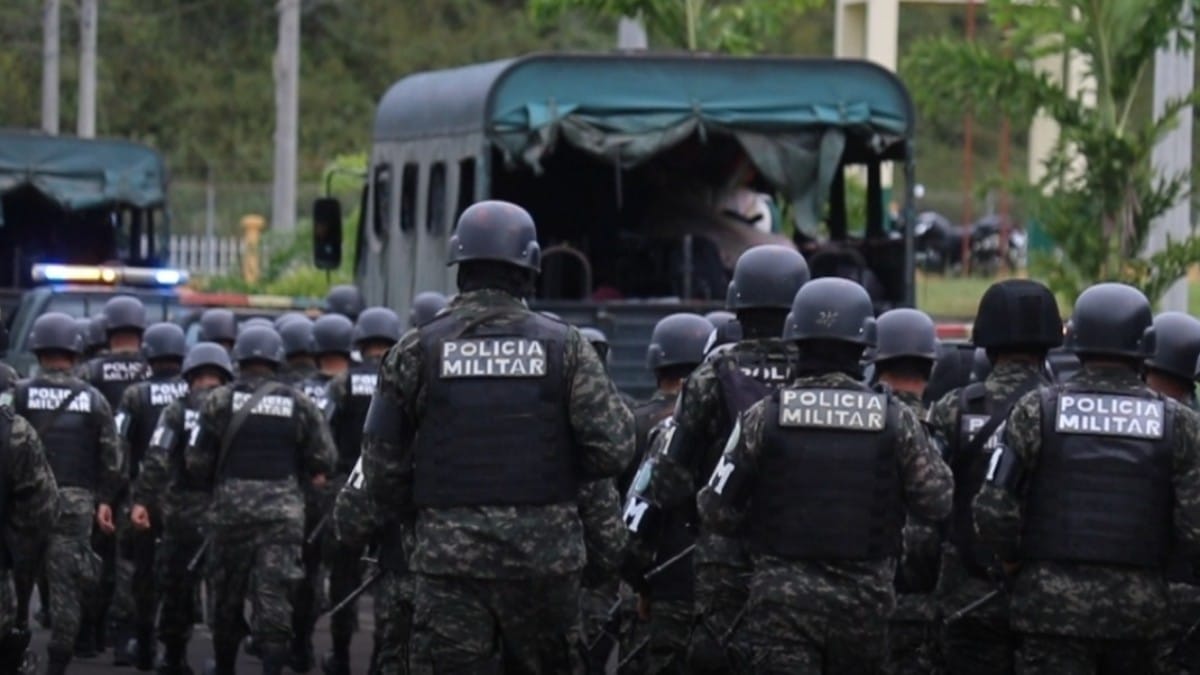
Honduras homicides reached 216 in the first 27 days of September 2026. The count comes from the National Police, which publishes a running tally of killings on its own statistics site.
Over the same 27 days of September 2025 the force recorded 188. The whole of that month brought 205, on the force’s monthly sheet.
The police put the daily average for September 2026 at eight killings. Only August was higher this year, at 8.10 a day.
The force labels the data preliminary, because cases are still being checked against other records.
The claim the figures have to carry
On Monday 28 September 2026 the security minister gave a different account. Gerzon Velásquez said that homicides had halved in the previous two weeks.
He said the fall came at a time when the trend had been strong. His remarks, reported by the Honduran daily Hondudiario, carried no figures.
Velásquez serves in the government of President Nasry Asfura. He was speaking nine days after a decision by the National Defence and Security Council.
Honduran law gives that council the power to declare criminal groups terrorist associations.
What the council declared, and when
The decision became public on Saturday 19 September 2026. Tomás Zambrano, the president of the National Congress, announced it without naming the groups.
The security minister named them on Wednesday 23 September 2026. They are the Mara Salvatrucha, known as MS-13, the Pandilla 18 and the Cártel del Diablo.
An earlier reform of the Penal Code had created the power. Zambrano said the reform let the council act against groups that state intelligence had already identified.
What changed in the law
The declaration turns membership into what officials call permanent flagrancy. Suspects can be arrested at any hour of any day, not only while an offence is under way.
Congress then passed decree 208-2026 unanimously on Tuesday 22 September 2026. It appeared in the official gazette, La Gaceta, on Saturday 26 September 2026.
The law sends anyone held as a member of such a group to a maximum-security cell. That applies before trial, and it removes the alternatives to pre-trial detention.
Conjugal visits are banned outright and family visits take place through glass. Prisoners get 30 minutes of exercise a day in their own block corridor, and lawyers may visit once a week.
The published package deals with arrest powers, detention and prison conditions. It also provides for judges assigned only to cases against members of these groups.
The counts that do not match
Honduras homicides are measured by more than one body. The National Autonomous University runs the National Violence Observatory, which checks deaths against police, forensic and civil registry records.
Its latest national bulletin, published in August 2026, covers all of 2025. It recorded 2,633 homicides and a rate of 26.2 per 100,000 people.
That was 57 fewer killings than in 2024. The same bulletin shows the rate down 12 points since 2022, when it stood at 38.2.
InSight Crime, a research group that tracks organised crime in the region, counted 2,332 killings in Honduras in 2025. Its rate was 23.2 per 100,000, on a standard regional definition.
The police put their own 2025 total at 2,629. No single figure for that year is shared by all three.
For 2026 so far the police count 1,915 killings to 27 September. A year earlier, over the same stretch, they counted 1,929, or 14 more.
The same sheet plots September day by day, for both years. Over the 13 days to 27 September the force counted 100 killings, against 110 in the 13 days before.
Counting only from the declaration, the direction reverses. The nine days from 19 to 27 September brought 77 killings, against 71 in the nine days before them.
The observatory’s most recent national bulletin ends on 31 December 2025.
The first case in court
On Monday 28 September 2026 a first-instance judge ordered three men held before trial. El Mundo, a Honduran daily, reported the ruling at the initial hearing.
They are Luis Alfredo Castillo Gutiérrez, César Octavio Medina Fúnez and Francisco Narciso Escobar. Prosecutors accuse them of terrorist association, murder and attempted murder.
The case file places the attacks on 11 September 2025, in the municipality of Sulaco. Pre-trial detention is a holding measure, and no court has convicted the three.
The prosecution was brought by the special operations unit of the public prosecutor’s office. El Heraldo reported that the arrests were made in the village of Las Cañas.
The security ministry describes the Cártel del Diablo as a group built on drug trafficking, contract killing and extortion. The minister said it shelters in mountain country far from the towns.
Support, and the warnings
The United Nations human rights office in Honduras published a statement on Thursday 17 September 2026. It warned that imprecise and very broad definitions of terrorism can lead to further rights violations.
Its representative, Juan Carlos Monge, also made the case for acting. “Nobody should have to choose between security and rights,” he said.
The same statement listed forced displacement inside the country among the harms crime already causes. It asked the state to respect legality, the presumption of innocence and due process.
A senior United States official welcomed the move. Juan Pablo Segura, the assistant secretary of state for Western Hemisphere affairs, congratulated Honduras on 25 September 2026.
Kenneth Madrid, a Honduran lawyer and analyst, backs the reforms and names their weak point. Arrests without solid investigation will not produce convictions, he said on Tuesday 29 September 2026.
What it means where people live
Risk in Honduras is not spread evenly. The observatory put Colón at 49.6 homicides per 100,000 in 2025 and Yoro, where Sulaco sits, at 39.1.
Francisco Morazán, the department that contains Tegucigalpa, stood at 21.6. Nine of the 18 departments were above the national rate.
None was below the world average of 8.8 per 100,000 that the bulletin cites. For anyone living or travelling in Honduras, that spread matters more than the national average.
The observatory’s next national bulletin will cover 2026. Until it appears, the police sheets carry the running count of Honduras homicides.
More: Honduras coverage, every day from The Rio Times.
Frequently Asked Questions
Did homicides in Honduras really fall by half after the terrorist declaration?
The security minister, Gerzon Velásquez, said on 28 September 2026 that killings had halved in the previous two weeks. The National Police’s own published sheet, updated on 27 September 2026, records 216 killings in the first 27 days of that month, an average of eight a day. Over the same 27 days of September 2025 the force recorded 188. The sheet also plots September day by day: it shows 100 killings in the 13 days to 27 September, against 110 in the 13 days before, a fall of about a tenth rather than a half. The National Violence Observatory at the National Autonomous University, which produces the independent national count, has not yet published a bulletin covering 2026.
What does the terrorist designation actually change?
It changes arrest and detention powers rather than the definition of a murder. Once the National Defence and Security Council declares a group a terrorist association, membership is treated as a continuing offence, so suspects can be detained at any time. Decree 208-2026, passed on 22 September 2026, then sends those held to maximum-security isolation before trial, bans conjugal visits, limits family visits to contact through glass and allows one lawyer visit a week.
Who are the three groups named?
They are the Mara Salvatrucha, usually written MS-13, the Pandilla 18, also known as Barrio 18, and the Cártel del Diablo. The first two are transnational street gangs with a long presence in Honduras, El Salvador and Guatemala. The Cártel del Diablo is a Honduran group that the security ministry links to drug trafficking, contract killing and extortion in the mountains of Yoro and neighbouring areas.
Are the three men in custody guilty?
No court has said so. A first-instance judge ordered pre-trial detention on 28 September 2026 for Luis Alfredo Castillo Gutiérrez, César Octavio Medina Fúnez and Francisco Narciso Escobar, who are accused of terrorist association, murder and attempted murder. Pre-trial detention keeps a defendant in custody while a case proceeds; it is not a verdict. The case file dates the attacks to 11 September 2025, in the municipality of Sulaco in the department of Yoro.
Sources: Honduran National Police daily homicide sheet, updated 27 September 2026, the same force’s monthly comparison table, National Violence Observatory bulletin 71, UNAH, August 2026, InSight Crime’s 2025 homicide round-up, El Mundo on the three men sent to pre-trial detention, El Mundo on decree 208-2026 and the prison regime, the UN human rights office statement of 17 September 2026, Hondudiario on the minister’s remarks, Hondudiario on the council’s declaration, El Heraldo on the charges and the prosecuting unit, the US State Department biography of Juan Pablo Segura
This article was produced by The Rio Times’ automated newsroom system. How we use AI · Report an error
Read More from The Rio Times