Healthcare in Barbados for Expats 2026: Queen Elizabeth Hospital, Insurance and Costs
GUIDES · BARBADOS
Key Facts
- —What it is A tax-funded public system: nine polyclinics for primary care, one acute hospital in Bridgetown, and a national drug service. Beside it sits a small private sector of clinics and one private hospital.
- —Who it’s for Remote workers on the Welcome Stamp, retirees on a permit, people on work permits, and anyone comparing Barbados with Panama or Portugal on medical grounds.
- —What it costs Free at the point of delivery for citizens and permanent residents. Everyone else may be charged. The only price the hospital itself publishes is a private room at BDS$525 a day, about US$263.
- —Why it matters A Welcome Stamp holder is not a permanent resident, so the free-treatment rule does not cover them. The remote work legislation requires them to hold health insurance for exactly that reason.
- —The catch Very serious cases leave the island. The State Department warns that transport can take hours and that ambulance crews are barred from applying lifesaving techniques in transit.
Who pays, who does not, what the Queen Elizabeth Hospital can and cannot do in 2026, and why the part of your policy that matters is the flight rather than the consultation.
Healthcare in Barbados is good for the region and free at the point of delivery, but only for a defined group. The hospital states the rule plainly: free treatment goes to citizens and permanent residents, and it has a statutory duty to identify everyone else and charge them. For a foreigner arriving on a remote-work stamp, that single sentence decides the whole question.
How the system is built
Healthcare in Barbados runs on three tiers. Primary care goes through nine polyclinics, spread across the parishes and including the David Thompson complex in St John and the Winston Scott clinic in St Michael, which keeps extended hours and a fast-track service. Outpatient clinics cover St Andrew, St Joseph and St Thomas.
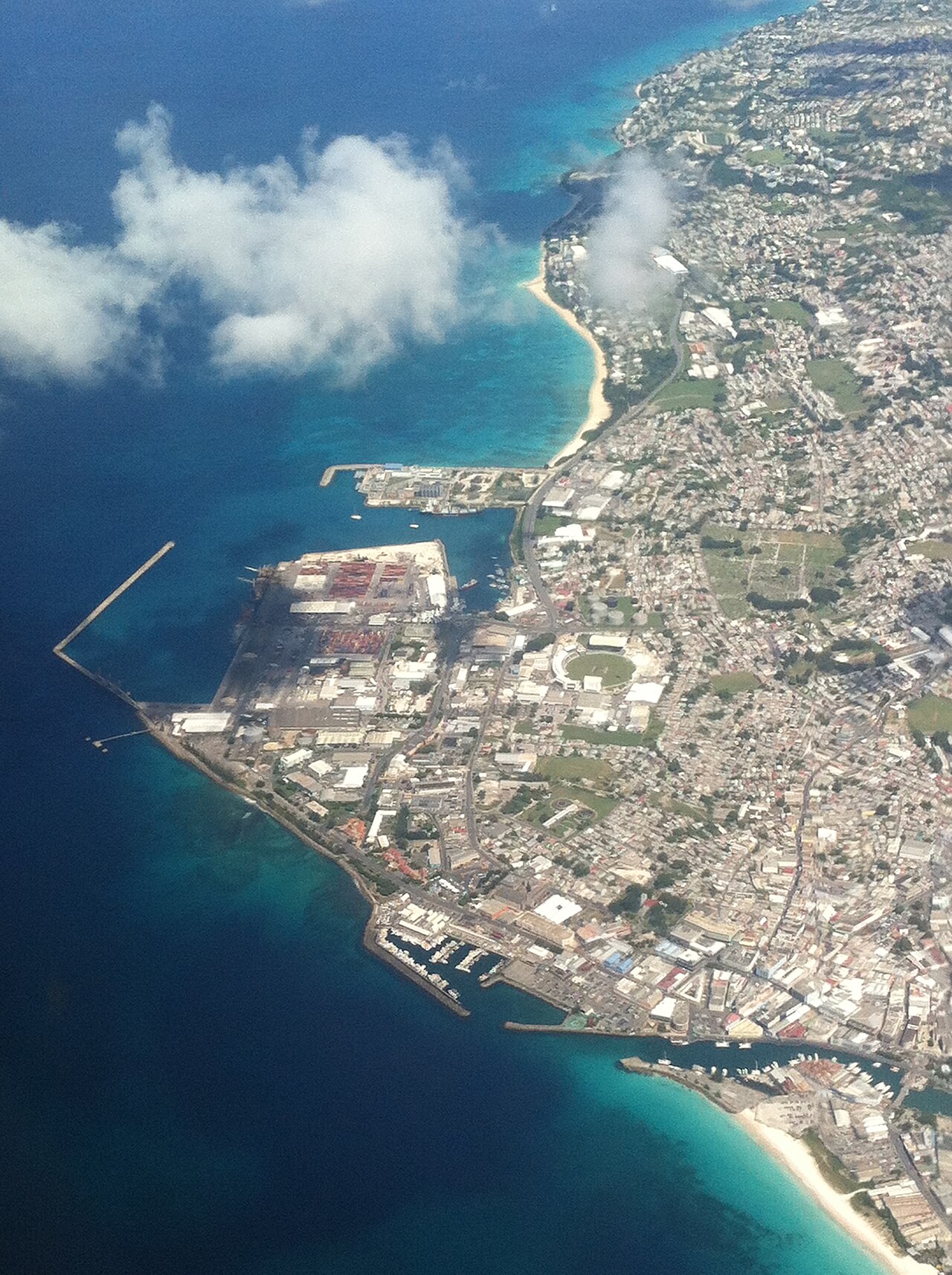
Acute, secondary and emergency care all sit in one place: the Queen Elizabeth Hospital in Bridgetown. There is no second public hospital for serious illness, which is why so much of any discussion about healthcare in Barbados is really a discussion about one building.
Medicines run through the Barbados Drug Service, which publishes the national formulary and supplies it through polyclinic pharmacies and private participating pharmacies it reimburses. A separate scheme gives free formulary drugs to over-65s, under-16s and anyone of any age prescribed for asthma, cancer, diabetes, epilepsy, glaucoma or hypertension.
Who gets free care, and who does not
The hospital’s own words are worth quoting because they are unusually direct. It provides free treatment to citizens and permanent residents. If you are neither, you may be required to pay. The board has a statutory obligation to identify patients not entitled to free treatment and to charge them. You may be asked about your residential status whatever your nationality, and whether or not you have paid taxes in the past.
The underlying law is the hospital’s fees regulations of 2006, which turn on whether you are a citizen or ordinarily resident, the latter defined by reference to permanent residence under the immigration law. The fee schedules have always carried two columns, one for citizens and residents and one for everybody else.
Some things are free to everyone regardless. The government’s own health report lists genuine emergencies, antenatal care, immunisation, conditions of public health significance, and treatment for sexually transmitted infections and HIV. British residents also have narrow reciprocal cover for immediate treatment during a temporary stay, under a 1992 order, though not if they travelled in order to get treated.
The drug service applies the same logic. Its formulary categories are free at the point of service to citizens, other Caribbean Community nationals and permanent residents. A non-resident foreigner is outside that wording.
The Queen Elizabeth Hospital in 2026
The hospital is accredited by Accreditation Canada International and the United States embassy describes it as the island’s major trauma facility, with medical, surgical and neonatal intensive care, dialysis, a 24-hour emergency room and consultants across almost all specialties. That is the strength.
The pressure is equally documented, by the government itself. The health minister cited inadequate laboratory facilities, bed shortages, limited cancer treatment, overcrowding and a need for more clinical space, and disclosed a mould infestation in the laboratory dating from before the pandemic that repeated cleaning has not cleared. A fire in February 2026 worsened bed availability.
Capacity figures differ. The health minister said in October 2025 that there are 550 beds with only about 420 in use; the United States embassy had described a 600-bed facility in January 2025. The lower, more recent ministerial figure is the safer one to plan around.
Waiting is the acknowledged weak point. In January 2026 the hospital called a press conference after emergency attendances passed 100 a day, with 40 to 60 patients waiting at a time against an ideal of about 15. On elective surgery, the chief executive conceded to callers who had waited up to three years for hip replacements that the hospital had been driving blind on its own data, and set a target of months rather than years.
There is also a staffing gap. The prime minister disclosed a shortfall of about 200 nurses across the public system in February 2026, prompting recruitment in Ghana, Kenya and Ethiopia under a health partnership between Africa and the Caribbean.
What is being built
Barbados is spending heavily, and a guide written a year from now will look different. In October 2025 the government signed a deferred payment agreement with a Chinese consortium worth BDS$390 million, about US$195 million, at 3.5 percent over eleven years, for an expansion at the Enmore site across the road from the hospital.
It adds roughly 40 percent more hospital in two linked towers. The first holds an outpatient building, a ward, a laboratory centre and a burn unit, restoring a national capability lost years ago. The second holds an oncology centre. Four new wards add 96 beds. Construction is estimated at 42 months from groundbreaking.
A separate programme worth US$175 million covers a new geriatric hospital at Waterford, a halfway house in St Peter, further expansion at the main hospital and a senior village in St George. As of August 2026 it was still in planning and design, with construction expected across 2027 and 2028 and facilities operational in 2029.
Meanwhile the existing plant is being refitted. A new linear accelerator had delivered more than 1,500 cancer treatments by mid-2026, a BDS$130 million capital fund is replacing ageing equipment, and the new health information system has digitised more than four million pages of records.
The private sector
The private sector is small, real and concentrated. The verified facilities all appear on the British foreign office list updated on 22 September 2026. They are Bayview Hospital and Urgent Care in St Michael, Sandy Crest Medical Centre on the west coast, the Coverley Medical Centre, FMH Emergency Medical Clinic, Urgent Care Barbados and Elcourt.
Bayview is the closest thing to a private hospital: operating since 1989, more than 80 doctors with admitting privileges, a level-two intensive care unit, a maternity unit and a 24-hour urgent care centre. Its own frequently asked questions carry an important qualification, that urgent care is not the same as an accident and emergency department, and that gunshot wounds and severe trauma should go to the Queen Elizabeth Hospital.
Consultants at the public hospital may also treat private patients there under the statutory fee schedule, with the patient paying the hospital and the consultant separately.
What none of them does is publish prices. Not one of the private facilities lists a consultation fee or a procedure cost online. The only official health price found anywhere on the island is the hospital’s private room at BDS$525 a day. Anyone budgeting should telephone and ask.
Insurance, and what nobody publishes
Two insurers dominate healthcare in Barbados on the private side: CG United, part of the Coralisle group, and Sagicor Life. CG United’s individual plan publishes its design in detail, and the design is worth reading before the price. Lifetime cover runs to BDS$2 million, with a calendar-year maximum of BDS$500,000 for an insured under 65, a deductible of BDS$250 for an individual and BDS$750 for a family.
One clause deserves attention from anyone planning a long retirement. On that published schedule, from age 65 the lifetime maximum drops to BDS$500,000 and benefits terminate altogether at age 70. A policy that ends at 70 is a different product from one that does not.
Premiums are the gap. No insurer operating in Barbados publishes rates online. Sagicor directs enquirers to a telephone number; CG United publishes benefits but not prices. The figures that circulate on forums and broker pages are either from other countries or undated, and none of them is used here.
For a remote worker the obligation is not optional in any case. The legislation behind the Welcome Stamp requires the holder to carry health insurance, precisely because the stamp does not make them a permanent resident and so does not bring free treatment with it.
When you have to leave the island
There is a formal state route for what Barbados cannot treat, the medical aid scheme run through the hospital. A consultant refers, a purely clinical committee decides whether the case would benefit from overseas treatment, and the social work department then assesses insurance cover and arranges travel.
For a foreigner, the relevant mechanism is private. The State Department warns that very serious injuries often require medical evacuation and encourages travellers to buy cover. It adds two details people rarely think about. Transport can take hours to respond, and ambulance attendants are barred from applying lifesaving techniques in transit.
The embassy names the evacuation providers it uses for its consular district, all of them Florida-based air ambulance operators. What nobody publishes is a price, so the sensible step is to get the named operator and the trigger conditions in writing from your insurer before you need them.
One last piece of context, and it cuts both ways. In September 2026 the Barbadian foreign ministry warned its own citizens travelling abroad that visitors are generally not entitled to free or subsidised healthcare in the countries they visit, and that consular help does not extend to paying medical bills. The same rule applies in reverse when you arrive.
Connected Coverage
Barbados Remote-Work Visa Has Approval Only to December 2026
Retire in Barbados in 2026: Three Permit Routes
Taxes in Barbados for Foreign Residents in 2026
Sources: Entitlement rules from the Queen Elizabeth Hospital’s own published answers and its 2006 fees regulations, system structure from the Ministry of Health and the 2022 health report laid in Parliament, hospital condition and the expansion from Barbadian press reporting of ministerial statements, the list of private facilities from the British foreign office, and the evacuation warning from the United States State Department.
- Queen Elizabeth Hospital — am I entitled to free treatment?
- Queen Elizabeth Hospital (Fees) Regulations, 2006
- Ministry of Health and Wellness — primary health care and the polyclinics
- Barbados Health Report 2022, laid in Parliament
- Foreign, Commonwealth and Development Office — list of medical facilities in Barbados
- United States State Department — Barbados country information
- CG United Insurance — published schedule of benefits for the individual plan
- Queen Elizabeth Hospital — progress on strategic plan initiatives, June 2026
What Is Not Known
What private care costs. Not one private facility on the island publishes a consultation fee or a procedure price, and the hospital publishes only its private room rate. Any figure you find online for a Barbadian private consultation is unsourced. Telephone the clinic.
What health insurance costs. No insurer operating in Barbados publishes premium rates. Both main insurers direct enquirers to call. The only premium figures encountered in research came from an anonymous forum in another country and are deliberately not repeated here.
What medical evacuation costs. The embassy names the air ambulance operators it uses but publishes no price, and neither do the operators. Nor is there a published tariff for what the hospital charges a non-resident, only the two-column structure written into the regulations.
How many beds the hospital actually has. The health minister said 550 with about 420 in use in October 2025; the United States embassy described a 600-bed facility in January 2025. The two have not been reconciled, and the expansion cost has itself been reported variously as US$175 million, US$195 million and BDS$390 million, which may conflate two separate projects.
How long people actually wait. The hospital has given vivid descriptions of emergency pressure and conceded that elective waiting has reached three years in some cases, but it publishes no waiting-time series. Its chief executive said the data had not been centralised.
Frequently Asked Questions
Is healthcare free in Barbados?
It is free at the point of delivery for citizens and permanent residents. The Queen Elizabeth Hospital states that anyone who is neither may be required to pay, and that it has a statutory obligation to identify and charge them regardless of nationality or past tax payments. Emergencies, antenatal care, immunisation and treatment for HIV and sexually transmitted infections are free to everyone.
Does the Barbados Welcome Stamp include healthcare?
No. The remote-work stamp does not make you a permanent resident, so the free-treatment rule does not reach you, and the legislation behind the programme requires holders to carry health insurance. Budget for private cover from the day you land.
What is the main hospital in Barbados?
The Queen Elizabeth Hospital in Bridgetown, which handles all acute, secondary, tertiary and emergency care for the island and is accredited by Accreditation Canada International. It has medical, surgical and neonatal intensive care, dialysis and consultants across almost all specialties, and it is also the only public hospital of its kind in the country.
Are there private hospitals in Barbados?
Bayview Hospital in St Michael is the main private facility, operating since 1989 with more than 80 doctors holding admitting privileges, a level-two intensive care unit and a 24-hour urgent care centre. Sandy Crest serves the west coast, and there are several urgent care clinics. Bayview itself says its urgent care is not an accident and emergency department and that severe trauma should go to the public hospital.
How much does a doctor cost in Barbados?
There is no published answer, which is itself the finding. No private clinic on the island lists prices online, and the only official health price published anywhere is a private hospital room at BDS$525 a day, about US$263. Ring the clinic and ask before you go.
Do I need medical evacuation insurance for Barbados?
For anything serious, yes. The United States State Department says very serious injuries often require evacuation and encourages travellers to buy cover, noting that transport can take hours to respond and that ambulance attendants are prohibited from applying lifesaving techniques in transit. Get the operator and the trigger conditions in writing from your insurer.
This article was produced by The Rio Times’ automated newsroom system. How we use AI · Report an error
Read More from The Rio Times