
A senior Guinean army commander has linked the country’s crackdown on illegal gold mining to the threat of terrorism. General Mamadi Condé, who commands the military region of N’Zérékoré, a city in Guinea’s southern forest region, said recently opened mining sites can be infiltrated and used to feed terrorist activity.
His remarks were published on Wednesday 18 November 2026 and followed an awareness session in N’Zérékoré on the national operation against clandestine mining. They come as Guinea’s clampdown on illegal gold mining, which began in the Siguiri region, continues.
Key Facts
- Who. General Mamadi Condé, commander of the N’Zérékoré military region in southern Guinea.
- What. He warned that recently opened mining sites can be infiltrated and used to sustain terrorism.
- Where. N’Zérékoré, at an awareness session on the national operation against illegal gold mining.
- Why it matters. Artisanal gold made up 69% of Guinea’s 2025 exports.
- As of. 18 November 2026, 13:00 GMT.
Guinea’s N’Zérékoré commander says illegal gold sites can be exploited by terrorists and asks residents to report suspicious movements.
What the General Said
General Condé said terrorism does not take root in a single day, in French « Le terrorisme ne s’implante pas en un seul jour ». He said he served seven years as a battalion commander in Siguiri, a gold-mining prefecture in north-eastern Guinea near the Malian border.
He warned that recently opened mining sites can be infiltrated and used by terrorism to sustain its activities, so illegal mining is more than an economic and environmental problem. He also said that closing sites may push people towards other towns, naming N’Zérékoré, which he called an economic hub.
He asked residents not to ignore suspicious movements and urged neighbourhood chiefs and citizens to cooperate with the security services. Landlords, he said, are responsible for knowing who they house.
He tied the call to the president’s wish to protect the environment, saying « Il faut préserver cet environnement ». The remarks do not mention Mali, the border or any attack.
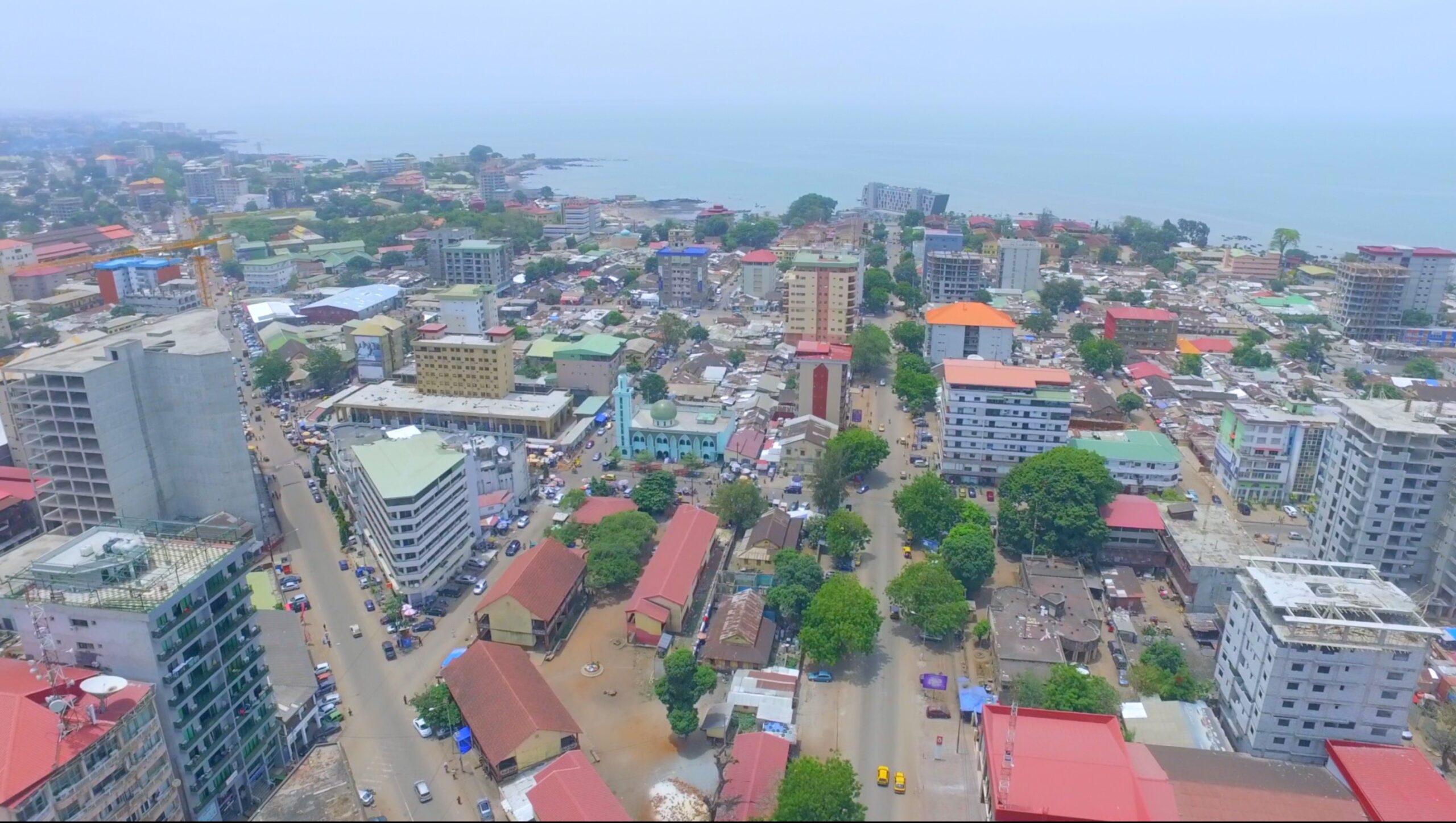
The Crackdown Behind the Remarks
Guinea banned clandestine mining in the Siguiri region from 2 November 2026, and by 7 November a joint Defence and Security communiqué reported 1,263 people arrested, including foreign nationals. On 3 November the Territorial Administration Ministry dismissed 479 district and neighbourhood presidents in the area.
Mali’s government says about 160,000 people were pushed back across the border from Guinea and reports six deaths. The Guinean government said at least 10 people died in clashes between miners and security forces on 12 November.
The Big Picture: Gold, a Long Border and a Regional Threat
The Institute for Security Studies (ISS), a Pretoria-based African think tank, wrote on 11 August 2026 that Guinea must address internal weaknesses as terrorism nears its borders. It reports that 11 suspected members of JNIM, the al-Qaeda-linked Sahel militant coalition, were indicted in March 2026 in gold towns bordering Mali.
The ISS says Guinea’s north-eastern border with Mali runs 858 kilometres and is poorly demarcated, and that artisanal gold made up 69% of Guinea’s exports in 2025, or 49.6 tonnes. Its authors warn that the border zone could end up financing extremist groups.
Attacks inside Mali near the Guinean border have become more frequent over the past two years, the ISS says, including a 16 March 2026 attack on a checkpoint at Yanfolila, about 50 kilometres from the border, and a 4 July 2026 raid on the Kéniéroba prison. Since early May 2026 JNIM has also tried to disrupt freight convoys on the road from Bamako, Mali’s capital, to Kourémalé towards Guinea.
On 22 April 2026 Guinea’s head of state, Mamadi Doumbouya, created a Special Operations Command, according to the ISS. The ISS does not connect the mining ban to terrorism.
What It Means for You
For anyone doing business around Guinea’s mining zones, the message is that a regional commander now treats illegal gold sites as a security matter and not only an environmental one. It is one officer’s view, not a government assessment of an attack in N’Zérékoré.
Gold matters here because it was 69% of Guinea’s exports in 2025, according to the ISS, so measures that close sites also change local incomes and trade. Readers who follow Guinea’s bigger projects can read our coverage of the Simandou iron-ore programme.
What Is Not Known
The published remarks do not state the date of the session, and no transcript or army statement confirms the remarks beyond their publication on 18 November. General Condé gave no figure for terrorist activity in southern Guinea, and none of the sources describes an attack there.
It is also unclear which group he had in mind. The ISS links JNIM to the northern border towns, not to N’Zérékoré.
JNIM: Jama’at Nusrat al-Islam wal-Muslimin, an al-Qaeda-linked militant coalition active in Mali and the Sahel.
Orpaillage: French for small-scale, often unlicensed gold mining.
Military region: an army command area; N’Zérékoré is the one covering Guinea’s southern forest zone.
Connected Coverage
Guinea news and analysisSecurity newsGuinea Gold Refinery Opens on 1 NovemberGuinea Opens Nearly 12 km Simandou Tunnel
Frequently Asked Questions
Who is General Mamadi Condé?
He is a Guinean army general who commands the N’Zérékoré military region in the south. He is not the head of state, Mamadi Doumbouya.
What did General Condé say about terrorism?
He said terrorism does not take root in a single day and that recently opened mining sites can be infiltrated and used to sustain it. He asked residents to report suspicious movements.
Has there been a terror attack in N’Zérékoré?
None of the sources describes an attack in N’Zérékoré. General Condé’s remarks warn of a risk and do not report an incident.
Why is illegal gold mining a security issue in Guinea?
The ISS says the border zone with Mali could finance extremist groups, and gold was 69% of Guinea’s exports in 2025. General Condé argues that mining sites can be infiltrated.
Sources
Remarks by General Mamadi Condé, commander of the N’Zérékoré military region, published 18 November 2026; Institute for Security Studies (ISS Today, 11 August 2026); Guinean Defence and Security communiqué of 7 November 2026 and Territorial Administration Ministry decision of 3 November 2026; Malian government statement reported 9 November 2026.
This article was produced by The Rio Times’ automated AI newsroom. Editorial responsibility: Matthias Camenzind, Publisher and Editor-in-Chief. The Rio Times also runs Ask Rio Times, which answers from 100,000+ of our own articles, the daily Latin America Power Map, and prediction-market odds on elections and markets.. How we use AI · Report an error