
Guayaquil, Ecuador’s largest city, faces high tides above four metres (13 feet) every morning and evening from Tuesday 10 to Thursday 12 November 2026. Inocar, the Ecuadorian Navy’s oceanographic institute, published the tide table on 8 November, a day before streets flooded in the Suburbio, a densely populated district of Guayaquil, on Monday 9 November, a local report said.
Key Facts
—What: Inocar forecasts Guayaquil high tides above 4 metres until Thursday 12 November.
—Peaks: Around 08:00 and 21:00 local time each day, Tuesday to Thursday.
—Where: The Suburbio, a densely populated district, flooded on Monday 9 November, a local report said.
—Why: Heavy rain at high tide leaves streets with no way to drain.
—Power Index: Ecuador ranks 8th of 14 in The Rio Times Latin America Power Index, with 37.2 points (November 2026 edition).
When heavy rain meets a high tide, Guayaquil’s streets have nowhere to drain, and Inocar says that is when the danger grows.
What Inocar Forecasts for Guayaquil
Inocar forecast a high tide of up to 4.55 metres at 19:42 on Monday 9 November. For the three days that follow it lists two peaks a day above four metres, shown below in local time with heights.
Tuesday 10 November: 07:44 (4.36 m) and 20:17 (4.48 m)
Wednesday 11 November: 08:17 (4.25 m) and 20:49 (4.38 m)
Thursday 12 November: 08:49 (4.13 m) and 21:21 (4.26 m)
The heights ease a little each day as the spring tide, the period of the year’s largest tides, passes its peak. Residents should check the institute’s table before parking or walking near the water.
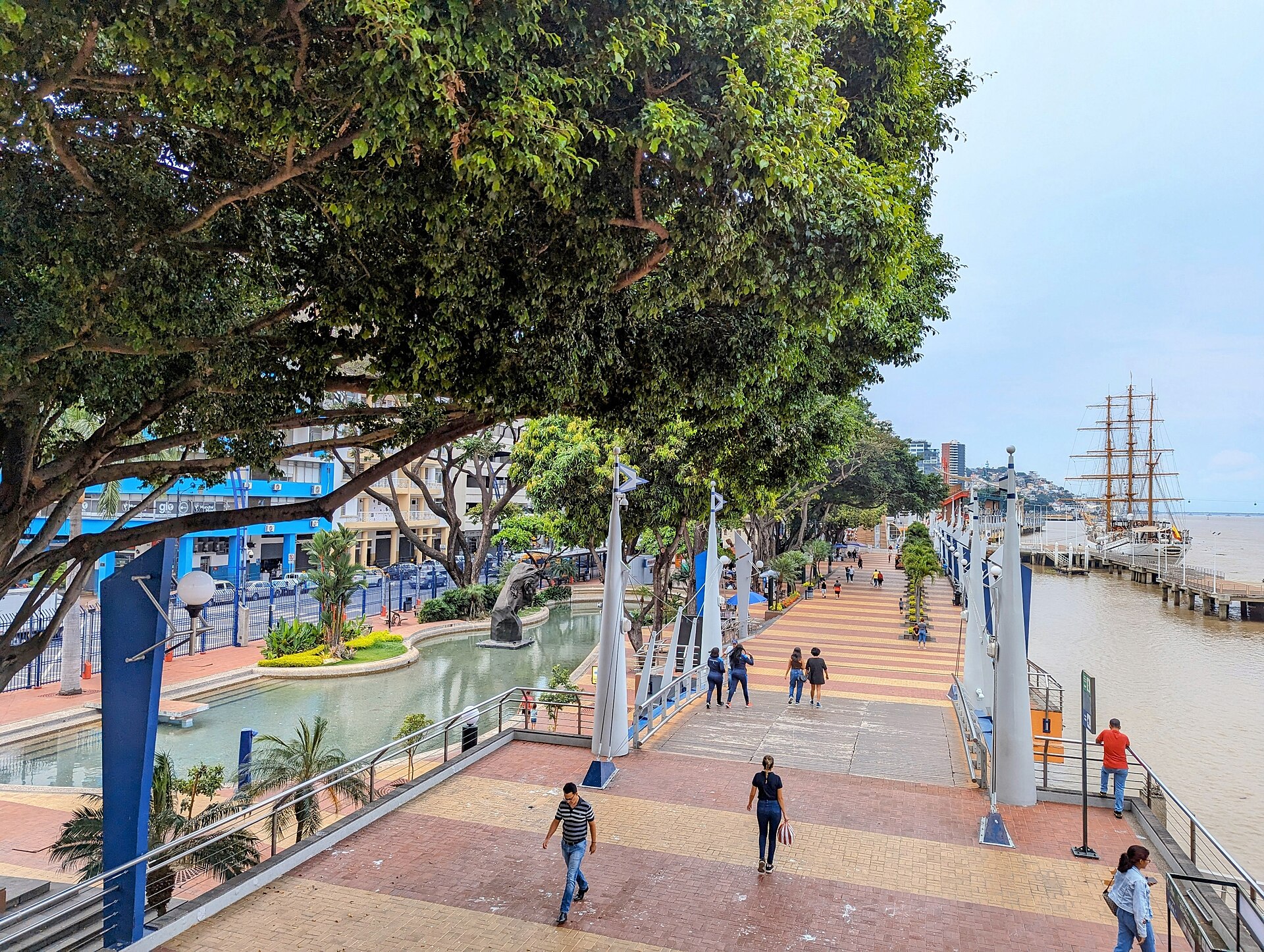
Monday’s Flooding in the Suburbio
A local report said ECU 911, Ecuador’s national emergency call and camera network, showed flooded streets in the Suburbio on Monday 9 November. The water covered several junctions and reached the 4 de Marzo community on Isla Trinitaria.
The local report tied the flooding to high tide in the Estero Salado, the tidal inlet that wraps around the city from north to south. It added that Inamhi, Ecuador’s national weather service, had kept its rain alert for Guayaquil and forecast more rain linked to El Niño.
Why Tide and Rain Together Are the Risk
El Niño is a warming of the Pacific Ocean that brings heavy rain to Ecuador’s coast. Inocar’s advice was to take extra care when high tides coincide with intense rain.
A storm on Sunday 1 November had already flooded 78 sectors of the city by 22:40, according to Segura EP. In Las Orquídeas, a neighbourhood in the north, between 600 and 700 families had water in their homes, according to Segura EP, a Guayaquil municipal agency.
What It Means for You
Visitors to Guayaquil should expect slow traffic and some closed streets around the river and in southern districts at peak tides, especially if rain falls at the same time. Ecuador uses the US dollar as its currency, so any repair or relocation costs are quoted in US$.
Expats and travellers can follow the daily tide times above and avoid low-lying streets around the 08:00 and 21:00 peaks. The city’s coastal flood risk is explained in our Ecuador flood safety guide for US travelers and in our report on earlier flooding in Guayaquil.
What Is Not Known
It is not yet clear how much rain will fall at the peak tides on 10 to 12 November, and no damage count for Monday’s flooding was available. Our latest coverage of the wider rains is in Ecuador Coast Floods Force Families Out and in the Ecuador country hub.
Frequently Asked Questions
How high will Guayaquil’s tides be this week?
Inocar forecasts peaks above 4 metres twice a day from Tuesday 10 to Thursday 12 November 2026. On Monday 9 November it forecast up to 4.55 metres.
What time are the highest tides?
The morning peaks fall between 07:44 and 08:49 and the evening peaks between 20:17 and 21:21, local time. The exact heights are 4.13 to 4.48 metres.
What is the Suburbio?
The Suburbio is a densely populated district of Guayaquil. Its streets flooded on Monday 9 November as the tide rose.
Why do tides cause flooding in Guayaquil?
The city sits beside the Estero Salado and the Guayas River, and its streets drain toward tidal water. When a high tide arrives during heavy rain, the water has nowhere to go and streets flood.
Sources
Inocar (Instituto Oceanográfico y Antártico de la Armada), tide table of 8 November 2026 and advisory of 8 November 2026; Inamhi (Instituto Nacional de Meteorología e Hidrología), rain alert of 9 November 2026; ECU 911, flood reports of 9 November 2026; Segura EP, briefing on Las Orquídeas, November 2026.
This article was produced by The Rio Times’ automated AI newsroom. Editorial responsibility: Matthias Camenzind, Publisher and Editor-in-Chief. The Rio Times also runs Ask Rio Times, which answers from 100,000+ of our own articles, the daily Latin America Power Map, and prediction-market odds on elections and markets.. How we use AI · Report an error