
GABON · ECONOMY
Key Facts
- What is happening Oil, manganese and timber carry Gabon’s economy, and growth slowed to 2.7% in 2025.
- Why it matters Ageing oilfields, high debt and a planned 2029 manganese export ban shape jobs and investment.
- The numbers Debt is 78.9% of output (2025); one bank issued half of new loans; Assala cost US$1.3 billion.
- Who is who The state, its oil company, a French miner and a few banks hold most levers.
- What to watch The 2029 manganese export ban, output at ageing oilfields and the 2026 to 2030 growth plan.
- What it means for you US investors can follow Vaalco, a US-listed oil producer; Citigroup is the only US bank.
Oil, manganese, timber and a handful of banks and state bodies carry Gabon’s economy. This guide names who controls each sector in November 2026.
The Gabon economy in 2026 is small and resource-driven, and a few companies, state bodies and banks hold most of the power. This guide names the biggest players and who controls them, with dated figures.
Gabon lies on the Atlantic coast of Central Africa and has about 2.3 million people, the US State Department says. Oil still makes up most exports, and the same 2024 report says reserves are declining.
More regional coverage sits on the Rio Times Central Africa page. Conversions use EUR 0.8934 per US$1, the open.er-api.com rate of 4 November 2026 (00:02 UTC).
Gabon Economy in One Page
The list below names each key player and what it controls. Details and dates follow in the sections after it.
- Gabon Oil Company: the state oil company, created in 2011, which bought Assala Energy in June 2024.
- Vaalco Energy: US-listed oil producer that operates the Etame Marin block with a 58.8% working interest.
- TotalEnergies EP Gabon: oil producer whose shares trade in Paris, at EUR 232 on 29 October 2026.
- Eramet and Comilog: the French mining group and its Gabonese unit that run the Moanda manganese mines and the Transgabonais railway.
- Arise and the Nkok zone: the industrial platform, run with the state, that processes timber for export.
- BGFIBank: the largest bank, with about half of new loans in late 2024.
- FGIS: the Gabonese Strategic Investment Fund, the sovereign wealth fund set up in 2008.
Oil, Still the Main Export
Oil accounts for most of Gabon’s exports, and the US State Department says reserves are declining. The African Development Bank reports oil production fell 2.9% in 2025.
The World Bank says technical incidents and ageing oilfields cut output in 2026. It adds that an unexpected oil pipeline destruction has undermined prospects for export gains.
Vaalco Energy, a US-listed oil producer, operates the Etame Marin block about 20 miles offshore with a 58.8% working interest. Its page lists 7,982 barrels of oil equivalent a day in 2026 and 17.1 million barrels of reserves.
Vaalco also holds a 37.5% non-operating interest in the Niosi Marin and Guduma Marin blocks. Production-sharing contracts for them were completed with the Government of Gabon.
TotalEnergies EP Gabon is the local oil arm of the French major, and its shares trade in Paris. It published first-half 2026 results on 27 August 2026, and its shares stood at EUR 232 (about US$259.70) on 29 October 2026.
Gabon Oil Company, called GOC, is the state oil company created in 2011. It can automatically take up to 15% of any petroleum contract at market price.
In February 2024 GOC agreed to buy Assala Energy, the oil assets of the US investor Carlyle Group. The US State Department says the sale closed in June 2024 for US$1.3 billion.

Manganese, Eramet and the Railway
Eramet, a French mining group, runs Gabon’s manganese through its unit Comilog. The ore comes from the Moanda mines, which the company describes as the world’s largest manganese mines.
In 2025 Eramet reported 7.1 million tonnes of manganese ore and agglomerates and 653,000 tonnes of manganese alloys. Its page does not separate the Gabonese share from those group totals.
Comilog began mining the Okouma deposit in 2023, which Eramet says will raise capacity to 10 million tonnes a year. The Transgabonais railway, run by Comilog’s subsidiary Setrag, covers 648 kilometres with 24 stations.
The line carries about 6 million tonnes of ore and goods a year, along with passengers and forestry products. The Eramet page describes the group as the largest private employer in Gabon through Comilog and Setrag.
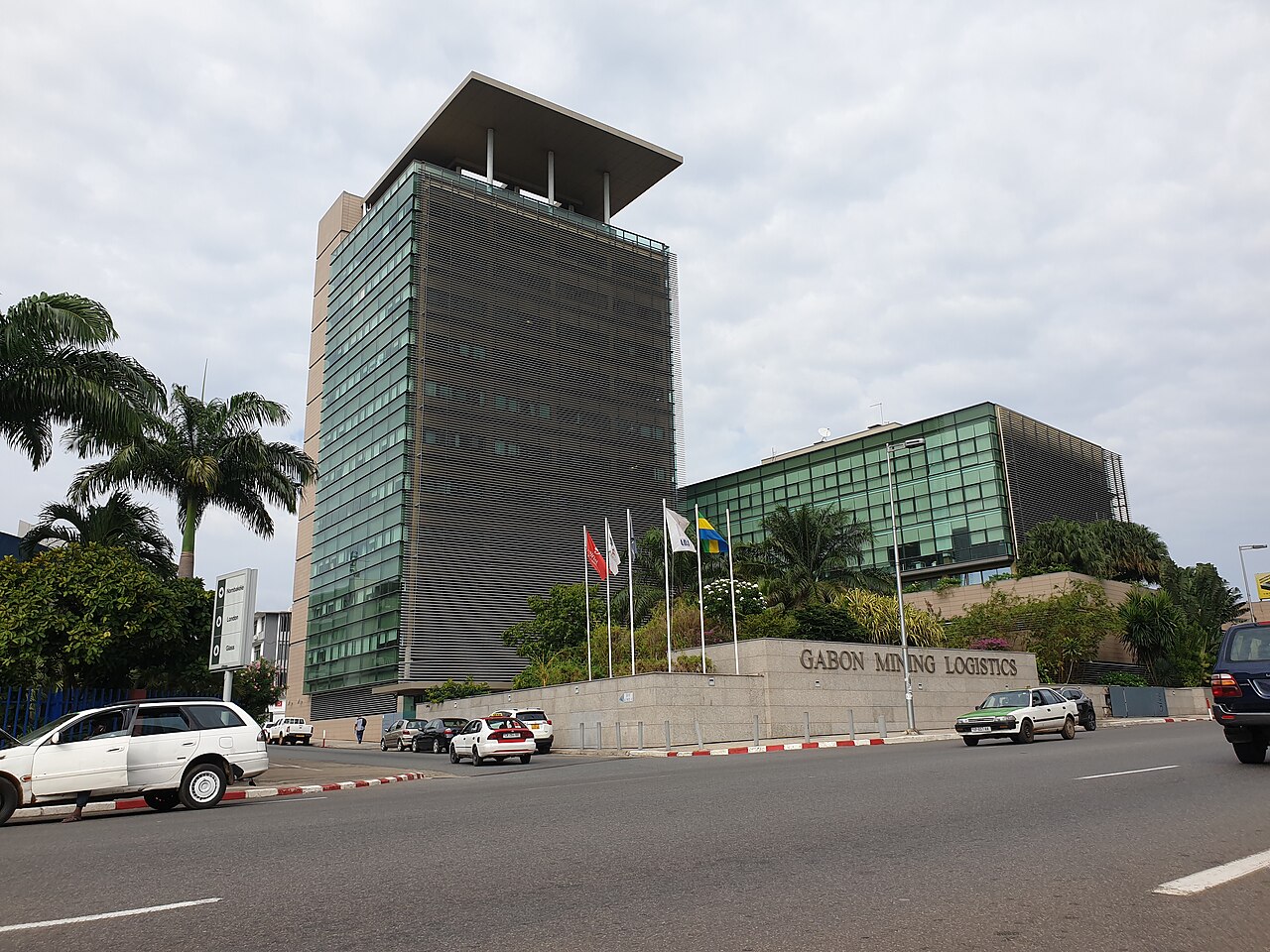
On 2 June 2025 Eramet said it took note of the government’s intention to ban crude manganese exports from 1 January 2029. The aim is to push processing into Gabon, and the full rules were not found.
The African Development Bank says mining output fell 2.1% in 2025. The World Bank adds that transport and demand problems also hit manganese and timber.
Timber, Processing and the Nkok Zone
Gabon banned unprocessed wood exports in 2009 to build a domestic processing industry, the US State Department says. Timber output still fell 23.7% in 2025, the African Development Bank reports.
The Nkok special economic zone is a partnership between the Gabonese state and Arise, an industrial platform of the Singapore-based Olam Group. The US State Department says the zone was inaugurated in 2011, and it reports more than 20,000 direct and indirect jobs.
It says it exported EUR 272 million (about US$304 million) of products in 2022. Arise signed a January 2023 agreement to expand farming and forestry in the Mpassa-Lebombi zone.
Greenply, an Indian company, makes veneer and plywood in the Lambaréné zone. The New Owendo International Port opened in 2017 with 18 hectares and 3 million tonnes of yearly capacity.
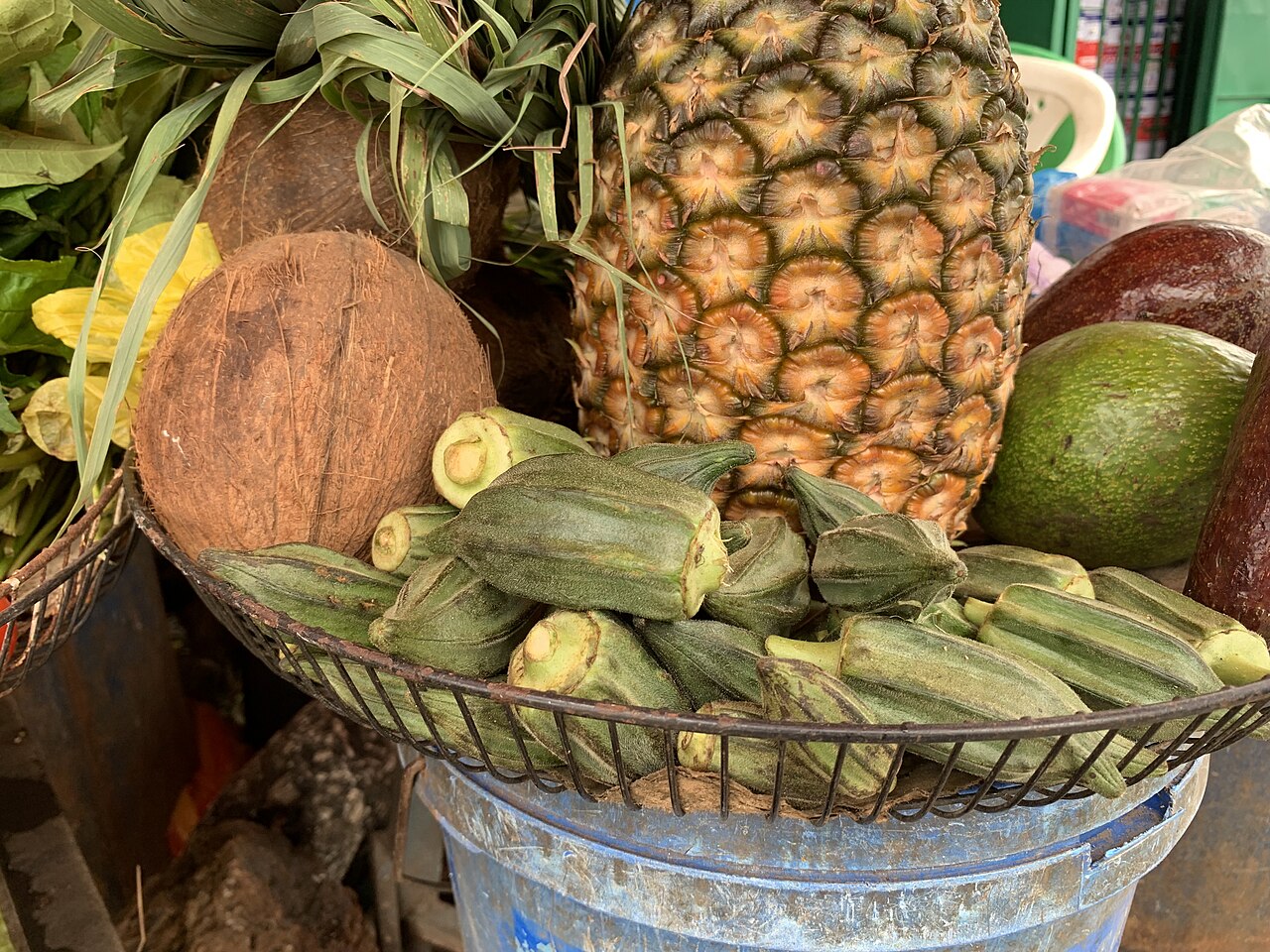
Farming is a smaller sector, but the African Development Bank counts palm oil and poultry among growth drivers for 2026. Construction rose 25.4% in 2025 and services 4.4%.
Banks and Who Holds the Money
BGFIBank is the leading bank, and it issued 50.66% of new loans in July to September 2024. Next came UGB at 13.98%, Citibank at 9.9%, Orabank at 9.7% and BICIG at 9.6%, all banks working in Gabon.
Ecobank held 4.8% and UBA 1.1% of new loans in the same quarter. The three largest banks hold 77% of loans and deposits, the US State Department says.
Citibank is the only US bank present in Gabon. A new lender, the Bank for Commerce and Entrepreneurship of Gabon, launched in December 2024.
The financial system is shallow, the African Development Bank says. Long-term loans were only 1% of bank lending in 2025, and lending rates averaged 16.5% in the first quarter of 2025.
Bad loans rose from 9.28% to 9.86% of the total in 2025, while lending to the government grew 116.9%. Banks therefore lend more to the state and less to private firms.
The State as Owner and Debtor
President Brice Clotaire Oligui Nguema was elected on 12 April 2025 and sworn in on 3 May 2025. He came to power after the coup of 30 August 2023 that ended Ali Bongo Ondimba’s rule.
The Gabonese Strategic Investment Fund, known as FGIS, is the sovereign wealth fund set up in 2008. It reported about US$1.89 billion in assets in 2023, including US$500 million under direct management.
The transition authority also took over Afrijet, Gabon’s only domestic airline, from the Bongo family. The US State Department says this was an ownership transfer and not an expropriation.
Debt is the main constraint, and domestic debt rose from US$660 million in 2020 to US$4.95 billion in 2023. Total debt is 78.9% of GDP as of 2025.
The African Development Bank says the 2025 deficit widened to 5.3% of GDP and the rating was cut again in December 2025. The World Bank says a debt audit was carried out in mid-2026.
The IMF says Gabon owed it SDR 357.06 million (about US$484 million) on 31 March 2026 (SDR is the IMF’s own unit). The regional central bank BEAC cut its policy rate to 4.5% in June 2026, the World Bank says.
The Rio Times covers the sector in its Gabon beyond oil report, its Gabon after Bongo report and the Gabon explained guide. The geopolitics guide and the Gabon in Africa guide add the foreign context.
Jobs, Poverty and the Growth Gap
Growth slowed to 2.7% in 2025 from 3.4% in 2024, according to the African Development Bank. The World Bank gives a different estimate of 3.2% for 2025, and the gap is not explained.
Unemployment is 20.2% and reaches 36.3% among young people, the African Development Bank says. Poverty rose from 32.8% in 2024 to 33.1% in 2025.
The African Development Bank forecasts 3.0% growth in 2026 and 3.1% in 2027, led by construction, farming, food processing and services. The IMF projects 2.7% for 2026 and inflation of 2.5%.
What It Means for US Readers
Vaalco Energy gives US investors direct exposure to Gabonese oil, and Citigroup is the only US bank on the ground. Check company filings for the latest production and reserve figures.
The US International Development Finance Corporation, a government lender, insured the Owendo mineral port with US$5.7 million of risk cover in 2019. In 2023 it gave US$500 million in cover to the Gabon blue-bond project.
US trade with Gabon is small, with a US foreign direct investment stock of US$77 million in 2022. US firms should expect high lending rates, heavy state involvement and a rising debt burden.
What Is Not Known
The private business families and tycoons of Gabon could not be confirmed from primary sources, so none is named. The only family named in the sources used is the Bongo family.
The state’s stake in Comilog and the owners of BGFIBank were not confirmed. The water and power utility, the national timber company, the telecom operators and the Sogara refining zone were not verified either.
Gabon’s current oil output in barrels a day and the full text of the 2029 manganese export ban were not found. Whether GOC has raised the financing for Assala beyond the closing in June 2024 is also unknown.
The World Bank and African Development Bank growth estimates for 2025 differ and were not reconciled. No prediction market on the Gabon economy with real trading was found, so none is shown.
Frequently Asked Questions
What does the Gabon economy depend on?
Oil, manganese and timber drive Gabon’s economy, with oil making up most exports. Growth slowed to 2.7% in 2025, the African Development Bank says.
Who is the biggest oil producer in Gabon?
Several firms produce oil, including TotalEnergies EP Gabon and Vaalco Energy, which operates the Etame Marin block. The state company Gabon Oil Company bought Assala Energy for US$1.3 billion in June 2024.
Who runs Gabon’s manganese?
Eramet, a French mining group, runs the Moanda mines through its unit Comilog. The government plans to ban crude manganese exports from 1 January 2029.
Which is the largest bank in Gabon?
BGFIBank, which issued 50.66% of new loans in July to September 2024. The three largest banks hold 77% of loans and deposits.
How high is Gabon’s debt?
Total debt reached 78.9% of GDP in 2025, the African Development Bank says. A debt audit was carried out in mid-2026, according to the World Bank.
Can US investors put money into Gabon?
US investors can buy shares in Vaalco Energy and follow Citigroup, the only US bank present. They should expect heavy state involvement, high lending rates and rising debt.
Sources: World Bank, Gabon overview ; IMF, Gabon country page ; African Development Bank, Gabon economic outlook ; US State Department, 2024 Investment Climate Statement, Gabon ; US State Department, 2025 Investment Climate Statement, Gabon ; Eramet, manganese activities ; Eramet, statement on the Gabon manganese export ban (2 June 2025) ; Vaalco Energy, Gabon operations ; TotalEnergies EP Gabon, investor site ; Gabon Special Economic Zone, Nkok ; open.er-api.com (exchange rates, 4 November 2026) (all accessed on 4 November 2026).
This article was produced by The Rio Times’ automated newsroom system. How we use AI · Report an error · Editorial responsibility: Matthias Camenzind, Editor-in-Chief