GABON · CONTINENT
Key Facts
- The country Gabon, an Atlantic-coast state of Central Africa with 2.6 million people, a US$21.4 billion economy in 2025 and forest over about 91% of its land.
- Weight in Africa Third-highest income per person on the continent at US$8,263 in 2025, yet only 28th of 52 economies by size.
- Why it matters The world’s second-largest manganese miner after South Africa, and the supplier of 64% of US manganese ore imports from 2021 to 2024.
- Memberships African Union (suspension ended 30 April 2025), seat of the Central African club ECCAS, six-state CFA franc bloc CEMAC, and the Commonwealth.
- Alliances France, China, the United States and the Gulf: China buys the most exports, and US trade preferences returned on 1 January 2026.
- Leader President Brice Clotaire Oligui Nguema, elected 12 April 2025 for a seven-year term renewable once, as of October 2026.

In Plain English
African Union: the continental club of African states, based in Addis Ababa, Ethiopia, whose Peace and Security Council handles crises and coups. ECCAS: the Economic Community of Central African States, a regional club created on 18 October 1983 in Libreville, where it still has its seat.
CEMAC: the Economic and Monetary Community of Central Africa, a six-state club that shares the CFA franc. BEAC: the Bank of Central African States, the regional central bank that sets one interest rate for those six states.
AGOA: the African Growth and Opportunity Act, a US law that lets eligible sub-Saharan African countries sell many goods to the United States without import duties. Commonwealth: an association of countries that cooperate on democracy, trade and law, which Gabon joined in June 2022.
Gabon is a forested oil-and-manganese state of about 2.6 million people that carries more weight on the African continent than its size suggests: the third-highest income per person in Africa, the world’s second-largest manganese output and the seat of the regional club ECCAS. After the August 2023 coup it won back its place in the African Union and the Commonwealth in 2025, and as of October 2026 it balances France, China, the United States and the Gulf.
Gabon at a Glance in African Terms
Gabon had 2.59 million people in 2025, according to the World Bank data available as of October 2026, which makes it the 43rd-largest of 54 African countries by population. Its economy was worth US$21.4 billion in 2025, which ranks 28th of the 52 African economies with data, far behind South Africa at US$427 billion and Nigeria at US$291 billion.
Income per person tells a different story: US$8,263 in 2025, the third-highest in Africa after the island states of Seychelles (US$19,449) and Mauritius (US$12,991). Botswana follows at US$7,778 and Equatorial Guinea at US$6,615, so Gabon is the richest mainland economy on the continent by this measure.
The World Bank’s country overview says Libreville and Port-Gentil hold nearly 59% of the population and that half of all Gabonese are under 20. Forests cover about 91% of the land, a share that makes the country a net carbon absorber in the Bank’s words.
Africa’s Second Manganese Giant and Its Oil
The US Geological Survey estimates that Gabon mined 5.0 million tonnes of manganese, measured as manganese content, in 2025, about a quarter of the 20 million tonnes mined worldwide. Only South Africa, at 7.6 million tonnes, produced more, ahead of Ghana at 2.0 million tonnes.
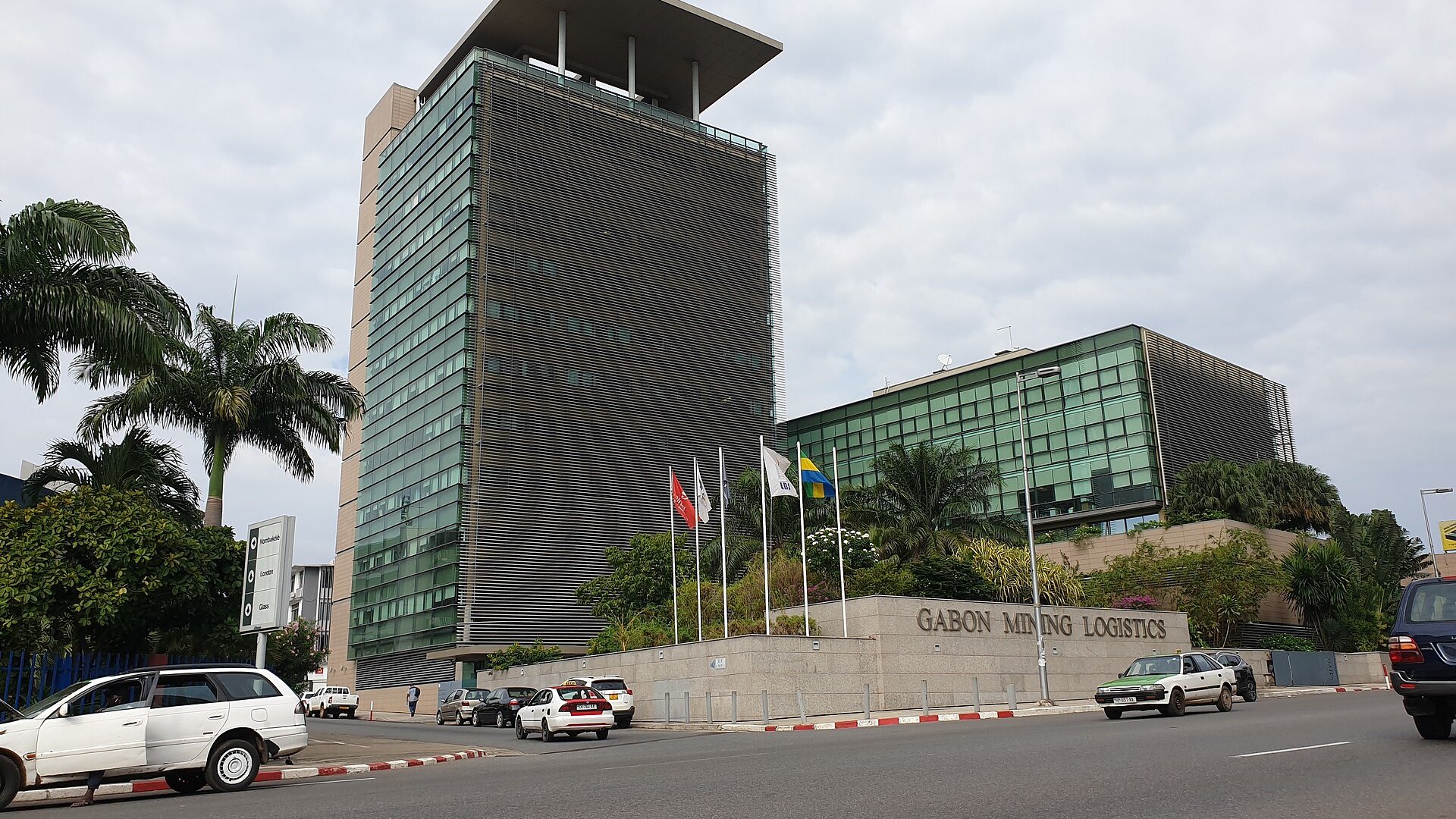
The ore comes from the Moanda mines in the south-east, which the mining group Eramet calls the world’s largest manganese mines. Its local arm Eramet Comilog also runs the Setrag railway, which carries ore, passengers and timber between eastern and western Gabon.
Oil is the other pillar, and the president said in June 2026 that the state’s purchase of the Assala and Tullow Oil assets made the national oil company the country’s largest producer. The World Bank, however, says ageing oilfields and technical incidents cut oil output in 2025.
The president also calls the Belinga iron ore deposit, estimated at 7.5 billion tonnes at 65% grade, the largest in the world, a figure that is his government’s own estimate. He pairs it with plans for deep-water ports at Kobe-Kobe and Mayumba, a railway line and hydroelectric dams.
A Regional Capital for Central Africa
Libreville is the seat of ECCAS, which was created in the city on 18 October 1983 and marked its 43rd anniversary there on 18 and 19 October 2026. As of October 2026 its commission is led by Ambassador Ezéchiel Nibigira, while Equatorial Guinea’s President Teodoro Obiang Nguema Mbasogo chairs the conference of its heads of state.
The commission itself says that insecurity, weak trade among members and poor shared infrastructure still hold back integration. Gabon is also one of the six CEMAC states, whose central bank BEAC cut its policy rate to 4.5% in June 2026.
The neighbours, the border court case and the trade flows inside the region are covered in a separate guide, Gabon Is Richer Than All Its Neighbours. This guide looks beyond the region to the continent and the great powers.
From Suspension to Return
Army officers seized power in Gabon on 30 August 2023, and the African Union suspended the country afterwards. Gabon’s presidency said in July 2025 that the sanctions of ECCAS, the African Union and the United States had been lifted one after another.
The African Union’s Peace and Security Council ended the suspension on 30 April 2025, after the presidential election of 12 April 2025 won by Brice Clotaire Oligui Nguema. The Commonwealth’s ministerial action group lifted its partial suspension on 15 July 2025, which Gabon’s presidency called a full reintegration.
Oligui Nguema was inaugurated on 3 May 2025 under a constitution approved by referendum on 16 November 2024 that sets a seven-year presidential term renewable once. As of October 2026 he holds the offices of head of state and head of government at once, as the presidency’s own website titles him.
In his State of the Nation speech of June 2026 the president said Gabon had been elected to the African Union’s Peace and Security Council and confirmed its bid to host the African Union summit in 2027. He also said Gabon took note of the International Court of Justice judgment of 19 May 2025 in its island and sea dispute with Equatorial Guinea and is ready to apply it, with an African Union mediator now involved.
France, China, the United States and the Gulf
France remains the closest Western partner: its foreign ministry calls France Gabon’s leading supplier with a 26% market share, with about 110 French companies employing 14,000 people. Their estimated turnover is €3.23 billion (US$3.6 billion at the European Central Bank rate of US$1.113 per euro on 29 October 2026).
The French armed forces keep a joint liaison detachment of about 100 personnel inside a Gabonese camp in Libreville, which the French defense ministry says exists to share information and coordinate exercises. The two countries renewed their defense partnership around schools for defense administration and for protecting the environment and natural resources, and about 6,000 trainees from the sub-region attend Gabon’s three regional schools each year.
China is the biggest buyer: it took 27.7% of Gabon’s US$12.7 billion in goods exports in 2023, ahead of France at 10.6%, in World Bank trade data. Gabon’s presidency dates the diplomatic relationship to 1974 and lists Chinese-built projects including the Grand Poubara dam and the seats of the National Assembly and the Senate.
The presidency announced on 14 October 2026 that President Oligui Nguema will make a state visit to China from 3 to 8 November 2026. It said the talks would cover investment and projects such as 500 homes and a cement plant in the Neuf Provinces zone, whose terms remain to be set.
The United States restored Gabon’s trade preferences under AGOA in Proclamation 11030 of 19 May 2026, effective 1 January 2026, after ending them in a proclamation of 29 December 2023. Those duty-free preferences run only to 31 December 2026 under current US law, and the presidency presented the decision to a visiting US official on 19 June 2026 as a sign of confidence in its reforms.
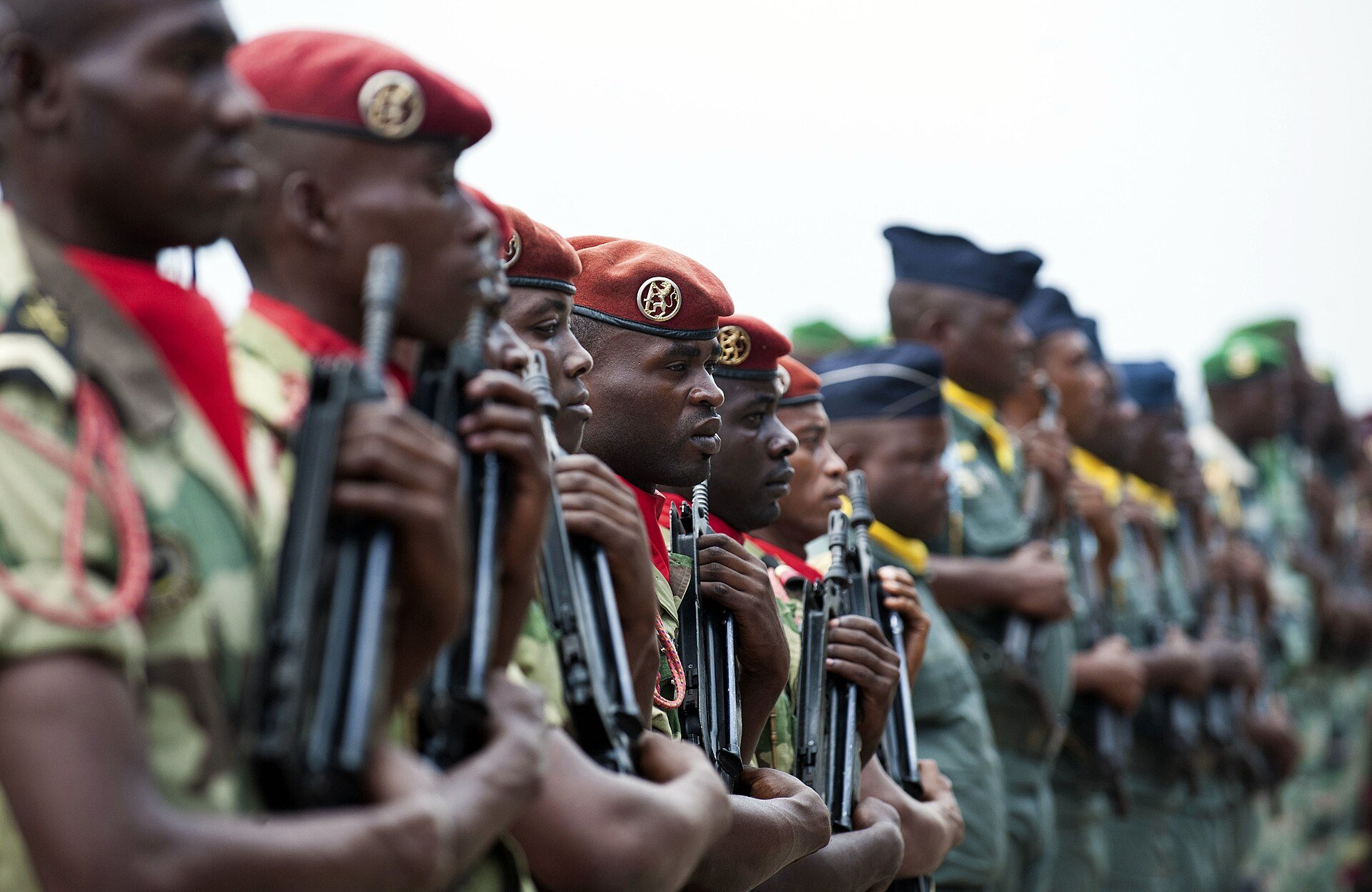
The presidency announced in July 2026 that the United Arab Emirates had donated 20 Panthera T8 armored vehicles to Gabon’s defense and security forces. It describes the gift as part of a policy of diversifying strategic partners and of South-South cooperation, and a report on the defense budget shows how that spending is being squeezed.
Peers: Small Rich States of the Continent
Gabon’s closest peers are small resource-rich states: Botswana, with 2.56 million people and US$7,778 per person, and Equatorial Guinea, with 1.94 million people and US$6,615. Gabon has slightly more people than Botswana and a slightly larger economy, US$21.4 billion against US$19.9 billion, but both trail Mauritius at about US$13,000 per person.
Inside the six-state CEMAC bloc, Gabon holds 3.8% of the people but 16% of the combined output of US$134 billion in 2025. Its income per person is more than four times that of Cameroon, the bloc’s largest economy, at US$1,972.
Size is the limit: Nigeria’s economy is 13.6 times Gabon’s and South Africa’s is 19.9 times, while Gabon’s 2.6 million people are about 1% of Nigeria’s 237.5 million. A fuller picture of the country at home sits in the guide to Gabon after the Bongos.
The Forest Economy and the Debt Test
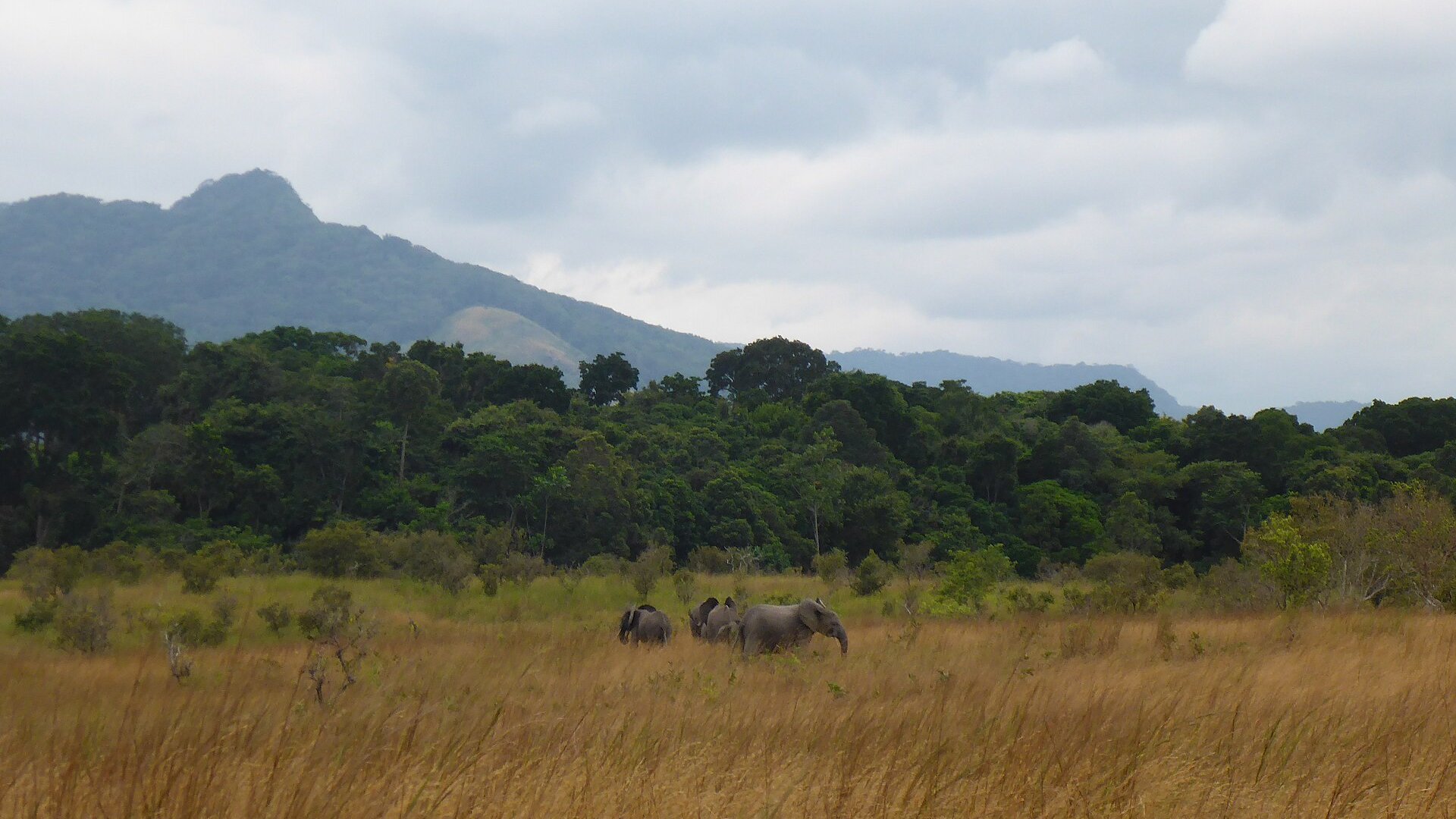
The World Bank calls Gabon a net carbon absorber that is engaged in international carbon markets to earn climate finance from its forest. The photo below shows the savanna and rainforest mix that makes up much of that forest estate in Lopé National Park.
Public finances are the weak point: the World Bank says a strong deterioration in 2025 left debt and liquidity pressures elevated, and that a debt audit was carried out in mid-2026. A report on the Eurobond sale and a report on the mining permit audit follow the same story.
The president said in June 2026 that debt stood at 70% of output when he took power and that talks with the International Monetary Fund concern a restructuring he calls high but sustainable. The IMF’s country page lists 14 lending arrangements since Gabon joined on 10 September 1963 and a last yearly review, the Article IV consultation, held on 13 May 2024.
The World Bank’s Gabon Economic Update of 27 October 2026 puts unemployment at around 17% of working-age people and around 30% among young people. It urges lower trade barriers, including what it calls one of the world’s highest tariffs, and more private investment.
What It Means for US Readers
American steelmakers depend on imports for all of their manganese, and the US Geological Survey says Gabon supplied 64% of US manganese ore imports from 2021 to 2024. Importers can again use AGOA duty-free access for Gabon, but the preferences are set to end on 31 December 2026 under current US law.
The State Department rates Gabon Level 2, exercise increased caution, because of unrest, crime and health risks, in an advisory dated 30 March 2026 that was still the listed advisory as of October 2026. Protests and crime are most common in Libreville and Port-Gentil.
Gabonese nationals face US entry limits as of October 2026 under Presidential Proclamation 10998, signed on 16 December 2025, which has suspended their entry as immigrants and on B-1, B-2, F, M and J visas since 1 January 2026. The proclamation cites Gabon’s overstay rates of 13.72% for B-1/B-2 visas and 17.77% for F, M and J visas, exempts lawful permanent residents and tells consular officers to shorten the validity of other nonimmigrant visas issued to Gabonese.
US companies are already present, including Houston-based Vaalco Energy, which is listed on the New York Stock Exchange and holds oil assets in Gabon, Egypt, Côte d’Ivoire and Equatorial Guinea. Further coverage of the region sits in the Africa section.
What Is Not Known
The size of the population is not settled: the World Bank’s indicator database gives 2.59 million for 2025, while its country overview page cites about 3.5 million. The president said in June 2026 that a new national census has been carried out and that its results will be published, so every population figure stays an estimate until then.
Whether the AGOA preferences continue after 31 December 2026 depends on a decision that US law has not yet made. Gabon’s own eligibility is also reviewed every year, so the restored access is not permanent.
The terms of any IMF program are not public, because the president says talks concern a debt restructuring while the IMF’s country page showed no new program when it was read in October 2026. The World Bank notes that a debt audit was carried out in mid-2026 but does not give the findings.
The outcome of the mediation over the island and sea dispute with Equatorial Guinea is not known, since the president described only an agreed work plan with a win-win aim. The sources also differ on Gabon’s main supplier: France’s foreign ministry names France with a 26% share, while World Bank trade data for 2023 put South Korea first at 13.3% and France second at 13.0%.
Frequently Asked Questions
How big is Gabon’s economy compared with the rest of Africa?
Gabon’s economy was worth US$21.4 billion in 2025, which ranks 28th of 52 African economies with data. Its income per person of US$8,263 is the third highest in Africa.
What is Gabon’s role in Africa?
Gabon hosts the headquarters of ECCAS, the Central African regional club, and belongs to the six-state CEMAC currency bloc. It is also the second-largest manganese miner in the world after South Africa on 2025 estimates.
Is Gabon back in the African Union?
Yes, the African Union ended Gabon’s suspension on 30 April 2025, after the presidential election of 12 April 2025. Gabon’s president says it has since been elected to the African Union’s Peace and Security Council.
Who are Gabon’s main partners?
France is the leading Western partner and China the biggest export buyer, at 27.7% of 2023 goods exports. The United States restored AGOA trade preferences for Gabon from 1 January 2026, and the United Arab Emirates donated armored vehicles in 2026.
Does the United States buy manganese from Gabon?
Yes, Gabon supplied 64% of US manganese ore imports from 2021 to 2024, according to the US Geological Survey. The United States has produced no manganese ore with 20% or more manganese since 1970.
Is Gabon safe for American travelers?
The State Department advisory for Gabon is Level 2, exercise increased caution, dated 30 March 2026, citing unrest, crime and health risks. Protests and crime are most common in Libreville and Port-Gentil.
Sources: World Bank Gabon overview, Gabon Economic Update, 27 October 2026 and World Development Indicators; World Bank trade statistics, 2023; US Geological Survey, Mineral Commodity Summaries, February 2026; Proclamation 11030, Federal Register, 22 May 2026; Proclamation 10998, Federal Register, 19 December 2025; State Department travel advisories feed; International Monetary Fund, Gabon page; Presidency of Gabon, State of the Nation, published 15 June 2026, China audience, 14 October 2026, US audience, 19 June 2026, UAE donation, July 2026 and release of 15 July 2025; Commonwealth Secretariat, 15 July 2025; ECCAS, 19 October 2026; International Court of Justice, case 179; French foreign ministry, Gabon country file, 23 October 2026; French armed forces ministry, Gabon liaison detachment; Eramet, manganese; Vaalco Energy; European Central Bank reference rate, 29 October 2026.
This article was produced by The Rio Times’ automated newsroom system. How we use AI · Report an error · Editorial responsibility: Matthias Camenzind, Editor-in-Chief