Oligui Nguema Wins Seven Year Term as Gabon Economy Races Oil Decline
Economy · Gabon
—The stakes. Gabon remains hostage to oil for half its tax revenue while mature fields begin an expected decline from 2025.
—The date. President Brice Oligui Nguema secured 94.9% of the vote in April 2025, closing the post-Bongo transition with a seven-year mandate.
—The fiscal picture. Public debt is projected at 86.1% of GDP in 2026 on IMF figures, up from 70.9% in 2024, and the government revised 2026 growth down from 6.5% to 4% in May 2026.
—The diversification push. Libreville is betting on manganese, iron ore, timber and local processing to offset falling crude output and weak prices.
—The investor angle. Chinese and French operators still dominate extractive projects as the state builds a sovereign fund inside CEMAC rules.
Gabon’s first post-coup president has traded his military uniform for a seven-year civilian mandate but inherited an economy still chained to three commodities. Oil, manganese and wood generate 97% of exports, leaving Libreville exposed as mature wells decline and global crude prices soften into 2026.
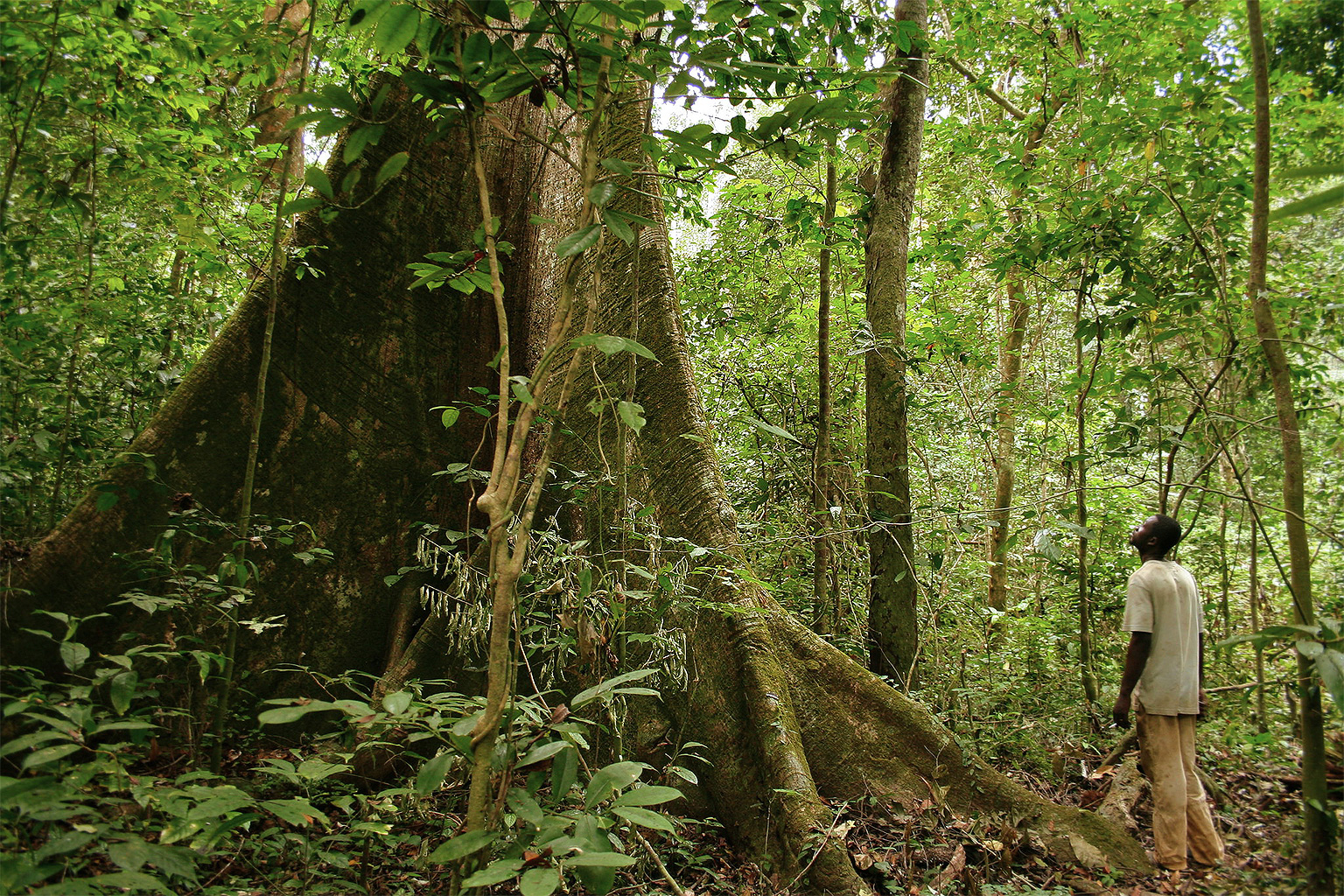
Oligui consolidates power after the transition
General Brice Clotaire Oligui Nguema won the presidential election in April 2025 with 94.9% of the vote and a 70% turnout. The victory gave the former junta leader a seven-year term that formally closed the political transition after the Bongo dynasty’s fall.
Oil still dominates revenue and exports
Oil revenues account for around 50% of Gabon’s tax revenues in 2023, according to Coface. The World Bank puts oil alongside manganese and wood as the three commodities behind 97% of total exports.
TotalEnergies EP Gabon pumped 16.0 thousand barrels per day in 2025, a 6% decline from 17.0 thousand b/d in 2024. The company blamed planned shutdowns on the Anguille and Torpille fields in the second quarter of 2025.
TotalEnergies reported 2025 revenues of USD 418 million, down 10% from USD 465 million in 2024. A 15% drop in average selling prices was only partly offset by a 7% increase in volumes of crude sold.
Aggregate Gabonese crude production stood at 227 thousand b/d in December 2025, up from the 215 thousand b/d recorded in November 2025. The CEIC series, drawn from OPEC data, shows a long-term average of 179 thousand b/d between April 2016 and December 2025.
The World Bank’s CEMAC Economic Barometer warns that maturing oilfields will gradually reduce output from 2025. Ecofin adds that Gabonese oil production is expected to contract by 3% in 2026 after growing 3.1% in 2024 on targeted investment.
Live Market IntelligenceCommodities — Live Market Board
Rio Times · Live Market Intelligence
Commodities — Live Market Board
-0.03%
| Instrument | Last | Change | YoY | Prev. | High | Low | Volume |
|---|---|---|---|---|---|---|---|
| GOLD | 4,461 | +1.78% | +33.20% | 4,383 | 4,503 | 4,421 | 139,824 |
| SILVER | 65.59 | +1.26% | +73.05% | 64.77 | 66.98 | 64.81 | 46,406 |
| BRENT | 88.88 | -0.03% | +34.42% | 88.91 | 90.07 | 88.12 | 29,713 |
| WTI | 83.11 | -0.11% | +31.57% | 83.20 | 84.35 | 82.40 | 166,848 |
| COPPER | 6.61 | +0.03% | +46.70% | 6.61 | 6.71 | 6.61 | 39,543 |
| LITHIUM | 75.20 | +1.47% | +62.95% | 74.11 | 75.80 | 75.08 | 89,275 |
| IRON ORE | 161.91 | — | +58.10% | 161.91 | 161.91 | 1 | |
| SOY | 1,184 | +3.20% | +17.05% | 1,148 | 1,199 | 1,168 | 163,179 |
| CORN | 480.50 | +10.02% | +29.34% | 436.75 | 480.75 | 459.50 | 341,248 |
| WHEAT | 655.00 | +3.93% | +29.70% | 630.25 | 657.75 | 631.50 | 128,793 |
| COFFEE | 317.25 | -5.51% | +0.67% | 335.75 | 321.20 | 313.55 | 21,747 |
| SUGAR | 16.43 | -1.79% | -3.01% | 16.73 | 17.11 | 16.22 | 171,992 |
| COCOA | 5,719 | +3.18% | -34.96% | 5,543 | 5,779 | 5,574 | 26,773 |
| ORANGE JUICE | 138.55 | -0.47% | -45.38% | 139.20 | 141.05 | 137.50 | 703 |
| COTTON | 85.03 | +2.33% | +26.78% | 83.09 | 82.90 | 81.96 | 16,546 |
| BEEF | 223.60 | -3.93% | -5.18% | 232.75 | 226.40 | 223.00 | 16,126 |
| CATTLE | 339.10 | -3.16% | -1.82% | 350.17 | 345.50 | 338.60 | 10,164 |
| USD/BRL | 5.16 | +0.01% | -5.13% | 5.16 | 5.18 | 5.14 | — |
Manganese emerges as second pillar with limits
The 2026 amending finance law revised manganese production upward to 9.424 million tonnes from the originally planned 9.229 million tonnes. The budget assumes a selling price of USD 166.9 per tonne, down just 0.8%.
Financial Afrik notes that even this improved volume leaves manganese too marginal to serve as a credible diversification lever at current prices. The mineral remains the second pillar but cannot replace oil revenue alone.
Non-oil exports including manganese, liquefied natural gas and iron ore are expected to grow significantly, according to Coface. Yet the same assessment cautions that these gains will not fully offset declining oil sales.
The World Bank’s Gabon Economic Update puts manganese, oil and wood together at 97% of exports. Any price shock to manganese or timber hits the current account hard because the export base is so narrow.
New iron and gold projects promise a broader base
Gabon’s mining sector is expanding beyond manganese with initial output expected from the Baniaka iron and Etéké gold projects. Ecofin reports that expanded manganese processing is part of a deliberate push to move up the value chain.
Belinga shipped its first cargo in December 2023, though the World Bank still describes production there as upcoming, and expects exploitation to begin at Baniaka in 2026. Both deposits rank among Africa’s largest and should boost mining activity.
Libreville plans a crude manganese export ban set for 2029, according to a World Bank country document. The policy aims to force local processing and create jobs in the mining belt around Belinga.
These projects give substance to the government’s diversification rhetoric but carry long lead times. Investors will judge whether infrastructure and power supply can keep pace with the new mines.
Fiscal numbers and the May 2026 growth revision
The Council of Ministers adopted an amending finance law on 22 May 2026 that revised expected growth to 4%, down from an initial 6.5%. This aligns more closely with the IMF’s projection of 2.7% growth for 2026.
The government had targeted 6.5% growth for 2026, while the IMF projected 2.6%, a divergence documented in an analysis of Gabon’s dialogue with the Fund. The eventual 4% revision reflects a middle path driven by weaker oil assumptions.
Inflation stood at 1.2% in 2024, with public debt at 70.9% of GDP on IMF figures. Debt at that level already breaches the CEMAC convergence ceiling of 70%, set by the Central African Economic and Monetary Community rules on debt and price stability.
Coface expected inflation to remain below the BEAC’s 3% target in 2025; the World Bank projects 3.2% for 2026, above that mark. The BEAC is the Banque des États de l’Afrique Centrale, the regional central bank for the six CEMAC member states.
Growth driven by non-oil sectors
The World Bank projects growth of 3.4% in 2024, 2.5% in 2025 and 3.0% in 2026, driven mainly by non-oil sectors. New iron and manganese deposits, timber, oil palm, biodiesel and gas industries underpin this outlook.
A more recent World Bank update projects average growth of about 3.3% over 2026 to 2028. Mining, wood and agricultural sectors do the heavy lifting while oil faces structural challenges.
Ecofin cites official forecasts targeting 9.2% non-oil growth in 2026, nearly three times the current rate. That was the pre-revision target; the amending finance law of 22 May 2026 cut the headline goal to 4%.
The gap between official ambition and external forecasts remains wide. The IMF’s Article IV report notes that gradually declining oil wealth weighs on long-term growth and the external position because diversification is still moderate.
Debt management inside CEMAC
Public debt at 70.9% of GDP in 2024 breached the CEMAC convergence ceiling of 70%, and the World Bank puts it higher still at 74.7% for 2024 and 81.9% for 2025. CEMAC stands for the Communauté Économique et Monétaire de l’Afrique Centrale, the regional bloc sharing a central bank.
The BEAC anchors monetary policy and keeps the regional currency, the Central African franc, pegged to the euro. This provides exchange rate stability but limits domestic policy flexibility.
The IMF 2024 Article IV report notes the transition government intended to accelerate diversification while continuing hydrocarbon development. Infrastructure for mining, wood, agriculture and tourism formed the core of that strategy.
Gabon formally requested an IMF programme on 11 March 2026, with talks targeted to conclude by December 2026. The government revised its own growth target downward without securing a formal agreement with the Fund.
Chinese and French roles remain central
TotalEnergies EP Gabon remains a key operator in the oil sector, with production and revenue figures verified through filings with France’s markets regulator. French capital still anchors the legacy hydrocarbon assets.
Chinese investors have expanded heavily into mining infrastructure, particularly around the Belinga iron ore deposit. The World Bank notes that iron ore production at Belinga started in 2024, a project long associated with Chinese financing.
China’s presence also extends to manganese processing and port logistics, areas where Gabon wants to reduce raw exports. The 2029 crude manganese export ban would push more beneficiation activity toward Chinese joint ventures.
French engagement goes beyond oil into timber and services, while Paris remains the dominant external political partner. The parallel Chinese expansion into extractive infrastructure gives Libreville bargaining power in concession negotiations.
Sovereign fund and local processing ambitions
The government is building a sovereign fund to manage resource revenue, part of a broader post-Bongo policy shift. The transition government’s IMF-documented strategy already called for infrastructure to support mining, wood and agriculture.
Local processing is now the explicit goal across manganese, timber and gas. Ecofin reports that expanded manganese processing aims to reduce reliance on raw exports and move up the value chain.
The planned crude manganese export ban in 2029 would force domestic beneficiation. This mirrors similar resource nationalist policies in Indonesia and Zimbabwe that sought to capture more value from mining.
Biodiesel and gas industries are cited by the World Bank as emerging sectors that could widen the non-oil base. Oil palm development supports the biodiesel push while associated gas from oil fields feeds industrial demand.
What changes for investors after the transition
The April 2025 election removed political uncertainty by giving Oligui a seven-year mandate. Investors now face a government with clear priorities but constrained by oil decline and a narrow export base.
Oil majors should expect continued production declines at mature fields unless exploration reverses the trend.
Mining investors in manganese, iron and gold face a shifting policy environment. The 2029 crude export ban would require additional capital for processing plants and power infrastructure.
Fiscal risk is rising under CEMAC rules, with debt above the 70% convergence ceiling. Gabon formally requested an IMF programme on 11 March 2026, with talks targeted to conclude by December 2026, leaving external financing gaps until then.
The sovereign fund signals a long-term effort to smooth resource revenue, but its operational details remain thin. Investors should watch whether the fund actually receives deposits or exists mainly as a political statement.
Structural risks to the 2026 outlook
The concentration of exports in oil, manganese and wood exposes Gabon to commodity price swings. A simultaneous downturn in oil and manganese would strain the external position quickly.
Oil output decline is structural, not cyclical, according to the World Bank. Maturing fields and low global prices will slow the economy even as non-oil sectors grow.
The government’s own revision from 6.5% to 4% growth shows the difficulty of forecasting in a hydrocarbon-dependent economy. The IMF’s lower 2.6% projection suggests further downward risk.
Inflation is controlled for now, but the end of the wheat flour subsidy could push food prices higher. Coface expects the overall rate to stay below 3% thanks to lower import costs.
Debt service will become harder if oil revenues keep falling. Half of tax revenue depends on oil, so any production or price shock feeds directly into the budget deficit.
The Big Picture
Latest developments
- Doing Business in the Republic of Congo: Oil, a Euro Peg and a Big Port — 1 October 2026
- São Tomé Opposition Wins Vote by 561 Ballots but Still Needs a Partner — 1 October 2026
- Africa Intelligence Brief — Wednesday, September 30, 2026 — 30 September 2026
- Nigeria Women Investors Back Cooking Oil Start-up With Up to US$1 Million — 30 September 2026
This article was produced by The Rio Times’ automated newsroom system. How we use AI · Report an error · Editorial responsibility: Matthias Camenzind, Editor-in-Chief