
France in Turmoil
Published Thursday, Nov. 5, 9:30 a.m. ET (3:30 p.m. Paris) · Source: Rhône prefecture, French Interior Ministry, CGT, Polymarket
Lyon marched all morning under a ban that kept the crowd away from its grandest square. By afternoon, the city’s officials and its unions could not agree on how many people had come.
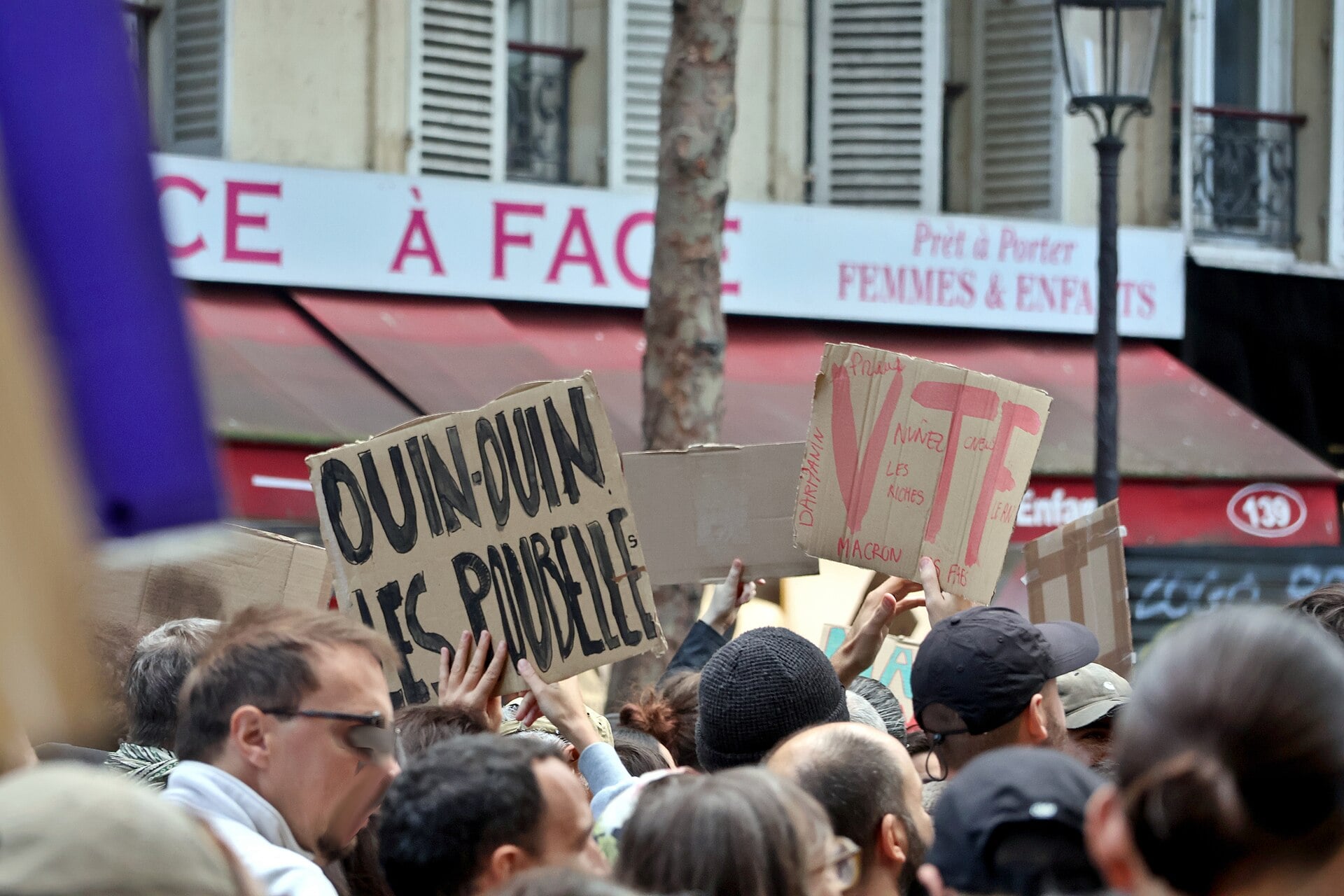
Between 30,500 and 55,000 people marched through Lyon, France’s third-largest city, on Thursday, Nov. 5, during a nationwide strike day. The Rhône prefecture, the central government’s local office, counted 30,500, while the CGT, one of France’s biggest union federations, said about 55,000, in counts reported by Thursday afternoon in Lyon.
The march is the latest chapter in our France protests coverage, and why France is in crisis explains the anger behind it. Police and unions count crowds by different methods, so the two numbers are claims, not a verdict.
Key Facts
- Lyon turnout. Prefecture counts 30,500; the CGT union says about 55,000. Both counts were reported Thursday afternoon, Lyon time.
- National turnout. Interior Ministry: 270,000 marchers outside Paris at 7:00 a.m. ET; the CGT says more than 250,000.
- Lyon clashes. Mortar fire, thrown objects and tear gas at the march’s edge; no official arrest total yet.
- Still unknown. Final national counts and the government’s answer to the pay demands are yet to come.
- Prediction markets. Polymarket puts France passing a national budget by Dec. 31 at 54% (9:08 a.m. ET, Nov. 5).
This story is part of our coverage of the why France is in crisis. Dates, times and how to follow it are in our guide.
In plain English
Unions across France called a one-day strike over pay, public services, jobs and industry. In Lyon, local officials banned marching through the city centre, which shaped where the crowd could go and where scuffles broke out.
A Ban Redrew the Lyon Route
On Tuesday, Nov. 3, the Rhône prefecture banned demonstrations in a central perimeter from 3:00 a.m. to 2:00 p.m. ET on Nov. 5 (9:00 a.m. to 8:00 p.m. in Lyon). The order barred marchers from crossing the Pont de la Guillotière bridge and from ending at Place Bellecour, the city’s main square.
The prefecture pointed to the Oct. 31 march, which it said drew 19,000 people, nine arrests and four injured officers, with mortar fire and burning barricades. It also said it had spotted calls on Telegram, a messaging app, urging people ready to clash with police to join the head of the march.
The unions challenged the ban in court and lost: the Lyon administrative court rejected their appeal on Wednesday, Nov. 4. State services had expected 20,000 to 30,000 marchers, so the prefecture’s own 30,500 sits just above that range. It is also about 60% more than the 19,000 it counted on Oct. 31, a sign the Lyon turnout is growing.
Where the March Went and Where It Turned Rough
The procession was due to leave the Manufacture des Tabacs, a former tobacco factory, at 4:30 a.m. ET (10:30 a.m. in Lyon). It followed Cours Gambetta, Quai Claude Bernard and Avenue Berthelot toward Place Jean-Macé, a square in the city’s 7th district.
Trouble flared at the margins. Black bloc militants, masked protesters who seek confrontation, were at the front and threw projectiles at police, and by about 7:30 a.m. ET (1:30 p.m. in Lyon) clashes with mortar fire and thrown objects had broken out at the Pont Gallieni bridge, where riot police used tear gas.
The National Picture Is Larger and Louder
At 1:00 p.m. in Paris (7:00 a.m. ET), the Interior Ministry, which runs France’s police, counted 270,000 marchers in 180 marches outside Paris. The CGT said it had counted more than 250,000 in 73 cities.
Five union federations, the CFDT, CGT, FO, Unsa and FSU, called the strike over pay, public services, jobs and industry. Their demands centre on higher pay, led by the minimum wage.
Interior Minister Laurent Nuñez, France’s top police official, put 70,000 police and gendarmes on duty and promised an “extremely firm response” to any excesses. At midday, the Ministry of Public Action, which oversees the civil service, reported strike rates of 9.89% in the state civil service, 4.60% in local government and 3.93% in hospitals.
In Paris, police banned the Bastille to Concorde route the unions proposed and approved a Republic to Nation march instead.
What Prediction Markets Say
Polymarket, a crypto-based prediction market, priced France passing a national budget by Dec. 31 at 54% on Nov. 5 at 9:08 a.m. ET, with about US$26,000 traded. A French state of emergency by Dec. 31 stood at 6.5%, on about US$2.7 million traded.
Why we show this: prediction markets turn real-money bets into a live probability that moves within minutes of the news, which is why investors, campaigns and newsrooms in the United States now follow them closely. We show them next to polls and official results, never instead of them.
What It Means for US Readers
A long season of street pressure makes it harder for Paris to pass a budget, which matters to Americans who hold French bonds or shares. Travellers should expect crowds, closed streets near march routes and disrupted transport on strike days. Final counts and the government’s reply to the pay demands, expected in the coming days, will show whether the movement keeps growing.
What Is Not Known
Nobody has explained the gap between 30,500 and 55,000 in Lyon, and no final national or Paris count is out. Official totals for arrests, injuries and damage and the government’s reply to the pay demands are also missing.
Frequently Asked Questions
How many people marched in Lyon on Nov. 5?
The Rhône prefecture counted 30,500 and the CGT union about 55,000. The gap reflects different counting methods.
Why was the Lyon route restricted?
The prefecture banned marches in a central perimeter, citing violence at the Oct. 31 march. Marchers could not cross the Pont de la Guillotière bridge or end at Place Bellecour.
Sources: Rhône prefecture, French Interior Ministry, CFDT strike call, Unsa strike call, Polymarket. Related: will France’s government collapse, why is France protesting.
Editorial responsibility: Matthias Camenzind, Editor-in-Chief · Editorial standards · Report an error
France in Turmoil
- Why France Is in Crisis, and How Macron Lost His Grip
- Why Is France Protesting? Riots, Curfews and the 2027 Race
- Is It Safe to Travel to France Right Now? Curfews, Strikes
- Who Will Win France’s 2027 Election? Polls and Odds