France in Turmoil
Published Thursday, Nov. 5, 5:45 a.m. ET (11:45 a.m. Paris) · Source: French Education Ministry, Union syndicale lycéenne, SNCF and RATP notices, Polymarket
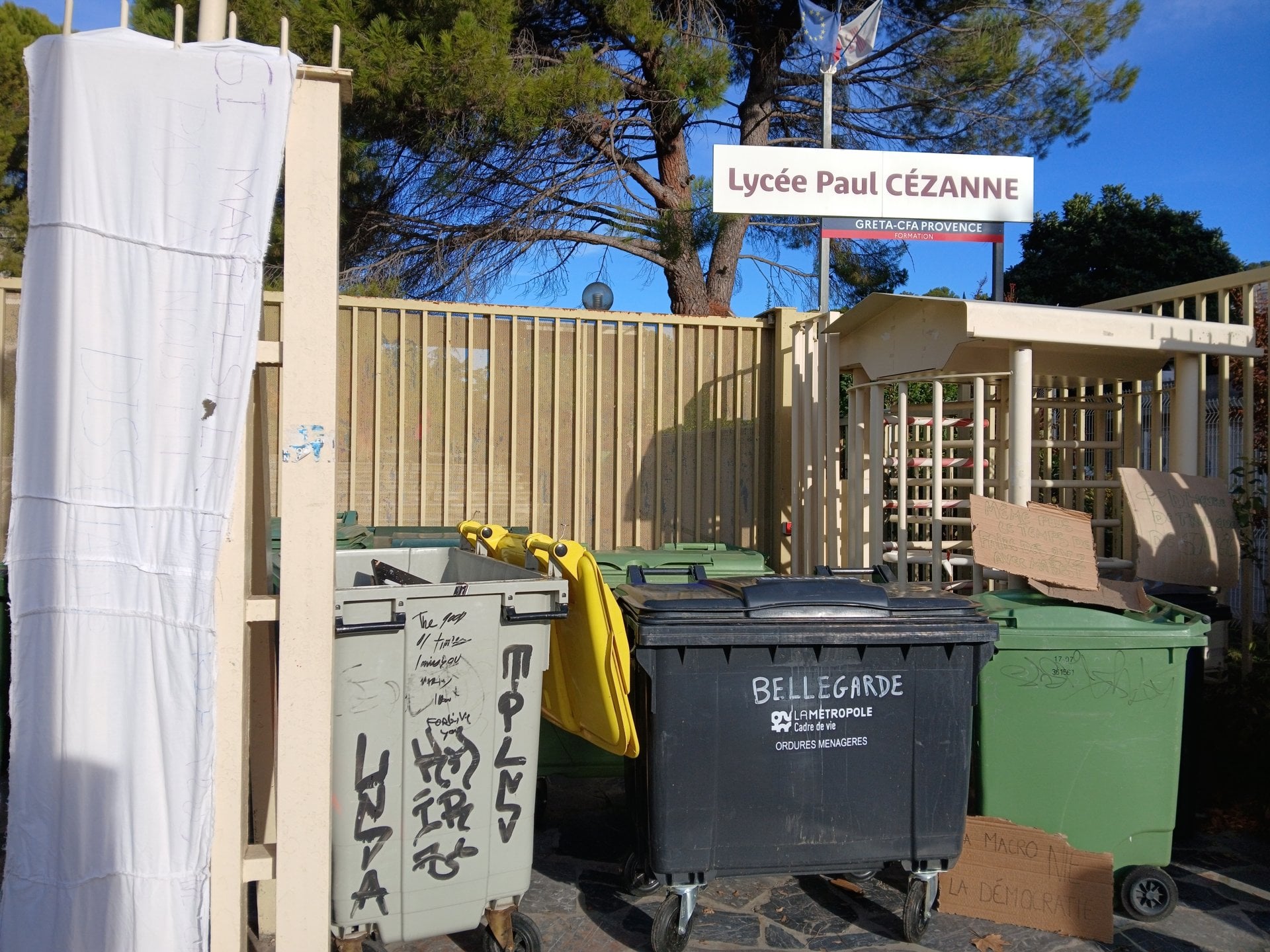
France woke up to a counting war over its schools. The government sees 81 blockades, while the main student union sees more than 1,000 schools at a standstill.
By 10 a.m. Paris time (4 a.m. ET) on Thursday, Nov. 5, France’s Education Ministry said 81 of its roughly 3,700 high schools were blocked, about 2.2%. The Union syndicale lycéenne (USL), a student union that helps lead the movement, said more than 1,000 were “at a standstill.”
The clash opens a national strike day. Our France protests hub tracks every step, and why France is in crisis explains the anger over prices and the 2027 budget.
Key Facts
- What happened. France counts 81 high schools blocked at 10 a.m. Paris time; students say over 1,000.
- The numbers. 81 of about 3,700 schools, or 2.2%. Students count shut schools, not just blockades.
- What happens next. Paris march, 8 a.m. to 1 p.m. ET (2 p.m. to 7 p.m. Paris), République to Nation.
- Prediction markets. Polymarket puts a French state of emergency by Dec. 31 at 6.5% (5:20 a.m. ET, Nov. 5).
This story is part of our coverage of the why France is in crisis. Dates, times and how to follow it are in our guide.
In plain English
For about six weeks, French teenagers have blocked school gates to protest the government’s budget and school policy. Unions of adult workers now join them for a one-day national strike over pay and prices.
Why the Two Counts Are So Far Apart
The USL counts schools blocked by students, schools closed by the authorities and schools sealed off by police. The ministry counts blockades only, and it said no blockade was reported in 84% of France’s departments, its regional units.
Both numbers can be true at once because they measure different things. Neither side has published how it counted, and the ministry’s figure covers only the first hours of the school day.
Monday Looked Calmer Than This Thursday
The ministry counted 41 blocked schools on the morning of Monday, Nov. 2, the first day back from the autumn holiday. Édouard Geffray, the education minister, told France Inter radio the situation was “fairly residual,” then warned that “the school year is now at risk for several hundred thousand pupils.”
“Everyone is free to protest,” he said, “but nobody must stop others from going to class.” The government has offered 500 extra secondary-school posts in the 2027 budget and a cap of 28 pupils per class, phased in from autumn 2027, yet the blockades continue. The ministry’s own count has roughly doubled in three days, from 41 on Monday to 81 on Thursday.
Unions Bring the Strike to Trains and Classrooms
Thursday’s strike is wider than the student movement. Sophie Binet, general secretary of the CGT (Confédération générale du travail, one of France’s biggest union confederations), wants higher wages everywhere and changes to the government’s draft 2027 budget.
The ministry put the strike rate in public primary schools at 17.54%. At SNCF, the state rail operator, four unions called a strike, and the company expects slightly disrupted high-speed TGV service and disrupted regional trains.
The RATP, which runs Paris public transport, expects normal metro, bus and tram service. The exception is the RER B suburban line, which runs a reduced service.
The Paris march runs from Place de la République to Place de la Nation between 2 p.m. and 7 p.m. Paris time (8 a.m. to 1 p.m. ET), on the route police set after a court upheld the ban on the unions’ preferred one. We covered the route fight and the 70,000-officer police deployment on Wednesday.
What Prediction Markets Say
Polymarket, a crypto-based prediction market, prices a French state of emergency by Dec. 31 at 6.5%, with about US$2.7 million traded. A separate contract puts the chance France passes a national budget by Dec. 31 at 63.5%, with about US$26,000 traded (5:20 a.m. ET, Nov. 5).
Prices are bets, not polls. Why we show this: prediction markets turn real-money bets into a live probability that moves within minutes of the news, which is why investors, campaigns and newsrooms in the United States now follow them closely. We show them next to polls and official results, never instead of them.
What It Means for US Readers
Americans travelling in France today should expect rail delays and a disrupted RER B, the line many visitors use between Paris and its airports. Investors tracking French politics get an early read on whether the strike merges with the student revolt before the budget vote.
What Is Not Known
No turnout, arrest or injury figures for Nov. 5 were available at the time of writing. It is also unclear how the ministry’s count will move through the day, or how many of the USL’s 1,000 schools were in fact open. The next checkpoint is the Paris march, which ends at 1 p.m. ET (7 p.m. Paris), and any second school count would show whether the blockades are growing.
Frequently Asked Questions
How many French high schools were blocked on Nov. 5?
The Education Ministry counted 81 of about 3,700 at 10 a.m. Paris time (4 a.m. ET). The student union USL says more than 1,000 are at a standstill.
Why is France on strike?
Unions want higher wages and changes to the 2027 budget. Students joined them, protesting school policy and the cost of living.
Sources: French Education Ministry; Union syndicale lycéenne; SNCF; RATP; Polymarket.
This article was produced by The Rio Times’ automated newsroom system. How we use AI · Report an error · Editorial responsibility: Matthias Camenzind, Editor-in-Chief
France in Turmoil
- Why France Is in Crisis, and How Macron Lost His Grip
- Why Is France Protesting? Riots, Curfews and the 2027 Race
- Is It Safe to Travel to France Right Now? Curfews, Strikes
- Who Will Win France’s 2027 Election? Polls and Odds