France Africa Military Withdrawal Ends Sahel Bases as Russia’s Africa Corps Moves In
Geopolitics · Africa
—The stakes. France has closed all major combat bases in the Sahel and West Africa, marking the end of a decades-old security architecture.
—The vacuum. Russia’s state-controlled Africa Corps is filling the security void left by France in Mali, Burkina Faso, and Niger.
—The remaining footprint. France now retains a reduced military presence in Djibouti, Gabon and Côte d’Ivoire, where about 80 advisers remain, and returned to Chad in April 2026, with a new focus on training and intelligence.
—The business risk. French investors face higher political risk in Sahelian states now aligned with Moscow, even as they seek new security partnerships.
—The counterterrorism question. Local juntas now rely on Russian contractors for counterterrorism, while insurgent violence persists across the region.
What began as a tactical redeployment has become a strategic rupture. By mid-2026, France’s two-decade combat posture in the Sahel is gone, replaced by Russian paramilitary operations that answer to African military juntas rather than Paris.
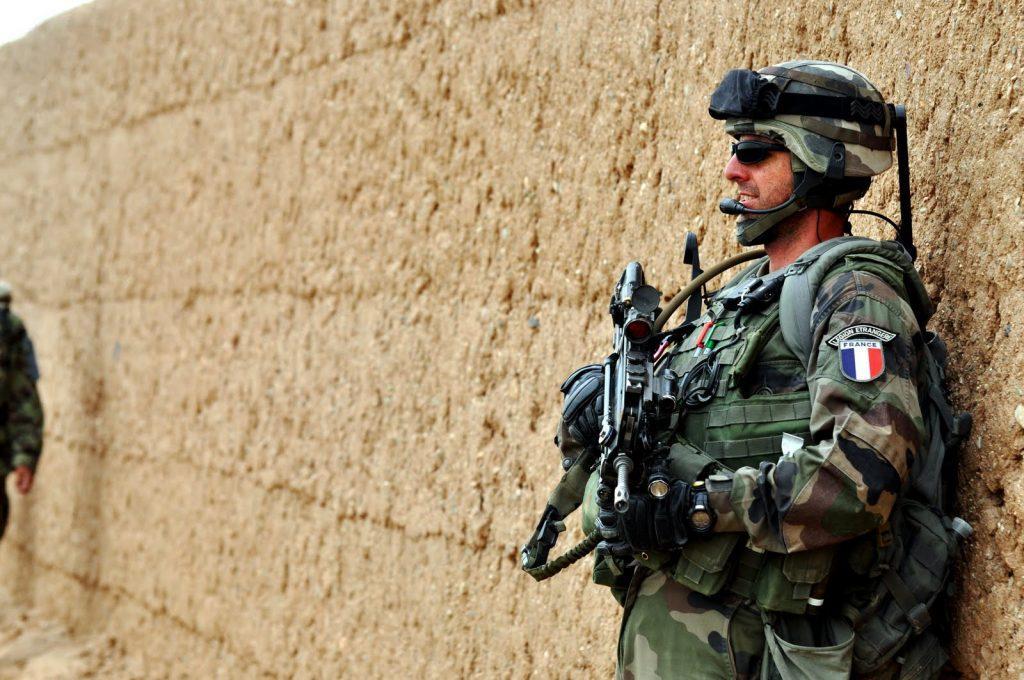
The End of an Architecture
France’s military withdrawal from West Africa ran from March 2022 to July 2025.
It closed bases in Mali, Burkina Faso, Niger, Chad, Senegal, and Ivory Coast.
The process became known as the ‘African Frexit’ among analysts tracking the exits.
Paris retains only a much smaller footprint in Djibouti and Gabon.
That footprint now focuses on training and intelligence partnerships rather than permanent combat deployment.
Mali First, Then the Dominoes
Operation Barkhane peaked at about 5,500 French troops across Mali, Niger and Chad, with roughly 2,400 in Mali when the withdrawal was announced.
President Emmanuel Macron announced the Mali withdrawal in February 2022.
The last French unit left Mali on 15 August 2022, crossing into Niger.
That ended a nine-year mission launched to expel Islamist extremists from northern Mali.
Burkina Faso and Niger Expel Paris
Burkina Faso requested the departure of French troops in January 2023.
Some 400 French soldiers left Burkina Faso, with withdrawal complete in February 2023.
France had pivoted its regional focus to Niger after leaving Mali.
Niger then expelled French forces following a coup, with Paris announcing withdrawal in September 2023.
Around 1,500 French soldiers left Niger by December 2023, and France handed over all its bases there.
Chad Closes the Last Sahel Base
Chad hosted about 1,000 French soldiers across three bases, headquartered at Adji Kossei in N’Djamena.
That base was considered France’s last major Sahel base.
On 28 November 2024, Mahamat Idriss Déby’s government terminated Chad’s defence agreements with France.
The decision ended a relationship in place for roughly 65 years.
France completed its withdrawal from Sergent Adji Kossei base on 30 January 2025, one day before the deadline.
Ivory Coast and Senegal Shrink the Map
Ivory Coast announced in December 2024 that roughly 600 French troops would leave.
That withdrawal was completed on 20 February 2025.
Senegal announced a withdrawal in November 2024 for about 350 French soldiers.
Their departure was completed on 17 July 2025.
Combined, these moves removed France’s remaining West African garrisons outside Gabon.
Russia’s Africa Corps Moves In
Russia’s state-controlled Africa Corps has moved into several vacated spaces.
It positions itself as the successor to Wagner and explicitly aims to fill the vacuum left by French withdrawals.
Mali, Burkina Faso, and Niger are the main hubs of this new Russian deployment.
The Africa Corps is controlled by the Russian state, unlike the semi-deniable Wagner model.
Its arrival complicates Western counterterrorism cooperation and shifts local political influence toward Moscow.
Counterterrorism After the French Exit
France’s departure has not ended jihadist violence in the Sahel.
Local juntas now rely on Russian contractors for counterterrorism operations.
Russia’s Africa Corps offers protection for regimes but less capacity for holding territory or winning hearts and minds.
Analysts note the security vacuum left by Western withdrawals has been filled by Russian forces with a different mandate.
That mandate prioritizes regime survival over the population-centric approach France long claimed.
French Business Interests Face New Risks
French investors now operate in Sahelian states where Paris has almost no military sway.
Contracts in mining, logistics, and infrastructure are exposed to higher political risk.
Governments in Mali, Burkina Faso, and Niger have signalled willingness to renegotiate terms with new partners.
The new security providers are Russian, but the economic arbitrage may favour Chinese, Turkish, or Gulf actors.
France retains a commercial presence, but its protection umbrella has vanished.
Chad’s Partial Reversal
Chad ended its defence agreement with France in late November 2024.
The withdrawal of about 1,000 French troops ended some 40 years of continuous deployment, in a relationship dating from independence in 1960.
By April 2026, the first French personnel returned to Chad under a redefined arrangement.
Their focus is training, intelligence, and limited air support rather than permanent bases.
This signals that N’Djamena may accept a lighter French footprint without restoring the old garrison model.
What Remains in Gabon and Djibouti
France retains military forces in Gabon and Djibouti as of 2026.
Djibouti hosts France’s largest remaining base on the continent.
Gabon serves as a hub for training and regional liaison rather than large combat deployments.
Both bases are framed as partnership platforms, not forward operating posts for Sahel missions.
The reduced posture marks a clear diminishment of French military influence in West and Central Africa.
The New Arithmetic Of French Troops
The shift away from large bases can be seen in simple numbers. Before the withdrawal decisions, France kept around 1,000 soldiers in Chad and about 600 at the Port-Bouët base in Ivory Coast, according to one report. Senegal hosted about 350 French troops before the exit was completed in July 2025. After the retrenchment, one AFP-based report put France’s planned total for West and Central Africa at about 600 troops. That is a sharp drop from the much larger deployments that once defined the French military footprint in the region.
The remaining presence is also uneven. Djibouti remains the main enduring French military foothold in Africa, with around 1,500 troops stationed there. Gabon kept a reduced presence at Libreville, down from about 380 troops in 2023 to roughly 100 from 1 July 2025 under the reconfigured posture. Ivory Coast still had about 80 French servicemen in advising and training roles after the base handover on 20 February 2025. That means the practical center of French military activity on the continent is no longer in the Sahel or in West African capital cities, but in a single base in the Horn of Africa.
The changing arithmetic also matters for how France talks about its role. Large garrisons with hundreds of soldiers were easy to see and easy to criticize. Now Paris is shifting to smaller liaison detachments, training missions, and targeted military assistance. Le Monde reported on 18 February 2026 that France and Chad were working toward a renewed military partnership built around a more discreet, mutually beneficial relationship, without the former permanent French presence. For countries like Senegal and Chad, the French soldier count has gone from hundreds or more to zero in permanent terms. For Djibouti, the number stays high. That difference may define the next phase of French policy in Africa.
A New Security Map for Investors
The African Frexit has redrawn the continent’s security map in under four years.
Foreign investors now weigh Russian security provision against French retreat.
The exit means fewer Western military logistics, less predictable legal recourse, and more volatility in affected states.
French business interests must adapt to a reality where Paris is no longer the guarantor of stability.
That adaptation will define French economic strategy in Africa through the rest of the decade.
Connected Coverage
DR Congo: Kinshasa Comics Festival Returns After Six Years
The Big Picture
Latest developments
- Africa Intelligence Brief — Saturday, September 26, 2026 — 26 September 2026
- Kenya’s Exports to the UAE More Than Double After Iran War Slump — 26 September 2026
- Africa Intelligence Brief — Friday, September 25, 2026 — 25 September 2026
- France to Send Troops to Guard the Saudi Oil Port That Bypasses Hormuz — 25 September 2026
This article was produced by The Rio Times’ automated newsroom system. How we use AI · Report an error · Editorial responsibility: Matthias Camenzind, Editor-in-Chief
Great Powers in Africa
- Who Backs Whom in Africa 2026: China, Russia, US, Gulf
- Africa: The New Scramble
- DP World and AD Ports Drive Gulf States Africa Investment as Saudi Deals Follow
- China Slashes Africa Lending 46% as Kenya and Angola Race to Refinance Old Debts