Africa Intelligence Brief — Friday, September 25, 2026
Executive Summary
Africa Intelligence Brief for 25 September 2026: Antananarivo marks a revolt it no longer trusts as the activists who toppled a president say the officers they installed have arrested them, Juba clears out its entire transitional government three months before a vote, Harare asks to...
Africa Intelligence Brief — Friday, 25 September 2026

Africa’s temper this Friday is impatience with its own institutions rather than with anyone abroad. Four governments spent the week arguing with their own citizens about who is owed what.
The register is tired book-keeping rather than rage. Malagasy activists are auditing what their revolt bought them, Zimbabwean members of parliament are auditing sewage works, and South Sudan’s president has audited his cabinet away.
Antananarivo is the sharpest case, because both sides are marking the same anniversary. Streets around Anosy and Ambohidahy were closed to traffic from 7 a.m. local time on Friday for the unveiling of a memorial stone.
Juba emptied itself on purpose. President Salva Kiir dissolved the transitional unity government and removed every vice-president and minister by decree on Tuesday evening, three months before an election set for 22 December.
Southern Africa’s story this week is plumbing, and it is being counted rather than shouted. A parliamentary committee’s report told Zimbabwe that only 20 of the country’s 63 sewage treatment plants still work.
What steadies the week is being built rather than announced. Uganda has begun a power line into South Sudan, and Madagascar’s footballers were in Nigeria on Friday for a match the whole island could watch.
Key Facts
Madagascar Marks A Revolt It No Longer Trusts
Madagascar spent Friday marking an uprising whose authors say it was taken from them. The first protest, over chronic water and power cuts, was held on 25 September 2025.
The officers who ended up governing are now the people the protesters complain about. Felana Andriatahina, 32, who runs an eco-construction business and belongs to the activists’ collective, told Agence France-Presse “It’s a betrayal”.
Her reasoning is about who benefited. She told the agency that it was the movement’s street protests that put the present rulers in office.
The state’s own answer this week was a public holiday, and then a row about it. Midi Madagasikara, a Malagasy daily, reported on 23 September that a decree numbered 2026-2212 made Friday a paid non-working day nationwide.
Its stated purpose was to honour those killed or hurt in 2025. The labour ministry’s own Facebook page then said that the declaration was untrue.
The minister blamed intruders rather than his own department. Denis Franconio Mac said the ministry had lost access to that page and pointed at people out to sow disorder, the Malagasy news site 2424.mg reported on 24 September.
His own account is that the holiday stood after all. Mr Mac said the day was paid and non-working under a decree signed by the prime minister in the Conseil de gouvernement, the cabinet meeting the prime minister chairs.
The other body is the one that did not sign it. A Conseil des ministres is chaired by the head of state, and it is that distinction the row turned on.
The head of state had said something different from New York. The site 2424.mg reported that Colonel Michael Randrianirina denied the announcement on 23 September, saying no such decision had been taken.
The arrangements went ahead regardless of the payroll. Antananarivo’s city authority closed Rue Jean Ralaimongo, Rue Mohamed V and Rue Titsy to traffic from 7 a.m. local time until the ceremony ended, the site reported on Friday.
The memorial itself is at Anosy. L’Express de Madagascar, a Malagasy daily, reported that a commemorative stele had been erected at the roundabout leading towards the Ambohidahy tunnel, to be unveiled at the ceremony.
The theme was set by the organisers. L’Express reported that the day ran under the words “Engagement et unité pour la patrie”, or engagement and unity for the homeland.
The head of state was expected there with four High Counsellors of the Refoundation. He had addressed the United Nations General Assembly the day before.
What he said in New York was a year. The site 2424.mg reported that Colonel Randrianirina reaffirmed the Refoundation authorities’ intention to hold elections before the end of 2027.
Not every part of the movement accepted the official version of its own anniversary. L’Express reported that a hardline faction of the Gen Z movement had distanced itself from the ceremony, saying its struggle had been stolen.
What turned relief into grievance was a set of arrests. Herizo Andriamanantena, 30, an agricultural engineer, is one of the movement’s best-known faces.
His own case is the one most often cited. He was held for 13 days after a march in April 2026 against the pace of reform, and six demonstrators were detained in all, Agence France-Presse reported.
He described the two feelings of the year in one interview. Of the day the old president fell he said “It was really both joy and relief”.
A second account is harder still. Nomena Ratsihorimanana, 36, who had worked for the National Human Rights Observatory, was held for five days.
He described the arrest itself. Mr Ratsihorimanana said “They put guns in our mouths, they threatened to kill us”.
The lawyers’ objection is about which charge is reached for. Maromanana Aliarivelo, a Malagasy lawyer, called the state-security charge “the tool par excellence used for ages by those in power in Madagascar”.
What steadies this is that the movement’s arithmetic has not changed. About 70 per cent of Malagasy are under 30, on United Nations children’s fund figures cited by Agence France-Presse.
The cost of last year is the other half of the ledger. At least 22 people died in the unrest of 2025.
The mood a year on is flat rather than angry. Midi Madagasikara wrote on 17 September that the generation which began it is disappointed to the point of paralysis.
Juba Clears The Room Before It Votes
South Sudan’s president answered his coming election by removing almost everyone else from office. Salva Kiir issued a Republican Order on the evening of Tuesday 22 September dissolving the transitional unity government created by the 2018 peace agreement.
The text was read out on the state broadcaster. Radio Tamazuj, a South Sudanese news service, reported that the order dissolved the national legislature and the Council of States.
The removals went further than the chamber. The order removed the first vice-president, Riek Machar, with the four other vice-presidents, and dissolved all ten state governments and their assemblies.
Somebody had to keep the lights on. Radio Tamazuj reported that 13 caretaker ministers, three deputy ministers and ten caretaker governors were named in the same order.
The ministries were told to carry on without their political heads. The order said all “substantive National Ministers and Deputy Ministers are hereby relieved of their portfolio duties”.
Their instruction was to keep working anyway. They were directed to “continue operating under an interim or caretaker structure” until the election.
The law that permits this was altered days earlier. President Kiir signed amendments to the National Elections Act of 2012 on 22 September, Reuters reported.
Two conditions came out of it. The amendments removed the requirements for a permanent constitution and a national census before any vote.
The same amendments resize the state. Radio Tamazuj reported that the new national assembly has 270 elected members, with 66 appointed to represent veterans, organised forces, minorities and people with special needs.
The states shrink in the same way. Their ten assemblies will hold 580 members between them, 58 each, half from constituencies and half from party lists.
The presidency keeps what the deputies lose. Vice-presidents must leave office three months before polling day, while the incumbent president retains full constitutional powers until the elected president takes office.
The presidency’s account of it is procedural. Africano Mande Gedima, the minister for presidential affairs, said the amendments brought the election law into line with the transitional constitution, Reuters reported.
Mr Machar’s party rejects the whole design. Oyet Nathaniel Pierino, acting chairman of the Sudan People’s Liberation Movement in Opposition, said in August that the changes stripped out the census and the constitution as conditions.
He put it as a legal charge. Mr Pierino accused the president of trying to “legalize” violations of the 2018 agreement, Radio Tamazuj reported.
Not every opponent takes that view. A rival faction of the same movement, led by the peacebuilding minister Stephen Par Kuol, supports the December vote.
A candidate outside both camps objects to the appointments rather than the election. Kornelio Kon Ngu leads the National United Democratic Front and was once third deputy speaker.
His complaint is about a broken understanding. Mr Kon Ngu said the parties had agreed that appointments would be made through consultation, and added “But this has not happened”.
Constitutional lawyers put the consequence bluntly. Michael Wani, who sat on the constitution drafting committee, said “Kiir will be the only person in power, without vice-presidents, without the executive, without the parliament”.
An analyst reads the same law as an escape route. Machot Amuom, an independent analyst, told Al Jazeera, the Qatari state-funded broadcaster, that it could let the president put the vote off for another year or two.
One civic voice made it a warning instead of a legal argument. Edmund Yakani, who directs the Community Empowerment for Progress Organisation, told Reuters “Don’t return us to war”.
The reason a reader far away should care is what a failed vote could restart. About 400,000 people died in the civil war that the 2018 agreement ended.
The man who signed that agreement is not free to contest this one. Mr Machar has been held since March 2025 on treason and murder charges that he denies.
Something is also being built across the same border. Uganda has begun a 299-kilometre high-voltage line joining its grid to South Sudan’s, the Nile Post, a Kampala news site, reported on Friday.
Uganda’s share of the money is one figure counted two ways. Its part is 91.7 million units of account, which the Nile Post put at about US$121 million.
The Fund’s own arithmetic is a little lower. The African Development Fund valued Uganda’s loan at US$119.21 million when it approved the financing, a difference of conversion date rather than of substance.
The whole link costs more than either country’s share. The Fund approved US$153.66 million towards a project costing US$260 million, with a US$32.50 million grant for South Sudan beside it.
The point of the line is diesel. Baba Fataja of the African Development Bank said “South Sudan is really struggling to have a reliable supply of electricity, which is very expensive because they depend on diesel”.
The Fund puts a number on who gains. It expects the link to reach 286,710 people in South Sudan and to carry 624 gigawatt hours between the two countries each year.
Uganda’s stretch is half the distance. It runs about 150 kilometres from Olwiyo to the border by way of Bibia, and the work runs from 2026 to 2029.
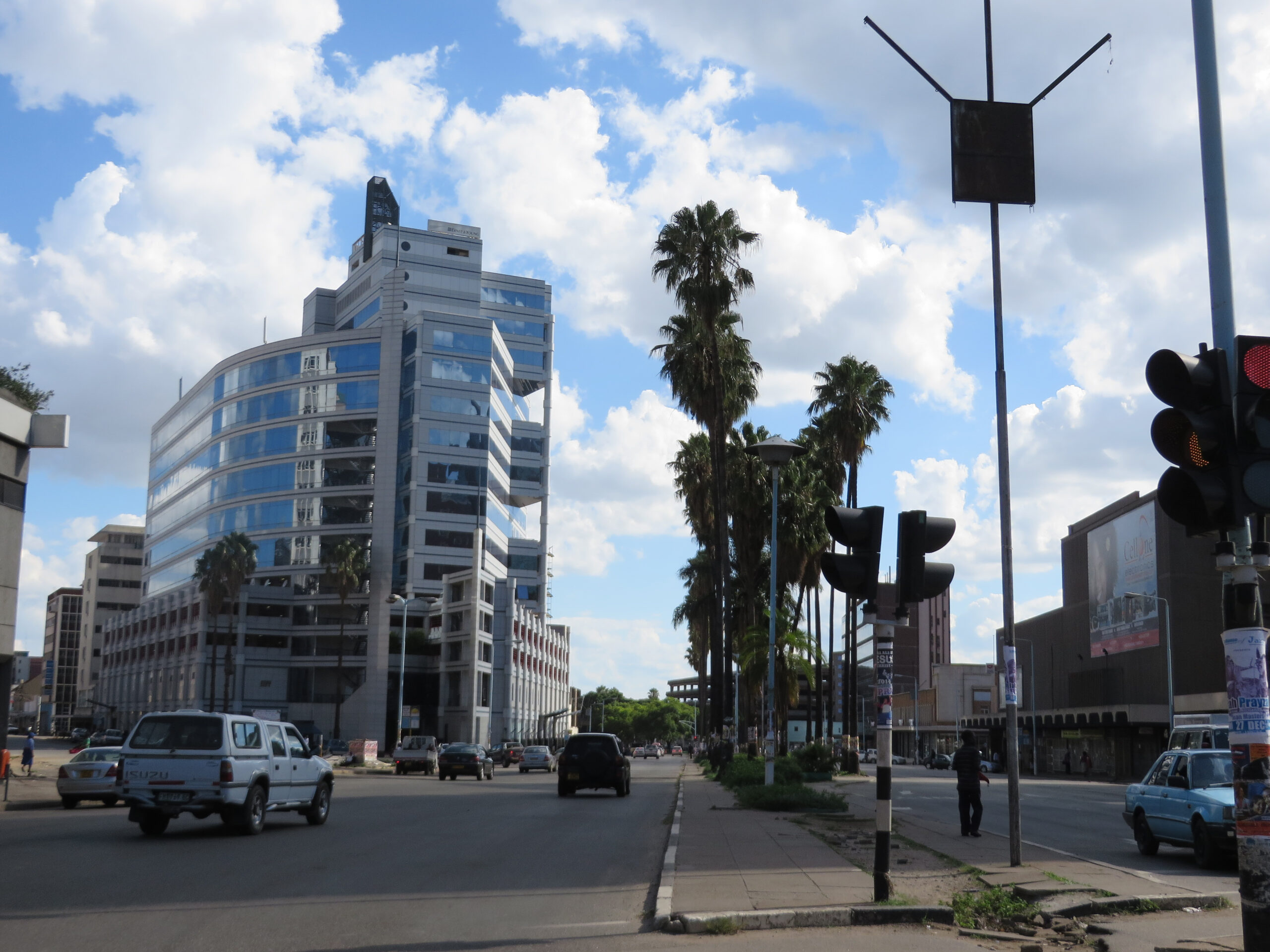
Harare Asks To Be Declared An Emergency
Zimbabwe’s parliament has put a number on its own sanitation and asked the president to act. Only 20 of the country’s 63 sewage treatment plants still function, NewZimbabwe.com, a London-based Zimbabwean site critical of the government, reported on Friday.
The report is older than the week it was read in. The portfolio committee on environment, climate and wildlife tabled it in July 2025, and it was released this week.
The figures explain the request. The plants still working discharge an estimated 570 megalitres of raw sewage every day.
One place is worse than all the others. At Amalinda Crossing, trunk mains that have given way have been discharging about 80 megalitres of raw sewage a day into the Mukuvisi River for 15 years.
Harare’s own works run below what they were built for. The Firle plant was designed for 144 megalitres a day and treats about 54, while the Crowborough plant does not work at all.
The river’s chemistry is in the report as well. Dissolved oxygen measured 51.2 per cent against a safe level of 60, and biological oxygen demand was 9.48 milligrams a litre.
The committee’s request carries a date. It asked the president to declare a state of emergency over the water and sanitation crisis by 31 December 2026.
A town next door is served worse than the capital. Chitungwiza receives about 12 megalitres of water a day against a demand of 112.5, NewZimbabwe.com reported.
Its own treatment works stopped long ago. The Zengeza wastewater plant has not functioned since 2007, and about 40,000 unlawful structures stand on protected wetland.
The remedy proposed for that town has a price and a deadline. The committee wants water authority status for Chitungwiza by December 2026 and a cholera alleviation programme costing about US$426.3 million.
Cholera is the word the committee reaches for because it is in living memory. The outbreak of 2008 and 2009 killed about 4,200 people and infected about 98,000, NewZimbabwe.com reported.
The city has not yet put its own account beside the committee’s. Harare’s council had published nothing about the report in its own newsroom by 16.35 UTC on Friday.
What was there instead was routine. The most recent item in that newsroom was dated 23 September and concerned a women’s leadership forum.
The national government’s position on councils is already on the record, and it is not sympathetic. Daniel Garwe, the minister of local government, addressed all 92 local authorities in June.
He drew the comparison himself. Mr Garwe said he would not tolerate one town with clean water beside another facing “a cholera outbreak due to broken-down sewer systems”, NewsDay, a privately owned Harare daily, reported.
He put the money problem in one figure. Mr Garwe said internal audits found councils spending up to 80 per cent of revenue on salaries and administration, leaving under 20 per cent for services.
He also told them the rules had changed. Mr Garwe called the new minimum service standards “no longer suggestions”.
In the same week the country began preparing for too little water rather than too much. Anxious Masuka, the minister of agriculture, said “Government has already approved a drought mitigation plan with six pillars”.
The new part of it is aircraft. Mr Masuka said a contingency plan agreed this time would use conventional aeroplanes and drones, 263Chat, an independent Harare online outlet, reported on 24 September.
Three aircraft are involved and the forecast is the reason. They will work from Harare, Bulawayo and Masvingo alongside drones.
The forecast is put as a possibility rather than a certainty. The Meteorological Services Department has said rainfall could be “erratic, poorly distributed and separated by prolonged dry spells”.
One official emphasis matters for a foreign reader. Obert Jiri, the permanent secretary for agriculture, said the next season was “expected to be drier than normal” and that “We are looking at irrigation development”.
The coming harvest is what those words are about. It decides how much maize Zimbabwe has to buy in.
Monrovia Quarrels Over What A Citizen May Type
Liberia is testing a new law against a doctored picture of its own vice-president. Police charged Jerry Nyantee Wrato with four offences under the Cybercrime Act of 2025.
The pictures were made by machine. The images and video of Vice-President Jeremiah Kpan Koung were produced with artificial intelligence, The Liberian Investigator, a Monrovia news site, reported on 21 September.
The charges are named in the police account. They are misuse of devices, cyberstalking, distribution of data messages inciting damage to property or violence, and distribution of harmful data messages.
The unusual part is who asked for the man’s release. Mr Koung said he had “no desire to press charges against this young man, or anyone else, merely for creating or sharing such content” about him.
He went further than that. Mr Koung said “I have therefore requested his immediate release”, The New Dawn, a Monrovia daily, reported on 21 September.
He added a line about how office should behave. Mr Koung said “Our laws must protect citizens, but leadership must also exercise tolerance, restraint and compassion”.
The police refused him. Gregory Coleman, the inspector-general, said that once such conduct comes to the attention of law enforcement, “the matter is no longer determined solely by the personal wishes of the individual affected”.
He was careful about what the charge meant. Mr Coleman said the action was not a determination of guilt.
The case has since stalled in a courtroom rather than moved. Judge Pape Suah of Criminal Court B postponed a habeas corpus hearing on Thursday 24 September, FrontPage Africa, a Monrovia paper known for investigations, reported on Friday.
Nobody came from the police for a second time. The arresting officer, the inspector-general and officers from three units all failed to appear, and the judge called their absence “a disrespect”.
The judge gave them one more chance and a clock. He moved the hearing to Friday 25 September at 11 a.m. local time and called it the respondents’ “last opportunity”.
The man himself has not been released. Mr Wrato sat in the dock during Thursday’s proceedings and remains in police custody.
His counsel says the detention is already unlawful. Garrison Yealue said the police had “illegally arrested the Petitioner and illegally kept him for more than 120 hours”.
He objected to the delay itself as well. Mr Yealue called the request to postpone “made in bad faith” and “a complete disrespect” to the court.
The law’s sponsor says none of this is about opinion. Francis Saidy Dopoh II is the senator for River Gee County and chairs the Senate committee on posts and telecommunications.
His own words were categorical. Senator Dopoh said “On free speech, let me be clear: this law has no intent to silence free speech”, the Liberian Observer, another Monrovia daily, reported on Friday.
He listed what the law is for. The Liberian Observer reported that the act covers threats of violence, harassment, incitement to violence, fraud and child exploitation, alongside cyberstalking and identity theft.
He also asked for machinery before enforcement. Senator Dopoh called for a national cybersecurity centre, published regulations, police training and a public awareness campaign before the law is pressed hard.
He addressed the public directly as well. Senator Dopoh said “To every citizen: learn the law, use the internet responsibly, and report abuse”.
The attack on the law comes from more than one direction. Samuel Tweah Jr., a former finance minister, called the cyberbullying provision “draconian”.
His argument is about where the man should be. Mr Tweah said “He should not be behind bars for free speech in the first place”.
The journalists’ objection is constitutional rather than political. Peter Quaqua, president of the West African Journalists Association, wrote that “The fact that speech is delivered electronically does not automatically remove its constitutional protection”.
One senator tried to set a threshold rather than repeal anything. Nya Twayen Jr., the senator for Nimba County, said “Offensive or unpopular opinions alone should not constitute sufficient grounds for prosecution”.
He wants the justice ministry to publish how it will act. Mr Twayen said the law “should not be used to criminalize criticism, comedy or the expression of an opinion”, The New Dawn reported on 24 September.
The constitutional balance he invokes is written down. Article 15 of Liberia’s 1986 constitution guarantees freedom of expression while making each person responsible for its abuse.
Even the day the law took effect is reported two ways. The Liberian Observer said President Joseph Nyuma Boakai approved it on 3 July 2026, while The New Dawn said he signed it on 19 August 2026.
The principle that will decide the case is older than the internet. Garpue Wonlue, the city solicitor, said “Criminal cases are prosecuted in the name of the Republic, not the complainant”, FrontPage Africa reported on 21 September.
Bamako Buys Its Fuel With A Military Escort
Mali marked 66 years of independence on 22 September with its capital supplied by convoy. More than 900 fuel tankers reached Bamako under military escort on 14 September, Al Jazeera reported.
The blockade behind that arithmetic is a year old. Hassane Koné of the Institute for Security Studies, a Pretoria research body, wrote that the group began obstructing traffic on 3 September 2025.
The roads it chose were the import roads. Mr Koné wrote that the routes linking Mali to Senegal and Mauritania were targeted around Kayes and Nioro, along with the corridor in from Côte d’Ivoire.
The escorts are not new either. Mr Koné wrote that the army began escorting tankers into Bamako from 10 September 2025, and that the prime minister announced protective measures on 16 September that year.
The group doing this has a name a foreign reader will not know. Fighters of Jama’at Nusrat al-Islam wal-Muslimin, the al-Qaeda-linked alliance usually called JNIM, have kept the pressure on since.
The effect inside the city is measured in schools and lights. The shortages have closed schools and cut electricity in Bamako, the broadcaster reported.
The mood in the capital is scepticism rather than panic. One resident told the broadcaster that the government says the army is operating and the situation is under control.
The same resident set the doubt out plainly. He said “people are asking themselves what ‘under control’ really means”.
The war has already reached the government itself. JNIM and the Tuareg-led Azawad Liberation Front attacked military sites in Bamako, Kati, Mopti, Gao and Kidal in April 2026.
One of those attacks killed a minister. The defence minister, Sadio Camara, died in the April attacks, the same broadcaster reported.
Analysts read the alliance rather than the roadblocks as the strategic problem. Beverly Ochieng, a senior analyst at the consultancy Control Risks, said it “poses a threat to the government’s consolidation of national territory”.
She named what that consolidation is worth to Bamako. Ms Ochieng said it is a key goal of the military government.
The human figure here is displacement rather than deaths. The United Nations refugee agency counted more than 400,000 people displaced inside Mali as of June 2026, concentrated in Gao, Mopti, Menaka and Timbuktu.
The price of the commodity being blockaded moved sharply this week. Brent crude’s November contract, the front month for that grade, settled at US$106.60 a barrel on Thursday 24 September.
It gave part of that back on Friday. The same contract was reading US$105.35 at 13.58 UTC.
That is why roadblocks work as a weapon. A capital fuelled only by escorted convoy pays the world price and the cost of the escort.
The shape of the price is also against Bamako. The gap between the November and December Brent contracts widened to US$6.38 on Thursday’s settlements from US$4.96 on Wednesday’s.
Magadi Wants More Than A Lifeline
Kenya has told a company that has been at Lake Magadi for two decades to leave. President William Ruto ordered Tata Chemicals Magadi to stop work and go on 3 September.
The order followed a suspension two months earlier. The mining ministry suspended operations on 28 July, and the High Court declined to lift that suspension, Pulse Kenya, a Nairobi news site, reported.
The president’s complaint was about what the country got back. Mr Ruto said the company had run its contract for more than 100 years without enough benefit reaching Kajiado, The Kenya Times, a Nairobi news site, reported.
The lake itself is the reason anyone cares. Lake Magadi holds trona, which is processed into soda ash, the raw material for glass and detergent.
The scale is national rather than local. Kenya produced 264,921 tonnes of natural soda ash in 2024 and exported nearly 249,000 tonnes of it, the world’s fourth-largest output of the natural kind.
Almost none of it is used at home. Tata Chemicals reports that more than 95 per cent of its soda ash output is exported, Pulse Kenya reported.
That is the government’s whole objection. Hassan Joho, the cabinet secretary for mining, listed unresolved royalties, weak export reporting and the absence of a plan to process the mineral in Kenya.
His legal position is narrower than the president’s speech. Mr Joho said “Past oversights do not grant immunity from existing laws”, Al Jazeera reported.
The company denies the premise. Tata Chemicals told stock exchanges that it was “fully compliant with the regulatory requirements”, ETV Bharat, an Indian broadcaster’s news site, reported.
It also said it had handed over what was asked for. The company said it had submitted the information and documentation requested and had demonstrated compliance, Pulse Kenya reported.
There is a bigger bill behind the argument. Kajiado County has pursued claims of about 17.45 billion shillings (about US$135 million at a market rate of 129.52 shillings to the dollar) over land rates and royalties.
The courts have not settled it either way. The Court of Appeal sided with Tata on key points in October 2025, and the Supreme Court gave the county more time in 2026.
The community around the lake is not of one mind. Esther Nganoni said “Tata Chemicals Company has been our lifeline”, citing school bursaries, water and health care.
The complaint from the other side is about dependence. Nkanoi Matipei said the company’s help had been “trickling, sustaining us but denying us economic freedom”, the broadcaster reported.
What follows is a tender rather than a nationalisation. Mr Ruto said “We will advertise the contract afresh and open the opportunities to greater participation”, The Kenya Times reported.
The condition attached is a factory. Mr Ruto said winners must build processing and manufacturing inside Kenya, and no tender date has been announced.
The works have been there longer than the country. Soda ash has been dug at Magadi since 1911, and Tata Chemicals inherited the operation when it bought Brunner Mond in December 2005.
Tigray Goes Dark And Its Young Men Go South
Ethiopia’s northern war produced a blackout on Friday and two incompatible accounts of the week. Telephone and internet networks stopped working across Tigray, Al Jazeera reported.
The order to cut them is said to have come from inside. The broadcaster reported that the Tigray People’s Liberation Front had told operators to shut the networks down.
The army’s claim is precise. The Ethiopian National Defence Force said it killed 272 Tigrayan fighters and wounded 260 in a counter-attack in the Amhara region.
The place it names is a district border. The attempt it says it repelled was on North Wollo, and Xinhua, the Chinese state news agency, carried the statement.
The front answered with a description rather than a number. Amanuel Assefa, its vice-president, told Agence France-Presse “We are in the situation of full-blown war now”, in remarks the broadcaster carried.
He put Tigrayan forces outside Tigray. Mr Assefa said they were fighting alongside local groups in the Afar and Amhara regions.
The people leaving are the story underneath both claims. Young men are going south to Addis Ababa to avoid recruitment, the same broadcaster reported.
One of them put a price on getting out. A 27-year-old called Gebru said his parents paid 20,000 birr, which the broadcaster put at about US$123, to have him released before he fled.
A second man’s reason was shorter. Shewit, 24, had been studying at Mekelle University, and said “I had already survived one war” before leaving for the capital.
Human Rights Watch has documented the practice. Laetitia Bader, its Horn of Africa director, said “We found that both former fighters but also civilians – young men, sometimes boys – were being abducted, detained”.
The organisation put an age on it. It reported the recruitment of boys as young as 15 in July.
The front rejects that reading and added nothing to it this week. Michael Asgedom, its spokesman, has previously called the allegations a mistaken narrative, and did not respond to the broadcaster’s requests for comment.
One academic set the limit of the 2022 settlement. Muauz Gidey Alemu of the Tigray Institute of Policy Studies said “Pretoria produced an effective cessation of large-scale warfare but an incomplete peace settlement”.
His standing is worth stating. Mr Muauz is an assistant professor of political science and lead researcher there.
The outside pressure is the one steadying thing here. The African Union called for restraint and de-escalation on Wednesday, Xinhua reported, and it is the only request this week addressed to both sides at once.
Congo’s Lake Boats Keep Their Old Habits
A boat crossing Lake Tanganyika in the dark took at least 41 people with it. Al Jazeera reported on Friday that the vessel was travelling from Kigoma in Tanzania to Kalemie in the Democratic Republic of Congo.
It was carrying more people than a small boat should. About 100 people and cargo were aboard when it capsized near the village of Mapera early on Thursday 24 September.
Forty-nine people were pulled out of the water. Norris Mulongoyi, the transport minister for Tanganyika province, told the Associated Press that the search for the missing was under way.
The minister would not name a cause. Mr Mulongoyi said the cause of Thursday’s sinking was not immediately clear.
A survivor described the moment plainly. Annie Moyoni told Radio Okapi, the United Nations-backed Congolese station, that passengers were woken at about one in the morning local time and found the boat tilting to one side.
What makes this ordinary rather than exceptional is the pattern around it. The broadcaster reported that boats on these routes commonly carry no life jackets and are often overloaded.
The same crossing lost a vessel a month ago. The MV Pacifique caught fire and exploded at Kigoma’s port on 28 August, killing six crew members with one reported missing.
The toll is the same from two directions. Sky News, a British broadcaster, also put the dead at at least 41 and those rescued at 49.
What This Means From Latin America
Latin America heard this week’s African argument about money in a familiar voice. Ghana’s president, John Dramani Mahama, told the United Nations General Assembly on 24 September “Africa does not seek charity”.
He said what he wanted instead. Mr Mahama said Africa sought “equal partnership anchored in mutual respect”, Citi News, a private Accra broadcaster, reported.
The demand behind that sentence is one Brasília and Bogotá have made in the same building. Mr Mahama asked for “long-term, affordable, and accessible concessionary financing” for human capital, industry and climate adaptation.
He also had a domestic figure to show. Mr Mahama told the assembly that Ghana had achieved a “dramatic turnaround” in its economy, the Ghana Broadcasting Corporation, the state broadcaster, reported.
A transitional government promising a vote is familiar ground here too. The region has watched officers take power with a timetable and then argue about the timetable.
Madagascar has now named a year. Its head of state told the General Assembly that the Refoundation authorities intend to hold elections before the end of 2027.
The comparison is set out at greater length elsewhere. The dossier carries the leader, the country health check and the outcome table with its Latin America column — open the Africa Intelligence Dossier.
One more parallel is about plumbing rather than politics. São Paulo and Lima have both argued for years about who pays to treat a city’s sewage.
Harare has now put one figure on that answer. Its parliamentary committee wants about US$426.3 million for a single cholera programme.
What We Are Watching
- Friday 25 September: Antananarivo commemorates — Streets around Anosy and Ambohidahy closed to traffic from 7 a.m. local time for the unveiling of a stele. The head of state was expected with four High Counsellors of the Refoundation, L’Express de Madagascar reported.
- Friday 25 September: Liberia’s habeas corpus hearing — Judge Pape Suah moved the hearing to 11 a.m. local time and called it the respondents’ “last opportunity”. Jerry Nyantee Wrato remained in police custody after Thursday’s sitting, FrontPage Africa reported.
- Friday 25 September: South Africa’s higher rate begins — Thursday’s brief reported that the Reserve Bank had published no effective date. The position is that the Bank’s own September statement says the increase to 7.25 per cent applies from today, and that the decision was unanimous.
- Friday 25 September: Nigeria plays Madagascar in Uyo — The two open Group L of qualifying for the 2027 Africa Cup of Nations at the Godswill Akpabio International Stadium at 16.00 UTC. Only one place is available, because the co-hosts Tanzania are already through, Vanguard, a Lagos daily, reported.
- About Monday 28 September: Malawi’s election body answers its staff — The Malawi Electoral Commission’s staff union wrote on 21 September demanding a meeting within seven days. Its chairperson, Justice Annabel Mtalimanja, is also resisting a relocation to Blantyre ordered in October 2025, Nyasa Times, a Malawian news site, reported.
- Monday 28 September: the General Assembly debate closes — The annual United Nations general debate ends on this date. The African speeches of this week, Ghana’s and Madagascar’s among them, can then be read as one set rather than as separate appeals.
- Tuesday 22 December 2026: South Sudan votes — The first national election since independence in 2011 is scheduled. A caretaker administration appointed on 22 September is to run it, under an elections act amended the same day.
- Thursday 31 December 2026: Zimbabwe’s emergency deadline — This is the date by which the committee has asked the president to declare a state of emergency over sewage. It is also the date by which it wants water authority status granted to Chitungwiza.
- Undated: Kenya re-advertises the Magadi contract — President William Ruto has said the soda ash concession is to be offered afresh to as many as ten bidders. Each is to be limited to part of the Kajiado parcel, and no date has been announced.
The Bigger Picture
Three of Friday’s stories ask the same question in different currencies. Madagascar’s young ask what their revolt actually purchased, and South Sudan’s opposition asks what a vote without a census proves.
The third is being asked in a courtroom. Liberia’s judges are deciding what a rude picture of a vice-president should cost the man who made it.
Two others are about plumbing and weather, which is where consent is quietly won or lost. Zimbabwe’s parliament counted 20 working sewage plants out of 63 and asked for emergency powers.
One thing was going the other way. Uganda and South Sudan spent the same week beginning a power line instead.
The price of oil sits underneath most of it. Brent’s November contract settled at US$106.60 a barrel on Thursday and read US$105.35 at 13.58 UTC on Friday.
That number reaches a long way. It is behind Bamako’s escorted convoys, and behind the fuel shock South Africa’s Reserve Bank named when it raised its main rate to 7.25 per cent.
What steadies the day is real and partial, as it usually is. A power line has its money, and Antananarivo closed three streets for a commemoration rather than for a confrontation.
One market number is worth holding beside that. The last Nigerian session with a published figure, on Thursday, left the All-Share Index up 0.38 per cent at 252,150.01 points.
Frequently Asked Questions
What happened in Madagascar a year ago?
Protests over chronic water and power cuts began on 25 September 2025, and President Andry Rajoelina left the country in October. Colonel Michael Randrianirina was sworn in as interim leader on 17 October 2025, and at least 22 people died in the unrest.
Why did South Sudan’s president dissolve the government?
Salva Kiir issued a Republican Order on 22 September ending the transitional unity government created by the 2018 peace agreement, three months before an election set for 22 December. He had signed amendments to the elections act the same day removing the requirements for a permanent constitution and a census.
What did Zimbabwe’s parliament actually ask for?
A parliamentary committee’s report, tabled in July 2025 and released this week, asked the president to declare a state of emergency over the water and sanitation crisis by 31 December 2026. It found only 20 of 63 treatment plants working, and Harare’s council had published no answer in its own newsroom by 16.35 UTC on Friday.
Is Liberia’s cybercrime law being used against critics?
The first prominent case is a prosecution over images of Vice-President Jeremiah Kpan Koung made with artificial intelligence, and the vice-president himself asked for the suspect’s release. The police refused, Jerry Nyantee Wrato was still in custody after Thursday’s court sitting, and a judge moved his habeas corpus hearing to Friday.
This article was produced by The Rio Times’ automated newsroom system. How we use AI · Report an error
LatAm Markets: Live Signals → — real-time movers, turnover leaders and FX across Latin America.