Ghana Floods Destroy 93 Homes and Food Stocks, Leaving 246 People Homeless
Ghana · EXPAT
Key Facts
- —The country Ghana is a West African democracy of about 35 million people. Its economy, about US$114 billion in 2025 (World Bank), is less than a thirtieth of Britain’s.
- —Why it matters The north is Ghana’s poorest and least connected area. Most families there farm by rain, so one flood can erase a year’s food, income and road access.
- —Why now September is the peak of the northern rainy season. The Ghana Meteorological Agency (GMet) issued a severe rainstorm warning for the five northern regions on 20 September.
- —What happened Rain that began on Wednesday 23 September collapsed 93 houses in North East Gonja District, Savannah Region, leaving more than 246 people without shelter.
- —Who is involved The National Disaster Management Organisation (NADMO), Ghana’s civil-protection agency, and District Chief Executive Abdul Mumin Ewuntomah, the government-appointed head of the district.
- —What it means for you Anyone travelling or trading in northern Ghana should expect washed-out rural roads and slower deliveries while the rains last, typically into October.
- —Still open Whether relief arrives within the promised 48 hours, and when the feeder road serving Lantung Park, Kedingi and Kanankula is rebuilt.
Floods in rural northern Ghana have collapsed 93 houses and left more than 246 people without shelter. Food stocks were washed away, and three villages are cut off from their market.
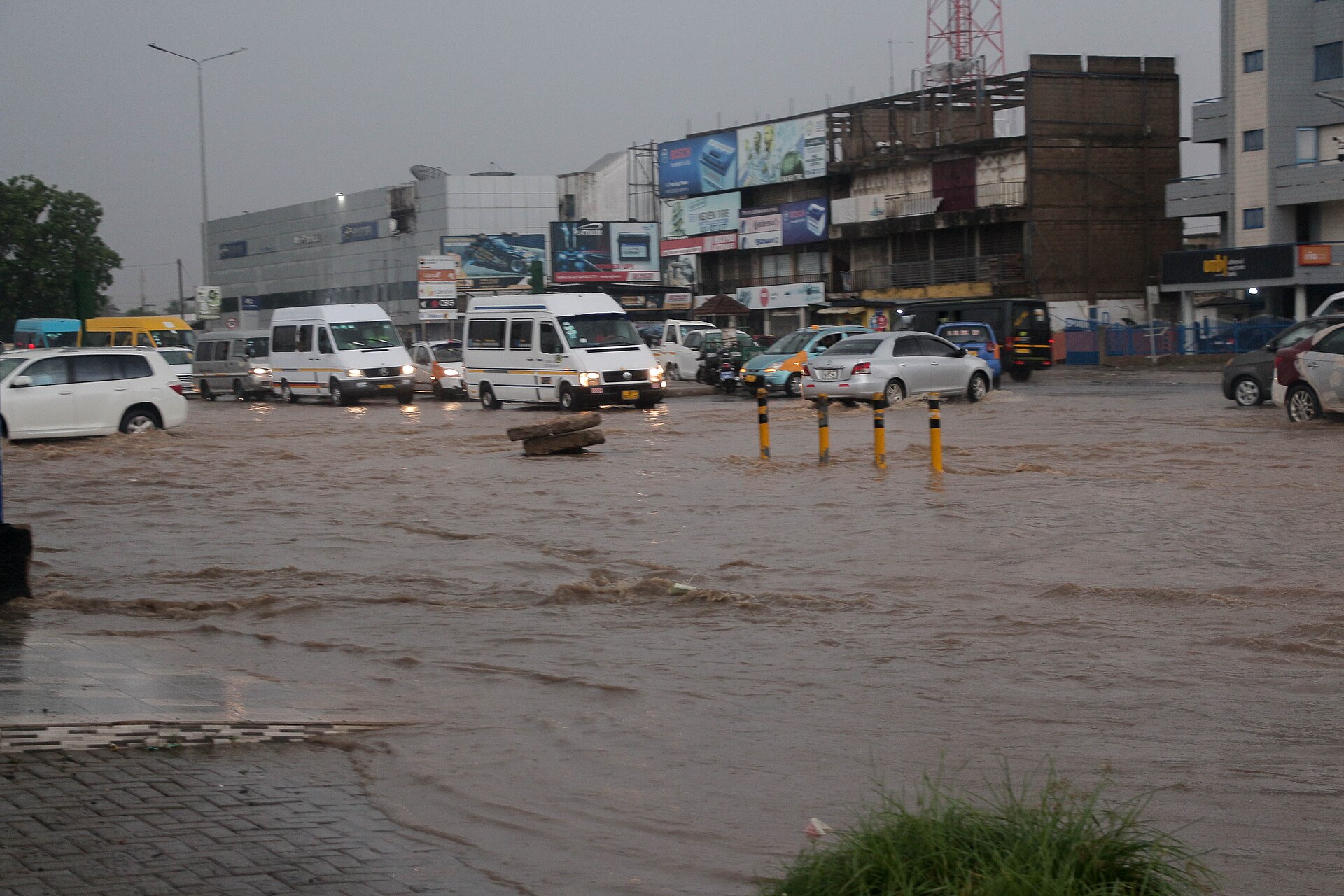
The North East Gonja floods have left more than 246 people without shelter in northern Ghana after 93 houses collapsed. The district lies in the Savannah Region, a vast, thinly populated farming area far from the capital, Accra.
Ghana’s National Disaster Management Organisation (NADMO), the state civil-protection agency, said the flooding followed continuous rainfall that began on Wednesday 23 September. NADMO and local officials then assessed the damage, which was reported on Saturday 26 September.
What the floods destroyed in North East Gonja
At least 93 houses collapsed across the district, and more than 246 residents lost their shelter. The water also destroyed food stocks, farm produce and livestock.
A section of a key feeder road was washed away. That cut off communities including Lantung Park, Kedingi and Kanankula from surrounding areas.
Feeder roads are the unpaved rural links that carry crops to market in Ghana. Here, the road connects several villages with the local market and nearby trading towns.
Luckman Musah, a farmer, said he lost bags of soybeans, maize and rice, as well as livestock. “We have lost our homes, food and sources of livelihood,” he told reporters.
How Ghana’s disaster agency is responding
NADMO’s Savannah Regional Director, Mahama Zakaria, led an assessment of the affected communities. He said situation reports had gone to NADMO’s head office in Accra.
He said relief items could reach victims within 48 hours. “Our immediate priority is to assess the extent of the damage and provide support to residents who have been displaced,” he said.
The District Chief Executive, Abdul Mumin Ewuntomah, is the president’s appointee running the local assembly. He put the number of collapsed structures at about 93.
He asked the National Security apparatus, the roads minister and the Department of Feeder Roads to treat the road damage as an emergency. He warned the blockage could cut residents off from health services in Bunjai and Salaga.
Until official help arrives, the district assembly and residents are gathering stones and gravel for a temporary crossing. Road-building equipment is expected to support the work.
Why a washed-out road matters so much
In northern Ghana, many villages depend on a single dirt road for food, trade and clinics. When it goes, prices rise and sick people struggle to reach care.
Mr Ewuntomah said traders from around Bimbila, a market town to the east, use the route. “If the route is not fixed, many people will not be able to come to the market,” he said.
A local business operator said customers and traders could no longer move freely between the communities and the market. Reporters on the ground said food supplies could suffer if the road stays closed.
A familiar pattern in Ghana’s north
Heavy rain in the north arrives in one long season, peaking in August and September. On 20 September, GMet issued a severe rainstorm warning covering Ghana’s five northern regions.
The north also faces river flooding from Burkina Faso, its northern neighbour. Water released from Burkina’s Bagre Dam flows down the White Volta into Ghana most rainy seasons.
Spillage from the Bagre Dam began in late August this year, Ghanaian media reported, after warnings from NADMO and the Water Resources Commission. Officials have not linked it to the Gonja flooding, which they attributed to rainfall.
Flooding has already hit other parts of Ghana this year. In August, the Foreign Affairs Ministry announced that ECOWAS, the West African regional bloc, would donate US$250,000 to support flood victims.
These pressures fit the wider picture in Africa: The New Scramble, where thin infrastructure shapes how states absorb shocks.
What it means for visitors and businesses
Most foreign visitors never reach North East Gonja, and the main highways north were not reported as affected. The practical lesson is wider: rural roads in the north can vanish overnight in September.
Firms buying crops such as soybeans, maize or shea from the north should allow for delays and losses. Aid groups working in the Savannah Region may see new requests for shelter, food and clean water.
What to watch next
The first test is NADMO’s promise of relief within 48 hours, which runs out around Monday 28 September. The second is how quickly the feeder road reopens, even as a temporary crossing.
Longer term, families who lost stored grain face a hungry season before the next harvest. Their recovery will depend on government support and on whether more heavy rain falls in October.
Frequently Asked Questions
How many people did the North East Gonja floods leave homeless?
At least 93 houses collapsed and more than 246 residents were left without shelter, according to NADMO and district officials in Ghana’s Savannah Region.
Where is North East Gonja?
It is a rural farming district in the Savannah Region of northern Ghana, a large and sparsely populated region created in 2018.
When will relief reach the flood victims?
NADMO’s Savannah Regional Director, Mahama Zakaria, said on 26 September that relief items could reach affected residents within 48 hours.
Was the Bagre Dam in Burkina Faso to blame?
Officials have not said so. NADMO attributed the flooding to continuous rainfall that began on Wednesday 23 September.
Connected Coverage
Sources
- 3News: Homes swept away, communities cut off as floods hit North East Gonja (26 Sep 2026)
- MyJoyOnline: Floods leave 246 without shelter as 93 houses collapse in North East Gonja (27 Sep 2026)
- Pulse Ghana: GMet issues severe rainstorm warning for 5 regions (20 Sep 2026)
- World Bank: Ghana population and GDP, 2025
This article was produced by The Rio Times’ automated newsroom system. How we use AI · Report an error
LatAm Markets: Live Signals → — real-time movers, turnover leaders and FX across Latin America.
Read More from The Rio Times