
GHANA · MINING · ENVIRONMENT
Illegal gold mining has reportedly restarted along the Tano River and around the main airstrip at Samereboi, a timber town in Ghana’s Western Region, in the south-west, nearly five months after floods swamped part of the town. Ghanaian television journalists flying a drone on Monday 9 November 2026 reported more than seven excavators at work, a count The Rio Times has not independently confirmed.
Ghanaians call this trade galamsey, a local word for illegal small-scale gold mining. It matters beyond one town because the regional minister blamed mining along the Tano for June’s flood, and a national task force, the National Anti-Illegal Mining Operations Secretariat (NAIMOS), runs a standing operation to clear mining from rivers.
Key Facts
- Where Samereboi, a timber town on the Tano River in Ghana’s Western Region.
- What More than seven excavators were reported digging at the airstrip and riverbank on 9 November.
- Before Mid-June floods submerged over 200 houses; the regional minister blamed illegal mining on the Tano and Samre rivers.
- Response NAIMOS, the national anti-illegal-mining task force, destroyed 92 river-mining rigs elsewhere on the Tano in October.
- Not confirmed Who owns the machines, and whether any authority has responded, are not yet known.
What the Drone Footage Showed
Journalists flying a drone on Monday 9 November 2026 filmed several excavators working along the Tano River banks and inside previously mined sites near Samereboi. They reported more than seven machines around the town’s main airstrip, where, the footage shows, digging has left deep pits and gullies that in places run toward the township and the river.
The report adds that the work was allegedly backed by influential individuals, an allegation that names no one and is unproven. We found no official comment on the footage by the morning of Tuesday 10 November.
Why Samereboi Is on Edge
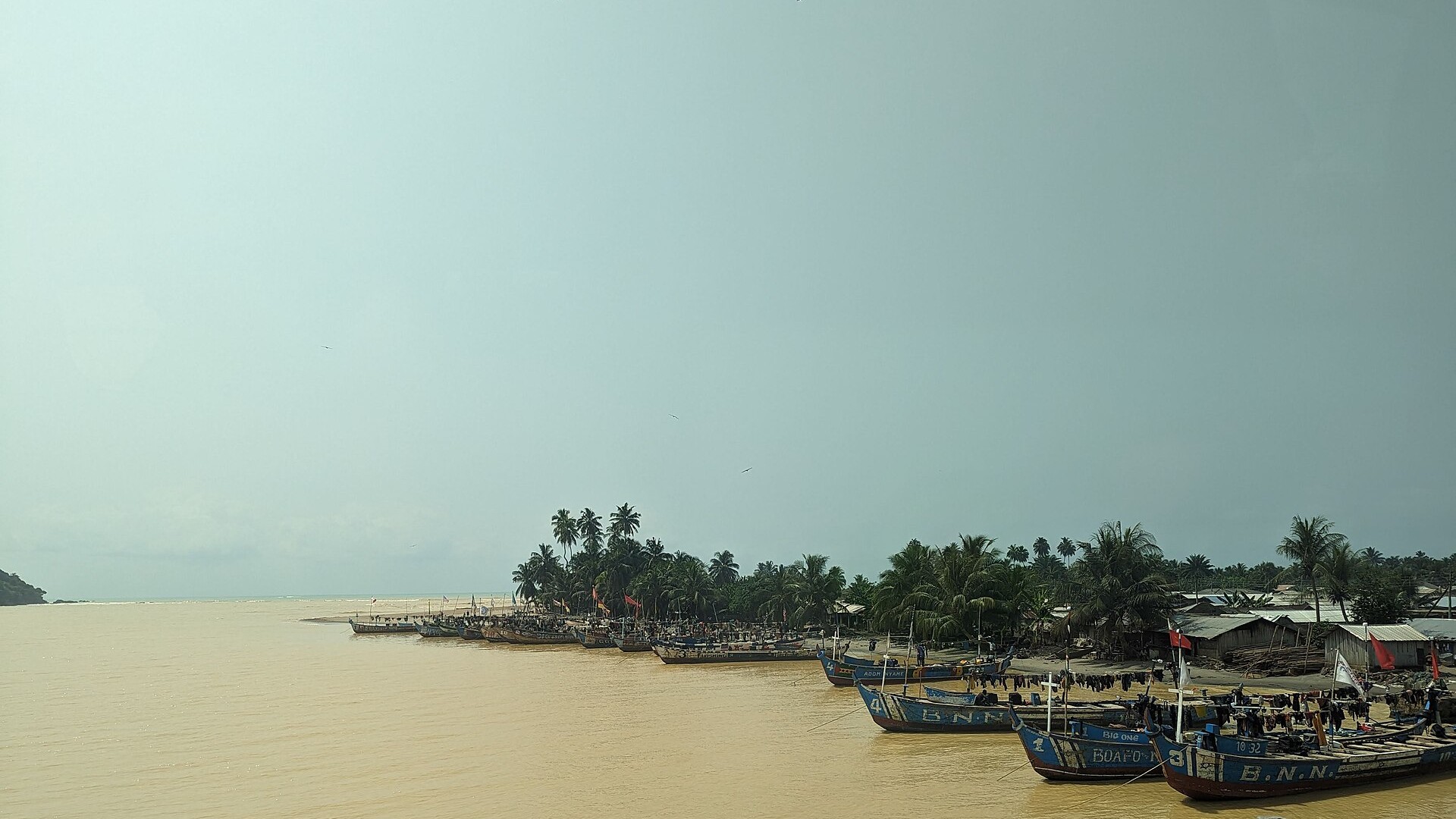
Heavy rain in mid-June 2026 made the Tano and Samre rivers overflow, and at least 200 houses were submerged, according to Joseph Nelson, the Western Regional Minister, in remarks reported on 23 June. He said river mining had degraded the banks and silted up the channels, so that this year’s flood was far worse than earlier ones.
Prof Nana Ama Browne Klutse, chief executive of the Environmental Protection Authority (EPA), Ghana’s environment regulator, said after visiting on 30 June that the Tano was blocked at several points and its banks were weakened. The EPA planned to dredge the river and build concrete walls along the banks near the community, and she warned that more rain could bring another flood.
What Enforcement Has Done So Far
NAIMOS, under its Operation Water Shield campaign to keep miners off rivers, said it destroyed 61 chanfang machines on 15 October and 31 more on 18 October along the Tano at Asemkrom, in Aowin, Western North Region. A chanfang is a floating platform with a pump, used to dredge gravel from a riverbed in search of gold.
NAIMOS said three suspected operators were arrested on 15 October and handed to the police, and that miners had returned to the water within days. Asemkrom lies in the Western North Region, while Samereboi is in the Western Region, so this shows a pattern rather than a link to the airstrip digging.
What It Means for You
For people with family, travel or business ties to Ghana’s gold belt, the Samereboi footage is a reminder that clearing a river is not the same as keeping it clear. Anyone assessing Ghanaian gold supply chains should note that river mining is illegal under Ghanaian law and that the same sites can be reopened within days.
Residents are the most exposed, since the television report says the town’s water pumping station was among the facilities submerged in June. Our explainer on Ghana’s illegal gold mining sets out how the trade works, and our earlier report on polluted rivers shows the wider damage.
More coverage is on our Ghana hub. It includes a study on toxic metals found in vegetables.
What Is Not Known
Nobody has said who operates the excavators at the airstrip, or whether NAIMOS or the EPA has visited since the footage was published. It is also unclear whether the dredging and bank walls the EPA announced after its visit have started.
Frequently Asked Questions
What is galamsey?
Galamsey is the Ghanaian word for illegal small-scale gold mining. It often takes place in rivers and forests and is the target of a national government operation.
Where is Samereboi?
Samereboi, also spelled Samreboi, is a timber town on the Tano River in Ghana’s Western Region. Floods hit it in June 2026.
Has the government responded to the new digging?
We found no official comment by the morning of Tuesday 10 November 2026. NAIMOS, the anti-illegal-mining task force, ran river operations on the Tano in October.
Sources: Environmental Protection Authority of Ghana (EPA), visit to Samereboi on 30 June 2026, remarks reported 2 July 2026; Western Regional Minister Joseph Nelson, remarks reported 23 June 2026; National Anti-Illegal Mining Operations Secretariat (NAIMOS) statement on Operation Water Shield, reported 19 October 2026; drone footage of 9 November 2026 as reported by Ghanaian television journalists, not independently confirmed.
This article was produced by The Rio Times’ automated AI newsroom. Editorial responsibility: Matthias Camenzind, Publisher and Editor-in-Chief. The Rio Times also runs Ask Rio Times, which answers from 100,000+ of our own articles, the daily Latin America Power Map, and prediction-market odds on elections and markets.. How we use AI · Report an error
Part of our ongoing coverage
Africa: The New Scramble — the great-power contest over the continent.