Europe Intelligence Brief — Tuesday, November 17, 2026
Executive Summary
Europe Intelligence Brief for November 17: Moscow softens on Europe’s Ukraine team, eurozone inflation hits 4.0 percent, Serbia’s parliament opens.
Europe wakes on Tuesday to a Kremlin that has stopped slamming the door, and to household bills that have not stopped climbing. The mood is cautious hope abroad and irritation at home.
Moscow said at the weekend that it will not set conditions on Europe’s negotiating team for Ukraine, a first softening after months of saying Europeans had no place at the table. The unity Europe found in Dublin on Friday now has something to test itself against.
The through-line is that Europe is being asked to be patient with Moscow and generous with Kyiv while its own citizens pay more for energy. Every vote this week, from Belgrade to Madrid, is partly a verdict on that bargain.
Key Facts
Kremlin. Moscow said on 14 November it will not set conditions on Europe’s Ukraine negotiating team.
Belgrade. Serbia’s new parliament opens today at 4:00 a.m. ET; the Student List holds 140 of 250 seats.
Prices. Eurozone inflation hit 4.0 percent in October, its highest since September 2023.
Summit. Prime Minister Andy Burnham meets EU leaders in Brussels on Friday 20 November.
Prediction markets. Polymarket priced Dejan Šoškić as Serbia’s next prime minister at 40.5 percent on 17 November, 6:33 a.m. ET.
Abu Dhabi: A Door Left Ajar
Dmitry Peskov, the Kremlin spokesman, told Russian media on Saturday that Moscow “cannot and does not want to set conditions” for Europe’s negotiating team, according to Euronews. He added that Russia should first speak with the Europeans to judge how far their position could help a settlement.
That is a change of tone, though not yet a change of terms. On Saturday, US envoy Jared Kushner said he aims to broker direct talks between Europe and Moscow, after the Abu Dhabi round on Tuesday 10 November that excluded Europeans.
No date or venue for that round has been announced, and Moscow has not said who it would accept in the room. Europe has a team and a half-open door, and neither side has yet said what would happen inside.
Rome And Brussels: Prices Bite At Home
Eurostat, the EU statistics office, estimated that eurozone inflation reached 4.0 percent in October, up from 3.8 percent in September and the highest since September 2023. Italy’s statistics office, Istat, put its own provisional rate at 5.4 percent, with energy bills doing most of the damage.
This is the home-front cost of a long war and an energy squeeze, and voters feel it faster than they feel diplomacy. Governments are being asked to fund Ukraine while shoppers ask why the weekly bill keeps rising.
Eurostat publishes its full October figures on Wednesday 18 November at 5:00 a.m. ET. The mood will be settled less by the headline than by whether the core rate, which strips out energy and food, moves from 2.5 percent.
Belgrade: A Majority Walks Indoors
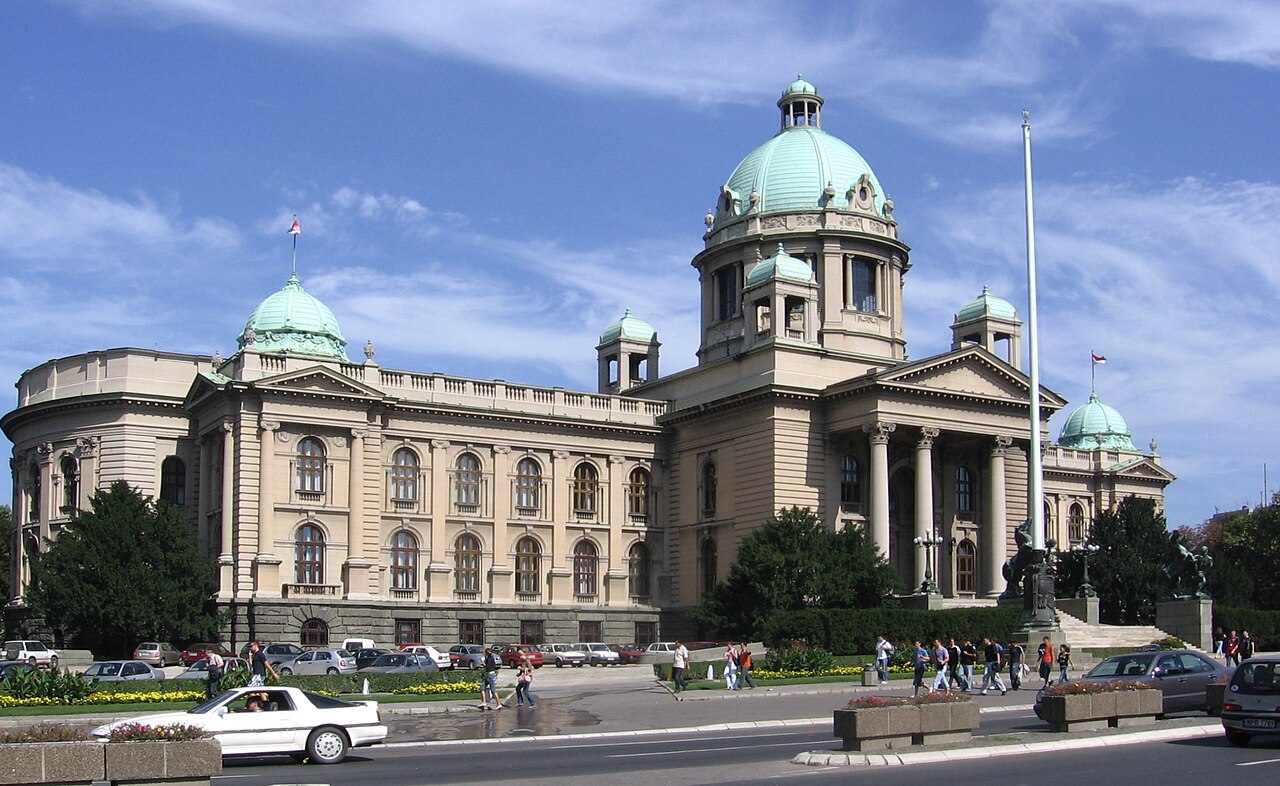
Serbia’s new parliament holds its opening session today at 10:00 local time, which is 4:00 a.m. ET. The Student List, the movement born in the protests, won 140 of 250 seats on 25 October, against 103 for the list led by the Serbian Progressive Party.
It has not named a prime minister, and parliament has up to 90 days from today to form a government. Its 140 seats are a majority in the 250-seat chamber.
The mood is of a crowd that won in the streets and must now learn to govern indoors. The first real signal will be the name it puts forward, and how it treats the opponents it has just displaced.
London: A New Prime Minister Meets Brussels
On Friday 20 November, Prime Minister Andy Burnham meets European Council President António Costa and European Commission President Ursula von der Leyen in Brussels for the second UK–EU summit. The agenda covers security, illegal migration, crime and cutting red tape for farmers and food firms.
Britain wants to be inside the European conversation on Ukraine without being inside the club. Friday shows how much of that the Europeans will grant.
Paris And Madrid: Streets Before Ballots
French school pupils have blockaded since the autumn holidays ended on 2 November. The government has offered to replace the Parcoursup university-application system by 2028, and several organisations call that too little.
In Spain, the campaign for the snap election on Sunday 29 November opened on 12 November. The state pollster CIS gives Prime Minister Pedro Sánchez’s Socialists 134 to 143 seats, while private pollsters point to a majority for the conservative People’s Party and the Vox party together.
What Prediction Markets Say
Polymarket, a prediction market where traders bet real money, priced Dejan Šoškić, a former Serbian central bank governor, as the next prime minister at 40.5 percent on 17 November at 6:33 a.m. ET, with about US$4.6 million traded. For Spain’s election, it priced the People’s Party to win at 75.5 percent, with about US$634,000 traded. These prices are bets, not polls.
Why we show this: prediction markets turn real-money bets into a live probability that moves within minutes of the news, which is why investors, campaigns and newsrooms in the United States now follow them closely. We show them next to polls and official results, never instead of them.
What This Means From Latin America
Higher European energy bills and a Ukraine settlement that is still unwritten both feed back to the Americas. In our reading, a softer Kremlin tone would first show up in lower grain and fertiliser premiums, which matter to farmers in Brazil and Argentina.
A Europe distracted by inflation and elections also has less appetite for the EU–Mercosur trade agreement with Brazil, Argentina, Uruguay and Paraguay. Exporters of beef, soy and sugar should plan for delay rather than quick ratification.
What We Are Watching
- Tuesday 17 November, 4:00 a.m. ET: Serbia’s parliament opens — The session starts a clock of up to 90 days, and the choice of prime minister will follow.
- Sunday 29 November: Spain’s general election — The CIS and private pollsters point in different directions.
- Wednesday 18 November, 2:00 a.m. ET: UK inflation for October — The forecast is 3.6 percent after 3.5 percent, which tells households whether relief is near.
- Wednesday 18 November, 5:00 a.m. ET: Eurostat’s full October inflation — The flash estimate was 4.0 percent, and the core rate was 2.5 percent.
- Friday 20 November: UK–EU summit in Brussels — Burnham meets Costa and von der Leyen on security, migration and trade.
- Date to be announced: the next round of Ukraine talks — No date or venue has been named, and Europe’s seat is undecided.
Background: the EU 2028–34 budget holdouts explained.
Background: the EU–Mercosur trade agreement explained.
Frequently Asked Questions
What did Russia say about Europe’s Ukraine talks team?
On 14 November the Kremlin spokesman said Moscow will not set conditions on Europe’s negotiating team. No date for the next round has been announced.
How high is inflation in Europe?
Eurostat’s flash estimate put eurozone inflation at 4.0 percent in October, the highest since September 2023. Full figures are due on 18 November.
When does Serbia’s new parliament meet?
Parliament opens on Tuesday 17 November at 10:00 local time. It then has up to 90 days to elect a government.
What is on the agenda at the UK–EU summit?
Prime Minister Andy Burnham meets EU leaders in Brussels on 20 November. The agenda covers security, illegal migration, crime and trade red tape.
This article was produced by The Rio Times’ automated AI newsroom. Editorial responsibility: Matthias Camenzind, Publisher and Editor-in-Chief. The Rio Times also runs Ask Rio Times, which answers from 100,000+ of our own articles, the daily Latin America Power Map, and prediction-market odds on elections and markets.. How we use AI · Report an error
LatAm Markets: Live Signals → — real-time movers, turnover leaders and FX across Latin America.
Read More from The Rio Times