EU Slashes Steel Quotas by 15% as Chinese Exports Flood Global Markets
The European Union will tighten steel import quotas by an additional 15% starting April 2025, a senior EU official announced Wednesday. This decisive move aims to prevent cheap steel from flooding European markets following new tariffs imposed by Washington.
European steelmakers currently battle soaring energy costs and fierce competition from Asia. The EU imported approximately 60 million metric tons of steel in 2024, with half that amount entering under tariff-free quotas.
Steel producers warn that Europe risks becoming a dumping ground for steel redirected from American markets. “The EU cannot be the only region that allows its industry to deteriorate,” stated Stephane Sejourne, Executive Vice-President of the European Commission.
He expects producers from Canada, India, and China will seek to increase European sales as the US market becomes less attractive. China’s steel exports soared by 25% in 2024, reaching nearly 118 million tons.
Despite forecasts suggesting a decrease to 90-100 million tons in 2025, these figures remain at historic highs. China currently faces an estimated 200 million tonnes of excess blast furnace capacity as domestic demand weakens amid property market declines.
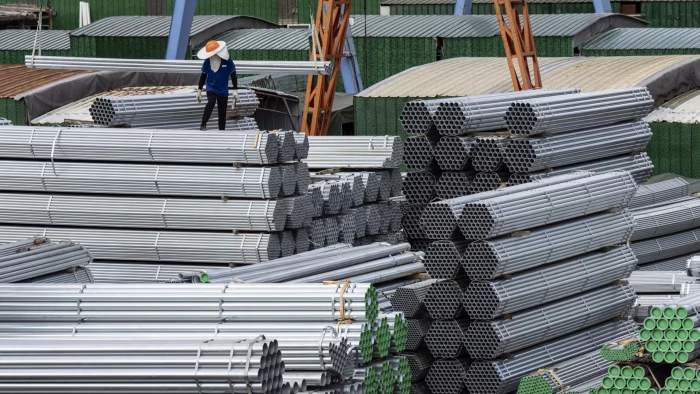
The European steel industry stands at a breaking point. Production has plummeted by 30 million tonnes in the past year while China and India expand operations.
Since 2008, the sector has lost 100,000 jobs, with 30,000 positions eliminated since 2014. German steelmaker Thyssenkrupp recently announced plans to reduce its workforce by around 40%.
By the third quarter of 2025, the Commission will propose long-term measures to replace current safeguards when they expire in June 2026. These new restrictions will provide stricter protections for European producers while maintaining limited market openness.
The EU also links these trade measures to security concerns. Sejourne emphasized that steel imports remain vital for rebuilding Europe’s military industrial base following the Ukraine conflict. “We must prepare for future challenges,” he said. “Let’s ensure that steel does not become the gas of yesterday.”
This article was produced by The Rio Times’ automated newsroom system. How we use AI · Report an error
Read More from The Rio Times