Indonesian Stocks Plunges 7% as Investors Flee Prabowo’s Economic Policies
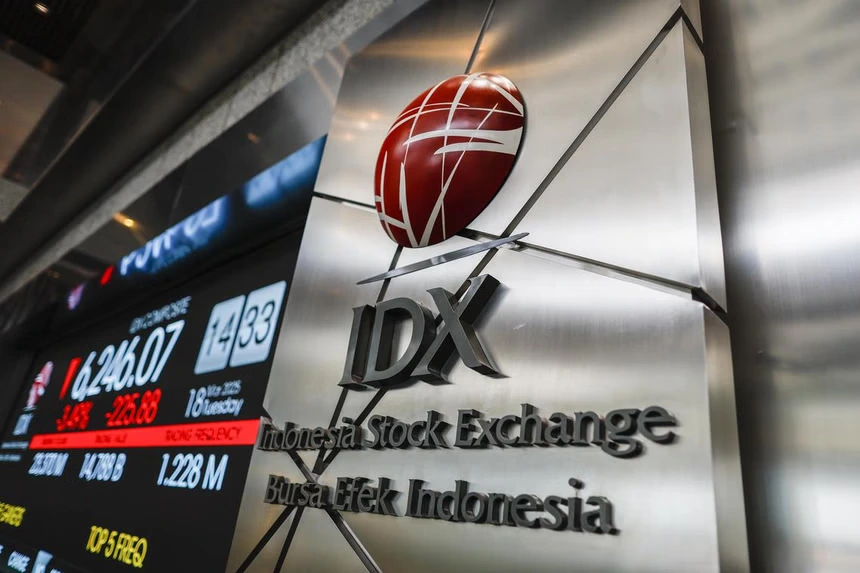
Trading halted on the Jakarta Stock Exchange yesterday as the market plummeted by 7.1%, forcing officials to suspend trading for 30 minutes.
The Jakarta Composite Index (JCI) recovered slightly to close down 3.8% at 6,223.39, marking its lowest point since September 2011. The market collapse reflects growing investor anxiety about President Prabowo Subianto’s economic policies since his October 2024 inauguration.
Foreign investors have withdrawn $1.65 billion from Indonesian equities so far this year. The rupiah has fallen 2% against the US dollar, making it Asia’s worst-performing currency in 2025.
Banking stocks have suffered the heaviest losses under Prabowo’s administration. Bank Central Asia has dropped 22.25% since October. State-owned Bank Rakyat Indonesia has declined 26.25% during the same period.
Bank Mandiri shows even greater damage with a 37.08% decrease since Prabowo took office. Prabowo’s fiscal decisions have alarmed market watchers.
His government slashed infrastructure spending by 75% to fund populist programs. The free school lunch initiative and the newly established sovereign wealth fund Danantara consume most redirected resources.
Indonesia Faces Economic Turmoil
Danantara particularly worries investors as it now controls seven major state-owned enterprises. These companies represent over 20% of the Jakarta Stock Exchange Composite Index.
The fund consolidates power over three major banks, oil company Pertamina, mining firm MIND ID, electricity provider PLN, and Telkom Indonesia. The government reports state revenue has dropped more than 20% compared to last year.
Indonesia now faces a rare budget deficit. Chief economist Josua Pardede attributes the market collapse to policy uncertainty. “Investors remain uncertain due to a lack of clarity, triggering a risk-off sentiment,” he explains.
Regulators have responded with emergency measures. The financial services authority now allows companies to buy back shares without shareholder approval. The central bank actively intervenes to stabilize the rupiah through currency markets.
The JCI has underperformed global markets with a 6% decline this year. Analysts expect continued volatility as markets assess Prabowo’s economic direction and await signs of policy stability.
This article was produced by The Rio Times’ automated newsroom system. How we use AI · Report an error
Read More from The Rio Times