El Carmen Drone Attack: Nine Grenades Hit a Colombian Police Station
Colombia · Security
Key Facts
- —What happened Drones dropped nine grenades on the El Carmen police station at 7:50 p.m. Colombia time on 20 September 2026.
- —Who was hurt One police officer was wounded, Semana and El Heraldo reported. No deaths have been reported.
- —Who is blamed Interior Minister Rodrigo Lara blamed “narcoterrorists”; Semana relayed the mayor’s account pointing to the ELN guerrilla.
- —What the government promised Lara said his ministry and the Defence Ministry will launch a strategy to supply anti-drone systems.
- —The catch Lara’s announcement named no equipment, no cost, no supplier and no deployment date.
- —Why it matters Armed drones are a growing threat to Colombian troops, with 418 attacks so far this year, according to military figures.
Grenades fell from drones as a town in north-east Colombia left Sunday evening Mass. The government blames the ELN guerrilla and promises anti-drone equipment, without details.
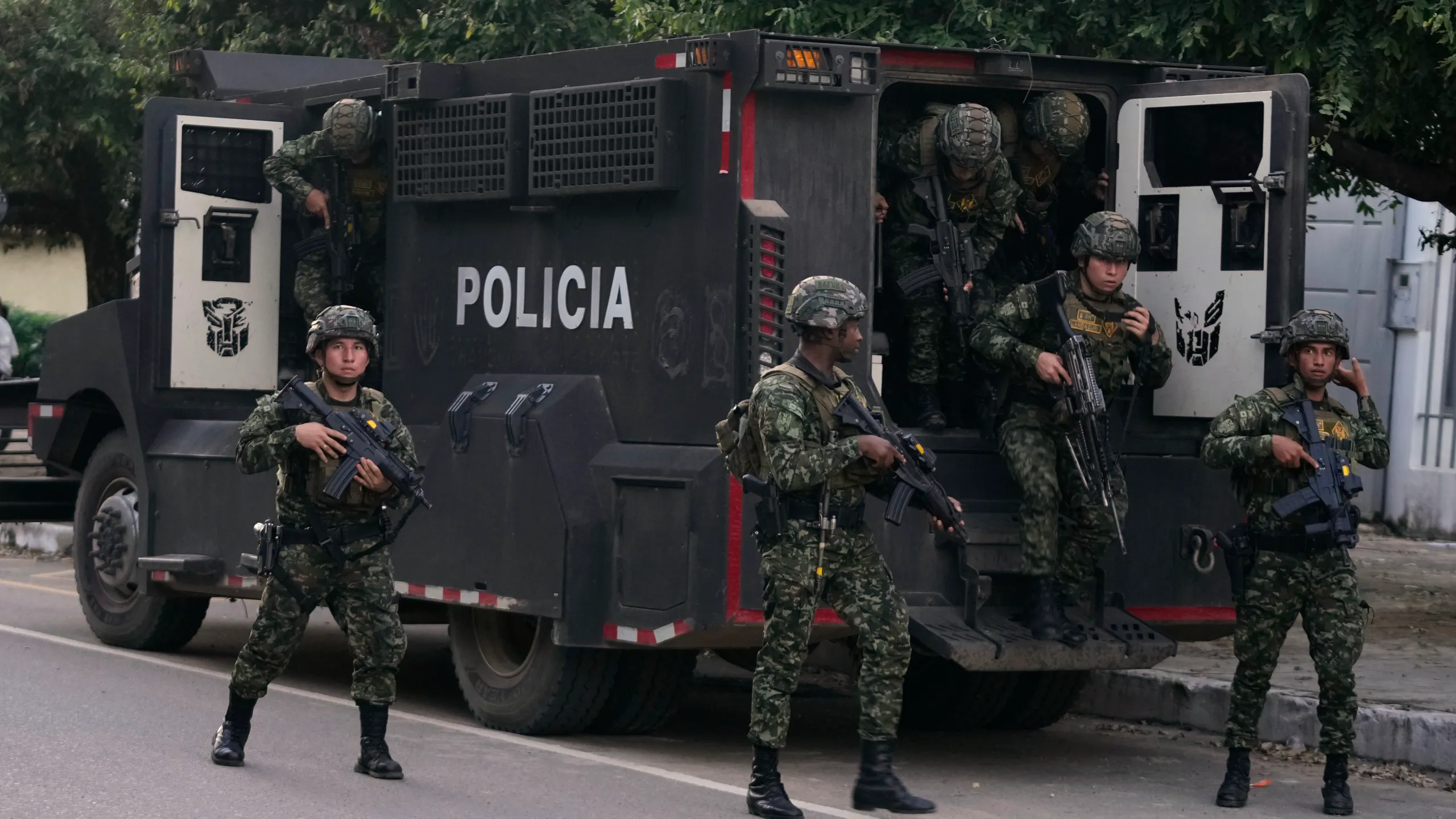
The El Carmen drone attack came as the town was leaving church. At about 7:50 p.m. Colombia time on Sunday 20 September 2026, drones dropped nine grenades on a police station in north-eastern Colombia.
One police officer was wounded, Semana and El Heraldo reported. The attack is the latest in a wave of armed-drone strikes on Colombian security forces this year.
El Carmen is a hilly municipality in the Catatumbo region of Norte de Santander, whose capital is the border city of Cúcuta. It reaches north to the frontier with Venezuela.
What happened on Sunday night
Interior Minister Rodrigo Lara gave the government’s account in a post on X after speaking to the town’s mayor. “At 7:50 p.m., when the community was leaving Mass, the narcoterrorists launched 9 grenades from drones against the police station,” he wrote.
Residents heard at least eight explosions, followed by rifle fire, Infobae reported. The station stands two blocks from the Catholic church where parishioners were leaving the evening service.
El Tiempo reported that drones had been seen over the town since the afternoon. The Colombian Aerospace Force was preparing deterrence flights over the area, the paper said.
Infobae described the wounded officer as hit by shrapnel, citing preliminary reports. No deaths have been reported.
Who the government blames
Lara’s post used the word “narcoterrorists” without naming a group. Semana reported that the mayor’s account, relayed by Lara, pointed to the ELN, and El Heraldo said the government blames the group.
The National Liberation Army, or ELN, is Colombia’s oldest surviving guerrilla group, founded in the 1960s. It is one of several armed groups active around Catatumbo, alongside dissident factions of the former FARC rebels.
Infobae listed the ELN, FARC dissidents, the Clan del Golfo and a group called Los Pelusos as active in the region. Authorities’ records point to the ELN as the main source of drone attacks there in 2026, El Tiempo reported.
No group had claimed the attack when Infobae published its first report. Nobody has been arrested or charged.
Lara linked the violence to a crackdown on stolen fuel. The road through Guamalito, a village in El Carmen, carries fuel that feeds Catatumbo’s drug trade, he said.
A town under repeated fire
El Carmen was already a target. El País reported that an attack on 4 September in Guamalito left three officers wounded, and another followed on 7 September.
An earlier drone attack on an army base in nearby Ocaña killed three soldiers, El País reported. The government blamed it on the ELN’s Camilo Torres Restrepo Front.
Lara said 150 police commandos had returned to Guamalito on the president’s orders.
Lara also recalled a visit to nearby Ocaña on Friday 11 September. He travelled there with the defence minister, retired army general Jorge Eduardo Mora López.
Mora, born in Cúcuta, took office on 7 August 2026 under President Abelardo de la Espriella. He previously commanded the army’s Eighth Division, according to Infobae.
The anti-drone promise
Lara said his ministry would help rebuild the damaged police stations. “Together with the Defence Ministry, we will launch the strategy of equipping anti-drone systems,” he added.
His announcement named no equipment, supplier, cost or deployment date. No budget for the plan has been reported.
In April 2026, Pedro Sánchez, defence minister under former president Gustavo Petro, announced anti-drone trials. Technical tests of technology offered by more than 40 companies would begin, Infobae reported.
“El Carmen is not alone,” Lara wrote. “We will sustain our presence, rebuild what they destroy and cut the logistics that finance these attacks.”
Drones change Colombia’s war
Cheap commercial drones fitted with explosives have become a favoured weapon of armed groups. Colombia’s Military Forces counted 418 drone attacks between January and early September 2026, Cambio reported.
Those attacks killed 25 soldiers and wounded more than 340, according to the same figures. They cover the armed forces, not the police.
Norte de Santander recorded 45 of those attacks and 13 of the deaths, Cambio said. Only the south-western department of Cauca had more attacks.
The Catatumbo backdrop
Catatumbo is a coca-growing borderland in Norte de Santander. On 16 January 2025 the ELN launched an offensive there against the 33rd Front, a FARC dissident group.
Both groups had been negotiating with Petro’s government, the ELN since 2022 and the 33rd Front since 2023. Talks with the ELN were then suspended, Human Rights Watch noted.
More than 56,500 people fled, according to Norte de Santander authorities. The Ombudsperson’s Office called it the largest forced displacement since records began in 1997, Human Rights Watch reported.
Regional authorities counted 78 people killed by 8 March 2025, the rights group added.
Petro’s government responded with emergency powers, and the fighting has never fully stopped. The El Carmen drone attack shows the war now reaching town centres from the air.
More: Colombia coverage, every day from The Rio Times.
Frequently Asked Questions
What happened in El Carmen, Colombia?
At about 7:50 p.m. Colombia time on Sunday 20 September 2026, drones dropped nine grenades on the police station of El Carmen, a municipality in Norte de Santander. The figure comes from Interior Minister Rodrigo Lara. One police officer was wounded, and no deaths have been reported.
Who carried out the attack?
No group had claimed it in early reports, and nobody has been charged. Lara blamed “narcoterrorists”, while Semana reported that the mayor’s account, relayed by Lara, pointed to the ELN, Colombia’s oldest surviving guerrilla group.
What anti-drone plan did the government announce?
Lara said the Interior and Defence ministries would launch a strategy to supply anti-drone systems. His announcement did not name the equipment, its cost, a supplier or where it would be deployed first.
How common are drone attacks in Colombia?
Very common. The Military Forces counted 418 drone attacks on troops between January and early September 2026, killing 25 soldiers, Cambio reported. Norte de Santander accounted for 45 of those attacks.
Sources: Semana on the interior minister’s statement, El Heraldo on the ELN attribution, Infobae on the anti-drone pledge, Infobae on the first reports from El Carmen, El Tiempo on the drones over the town, El País on the earlier Guamalito attacks, La Tapa on the full ministerial statement, Cambio on military drone-attack figures, Human Rights Watch on the Catatumbo conflict, Infobae on the defence minister, Infobae on earlier anti-drone trials
This article was produced by The Rio Times’ automated newsroom system. How we use AI · Report an error
Read More from The Rio Times