Colombia Gripen Contract Faces Court Bid to Freeze Payments to Saab
Colombia · Defense
Key Facts
- —What happened Lawyer Guillermo Rodríguez Martínez asked the Administrative Tribunal of Cundinamarca to suspend the purchase of 17 Saab Gripen fighters.
- —What he wants Suspension of the whole contract until its financing is disclosed, plus an urgent order halting payments or at least future disbursements.
- —What the deal is worth About €3,135.5 million (about US$3.6 billion), signed on 14 November 2025, with deliveries planned from 2028 to 2032.
- —The catch No admission, ruling or freeze has been reported, and nobody has been found to have done wrong.
- —Where the government stands Sources close to President Abelardo de la Espriella told El Espectador the jets will be received.
A lawyer wants a court to halt payments on one of Colombia’s largest defense purchases until the state discloses how it will be paid for. No admission, ruling or freeze has been reported.
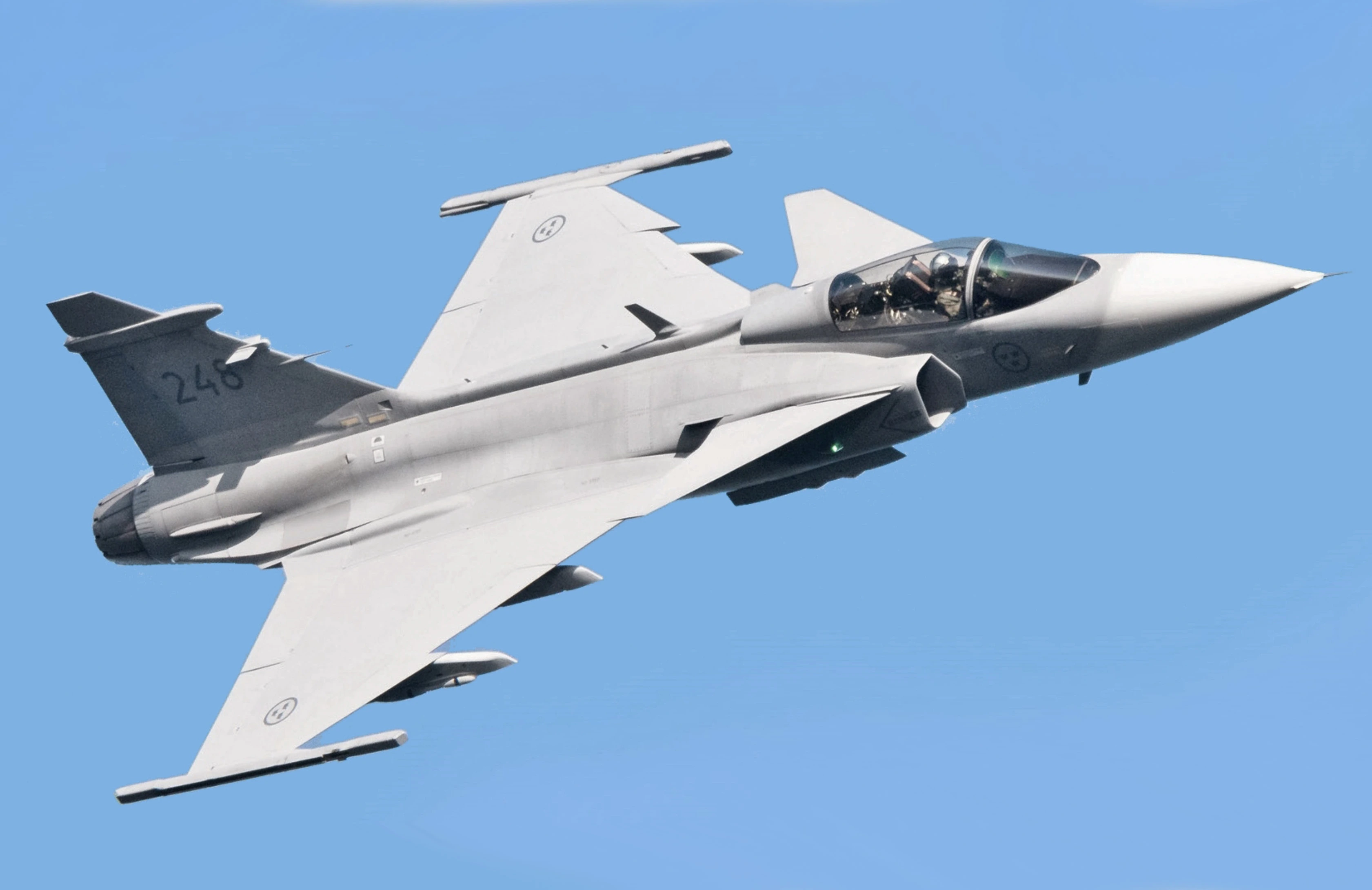
A Colombian lawyer has gone to court to freeze payments on the Colombia Gripen contract, one of the country’s largest defense purchases. He wants the state to reveal how it will pay for 17 Swedish fighter jets first.
The case was filed by lawyer Guillermo Rodríguez Martínez before the Administrative Tribunal of Cundinamarca, the regional court for Bogotá. Infobae reported it on 21 September 2026, citing El Tiempo.
No admission, ruling or freeze has been reported, and no court has found any wrongdoing in the deal. The filing is a request, not a decision.
What the lawsuit asks for
Rodríguez seeks the “suspensión inmediata y total de la ejecución del contrato,” a total halt to the contract. That would cover disbursements, transfers and approvals of future-year budget commitments.
He also seeks an urgent provisional order, known as a medida cautelar, against the Aerospace Force and the defense and finance ministries. It would halt payments, or at least future disbursements, while the court studies the case.
The suit names seven respondents. They include the Aerospace Force, as the air force is now called, the Presidency and the Navy.
El Tiempo called it the first known court action seeking to intervene directly in the deal with Saab. Saab is the Swedish defense group that builds the Gripen.
The complaint is about secrecy, not the jets
The lawsuit does not attack the aircraft itself. Its target is the financing, the budget and the payment terms.
Rodríguez says he sent formal information requests to several agencies on 20 August 2026. He asked for the disbursement schedule, the preliminary and cost-benefit studies, and the contract text.
The Aerospace Force withheld part of the material, citing national defense and security. The lawyer argues that the secrecy was applied in blanket fashion, without specifying which documents it covered.
The filing also cites the earthquake of 10 August, a magnitude-7.4 quake centred in Chocó that killed more than 300 people. Paying without disclosing interest and cost could strain public finances, it says.
Reports of the filing describe no allegation of corruption. It centres on disclosure and a pause.
What an acción popular is
The case is an acción popular, or popular action, an action enshrined in Article 88 of the 1991 Constitution. Anyone, person or organisation, can file one to protect collective rights rather than personal ones.
Law 472 of 1998 lists those rights. They include “la defensa del patrimonio público,” the defense of public assets, and “la moralidad administrativa,” integrity in public administration.
Under that law, a judge should decide within three working days whether to admit a suit. Judges may also order precautionary measures, such as halting an activity, before a final ruling.
Admission is not a finding against anyone. It only means the court will hear the case.
What Colombia signed
Colombia signed the deal with Saab on 14 November 2025 in Cali, on the anniversary of the air force. It covers 15 single-seat Gripen E jets and two two-seat Gripen F trainers.
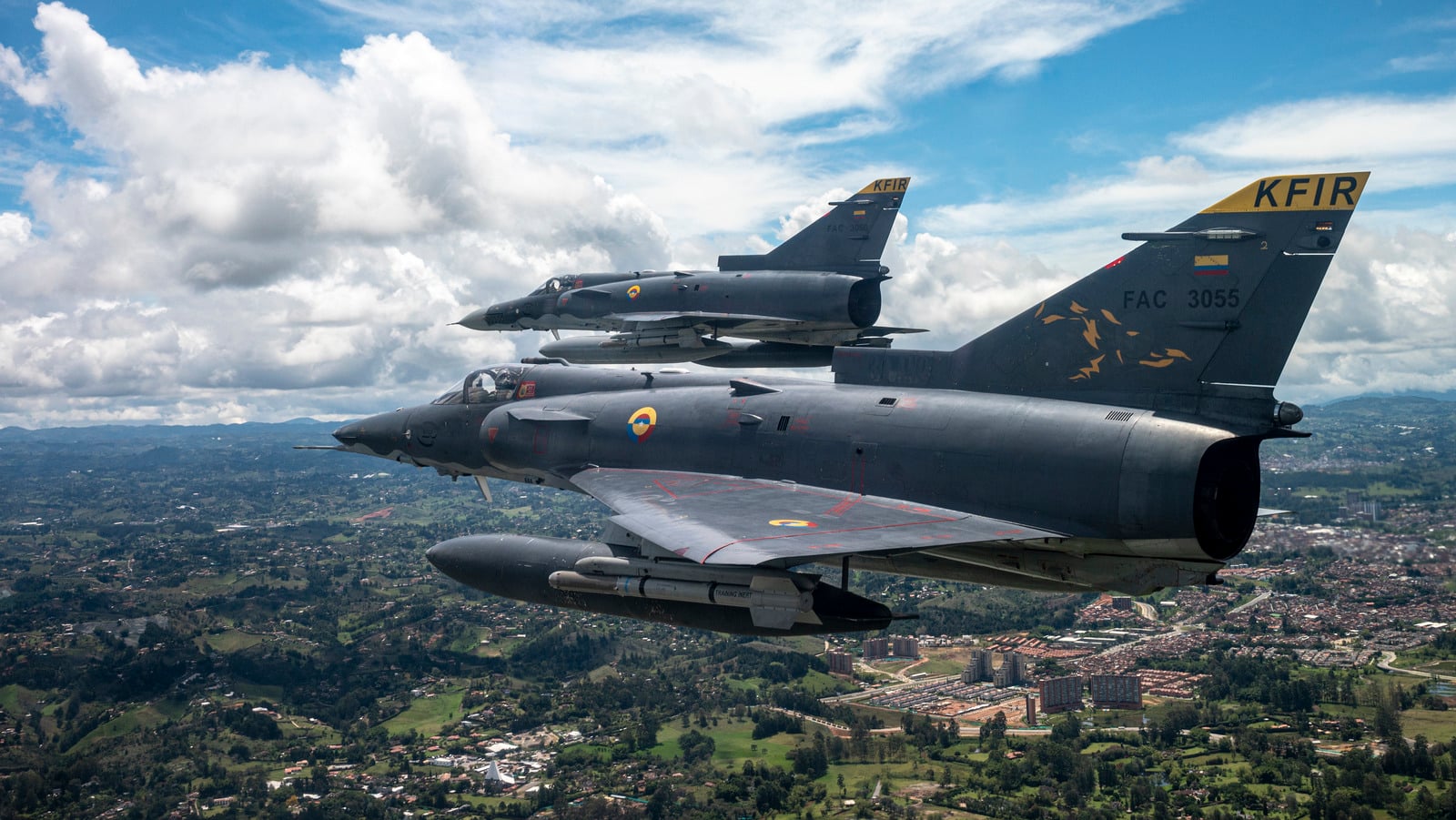
The lawsuit puts the value at €3,135.5 million (about US$3.6 billion). The jets are meant to replace Colombia’s ageing Israeli-made Kfir fleet.
Separately, the economic-policy document Conpes 4155 programs 16.86 trillion pesos (about US$5.3 billion) for the whole project from 2026 to 2032. That is a budget line, not the contract price.
Conversions here use the European Central Bank reference rate of 1.1490 dollars per euro on 21 September 2026. For pesos, they use Colombia’s official rate of 3,192.92 to the US dollar, valid that day.
Pedro Sánchez, then defense minister, said the peso allocation includes a margin in case the euro strengthens.
According to a January 2026 report on the Comptroller General’s review, jets arrive between 2028 and 2032. Forty percent is paid in advance and 60% on delivery.
The Comptroller General, Colombia’s public-spending watchdog, found no inconsistencies in the deal’s structure in its January review. On 10 June, the House of Representatives’ Accusations Commission opened a preliminary inquiry into the purchase.
That commission, which investigates presidents, is looking at then-President Gustavo Petro and his wife, Verónica Alcocer. Nobody has been charged.
The new government and the offsets
Abelardo de la Espriella became president on 7 August 2026. His government is analysing whether to renegotiate price and after-sale terms, El Espectador reported on 10 August.
Sources close to the president told El Espectador the jets will be received. Before handing over, Sánchez had warned that the deal “no se puede reversar,” cannot be reversed.
The sharper debate is over offsets, the benefits Saab promised Colombia alongside the sale. Under Petro, 85% were earmarked for social programs and 15% for the national aerospace industry.
Those social projects included solar panels for towns off the national grid, water in La Guajira and a hospital project. Officials are reviewing the offsets, Infobae reported on 13 September, citing El Tiempo and an unnamed source.
The idea is that part of the offsets could become technology transfer and military capabilities for the Aerospace Force. No official has announced a formal renegotiation, and Saab has not been reported to respond.
What happens next
Under Article 20 of Law 472, the tribunal must decide whether to admit the suit. No court order currently stops payments under the Colombia Gripen contract.
Under Article 25, it may also decide on precautionary measures, such as the freeze requested. Either step would be the first judicial decision on the case.
More: Colombia coverage, every day from The Rio Times.
Frequently Asked Questions
Has a court frozen the Colombia Gripen contract?
No. A lawyer has asked the Administrative Tribunal of Cundinamarca to suspend the contract and all related disbursements, and to grant an urgent provisional measure. No admission of the case or provisional order has been reported, and no court or authority has found wrongdoing in the purchase.
What is an acción popular?
It is an action enshrined in Article 88 of Colombia’s 1991 Constitution and regulated by Law 472 of 1998. Anyone, person or organisation, can file one to protect collective rights, such as public assets or integrity in public administration. Judges can order precautionary measures while the case proceeds.
How much are the Gripen jets costing Colombia?
The contract value cited in the lawsuit is €3,135.5 million (about US$3.6 billion) for 15 Gripen E and two Gripen F aircraft. Separately, the Conpes 4155 programming for the whole project sets aside 16.86 trillion pesos (about US$5.3 billion) through 2032, including a margin in case the euro strengthens.
Will the new government cancel the deal?
It has not said so on the record. Sources close to President Abelardo de la Espriella told El Espectador the jets will be received, while price and after-sale terms are analysed. Officials are also reviewing the offsets, Infobae reported on 13 September, citing El Tiempo and an unnamed source.
Sources: Infobae on the acción popular, Infobae on the offsets review, Infobae on the Comptroller’s review, Infobae on the outgoing minister’s position, El Espectador on the new government’s review, El Espectador on the congressional inquiry, El Espectador on the 2025 information ruling, Law 472 of 1998 on popular actions, European Central Bank reference rates, Colombia’s official peso-dollar rate
This article was produced by The Rio Times’ automated newsroom system. How we use AI · Report an error
Read More from The Rio Times