Colombia Bombing Suspension Lifted by Bogotá Judge, With Rules to Protect Recruits
Colombia · Defense
Key Facts
- —What happened A Bogotá judge lifted the Colombia bombing suspension on 16 September 2026, replacing it with five mandatory military precautions.
- —What the first order said No offensive air strikes where verifiable information showed recruited children at the target. It was made public on 3 September.
- —The catch Separate court orders in Guaviare and Cúcuta still restrict bombings where children may be present.
- —Why it matters Air strikes are central to President Abelardo De la Espriella’s offensive against the ELN guerrilla and FARC dissident groups.
- —What prompted the lawsuit Air strikes in Catatumbo and Guaviare in August 2026 killed four teenagers, including three aged 15 or 16 in Guaviare.
- —What comes next The Senate is due to vote on 23 September on a censure motion against the defence minister.
A family court suspended air strikes where there was verifiable information that recruited children were present, then replaced the suspension with strict precautions. Two regional judges still say stop.
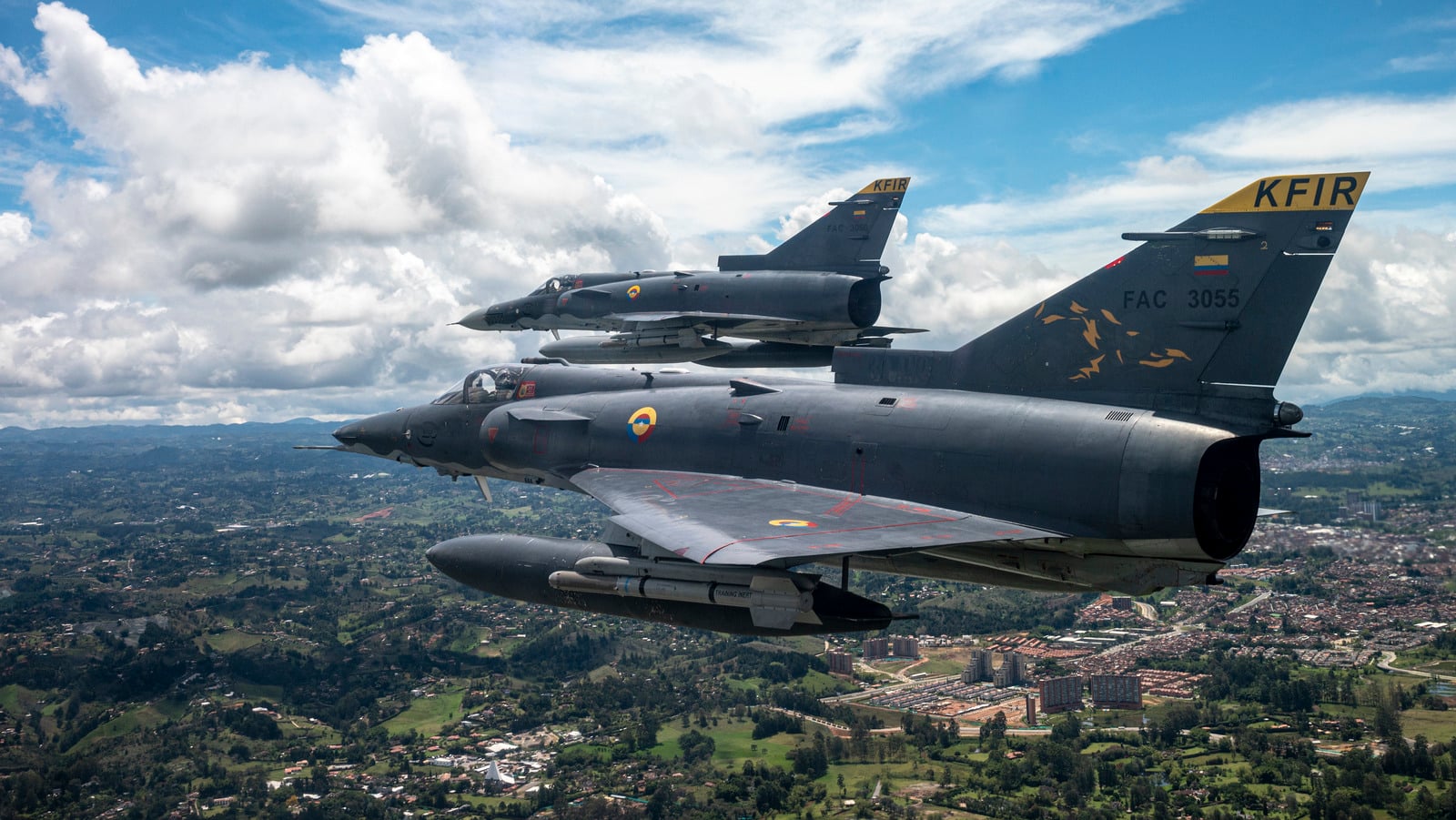
A Bogotá family judge has lifted the Colombia bombing suspension she ordered in early September, but not without conditions for the military. Her final ruling on Wednesday 16 September 2026 lets the air force resume strikes, under a stricter duty of care toward children.
The case matters well beyond one courtroom. President Abelardo De la Espriella, a right-wing lawyer in office since 7 August 2026, has made air strikes his spearhead.
What the judge ordered, and what she changed
Judge Marggy Viviana Arciniegas Gómez sits on the 34th Family Court of Bogotá, a first-instance court for family and child-protection cases. She acted on a tutela, Colombia’s fast-track lawsuit for protecting fundamental rights.
The suit was brought by Ower Jimmy Borda Parra, a lawyer acting on behalf of children recruited by armed groups. He filed it after air strikes in Catatumbo, near Venezuela, and in the southern department of Guaviare killed four teenagers in August.
Her provisional order, made public on 3 September, was narrower than many headlines suggested. It barred offensive air operations only where there was “certain, objective or reasonably verifiable information” that recruited children were present.
Ground operations were not affected. The suspension was to last until protective measures were in place and no less harmful alternative existed.
The government challenged the order, arguing that compliance was materially impossible. The judge rejected the challenge, finding “no sufficient reasons to revoke the measure”, according to the Cali daily El País.
Her final ruling went the other way on the central point. She refused to establish “an absolute prohibition” on offensive air operations when minors are present, El Colombiano reported.
Five conditions for every strike
Instead, the court imposed what it called a reinforced precaution standard. It applies whenever intelligence suggests children may be at a target, according to El Espectador and Semana.
The military must intensify checks on that intelligence and write the children’s presence into its legal and operational assessment. It must also weigh the foreseeable risk to their lives.
Commanders must examine less harmful means, methods or timing that could achieve the same aim. They must also apply the humanitarian-law principles of distinction, precaution and proportionality.
The judge added that a child found in a guerrilla camp is not automatically a legitimate target. Each case must be assessed bearing in mind that the child may be a victim of recruitment.
Other courts still say stop
The end of the Bogotá suspension does not free the air force everywhere. A criminal judge in San José del Guaviare, Jhoan Aguilera Martínez, ordered a similar suspension covering that department.
On 16 September, the Eighth Administrative Court of Cúcuta, near the Venezuelan border, issued a provisional order in another tutela. It was brought by the lawyer Natalia Bernal Cano and also covers civilians.
El Nuevo Siglo, a Bogotá daily, reported on 18 September that both orders remained in force. On 11 September it reported no bombings since 30 August, when a strike hit Mordisco dissidents in Guaviare.
What the government says
The government reacted sharply to the first order. Interior Minister Rodrigo Lara called it “absurd and unconstitutional” on X and said it would be appealed.
Lara argued that such an open standard made air strikes “materially impossible” in a conflict where armed groups recruit children. De la Espriella said in a speech on Sunday 13 September that court decisions are respected.
But “respecting does not mean giving up contesting them,” he added, ordering the state’s legal defence office to act firmly. No appeal against the final ruling had been reported by 21 September.
The defence minister is retired army general Jorge Eduardo Mora López. On 16 September he defended the strikes in the Senate, where the left-wing Pacto Histórico has filed a censure motion against him.
“Whoever puts minors at risk in camps is the criminal structure that recruits them,” Mora said. He accused armed groups of using children as human shields.
The Senate is due to vote on the motion on Wednesday 23 September, according to Infobae. On 20 September Mora wrote on X that the security forces act “with forcefulness, responsibility and within the law”.
The offensive behind the case
De la Espriella promised “no truce” with armed groups, including the National Liberation Army (ELN), a Marxist guerrilla. His first bombing, in mid-August, hit an ELN camp in Catatumbo, near Venezuela.
On 27 August, Operation Amón struck FARC dissidents, splinter groups that rejected the 2016 peace deal, in El Retorno, Guaviare. The target was a faction led by a commander known as Calarcá.
Medicina Legal, Colombia’s forensic institute, found that three of the ten dead were minors, aged 15, 15 and 16. EFE, the Spanish news agency, reported that a teenager had also died in the Catatumbo strike.
On 30 August the president ended three peace-dialogue processes. He said there was no real and verifiable will for peace.
A long and painful history
Children killed by bombs have toppled a Colombian minister before. A strike on 30 August 2019 in San Vicente del Caguán, in Caquetá, killed eight minors, according to Medicina Legal.
Senator Roy Barreras revealed the deaths during a censure debate. Defence Minister Guillermo Botero resigned on 6 November 2019, under President Iván Duque, before the vote.
Gustavo Petro, the leftist president from 2022 to 2026, suspended bombings on taking office and later resumed them. A strike on dissidents loyal to Iván Mordisco in Guaviare in November 2025 killed seven minors.
In July 2026, the director of Medicina Legal told Cambio magazine that about 65 minors died in military operations under Petro.
Children as recruits and as targets
Behind every such death lies forced recruitment. The Defensoría del Pueblo, Colombia’s human-rights ombudsman, counted 1,173 cases from 2024 to 31 July 2026, Infobae reported.
The office warns that falling reports mean more underreporting, not less recruitment. It names the Mordisco and Calarcá dissidents and the ELN among the main recruiters.
Mora told senators the armed forces had rescued 39 minors, according to El Tiempo. The government expects the Constitutional Court to clarify the legal framework for such strikes, El Nuevo Siglo reported.
More: Colombia coverage, every day from The Rio Times.
Frequently Asked Questions
What is a tutela?
A tutela is a fast-track lawsuit created by Colombia’s 1991 constitution. Anyone can file one to protect fundamental rights, including on behalf of people who cannot act for themselves. Any judge, even a family or local court, can hear it and must decide within days. Judges can also issue provisional measures while the case is pending.
Did the Colombia bombing suspension stop all air strikes?
No. The provisional order of the 34th Family Court of Bogotá covered only offensive air operations where there was certain, objective or reasonably verifiable information that recruited children were present. Ground operations were unaffected. The judge lifted it on 16 September 2026 and replaced it with five precautions, while separate orders in Guaviare and Cúcuta remained in force.
Who is Colombia’s defence minister?
The defence minister is retired army general Jorge Eduardo Mora López, appointed by President Abelardo De la Espriella. He faces a Senate censure motion filed by the left-wing Pacto Histórico over the Guaviare strike of 27 August 2026. The vote is due on 23 September.
Why were children in the camps?
Colombian armed groups forcibly recruit minors, often in remote rural areas. The Defensoría del Pueblo, the state human-rights ombudsman, counted 1,173 cases between 2024 and 31 July 2026. The government says the groups that recruit them are responsible for the danger they face.
Sources: Cambio on the provisional order, EFE via Swissinfo on the order and the government reaction, El País on the rejected government challenge, El Espectador on the final ruling, El Colombiano on the refusal of an absolute prohibition, El Nuevo Siglo on the orders still in force, Semana on the president’s response, El Tiempo on the Senate debate, EFE via Infobae on the Guaviare strike, Semana on the 2019 resignation, Infobae on the ombudsman’s recruitment figures
This article was produced by The Rio Times’ automated newsroom system. How we use AI · Report an error
Read More from The Rio Times