How Ecuador’s News Media Works, and Who Owns It
A plain guide to the newsrooms, the owners and the rules that shape what Ecuadorians read, and to how to follow Sunday's count.

Pillar: Ecuador
Ecuador’s press is under threat and changing hands, and that matters on the eve of Sunday’s local vote. Reporters Without Borders (RSF), a Paris-based press freedom group, ranked the country 125th of 180 in its 2026 World Press Freedom Index.
Ecuador votes on Sunday 29 November 2026 for mayors, prefects (provincial governors) and councillors, in an election approved on 31 July 2026 and announced on 1 August by the National Electoral Council (CNE), the electoral authority. Foreign readers will follow the count through outlets whose finances and safety are under pressure and whose ownership is changing, as our election guide explains.
Key Facts
- Power Index. Ecuador ranks 8th of 14 in The Rio Times Latin America Power Index, with 37.2 points (November 2026 edition).
- What. Reporters Without Borders, a press freedom group, ranks Ecuador’s press 125th of 180 in 2026.
- When. Voting is Sunday 29 November; polls close 17:00 local, 5 p.m. US Eastern.
- Prediction markets. Polymarket, a betting market, gives Quito Mayor Muñoz 55%, rival Burbano 32% (28 Nov, 12:04 a.m. ET).
- As of. 28 November 2026, 05:00 GMT.
A plain guide to the newsrooms, the owners and the rules that shape what Ecuadorians read, and to how to follow Sunday’s count.
Who Runs the Newsrooms
RSF’s country page, read on 28 November 2026, names El Comercio, El Universo, La Hora, Primicias and Últimas Noticias as the leading newspapers. Between 2024 and 2026, RSF says, local media closed and correspondents became fewer, which weakened coverage in high-risk areas.
In Plain English
- CNE: Ecuador’s electoral authority, which runs the vote and publishes results.
- Fundamedios: a Quito-based press freedom group that logs attacks on journalists.
- RSF: a Paris-based group that ranks press freedom in 180 countries.
- CPJ: the Committee to Protect Journalists, a New York press freedom group.
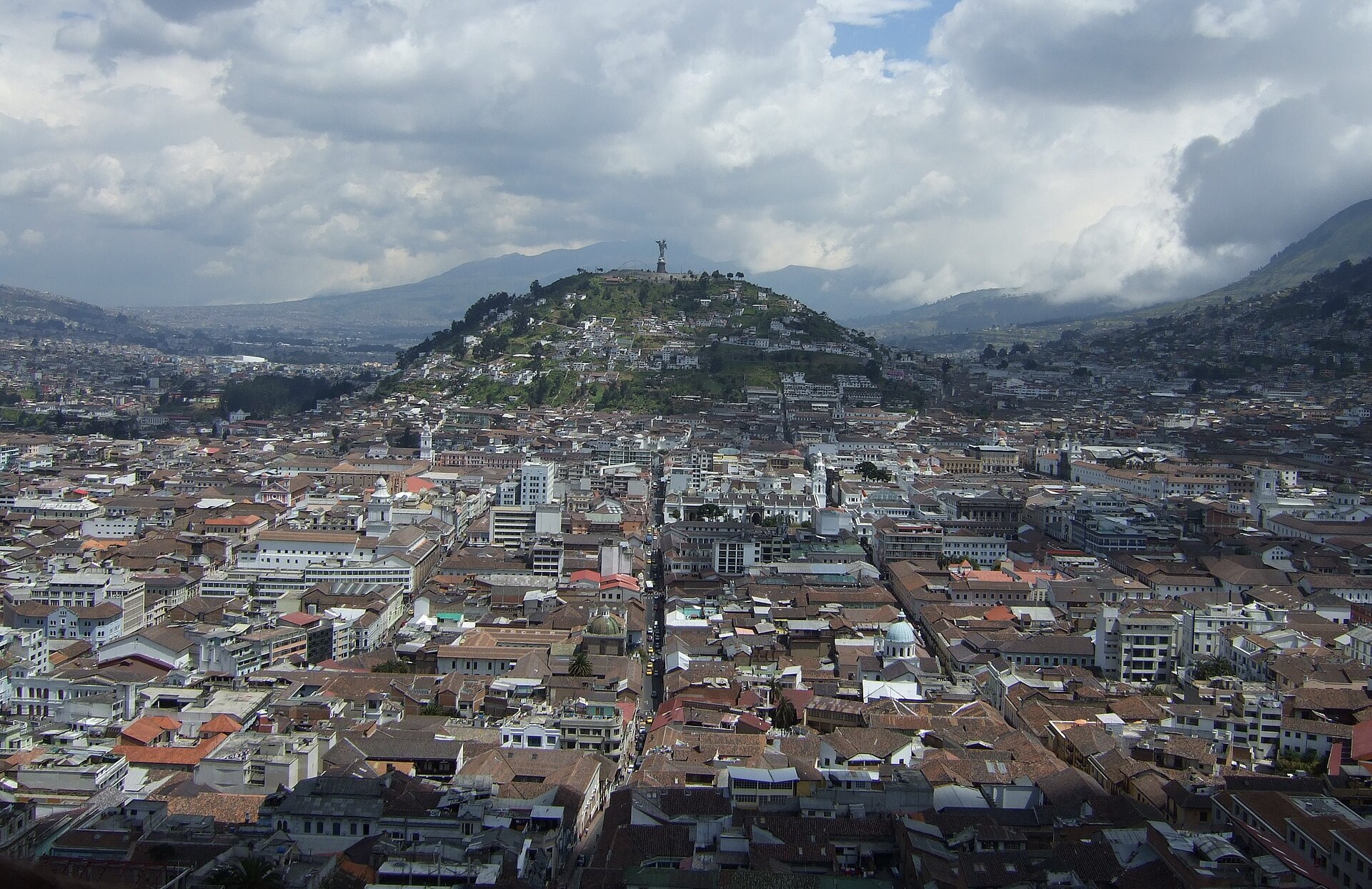
Digital outlets are multiplying, RSF says, but they lack a solid business model. La Hora and the state-owned daily El Telégrafo have moved fully online, and El Comercio laid off a large share of its staff.
Television has been hit too. In January 2024 armed men burst into the channel TC Televisión on live air, an attack that Fundamedios, in its April 2026 report on the media crisis, called “an image of the era” in our translation from Spanish.
Who Owns the Outlets
The Pérez family, which had owned Guayaquil’s El Universo for over a century, announced on 12 February 2026 that it was selling its shares to an investor group led by Florida-based entrepreneur Yves Maia Pardini. The group includes Integra Capital, an investment firm of Argentine businessman José Luis Manzano, and the terms were not disclosed.
Gráficos Nacionales S.A. (Granasa), publisher of the Guayaquil daily Expreso and the tabloid Extra, said in a statement of 1 January 2026 that actions by state bodies aim to bend its editorial line, which it describes as critical of President Daniel Noboa’s government. It cited a tax investigation by SRI, the national tax agency, which it says it learned of in September 2025 and which concerns 2023 income tax linked to its distributors, and public remarks by José Julio Neira, the government’s secretary of public integrity.
On 18 February 2026 the Superintendency of Companies, the state corporate regulator, intervened in Granasa, saying its aim is to oversee the company’s economic and financial performance after Inmobiliar, a state real-estate agency that claims a minority stake in Granasa, complained that the company withheld information it requested. Granasa has said it declined to hand over details about its legal advisers.
On 10 April 2026 Granasa said a possible attempt through Ecuador’s prosecutors (the Attorney General’s office) to take control of 40% of its shares was under way. The claim cites a complaint reportedly filed by the liquidator of another company, Veranera, and we found no final ruling on it.
The Inter American Press Association (IAPA), a regional press-freedom body, said on 5 January 2026 that a series of actions by several entities, including a government body, “could constitute indirect reprisals” against Granasa. Expreso’s print edition ended on Friday 9 October 2026, as Granasa and the IAPA had announced, and its digital edition continues.
Article 312 of Ecuador’s Constitution bars financial entities and groups, and their legal representatives, board members and shareholders, from controlling the capital of media companies. A referendum in 2011 amended the article.
How Free Is the Press
RSF’s 2026 World Press Freedom Index puts Ecuador 125th of 180 with a score of 44.37, down from 94th and 53.76 in 2025. That is a fall of 31 places in a single year.
RSF writes that “In Ecuador, journalists work in a climate of increasing danger, self-censorship and hostility, marked by the rise of criminal gangs and drug cartels, as well as an increase in assaults, threats, attacks and even murders.” Its count to 28 November 2026 shows one journalist killed since 1 January 2026, after three killed for their work in 2025.
Armed men shot dead Tomás Beltrán Conforme, founder and editor of the Facebook-based local news site Calcetines, on Sunday 8 November 2026 as he parked his car in front of his home in Calceta, in Manabí province, the Committee to Protect Journalists (CPJ) said on 9 November 2026. He had been under police escort for 18 months on the recommendation of MAPP, Ecuador’s protection mechanism for journalists, made up of officials, civilians and independent media workers.
“CPJ is alarmed by the killing of Ecuadorian journalist Tomás Beltrán Conforme following repeated threats to his life and urges the authorities to bring those responsible to justice,” said Cristina Zahar, CPJ’s Latin America program coordinator, on 9 November 2026. Fundamedios director César Ricaurte told CPJ that two part-time workers of Beltrán’s site, a messenger and a salesperson, were killed in a shootout in Calceta earlier in 2026.
Fundamedios counted 194 aggressions against the press in 2024 and 230 in 2025, with 114 of the 2025 cases by state agents and five journalists killed that year, against three in RSF’s count, according to its April 2026 report on the media crisis. It also logged Facebook suspensions of digital outlets in Macas, in the Amazon, in March 2026 after critical coverage of local authorities.
In 2025 the executive introduced an economic bill on irregular capital flows that, RSF says, could raise state supervision of non-governmental organisations (NGOs) and affect outlets that depend on foreign funding. We found no government statement answering RSF’s reading.
The Rules of the Game
RSF says Rafael Correa’s three terms as president, from 2007 to 2017, left tension with the press and intensive use of state tools. The Organic Law on Communication, enacted in 2013, was used in disputes with the press, including lawsuits and fines on reporters.
Media may publish opinion polls only until 10 days before the vote, under the CNE’s rule as applied under the Código de la Democracia, Ecuador’s electoral code. The deadline was midnight on Thursday 19 November 2026.
Pollsters that publish during the ban or operate without CNE registration face sanctions under the electoral code. The CNE has said it will report unregistered firms that publish forecasts to the Electoral Disputes Tribunal, Ecuador’s election court.
The campaign ran from 12 to 26 November, and the CNE calendar sets electoral silence from 27 November until polls close. The CNE organised 45 mandatory debates for jurisdictions above 100,000 voters, 21 for prefect and 24 for mayor.
How to Follow Sunday’s Vote
Polling runs from 07:00 to 17:00 Ecuador time on Sunday 29 November 2026, the CNE says, which is 7 a.m. to 5 p.m. US Eastern because both zones sit at UTC-5 (five hours behind Greenwich Mean Time) after US daylight saving ended on 1 November 2026. Mainland Ecuador does not use daylight saving time, so its clocks stay at UTC-5 all year.
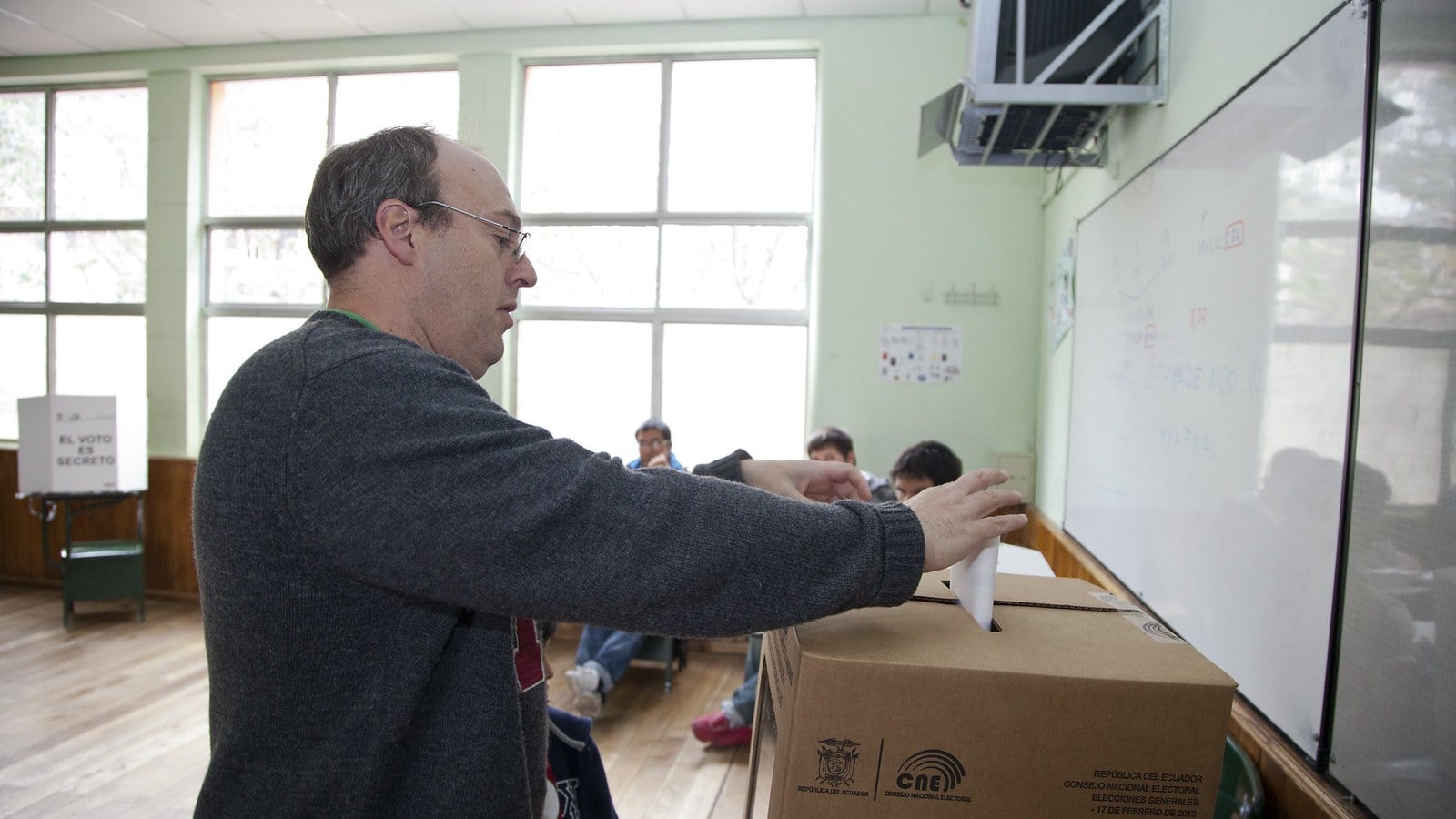
More than 13.8 million voters can choose among 51,731 confirmed candidacies in 24 provinces, according to CNE figures carried in November 2026. The ballots cover mayors, prefects (provincial heads), vice-prefects, councillors, parish boards and seven members of the CPCCS, the Council of Citizen Participation and Social Control, a state body that picks senior officials.
CNE president José Cabrera said on 18 November 2026 that the first official results will come between 18:00 and 18:30 on 29 November, which is 6:00 to 6:30 p.m. US Eastern. Those figures come from the official count, called the escrutinio, after polling stations close and count ballots.
The quick count is a separate process run by the CNE’s own statistics staff with no outside firm. As of 18 November 2026 the CNE had not said in which cantons (Ecuador’s municipalities) or provinces it would run.
Ten candidates are running for mayor of Quito, as our debate report shows, and the numbers by province sit in our election data room. The regions explainer shows how the provinces fit together.
What Prediction Markets Say
Polymarket, a crypto prediction market, shows Quito mayor race prices as of 28 November 2026 (12:04 a.m. ET): Quito’s mayor Pabel Muñoz 55.0% and challenger Harold Burbano, a former minister under President Daniel Noboa, 32.0%, with two other candidates, Bernardo Jijón at 9.6% and Jorge Yunda at 5.9%, with US$66,748 traded in total. Prices are bets, not polls, and cannot say who will win; Muñoz is the sitting mayor of Quito and Burbano the challenger.
Why we show this: prediction markets turn real-money bets into a live probability that moves within minutes of the news, which is why investors, campaigns and newsrooms in the United States now follow them closely. We show them next to polls and official results, never instead of them.
What We Do Not Know
We found no circulation or audience figures for any Ecuadorian outlet, no up-to-date public record of who owns El Comercio, La Hora, Primicias or Últimas Noticias, and no list of who holds each stake in the El Universo buyer group. We also found nothing on public broadcasters beyond El Telégrafo’s move online.
We found no CNE statement on where the quick count will run, and no text of what electoral silence bars outlets from publishing. The outcome of the Attorney General question over Granasa’s shares is also missing.
More: Ecuador news in English, every day from The Rio Times.
Frequently Asked Questions
How free is Ecuador’s press?
RSF ranks it low and says journalists face rising danger and self-censorship. Press groups also report threats and attacks on reporters.
Who owns El Universo?
The Pérez family announced the sale of its shares to a group led by Florida-based entrepreneur Yves Maia Pardini. The terms were not disclosed.
When will the first results come?
The CNE says the first official results arrive shortly after polls close, in the early evening. The CNE publishes them on its website, cne.gob.ec.
Can media still publish opinion polls?
No, the window for publishing polls has closed. Pollsters that break the rule face sanctions.
What is the quick count?
It is a separate, faster tally run by the CNE’s own statistics staff. It is different from the official count that produces the first results.
This article was produced by The Rio Times’ automated AI newsroom. Editorial responsibility: Matthias Camenzind, Publisher and Editor-in-Chief. The Rio Times also runs Ask Rio Times, which answers from 100,000+ of our own articles, the daily Latin America Power Map, and prediction-market odds on elections and markets.. How we use AI · Report an error
Sources
- National Electoral Council (CNE), cne.gob.ec
- Reporters Without Borders, rsf.org/en/pays/ecuador
- Committee to Protect Journalists statement of 9 November 2026
- Fundamedios, April 2026 report on the media crisis
- Granasa statements of 1 January and 10 April 2026
- Superintendency of Companies
- Constitution of Ecuador, 2008, article 312
- Código de la Democracia
- Polymarket market “Quito Mayoral Election Winner”, 28 November 2026
Expat Guide to Ecuador
What The Rio Times publishes for foreigners who live in or move to Ecuador.
Start here
- Ecuador Security and Crime Explained
- Best Places to Live in Ecuador for Expats 2026
- How to Get Residency in Ecuador in 2026: Visas From US$1,446 a Month
- Cost of Living Cuenca, Ecuador — Rent, Bills and Doctors, Priced in Dollars
City guides
Coming up in Ecuador
- Ecuador Voting Weekend Rules for Expats on 29 November 2026 29 Nov
- Camilo Ecuador 2027: Quito and Cuenca Shows Move to 9 and 10 April 9 Apr
Understand Ecuador