Guayaquil Campaigns Close Before Sunday Vote
A city whose elected mayor sits in jail goes to the polls on Sunday with eight candidates on the ballot.

Ecuador: Elections
On the last day of campaigning in Guayaquil, Ecuador’s largest city, President Daniel Noboa rolled in from Durán, a neighbouring city, on Thursday 26 November, in a caravan beside his candidate for mayor, Cynthia Viteri. Across town, the wife of the city’s jailed mayor held her own closing rally, where some attendees left in confusion before she arrived.
Guayaquil votes on Sunday 29 November with its elected mayor, Aquiles Álvarez, in jail since February. The campaign ended at 23:59 on Thursday under rules set by the CNE (Consejo Nacional Electoral, Ecuador’s election authority), and electoral silence, a ban on campaigning, began at midnight.
Key Facts
- Who. Eight candidates for mayor of Guayaquil, Ecuador’s largest city, with 2,019,614 registered voters.
- What. Campaigning ended Thursday; the elected mayor is in jail and is not running.
- When. Vote Sunday 29 November, 07:00 to 17:00; electoral silence now in force.
- Power Index. Ecuador ranks 8th of 14 in The Rio Times Latin America Power Index, with 37.2 points (November 2026 edition).
- As of. 27 November 2026, 13:00 GMT
A city whose elected mayor sits in jail goes to the polls on Sunday with eight candidates on the ballot.
Álvarez was backed by Revolución Ciudadana, the left-wing movement of former president Rafael Correa, though he is not a formal member, and was detained on Tuesday 10 February 2026; since 8 March he has been held in the Cárcel del Encuentro prison. He was sentenced to six years and eight months in the Triple A case, over unauthorised fuel trade, which his defence says is not final, and a provincial court has upheld a three-year sentence in the Grillete case, over his electronic ankle monitor.
The CNE required him to accept his candidacy in person, and he could not, so he is not on the ballot. Revolución Ciudadana was suspended, its backup candidate David Norero of the small RETO movement was blocked by electoral authorities, and the Electoral Disputes Tribunal (TCE) neutralised Amigo, another left-wing alternative, while city hall runs under an acting mayor.
The Social Christian Party (PSC), the conservative party of its leader Jaime Nebot, governed Guayaquil without a break from 1992 to 2023. In 2023 Álvarez won with 39.87% of the vote in a field of 11 candidates.
Viteri, a lawyer who was mayor from 2019 to 2023, announced on Wednesday 15 July 2026 that she was running for Noboa’s Acción Democrática Nacional (ADN), after first registering with Centro Democrático, a party founded by former Guayas prefect Jimmy Jairala. She has said of the switch: “I thought it was the best opportunity and the only one I will have, because before I did not work hand in hand with governments” (our translation).
She held her closing rally on Thursday at Avenida Machala and Gómez Rendón, next to the Colegio Guayaquil. She broke with the PSC, where her career began, and argues that the city should cooperate with the national government.
Andrés Roche, a lawyer and former head of the municipal traffic agency, runs for the PSC with the Madera de Guerrero movement and has Nebot’s backing. His campaign team says he closed online, with three videos and a social-media message on insecurity and weak public services, one of them using an everyman figure called “Juan Pueblo” to show the city’s decline.
Fiorella Icaza Samán, Álvarez’s wife, runs for the Ecuadorian Socialist Party (PSE) and has led marches demanding justice for him. Prosecutors have linked her to the Goleada case, an inquiry into alleged organised crime, although nothing is proven and a judge has suspended the trial-preparation stage until results are proclaimed.
Her closing rally was called for 16:00 at the Ángel María Canals sports complex in southern Guayaquil, with Sofía Espín, candidate for Guayas prefect (provincial governor), and José Francisco “Pepe Pancho” Cevallos, candidate for vice-prefect. Some attendees left in confusion before the candidates arrived at about 18:00.
Mónica Luzárraga, a lawyer, rights activist and former judge, stands for the Despierta alliance of Unidad Popular, a small left-wing party, and Pachakutik, an Indigenous-based movement. She has said: “I decided when Guayaquil was left without a mayor” (our translation), and her closing event had a media meeting point at 15:00.
Susana Santistevan, a lawyer and former vice-minister of social inclusion, represents CREO, the movement of former president Guillermo Lasso. Her day was scheduled to run from a 10:00 event at the “Mall del Piso” and an 11:30 walk through Isla Trinitaria, a Guayaquil district, to a 16:00 rally at Cristo del Consuelo.
Three more candidates complete the field of eight: Antonio García of Sociedad Patriótica, a party, and Pedro Medina, a doctor, for Mano Firme, the only three-party alliance. The third, Héctor Baldeón, is an evangelical pastor and former union leader running for Avanza, a party founded under Correa, and no closing events were confirmed for any of these three at the time of reporting.
Twelve political organisations filed candidacies for the mayoralty, seven of them in alliances, and across Ecuador 222 mayoralties are being decided on Sunday. Voters also choose prefects and councillors, and some candidates face court cases while they stand.
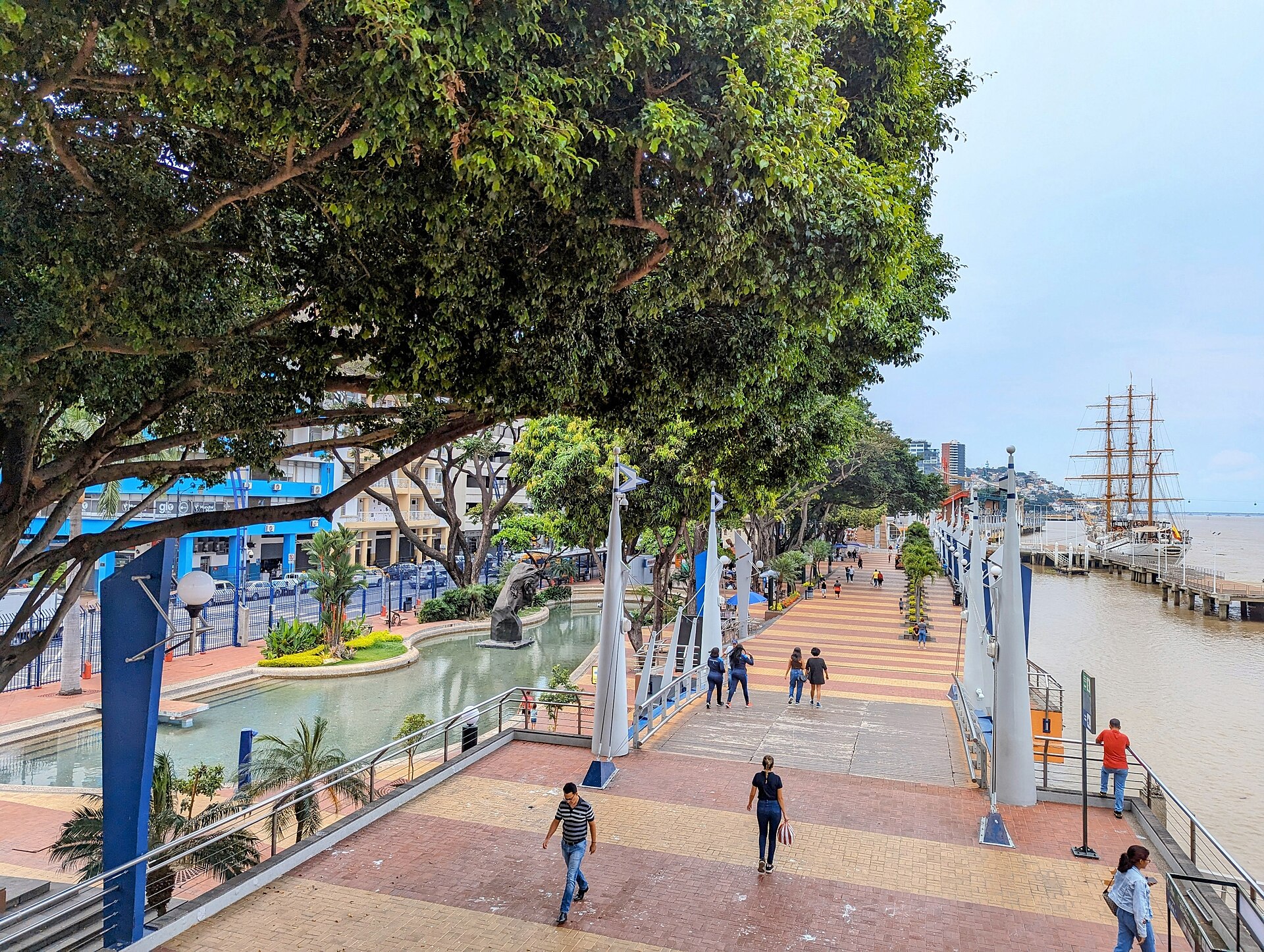
Ecuador uses the US dollar, and Guayaquil is its largest city and main port. President Noboa’s movement is trying to win a city where an opposition mayor has governed since 2023.
Under the silence rules, no propaganda is allowed until 17:00 on Sunday, and a dry law (ley seca) runs from 12:00 on Friday 27 November to 12:00 on Monday 30 November. Polling stations close at 17:00 on Sunday.
More: Ecuador news
Frequently Asked Questions
When do Guayaquil voters choose a mayor?
On Sunday 29 November, after campaigning ended on Thursday night. Electoral silence now applies until the polls close.
Why is this mayoral race unusual?
The elected mayor is in jail and was barred from the ballot, so eight other candidates are competing to replace him.
Why does Guayaquil matter outside Ecuador?
It is the country’s biggest city and main port, and its mayor’s office is a prize for both the government and the opposition.
Sources
Consejo Nacional Electoral (CNE), electoral calendar and voter figures, 26 November 2026; campaign statements of the candidates, 26 November 2026; Triple A case sentence (August 2026) and Grillete case appeal ruling (September 2026), Ecuador’s courts; Goleada case filings, Ecuador’s prosecutor’s office.
This article was produced by The Rio Times’ automated AI newsroom. Editorial responsibility: Matthias Camenzind, Publisher and Editor-in-Chief. The Rio Times also runs Ask Rio Times, which answers from 100,000+ of our own articles, the daily Latin America Power Map, and prediction-market odds on elections and markets.. How we use AI · Report an error