Quito Mayor Candidates Trade Jabs in Debate
Rivals aimed most of their fire at the sitting mayor, while security, transport and rubbish collection supplied the few concrete promises.

Brief · Ecuador
Ten candidates for mayor of Quito, Ecuador’s capital, debated on Sunday 22 November 2026 in an event run by the National Electoral Council (CNE), which organises Ecuador’s elections. They spent more time attacking the sitting mayor, Pabel Muñoz, who seeks re-election, than presenting plans.
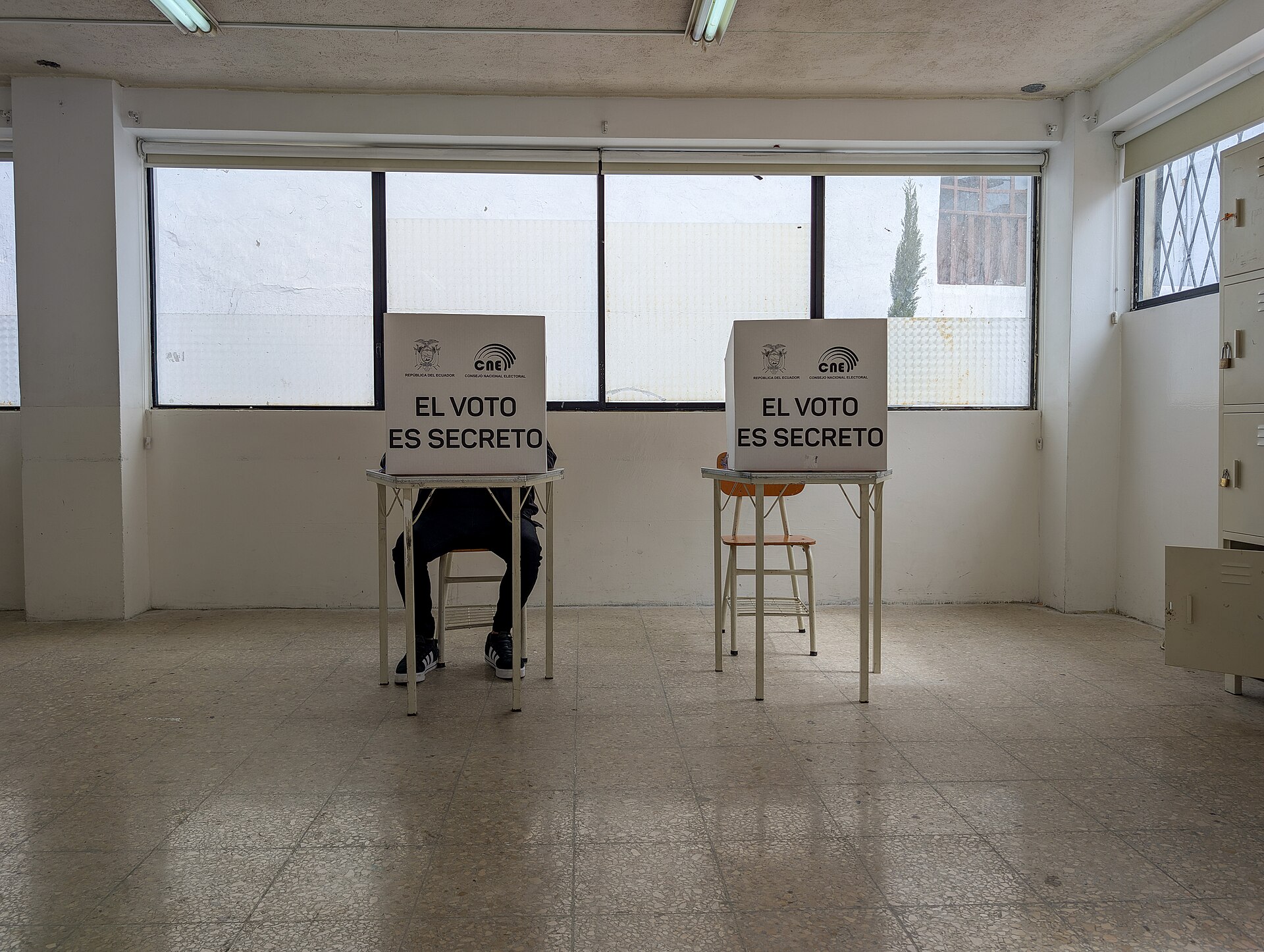
On Sunday 29 November 2026 Ecuadorians choose mayors, provincial prefects (the heads of provincial government) and councils. The CNE split the field into two blocks of five and set four themes: public services and risks, citizen security, integrity in the use of public funds, and local economic development.
Key Facts
- Who. Ten candidates for mayor of Quito, in two blocks of five, on Sunday 22 November 2026.
- Next. Local elections on Sunday 29 November 2026.
- Prediction markets. Bettors on Polymarket, a betting market, give Mayor Muñoz 49%, challenger Burbano 35% (23 Nov, 2:05 a.m. ET).
- Power Index. Ecuador ranks 8th of 14 in The Rio Times Latin America Power Index, with 37.2 points (November 2026 edition).
- As of. 23 November 2026, 07:09 GMT
Rivals aimed most of their fire at the sitting mayor, while security, transport and rubbish collection supplied the few concrete promises.
Harold Burbano, who represents the Democratic National Action party (ADN) of President Daniel Noboa and served as labour minister, compared Muñoz to a husband who, sensing he is losing his partner, starts offering serenades and expensive dinners. Muñoz called part of the event a “show barato”, a cheap show.
Candidate Wilson Merino told the audience on 22 November: “Exes are always toxic; people of Quito, you never go back to your ex.” He also called Muñoz an “exalcalde”, or former mayor, although Muñoz is still in office.
Burbano offered to extend the Quito Metro, the city’s new subway, to Calderón, a district in the north, and to create a metropolitan security command working with the national police. Muñoz replied that the planned extension to La Ofelia, in northern Quito, must be finished first.
Muñoz said at the debate that he would build an environmental complex to use 60% of solid waste. Merino attacked the garbage-collection fee billed on water bills and proposed restoring a stronger metropolitan police.
Candidate Carla Larrea, of the CREO party (Creando Oportunidades), proposed a “metropolitan shield” of connected cameras and an early-alert network. Candidate César Díaz proposed five security stations on the main roads into and out of Quito.
Candidate Paúl Desamblanc proposed a transit line called “Aerómetro” and an integrated transport system. Candidate Bernardo Jijón proposed reorganising the municipal budget and cutting municipal subsidies.
Jorge Yunda, a former Quito mayor, did not share the stage with Muñoz, so the two never met face to face. Yunda spoke in the second block, Muñoz in the first.
The vote also tests how far President Noboa’s ADN reaches beyond national politics. It is not yet known how many voters watched or whether the debate will move any votes.
What Prediction Markets Say
Polymarket, a prediction market where users bet real money, priced the Quito mayoral race at 2:05 a.m. ET (07:05 UTC) on 23 November 2026 as follows: Pabel Muñoz 49%, Harold Burbano 35%, Bernardo Jijón 5.2%, Jorge Yunda 3.5%, Wilson Merino 3%, Linda Romero 1.9%. US$15,469 had been traded on the market, and these prices are bets, not polls.
Why we show this: prediction markets turn real-money bets into a live probability that moves within minutes of the news, which is why investors, campaigns and newsrooms in the United States now follow them closely. We show them next to polls and official results, never instead of them.
Frequently Asked Questions
Did the sitting mayor meet all his rivals face to face?
Not with Jorge Yunda, a former mayor. He was placed in the other block, so he and Pabel Muñoz did not share the stage.
What is Ecuador voting on on 29 November?
Voters choose mayors, provincial prefects and local councils. Quito’s mayoral race is one of the contests.
Sources
Statements of the candidates at the debate organised by the National Electoral Council (CNE), 22 November 2026; market data: Polymarket, 23 November 2026.
This article was produced by The Rio Times’ automated AI newsroom. Editorial responsibility: Matthias Camenzind, Publisher and Editor-in-Chief. The Rio Times also runs Ask Rio Times, which answers from 100,000+ of our own articles, the daily Latin America Power Map, and prediction-market odds on elections and markets.. How we use AI · Report an error
Living in or visiting Quito? See this month's events and our Quito city guide with rents, safety and upcoming concerts.
Connected Coverage
Ecuador news · Ecuador Poll Shows Tight Quito Mayor Race · Latin America Power Map