
DR CONGO · ANALYSIS
Key Facts
- —What is happening The Tumaini trial is testing whether Ervebo and future candidates can protect against the Bundibugyo Ebola virus.
- —Why it matters No vaccine is currently approved specifically for Bundibugyo Ebola.
- —Who is who The trial is coordinated by Congo’s National Institute for Biomedical Research with the University of Antwerp and support from WHO, the Congolese Ministry of Health, CEPI and other partners.
- —What to watch Whether the Oxford-Serum Institute and Moderna candidates enter the platform, and whether interim efficacy signals emerge while transmission continues.
- —What it means for you For US travellers and investors, the trial does not create an approved Bundibugyo vaccine or eliminate travel risk to northeastern Congo.
The Ebola vaccine trial in Congo is testing whether existing and experimental shots can protect against the Bundibugyo strain. For US readers, the trial matters because no vaccine is currently approved for this Ebola species.
The Democratic Republic of Congo is a vast Central African nation whose eastern provinces have faced repeated Ebola outbreaks and chronic insecurity. This analysis explains the Tumaini trial, the strain problem it addresses, and what the evidence could mean for travel, public health and vaccine developers, drawing on the Africa Intelligence Brief.
What Tumaini Is Testing
Tumaini, meaning “hope” in Swahili, is a Phase 2/3 adaptive platform trial. It is designed to evaluate the safety, immunogenicity and efficacy of multiple vaccine candidates within a single framework rather than launching separate trials for each product.
The first candidate administered is Ervebo, the Merck vaccine licensed for prevention of disease caused by Zaire ebolavirus. Its inclusion is scientifically important but does not prove protection against Bundibugyo, the species driving the current outbreak.
Two Bundibugyo-specific candidates are expected to join the platform subject to further development and Congolese regulatory authorisation.
Both candidates have received support from the Coalition for Epidemic Preparedness Innovations, or CEPI. The Oxford candidate vaccine was expected to enter the trial shortly.
The trial uses ring vaccination, recruiting people who have been in contact with confirmed Ebola cases and other contacts judged to face high infection risk. This approach follows transmission chains rather than offering immediate mass vaccination to the entire population.
Why Bunia and Ituri
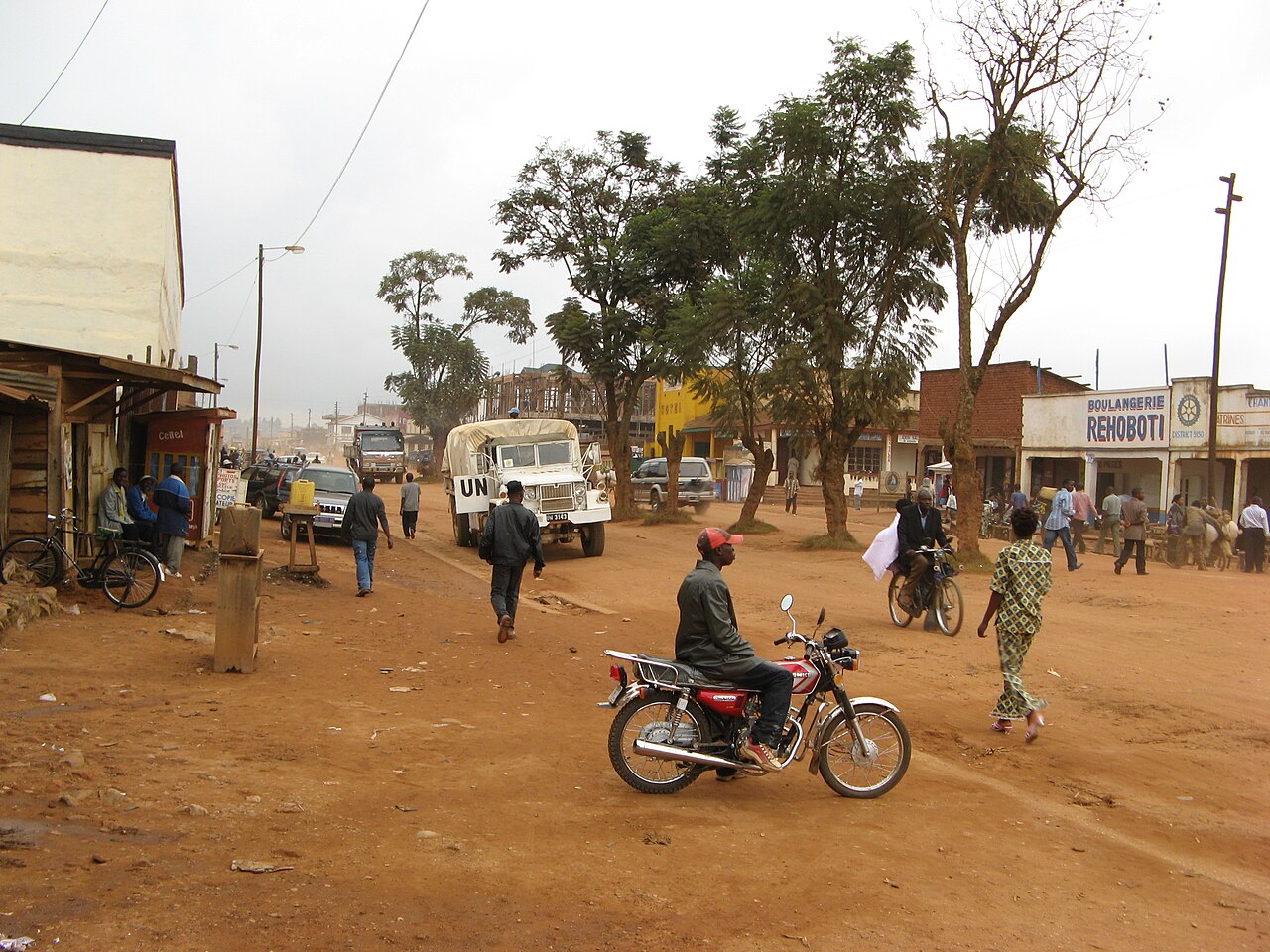
Bunia is the capital of Ituri Province and the epicentre of the outbreak. Selecting the city allows researchers to enrol high-risk contacts while transmission is active, making it possible to measure protection under real outbreak conditions rather than relying only on laboratory immune-response data.
The location also reflects operational reality. A trial must be close to confirmed cases, contact-tracing teams, treatment facilities, laboratories and community networks.
Conducting the study in the affected area can produce evidence faster, but it creates ethical and logistical challenges. These include informed consent during fear, insecurity, displacement and intense pressure for a solution.
The trial is coordinated by Congo’s National Institute for Biomedical Research, or INRB, with the University of Antwerp and support from WHO, the Congolese Ministry of Health, CEPI and other partners.
The Numbers That Matter
The different reporting dates matter.
Confirmed cases, probable cases, deaths among confirmed cases and total reported deaths may be counted differently across updates. No verified trial budget, financing total or currency-denominated expenditure for Tumaini is available in the cited sources.
The trial registry identifier is ClinicalTrials.gov NCT07842107, according to the Institute of Tropical Medicine Antwerp. The protocol is designed to include pregnant women and children.
The Actors and What Each Wants
The Congolese Ministry of Health provides national leadership and oversight for the trial. Its interest is generating evidence that can guide outbreak response and potentially protect high-risk communities.
The INRB, Congo’s national public-health laboratory, co-leads and co-sponsors the trial with the University of Antwerp’s Global Health Institute. Both institutions want rigorous safety and efficacy data under outbreak conditions.
WHO, led by Director-General Tedros Adhanom Ghebreyesus, provides technical, scientific and operational support.
CEPI, the Coalition for Epidemic Preparedness Innovations, has supported the Oxford-Serum Institute and Moderna candidates. Its interest is accelerating vaccine development for epidemic diseases that lack commercial markets.
Moderna, a US-based company, is developing a Bundibugyo-specific mRNA candidate. The precise US government agency, grant amount, contract value or current federal funding stream supporting Moderna’s candidate is not known.
The Strain Problem
“Ebola” is not a single virus. Ervebo was developed and licensed against Zaire ebolavirus, whereas the current Congolese outbreak is caused by Bundibugyo virus.
That distinction limits what can be inferred from previous Ebola outbreaks in eastern Congo. Ervebo’s strong record against Zaire Ebola does not automatically establish equivalent protection against Bundibugyo.
This is why Tumaini is not simply a mass rollout of an already-proven product. It is testing whether Ervebo offers cross-protection and whether newer candidates designed for Bundibugyo perform better.
There is also no approved vaccine specifically for Bundibugyo and no approved Bundibugyo-specific treatment identified in the available reporting. Until trial and regulatory evidence changes that position, the response continues to depend on early detection, isolation, contact tracing, supportive care, infection prevention and community cooperation.
A separate study called BRAVO was reported in September 2026, conducted by Médecins Sans Frontières with Congolese health authorities, Africa CDC and scientific partners. It planned to enrol approximately 20,000 frontline workers in Ituri and North Kivu over nine to 12 months, also using Ervebo.
Economic and Business Stakes
For a US investor audience, the commercial significance is limited at this stage. Tumaini is primarily a public-health and regulatory evidence exercise, not evidence of a near-term commercial product launch.
Moderna’s participation could generate proof-of-concept data for its Bundibugyo programme, but no approval, purchase agreement, sales forecast or delivery schedule is established in the cited material. The available sources provide no verified budget, financing total or currency-denominated expenditure for Tumaini.
The broader economic stakes lie in outbreak containment. Prolonged transmission in eastern Congo disrupts trade, mining, agriculture and cross-border movement, and raises the cost of humanitarian response.
A vaccine that works against Bundibugyo would reduce those costs and protect health workers, miners and logistics staff. But that outcome depends on trial evidence that does not yet exist.
For Latin America, the direct economic link is weak. The main relevance is preparedness: Latin American health authorities watch African outbreak responses for lessons on vaccine platforms, regulatory pathways and cross-border screening.
What It Means for the United States
For US citizens, the immediate travel question is not whether a vaccine trial has begun but whether travel to the affected area is prudent. Bunia and Ituri are in northeastern Congo, an area affected by Ebola transmission and serious security risks.
A vaccine under trial is not an approved travel vaccine, and Ervebo’s Zaire indication should not be treated as protection against Bundibugyo. Travellers should consult current US government health and security advisories before travel.
Border screening, quarantine, flight disruption, medical evacuation and access to treatment may change rapidly during an outbreak. The search results available here do not include a current CDC or US State Department advisory, so any article-specific US travel-risk language should be checked against those agencies immediately before publication.
The US connection is most direct through Moderna, a US-based company developing a Bundibugyo-specific mRNA candidate. The precise US government agency, grant amount, contract value or current federal funding stream supporting Moderna’s candidate is not known.
For US health agencies, the trial offers a real-world test of whether existing and platform-based vaccines can be adapted to a different Ebola species. That evidence could shape future stockpiling and emergency-use decisions.
The Scenarios
In the stabilising scenario, ring vaccination around confirmed cases reduces transmission quickly, and interim data show that Ervebo or a Bundibugyo-specific candidate generates a protective immune response. Regulators could then consider emergency-use pathways while the outbreak continues.
In the complicating scenario, insecurity, displacement or incomplete contact tracing limits the trial’s ability to recruit participants and measure efficacy. Declining case numbers, while good for public health, could also make it harder to generate statistically useful comparisons.
In the negative scenario, Ervebo shows weak cross-protection against Bundibugyo and the newer candidates are delayed. The response would then continue to depend on non-vaccine measures, and the outbreak could persist longer.
A realistic near-term expectation is that Ervebo can be studied immediately for possible cross-protection, while Bundibugyo-specific candidates may enter the same platform soon if authorised. Preliminary evidence could inform outbreak vaccination while transmission continues.
A definitive answer on routine or broad deployment requires later trial and regulatory decisions. No dated public milestones, such as enrolment targets, interim analyses or final-results dates, were provided.
What It Means for You
If you are a US traveller, the trial does not eliminate travel risk and does not create a generally available Bundibugyo vaccine. Consult current US government advisories and a travel-medicine clinician before any trip to northeastern Congo.
If you are an investor, the main near-term milestone is not revenue but evidence. Watch for candidate entry into the platform, participant recruitment, safety data, interim efficacy signals and eventual regulatory decisions.
If you are an expatriate or employer with staff in the region, the trial does not change the need for strict infection prevention, contact tracing and medical evacuation planning. A vaccine under study is not a substitute for operational caution.
What Is Not Known
Several questions remain open as of 24 October 2026. It is not known whether Ervebo reduces Bundibugyo infection or severe disease, or whether any protection is strong enough to justify broad deployment.
It is also not known how well the Oxford-Serum Institute candidate performs in humans, or when it will actually be added to Tumaini. The speed at which participants develop useful immunity after vaccination is unestablished.
Researchers do not yet know whether vaccination prevents infection, severe disease, death or transmission, or only some of these outcomes. The durability of any protection is also unknown.
It is not known whether the candidates work equally well in children, pregnant women, older adults, people with immune compromise and people with prior Ebola vaccination. The inclusion of pregnant women and children is valuable because these groups are often missing from early vaccine evidence.
Finally, it is not known when regulators could authorise a candidate outside the trial. TUMAINI is a Phase 2/3 trial of vaccine candidates against Bundibugyo virus.
What to Watch
Watch whether the Oxford-Serum Institute candidate receives Congolese regulatory authorisation and enters the Tumaini platform. Their entry would expand the trial beyond Ervebo and begin generating Bundibugyo-specific human data.
Watch WHO outbreak updates for changes in confirmed case and death counts. Transmission trends will determine whether the trial can measure efficacy under real outbreak conditions.
Watch for any interim safety or immunogenicity readouts from the trial. In an emergency, regulators could potentially consider exceptional pathways, but the available sources do not announce such a step.
Watch US CDC and State Department advisories for travel guidance on northeastern Congo. Those advisories, not the trial itself, are the practical reference for US citizens and employers.
Watch for any announcement from Oxford or the Serum Institute of India about candidate progress. The commercial significance for investors remains limited until proof-of-concept data emerge.
Related reading: Democratic Republic of Congo Neighbours Explained 2026; Congo Ebola Outbreak Explained, Spread and US Risk; DR Congo Geopolitics Explained 2026; more from DR Congo.
Frequently Asked Questions
What is the Tumaini Ebola vaccine trial?
Tumaini is a Phase 2/3 adaptive platform trial. It is testing whether Ervebo and future candidates can protect against the Bundibugyo Ebola virus.
Is there an approved vaccine for Bundibugyo Ebola?
No vaccine is currently approved specifically for Bundibugyo Ebola. Ervebo is licensed for Zaire ebolavirus, and its protection against Bundibugyo has not been established in humans.
Who is eligible for the Tumaini trial?
The trial uses ring vaccination, recruiting people who have been in contact with confirmed Ebola cases and other high-risk contacts. It is designed to include pregnant women and children.
Does the trial mean it is safe to travel to Bunia?
No. A vaccine under trial is not an approved travel vaccine, and Ervebo’s Zaire indication should not be treated as protection against Bundibugyo. Travellers should consult current US government health and security advisories.
Which companies are involved in the trial?
Merck’s Ervebo is the first candidate being tested. The University of Oxford with the Serum Institute of India is developing a ChAdOx1 candidate expected to join the platform.
Sources: riotimesonline.com, abc.es, fr.africanews.com, who.int, africanews.com, antaranews.com. Retrieved 24 October 2026.
This article was produced by The Rio Times’ automated newsroom system. How we use AI · Report an error · Editorial responsibility: Matthias Camenzind, Editor-in-Chief
Part of our ongoing coverage
Africa: The New Scramble — the great-power contest over the continent.