DRC’s Political Crossroads: Constitutional Changes Spark Debate
The Democratic Republic of Congo (DRC) finds itself at a critical juncture as President Felix Tshisekedi proposes constitutional changes. This move has sparked concerns about the country’s democratic trajectory and stability.
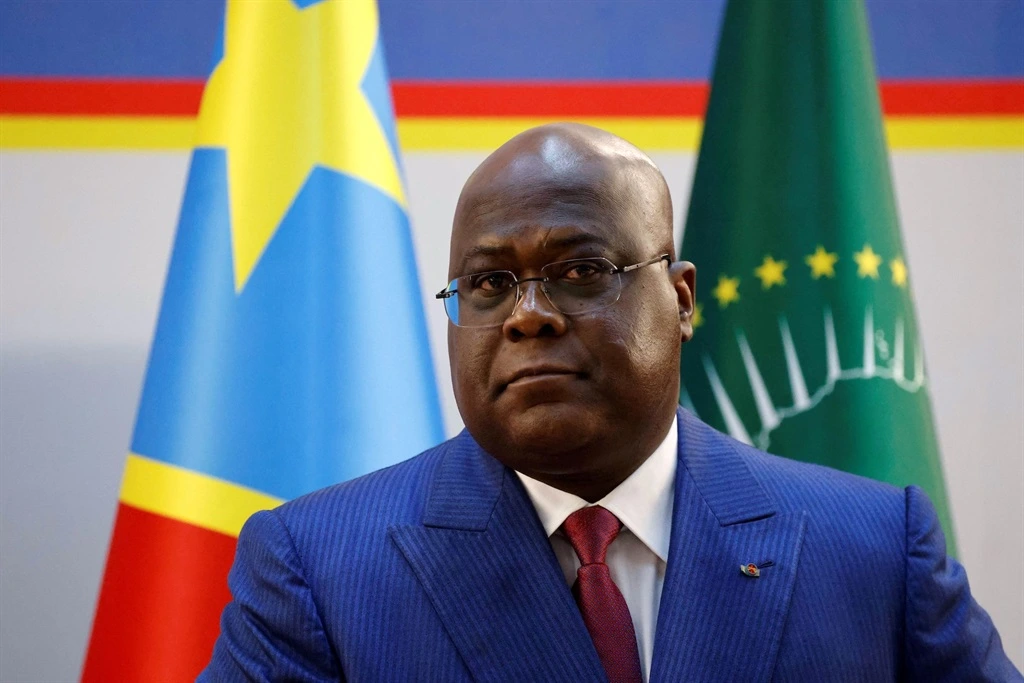
Tshisekedi, who secured a controversial second term in 2023, argues that the current constitution is outdated. He plans to establish a commission in 2025 to draft a new constitution.
While he claims this is necessary for the country’s progress, many view it as a potential attempt to extend his rule beyond the current two-term limit.
The DRC’s political landscape is complex and fraught with challenges. Despite its vast mineral wealth, the country struggles with widespread poverty and ongoing conflicts.
Over 23 million Congolese face food insecurity, and armed groups continue to operate in the eastern regions. Tshisekedi’s proposal echoes a troubling pattern seen across Africa.
Leaders in several countries have attempted to alter constitutions to extend their terms, often leading to political crises and violence.
The DRC’s Constitutional Reform Debate
The DRC itself experienced this under Tshisekedi’s predecessor, Joseph Kabila, who overstayed his mandate by two years. Opposition parties and civil society groups have voiced strong objections to the proposed changes.
They fear that altering the constitution could erode hard-won democratic gains and potentially destabilize the country. International observers share these concerns, worried that such moves could undermine recent progress in the DRC‘s governance.
The situation is further complicated by global interest in the DRC’s mineral resources. Some fear that international pressure to maintain democratic norms may be limited due to economic interests.
In short, this could potentially empower Tshisekedi to pursue controversial reforms. For the Congolese people, the stakes are high.
Many remember the struggles to establish term limits and view them as a crucial safeguard against autocratic rule. The proposed changes have reignited debates about the balance between political stability and democratic principles.
More: DR Congo news in English, every day from The Rio Times.
This article was produced by The Rio Times’ automated newsroom system. How we use AI · Report an error · Editorial responsibility: Matthias Camenzind, Editor-in-Chief
Part of our ongoing coverage
Africa: The New Scramble — the great-power contest over the continent.