
Colombia’s Constitutional Court declined on Monday to say who should investigate former president Álvaro Uribe over two 1990s massacres, so prosecutors keep the case for now.Uribe led Colombia from 2002 to 2010 and was a close ally of Washington during the years of Plan Colombia, the multibillion-dollar US security aid programme.
He denies any wrongdoing and is presumed innocent. On 9 November 2026 the court’s full bench of nine judges said it could not settle a dispute between two state bodies.
The case therefore stays with the Attorney General’s Office, known as the Fiscalía, where it has been since it was reactivated this year.
- What: Colombia’s Constitutional Court declined to decide who investigates ex-president Álvaro Uribe, by seven votes to two.
- Where it stays: The Attorney General’s Office keeps the file on the El Aro and La Granja massacres.
- Why it matters: A former US ally in Latin America remains under criminal investigation, and he is presumed innocent.
- Next: Prosecutors continue the inquiry.
- As of 9 November 2026, 17:00 GMT
What the Court Decided
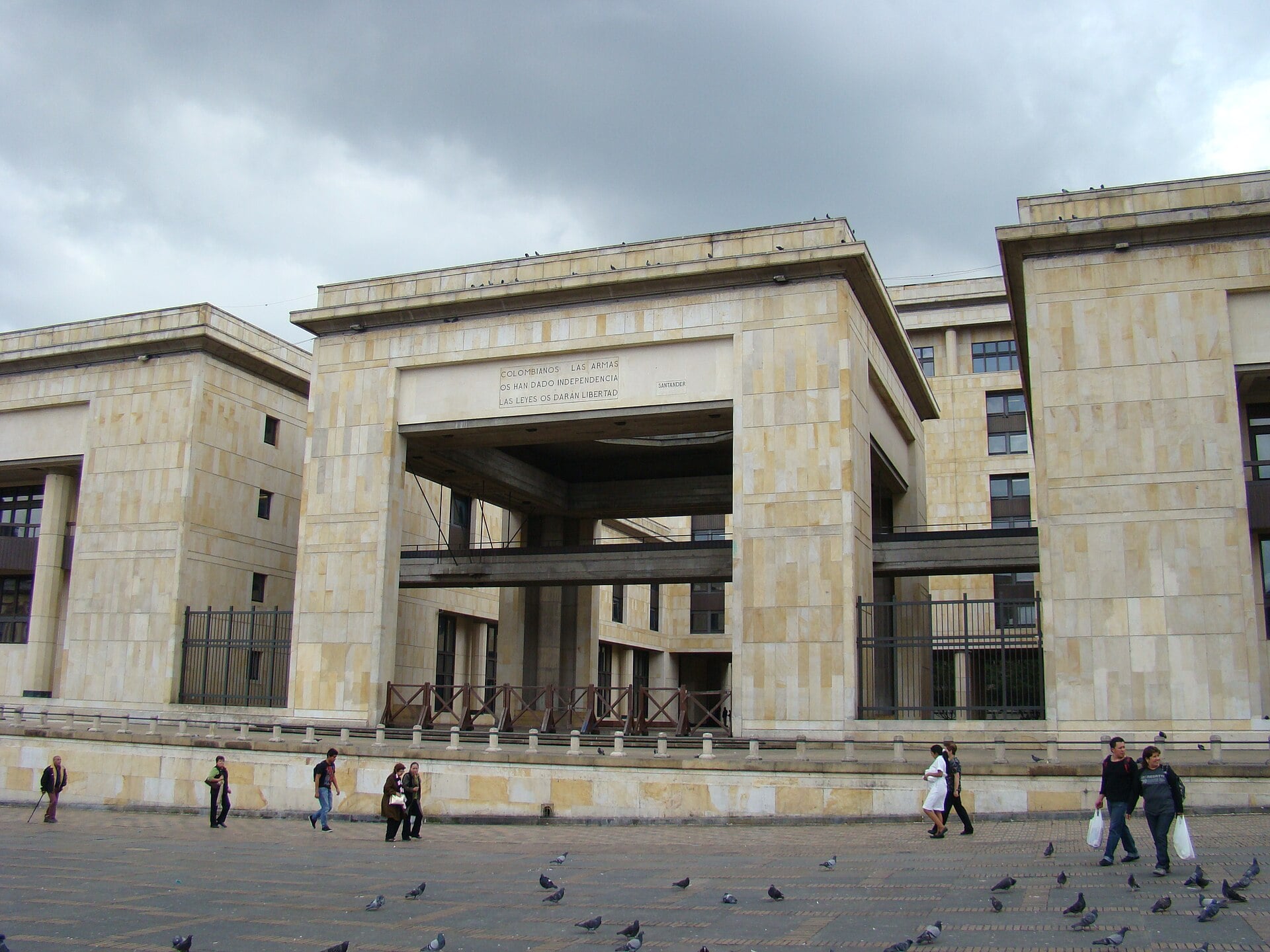
The Constitutional Court is Colombia’s top court for constitutional questions, and it also settles disputes over which authority has jurisdiction. On Monday its full bench voted seven to two to declare itself “inhibited”, meaning it refused to rule on the merits.
The court said the legal and objective conditions needed to resolve a jurisdiction conflict were not met. Judge Paola Meneses wrote the ruling, while judges Jorge Enrique Ibáñez and Carlos Camargo dissented and judge Juan Carlos Cortés added a clarification of his vote.
In plain terms, the court did not say prosecutors are right or wrong. It said the request was not properly built to be decided.
Legal experts said the authorities had not explained, under the court’s own case law, why each should handle the file. One scholar added that no specific rule obliges the court to settle such disputes between these two bodies.
Why Two Bodies Claimed the Case
The Chamber of Representatives, the lower house of Congress, has an Investigation and Accusation Commission, which handles complaints against sitting and former presidents. In late August 2026 its chairman, Representative Carlos Cuenca, asked the Attorney General for the file.
His argument was that the alleged conspiracy with a paramilitary group lasted until 2003, when Uribe was president and held special constitutional protection. A president can only be investigated by Congress for acts committed in office.
The Attorney General’s Office refused to hand it over. It argued that the events took place in the mid-1990s, when Uribe was governor of Antioquia, the north-western department where the massacres happened.
Under that reading, the presidential protection does not apply. The dispute then went to the Constitutional Court to decide.
The Massacres Behind the File
El Aro and La Granja are villages in the municipality of Ituango, in Antioquia. Paramilitary groups, illegal armed forces that fought left-wing guerrillas, attacked them in the mid-1990s, killing residents, burning homes, forcing families to flee and stealing cattle.
Prosecutors are also examining the killing of Jesús María Valle, an Antioquia human rights lawyer. Uribe is being investigated as a former public official at the time, and no formal charges have been reported.
The Fiscalía called the former president to give a statement in September 2026. The file stays with the Fiscalía after the ruling.
Uribe has repeatedly rejected the accusations. No reaction from him to Monday’s ruling had been reported at the time of writing.
What We Do Not Know
The court has not published a full explanation of every step of its reasoning in its public statement. We could not confirm whether the Congress commission will file a new, better-argued request.
It is also unclear whether the Fiscalía will bring formal charges, or when. Nobody has said how long the testimony phase will last.
What It Means for You
For US readers, this is mainly a story about institutional stability in a close American partner. Colombia’s courts and prosecutors are handling a case that touches its most prominent conservative politician, and the process continues in public view.
Investors should note that nothing changes for markets today, since no charge has been filed. Anyone following US-Colombia ties should watch whether the case moves to Congress, which would make it more political.
Frequently Asked Questions
Who is Álvaro Uribe?
He was Colombia’s president from 2002 to 2010 and a former governor of Antioquia. He was a key US ally in the fight against drug cartels and guerrillas.
Is Uribe charged with a crime?
No formal charges have been reported. He is under investigation by prosecutors, he denies wrongdoing, and he is presumed innocent.
What does “inhibited” mean here?
It means the Constitutional Court refused to decide the question because legal requirements were not met. It was not a ruling on Uribe’s guilt or on who is right.
Who investigates the case now?
The Attorney General’s Office keeps the file, through a prosecutor assigned to cases before the Supreme Court. The question of whether Congress should take over remains formally open.
Sources: official statements and public records.
This article was produced by The Rio Times’ automated AI newsroom. Editorial responsibility: Matthias Camenzind, Publisher and Editor-in-Chief. The Rio Times also runs Ask Rio Times, which answers from 100,000+ of our own articles, the daily Latin America Power Map, and prediction-market odds on elections and markets.. How we use AI · Report an error