Why China’s Chemical Curbs Barely Dent Mexico’s Fentanyl Supply
International
Key Facts
—The tally. China now requires export licences for sixteen precursor chemicals bound for North America, thirteen added in November and three after a May summit.
—The trigger. The moves followed trade deals between Washington and Beijing that tied tariff relief to cooperation on drugs.
—The gap. Analysts say most chemicals feeding Mexican production are non-scheduled and remain outside the controls.
—The workaround. Suppliers ship slightly altered compounds that fall outside any list, then cartels finish the synthesis in Mexico.
—The toll. Fentanyl killed more than forty-eight thousand people in the United States in 2024, official figures show.
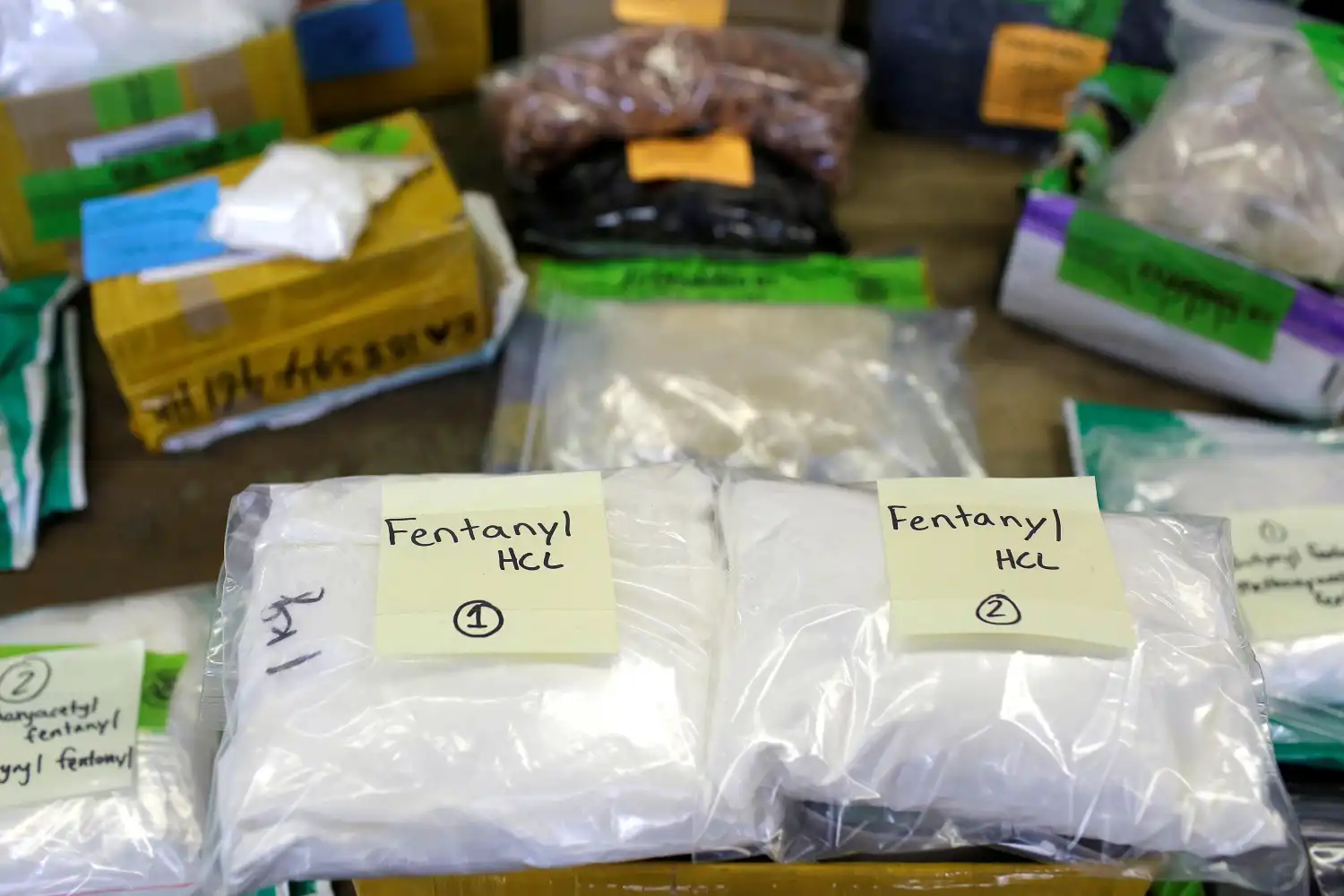
Every round of tighter China fentanyl precursor controls is announced as a breakthrough, yet the flow of chemicals feeding Mexican drug labs has barely changed, and the reason lies in the chemistry.
Beijing has steadily lengthened its list of restricted chemicals over the past year. It added thirteen precursors to a North American control list in November and three more after a summit between the American and Chinese leaders in May.
Each step has been framed as a concession won through trade talks, with Washington easing tariffs in exchange for cooperation. For a reader following the headlines, the direction looks promising and the intent looks real.
Where the China fentanyl precursor controls fall short
The problem is what the lists do not cover. Drug-policy analysts point out that the great majority of chemicals now used to make illicit fentanyl are non-scheduled substances, widely used in legitimate industry and barely regulated anywhere.
A precursor is simply an earlier chemical in the chain that leads to the finished drug. When authorities schedule one, chemists respond by shifting a step back to an unlisted compound and completing the extra reactions later.
Investigators have watched this happen in real time. Suppliers have shipped slightly altered versions of controlled molecules, so-called designer precursors, that fall outside any legal list until regulators catch up and add them one by one.
A pipeline that reroutes faster than the rules
The trade is also mobile. When China has cracked down in the past, Mexican cartels have turned to suppliers in India and elsewhere, keeping the finished-drug pipeline into the United States intact.
That mobility explains why a country can announce genuine controls and see little change on the ground. The chemicals are commodities with legal uses, the sellers are many, and the routes adapt faster than any single list can be revised.
The stakes are not abstract. American official figures attribute more than forty-eight thousand deaths in twenty twenty-four to fentanyl, the synthetic opioid at the centre of this supply chain.
Why it matters beyond North America
For Latin America, the pattern is a warning about how supply chains bend around enforcement. The same logic that reroutes precursors also moves the money, through laundering networks that now span several continents.
The forward implication is sobering. Until controls reach the non-scheduled chemicals at the heart of the trade, each new list is likely to shift the problem rather than shrink it, leaving the burden with Mexican enforcement and North American demand.
There is a diplomatic cost to the cycle as well. Each announcement lets both governments claim progress, which can ease trade friction in the short term while the underlying flow continues largely unchecked.
That gap between announcement and effect is what analysts urge observers to watch. The meaningful test is not how many chemicals appear on a list, but whether enforcement reaches the unlisted compounds and the money that moves alongside them.
History offers little comfort on the pace of that catch-up. Regulators tend to schedule a compound only after it has already appeared in seizures, which means the list is forever chasing a chemistry that can be tweaked again within months.
For governments across the Americas, the lesson is that supply-side pressure alone rarely closes a market. Lasting change tends to require action on demand, on money laundering and on the ports and couriers that move the goods, not only on a chemical index.
What do the China fentanyl precursor controls actually cover?
They require export licences for sixteen listed precursor chemicals sent to the United States, Mexico and Canada, but they leave untouched the many non-scheduled chemicals that make up most of the material feeding illicit production.
What is a designer precursor?
It is a slightly modified version of a controlled chemical, altered so that it falls outside existing lists, which lets suppliers ship it legally before cartels convert it into a banned precursor during synthesis.
Why does this matter for Mexico?
Because Mexican cartels sit at the centre of the pipeline, and as long as unlisted chemicals keep arriving from China or elsewhere, the enforcement burden and the violence stay concentrated on Mexican soil.
Connected Coverage
Which Latin American Cartels the United States Now Treats as Terrorist Groups
After Mexico’s Tunnel Escape, Cuba Detains Alleged Fentanyl Broker
Mexico Hands Over Cartel Leaders as the United States Squeezes
More: Latin America news in English, every day from The Rio Times.
Frequently Asked Questions
How many chemicals has China actually restricted for export to North America?
China now requires export licences for 16 precursor chemicals bound for North America — 13 were added in November and 3 more after a summit between American and Chinese leaders in May. However, analysts say most chemicals used to make illicit fentanyl are non-scheduled and still fall outside these controls.
Why aren't China's export restrictions stopping fentanyl production in Mexico?
Most chemicals feeding Mexican drug labs are non-scheduled substances that aren't on any restricted list, so suppliers simply ship slightly altered compounds that are technically legal, and cartels complete the drug synthesis inside Mexico. When China has cracked down before, Mexican cartels have also switched to suppliers in India and other countries to keep the supply flowing.
How deadly is fentanyl in the United States right now?
Fentanyl killed more than 48,000 people in the United States in 2024, according to official figures. It is a synthetic opioid at the centre of a supply chain that runs from chemical suppliers through Mexico and into the US.
This article was produced by The Rio Times’ automated newsroom system. How we use AI · Report an error · Editorial responsibility: Matthias Camenzind, Editor-in-Chief
In depth