Cameroon Regions Explained 2026
This guide walks through each region, its capital and its main economic role. It also explains the two English-speaking regions and the languages of the state.
Africa: Cameroon Regions
Cameroon is split into ten regions, the highest level of local administration, under a state run from Yaoundé, the capital. Two of them, the North-West and the South-West, form the English-speaking, or Anglophone, part of a country where English and French are both official languages.
For a US reader, the map shows where a security crisis has run since 2016 and where the country’s two deep-water ports, Douala and Kribi, sit. It also shows why the 2005 census, the base of every official regional projection, still frames each regional number.
Key Facts
- Who. Ten regions, 58 departments (their sub-divisions) and 360 arrondissements (the smallest state districts) divide the country.
- What. Decree 2008/376 of 12 November 2008 renamed the old provinces as regions.
- Where. The North-West (Bamenda) and South-West (Buea) are the English-speaking regions, with a special legal status since 2019.
- People. The 2005 census counted 17,463,836 people; the Far North and Centre held about 3.1 million each.
- As of. 20 November 2026.
This guide walks through each region, its capital and its main economic role. It also explains the two English-speaking regions and the languages of the state.
How Is Cameroon Divided Into Regions?
Cameroon has ten regions, 58 departments and 360 arrondissements, according to the National Institute of Statistics (INS), the state statistics office. These totals are the 2023 position given in the INS North-West yearbook.
In plain English, a region holds several departments, and each department holds several arrondissements. The regions were called provinces until 2008, when Decree 2008/376 of 12 November 2008 on the administrative organisation of the Republic renamed them and raised the old districts to arrondissements, as INS regional yearbooks record.
An earlier split came on 22 August 1983, when the old North Province broke into three: Adamawa, the Far North and the North, the INS Adamawa yearbook says. The country covers 475,442 square kilometres, according to the INS.
Each region has a chief town, called a chef-lieu in French, and a governor’s office. Yaoundé is both the capital of the Centre region and the capital of the republic, as the INS Centre yearbook notes.
Which Regions Form the Southern Core?
The Centre region has Yaoundé as its capital, 10 departments, 70 arrondissements and 68,953 square kilometres. The INS projects its population at 5,225,915 in 2023, and it calls the region one of Cameroon’s main cocoa basins, with 220,550 tonnes of cocoa in 2024.
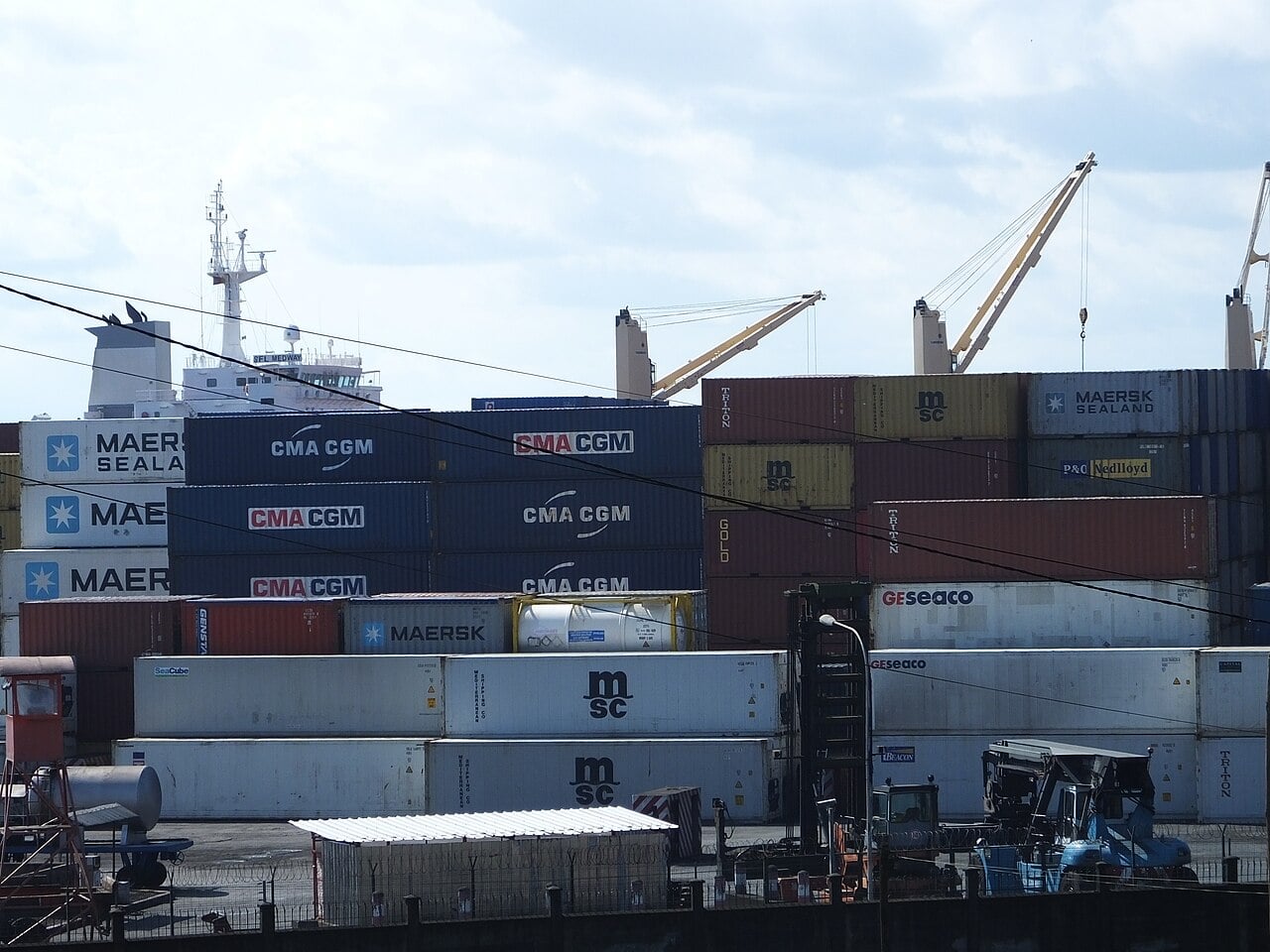
The Littoral region has Douala as its capital and the country’s main commercial port. Goods traffic at the port of Douala ran between 11.8 million and 12.9 million tonnes a year from 2018 to 2022, the INS Littoral yearbook reports from the port authority’s data.
The 2005 census counted 2,510,263 people in the Littoral, and 92.6% of them lived in towns. That is the highest urban share of any region, against 22.8% in the Far North.
The South region has Ebolowa as its capital and holds the Kribi deep-sea port. The port’s operator, the Port Authority of Kribi, says it handled 555,398 containers (measured in twenty-foot units) in 2025, or 37.5% of national container traffic.
The South had the fewest people in the 2005 census, with 634,655. The West region has Bafoussam as its capital, 8 departments and 1,720,047 people in the same census.
What Defines the Plateau and the North?
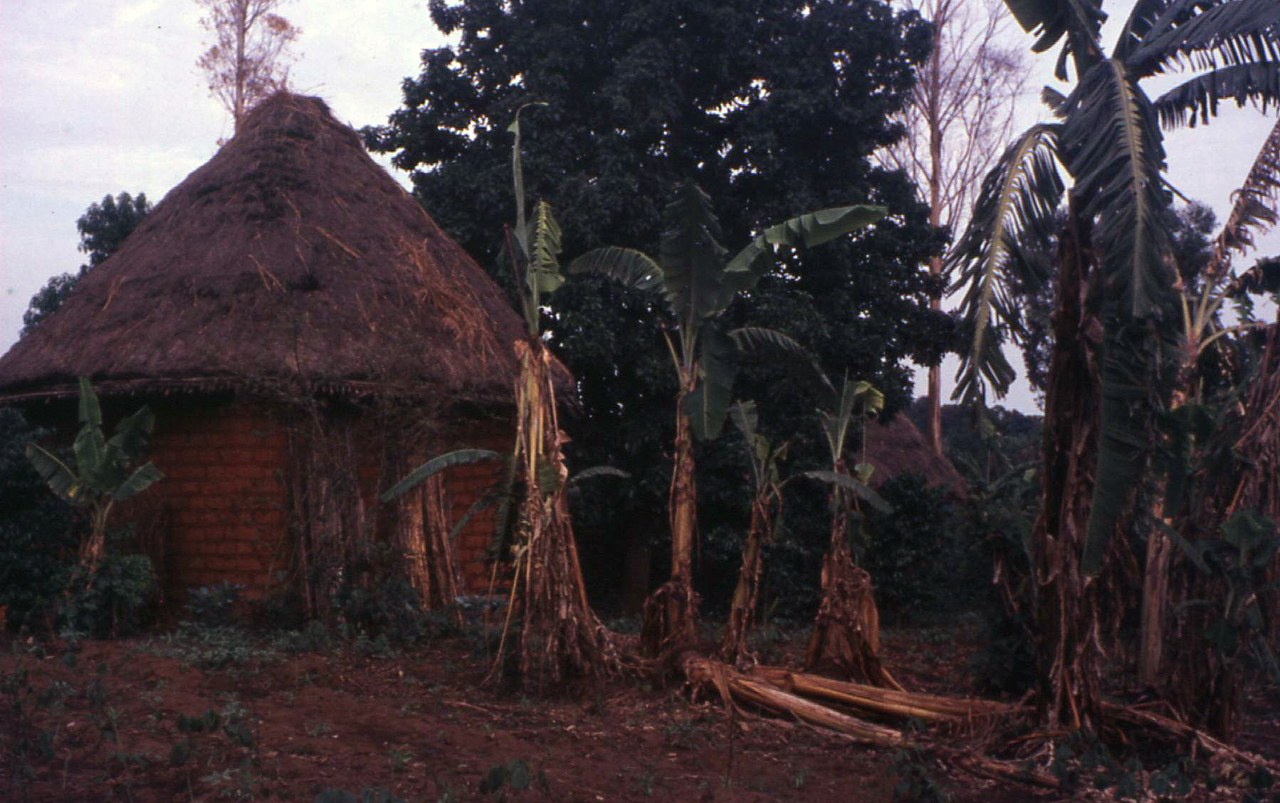
The Adamawa region has Ngaoundéré as its capital, 5 departments, 21 arrondissements and 63,701 square kilometres. Its high plateau, at 900 to 1,500 metres, forms a mountain arc that separates northern and southern Cameroon, the INS Adamawa yearbook says.
The INS calls Adamawa one of the main cattle-raising basins of Cameroon. The region’s herd reached 1,727,994 head in 2021, up 11.8% from 1,546,288 in 2020.
The East region has Bertoua as its capital and 771,755 people in the 2005 census. The North region has Garoua as its capital and counted 1,687,959 people that year.
The Far North region has Maroua as its capital and was the most populous region in 2005, with 3,111,792 people. Only 22.8% of them lived in towns, so most of the region is rural.
The 2005 census is the latest full count, so later figures are projections by the Central Bureau of the Census and Population Studies (BUCREP). The INS projects 26,133,035 people for the whole country in 2020.
What Makes the Two Anglophone Regions Different?
The North-West and South-West were part of the former West Cameroon. The INS calls the North-West one of the two Anglophone regions of the country, with Bamenda as its capital.
Together they held 3,045,032 people in 2005, or 17.4% of the national total of 17,463,836. The North-West alone had 1,728,953 people, and the South-West, whose capital is Buea, had 1,316,079.
The North-West covers 17,300 square kilometres, with 7 departments and 34 arrondissements. The INS projects 2,278,503 people for 2020, and lists 5 first-class and 117 second-class chiefdoms, the traditional authorities.
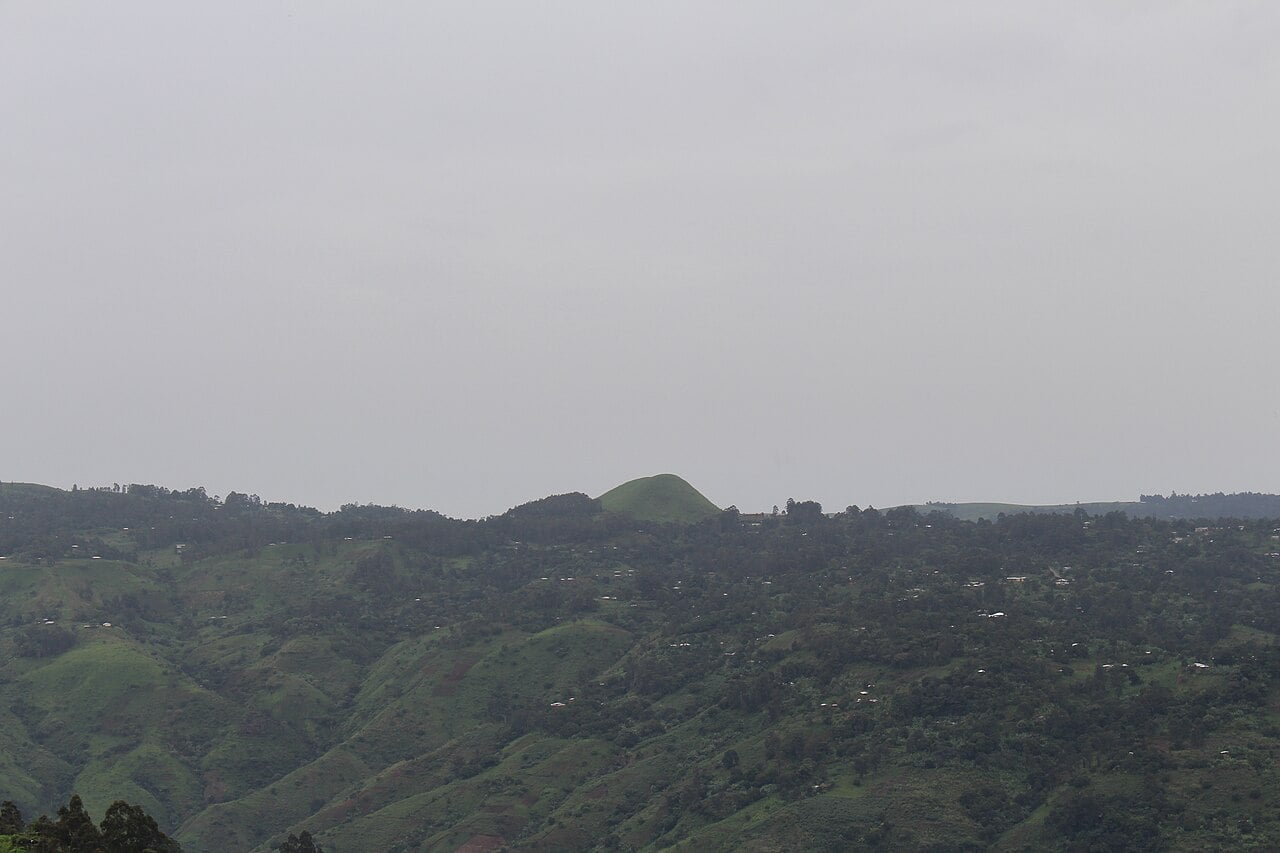
Law 2019/024 of 24 December 2019, the General Code of Regional and Local Authorities, gave both regions a special status, meaning their own rules of organisation. Section 327(2) says it rests on the historical, social and cultural values of these regions, with due respect for the primacy of the State and national unity.
Each region has a Regional Assembly, a regional parliament with two houses, one for representatives of the departments and one for chiefs. The status also lets the regions take part in shaping national policy on the Anglophone education sub-system.
The INS warns that the security situation in the North-West since November 2016 affects its population projections. These figures are therefore less certain than elsewhere.
The history behind the divide is in our history of Cameroon. Our power structure explainer shows how the regions fit into the system of power.
Which Languages Do the Regions Use?
Article 1(3) of the Constitution says: “The Official languages of the Republic of Cameroon shall be English and French, both languages having the same status.” That text applies to every region, not only the Anglophone pair.
In practice, the North-West and South-West follow the English-language legacy of British rule, while the other eight regions follow the French one. Ethnic and local-language groups cut across these lines, as our population and ethnic groups guide explains.
How Do the Regional Economies Differ?
Cameroon’s gross domestic product (GDP, the value of everything produced) reached FCFA 34,474.0 billion (about US$57.7 billion) in 2025, according to the INS national accounts. FCFA is the Central African CFA franc, pegged to the euro; real growth was 3.5%, the INS said in September 2026, and all conversions here use about 597 CFA francs per US$ on 20 November 2026.
Services made up 54.9% of value added in 2025, industry 24.6% and primary activities such as farming and forestry 20.5%, by our calculation from the INS tables. Oil and gas extraction fell from FCFA 1,698.0 billion (about US$2.8 billion) in 2022 to FCFA 782.1 billion (about US$1.3 billion) in 2025.
Regional yearbooks show how local the activity is. The North-West produced an estimated 178,000 tonnes of maize and 9,000 tonnes of rice in 2023, plus 2,100 tonnes of coffee and 900 tonnes of cocoa.
Douala and Kribi are the two ports named above, and both matter for trade in and out of the country. Our economy guide lists the firms and officials involved.
What to Watch Next
A new census would reset every regional number in this guide, because the 2005 count is still the base for the projections. Until BUCREP publishes new results, treat regional populations as estimates.
Watch how Law 2019/024 is applied in the two Anglophone regions, since it sets how much power they hold. For the full country picture, start from our Cameroon explainer.
Frequently Asked Questions
How many regions does Cameroon have?
Cameroon has ten regions: Adamawa, Centre, East, Far North, Littoral, North, North-West, South, South-West and West. They were called provinces until Decree 2008/376 of 12 November 2008.
What are the capitals of Cameroon’s regions?
Yaoundé (Centre), Douala (Littoral), Bafoussam (West), Bamenda (North-West), Buea (South-West), Ebolowa (South), Bertoua (East), Ngaoundéré (Adamawa), Garoua (North) and Maroua (Far North). Yaoundé is also the national capital.
Which regions are Anglophone?
The North-West and the South-West, whose capitals are Bamenda and Buea. They have had a special status under Law 2019/024 since December 2019.
What are Cameroon’s official languages?
English and French, both with the same status under Article 1(3) of the Constitution. The regions of the North-West and South-West follow the English-language legacy.
Which region is the most populous?
The Far North, with 3,111,792 people in the 2005 census, just ahead of the Centre with 3,098,044. Later figures are projections and may differ.
Which region has the main port?
The Littoral region holds Douala, the main commercial port. The South region holds the Kribi deep-sea port, where the port authority says 37.5% of national container traffic passed in 2025.
Sources: National Institute of Statistics of Cameroon (INS), regional statistical yearbooks of the North-West (2024), Centre (2025), Adamawa (2025) and Littoral (2023) and the 2025 national accounts; Central Bureau of the Census and Population Studies (BUCREP), third census 2005; Decree 2008/376 of 12 November 2008; Law 2019/024 of 24 December 2019; Constitution of Cameroon, Article 1(3); Port Authority of Kribi, 21 April 2026.
This article was produced by The Rio Times’ automated AI newsroom. Editorial responsibility: Matthias Camenzind, Publisher and Editor-in-Chief. The Rio Times also runs Ask Rio Times, which answers from 100,000+ of our own articles, the daily Latin America Power Map, and prediction-market odds on elections and markets.. How we use AI · Report an error
Expat Guide to Cameroon
What The Rio Times publishes for foreigners who live in or move to Cameroon.
Start here
Understand Cameroon