
BRAZIL · MINING
Key Facts
- The country Brazil is Latin America’s largest economy and one of the world’s biggest iron-ore producers, and the 2015 Fundão dam failure at Samarco, one of its worst mining disasters, polluted a river basin that reaches the Atlantic in Espírito Santo state.
- Why it matters Samarco is owned in equal parts by Vale and BHP, and both groups have shares listed on the New York Stock Exchange, so American investors follow every step of the clean-up.
- Why now Two ministries signed Interministerial Ordinance 75 on 26 October 2026, and it took effect the day it was published in the federal Official Gazette.
- What happened Brazil allowed professional fishing again in the sea off the Rio Doce mouth, closed since 2016, after health tests found no lead or mercury above the tolerated limit.
- The numbers The zone runs from Barra do Riacho to Degredo out to the 20-metre depth line, and the settlement behind the clean-up totals R$170 billion (US$31.36 billion).
- What it means for you Seafood from this coast can be sold and eaten again in Brazil, while Vale and BHP keep their obligations under the settlement.
- Still open It is not yet known how many fishers will return, how buyers will react or what test results would close the zone again.
- Power Index Brazil ranks 1st of 14 in The Rio Times Latin America Power Index, with 75.0 points (October 2026 edition).
In Plain English
Samarco is the Brazilian iron-ore miner whose Fundão dam failed in 2015, and it is owned in equal parts by Vale and BHP. Anvisa is Brazil’s national health surveillance agency, which tests food and water for safety.
The Fisheries and Aquaculture Ministry and the Environment Ministry issued the ordinance together. Tailings are the ground-up rock and water left over after iron ore is processed, and a dam holds them back.
Brazil has reopened fishing in the sea off the mouth of the Rio Doce in Espírito Santo state for the first time since a court froze it in 2016, after the health regulator Anvisa found no lead or mercury above the tolerated limit. The decision is set out in Interministerial Ordinance 75, signed on 26 October 2026 and published in the federal Official Gazette the same day.
The mining mud came from the Fundão dam of the Samarco iron-ore company, which Vale and BHP each own half of, and both groups have shares traded on the New York Stock Exchange. Readers can follow the wider story in the Brazil coverage and in the earlier report that Samarco was convicted on appeal over the Mariana dam collapse.
What the Ordinance Allows
The ordinance covers the sea strip from Barra do Riacho in Aracruz to Degredo and Ipiranguinha in Linhares, out to the 20-metre depth line. It took effect on publication and limits professional fishing to fishers and boats that hold whatever registration the law requires.
Normal rules still apply, including closed seasons, restricted zones, protected species, minimum sizes, permitted gear and measures to cut accidental catches. The two ministries can change or reverse the opening at any time if new data show a risk, and they can narrow it to certain species, gear or periods.
What the Health Tests Found
The technical note from Anvisa covered freshwater, marine and mangrove areas and found no lead or mercury above the maximum level set by national and international rules. Copper, chromium, iron, nickel, manganese and zinc were detected at average levels, the fisheries ministry says.
The ministry adds that a continuous programme tracking river water and sediment has raised no non-compliance alerts. A joint action plan run by the fisheries and environment ministries, with the health ministry and Anvisa, will monitor the fishing and can be updated as results come in.
Live Market IntelligenceBrazil — Live Market Board
Rio Times · Live Market Intelligence
Brazil — Live Market Board
-0.75%
167,921.80
-0.75%
69,705.03
-0.12%
10,253.96
-2.76%
92,079
-2.59%
2,490.92
+0.04%
| Instrument | Last | Change | YoY | Prev. | High | Low | Volume |
|---|---|---|---|---|---|---|---|
| IBOV | 167,921.80 | -0.75% | +19.56% | 169,186.42 | 178,526 | 175,157 | — |
| USD/BRL | 5.34 | -1.32% | -0.84% | 5.42 | 5.42 | 5.30 | — |
| SELIC | 13.75% | — | — | — | — | — | |
| PETR4 | 53.31 | -1.06% | +77.70% | 53.88 | 53.70 | 52.83 | 43,239,500 |
| VALE3 | 62.88 | -2.33% | +1.98% | 64.38 | 64.43 | 62.80 | 24,652,300 |
| ITUB4 | 41.42 | -0.67% | +11.30% | 41.70 | 42.60 | 41.15 | 28,160,700 |
| BBDC4 | 15.69 | -1.63% | -13.88% | 15.95 | 16.30 | 15.67 | 65,766,400 |
| BBAS3 | 17.59 | +0.69% | -15.59% | 17.47 | 18.31 | 17.51 | 67,844,600 |
| B3SA3 | 15.27 | +1.33% | +21.71% | 15.07 | 15.78 | 15.20 | 75,282,000 |
| ABEV3 | 15.40 | +0.20% | +26.75% | 15.37 | 15.68 | 15.31 | 27,307,400 |
| WEGE3 | 45.78 | +2.81% | +10.06% | 44.53 | 47.08 | 45.06 | 9,823,200 |
| PRIO3 | 69.21 | -2.71% | +87.14% | 71.14 | 70.98 | 69.15 | 6,663,200 |
| SUZB3 | 47.14 | -0.55% | -3.79% | 47.40 | 47.84 | 46.10 | 7,151,800 |
| RENT3 | 31.14 | -1.67% | -20.73% | 31.67 | 32.68 | 31.02 | 19,092,400 |
| AZZA3 | 16.72 | +1.15% | -42.24% | 16.53 | 17.42 | 16.72 | 4,875,400 |
| CSNA3 | 4.76 | -4.99% | -47.09% | 5.01 | 5.14 | 4.76 | 14,327,900 |
| GGBR4 | 24.87 | -2.28% | +36.28% | 25.45 | 26.20 | 24.79 | 7,507,900 |
| ENEV3 | 26.79 | +0.45% | +49.78% | 26.67 | 27.35 | 26.30 | 12,263,000 |
How the Ban Began
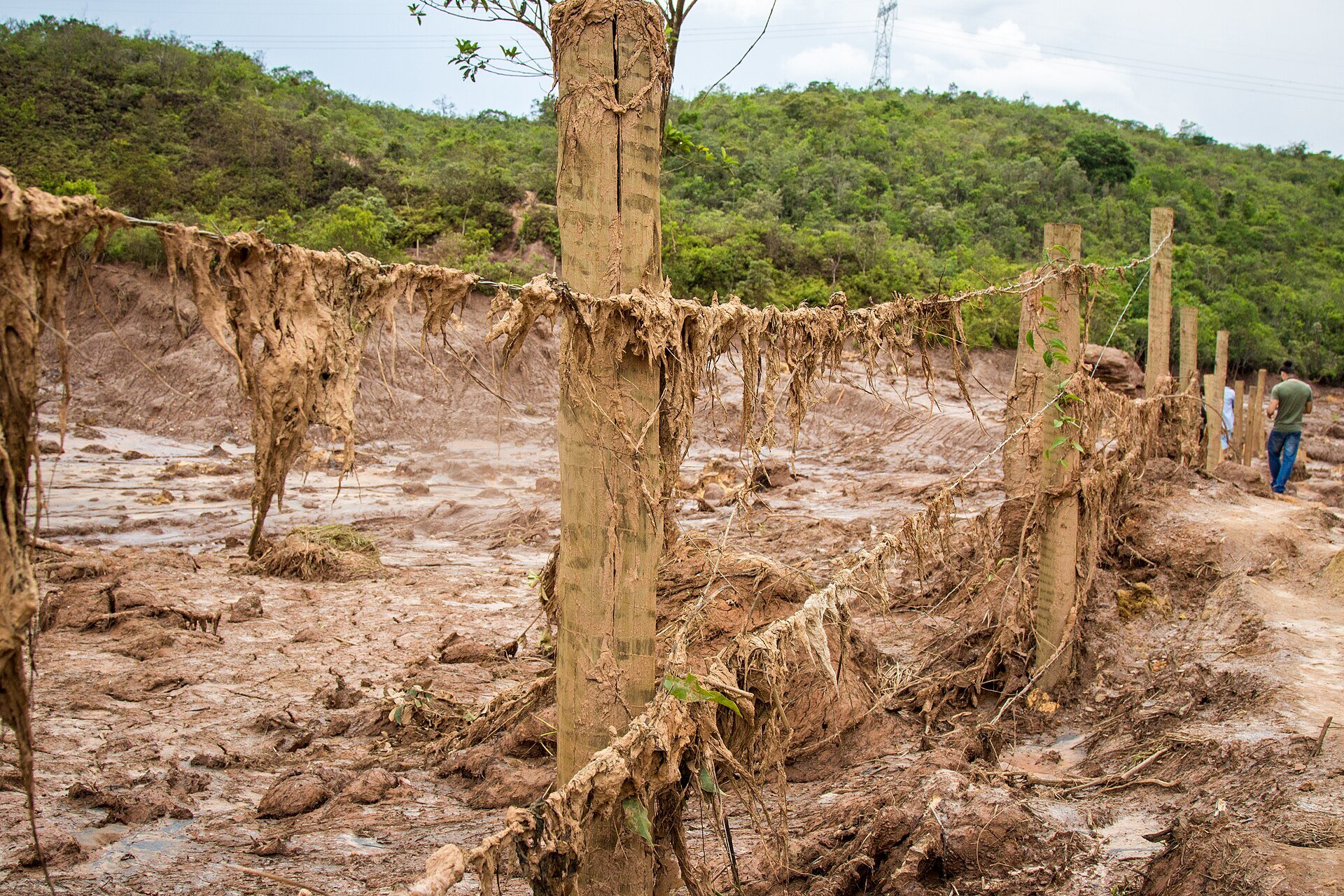
The Fundão dam at the Samarco mine in Mariana, in Minas Gerais state, broke on 5 November 2015 and killed 19 people. Agência Brasil puts the release at roughly 40 million to 55 million cubic metres of iron-ore tailings that buried the districts of Bento Rodrigues and Paracatu de Baixo and contaminated the whole Rio Doce basin, while Samarco says about 32 million cubic metres left the dam.
A court in Espírito Santo suspended fishing in 2016 for an indefinite period at the request of federal prosecutors, who pointed to the lack of conclusive studies on contamination of fish, shellfish and crustaceans. That suspension stood for about ten years until the two ministries acted.
The Money Behind the Clean-Up
Samarco’s settlement, signed on 25 October 2024 and ratified by the Supreme Federal Court on 6 November 2024, totals R$170 billion (US$31.36 billion) for definitive repair. Samarco says R$82.6 billion (US$15.24 billion) has been allocated to repair work from 2015 to 2026, and that about 357,200 people had received R$18.5 billion (US$3.41 billion) in payouts and financial aid under the new settlement by September 2026.
Amounts here are converted at 5.4212 reais per US dollar, the Banco Central do Brasil PTAX selling rate of Friday 30 October 2026. Eligible professional fishers and family farmers can claim R$95,000 (US$17,524) each through the settlement’s Agro and Fishing System, against R$35,000 (US$6,456) through its general compensation programme.
The fisheries ministry says reopening the sea does not replace or remove the repair, recovery and monitoring duties in the settlement, and income-transfer payments continue unchanged. Article 6 of the ordinance repeats that point in law.
What It Means for You
For American investors, Vale and BHP both trade in New York, and the reopening leaves their obligations under the R$170 billion (US$31.36 billion) settlement unchanged. The ministry and the ordinance both state that the clean-up duties continue.
For travellers and importers, the ordinance covers a stretch of coast in Espírito Santo state and does not mention exports or prices. The practical effect is local, for the fishing communities that can legally sell their catch again.
What Is Not Known
The ordinance does not say how many fishers will return to the water or when the first catches will reach markets. It also does not list the test results that would trigger a new closure, although it allows the opening to be narrowed or reversed at any time.
The Anvisa findings above come from the fisheries ministry’s summary of the technical note, so the underlying sampling data remain to be seen. The effect of the reopening on fish prices and on local incomes in Aracruz and Linhares has not been measured.
Frequently Asked Questions
Can people fish near the Rio Doce mouth in Brazil again?
Yes, professional fishing is allowed again in the sea from Barra do Riacho to Degredo, out to the 20-metre depth line, under Ordinance 75 of 26 October 2026. Only fishers and boats that meet the legal registration rules may work there.
Is seafood from the Rio Doce coast safe to eat?
Brazil’s health regulator Anvisa found no lead or mercury above the maximum tolerated limit, the fisheries ministry says. Copper, chromium, iron, nickel, manganese and zinc were detected at average levels.
Who owns Samarco, the company behind the dam failure?
Samarco is a closely held company owned 50% each by Vale and BHP Brasil, part of the BHP group. Vale and the BHP group both have shares listed on the New York Stock Exchange.
How much is the Mariana dam settlement worth?
The settlement signed on 25 October 2024 totals R$170 billion (US$31.36 billion) for definitive repair of the Rio Doce basin. The Supreme Federal Court ratified it on 6 November 2024.
Sources: Diário Oficial da União, Interministerial Ordinance MPA/MMA No. 75, 26 October 2026; Agência Brasil, 30 October 2026; Samarco, company profile; Samarco, the Fundão failure; Samarco, repair figures updated 13 October 2026; Banco Central do Brasil PTAX, 30 October 2026; US SEC filer record, Vale; US SEC filer record, BHP Group.
This article was drafted with automated assistance and reviewed before publication. How we use AI · Report an error · Editorial responsibility: Matthias Camenzind, Editor-in-Chief
Brazil runoff, Sunday, October 25: When is the Brazil runoff election. Latest: Brazil runoff polls, Flávio 51%, Lula 49%.