Brazil’s Police Opened Five Big Money Cases in a Single Day
Brazil · Politics
Key Facts
- —What happened Brazilian police launched five major fraud investigations in a single day, touching over R$1 billion (US$200 million).
- —How big a jump The cases span fake invoices, illegal currency dealing, bank fraud and diverted textbooks across four states.
- —The real story Fraud in Brazil is ordinary business risk, not exotic crime, lurking in supply chains and paperwork.
- —The catch The biggest raid targeted a Rio militia, but the most efficient case was a Brasília invoice scam.
- —Where it is growing Operations hit Rio, São Paulo, Brasília and Piauí, with warrants across four states and 14 municipalities.
- —What comes next Investigators are pursuing militia ties to officials, while expats should verify counterparties and keep records.
Federal agents, state prosecutors and civil police all moved on the same Thursday — and the combined sums are large enough to matter to anyone doing business here.
If you follow Brazil police operations for a living, Thursday 20 August was a heavy day. Five unrelated cases landed within hours of each other, run by three different kinds of police force, and together they touch more than R$1 billion (about US$200 million) in money that investigators say went somewhere it should not have. None of them is a household name yet. Read together, though, they say something useful about where fraud in Brazil actually happens — and it is rarely where the headlines look.
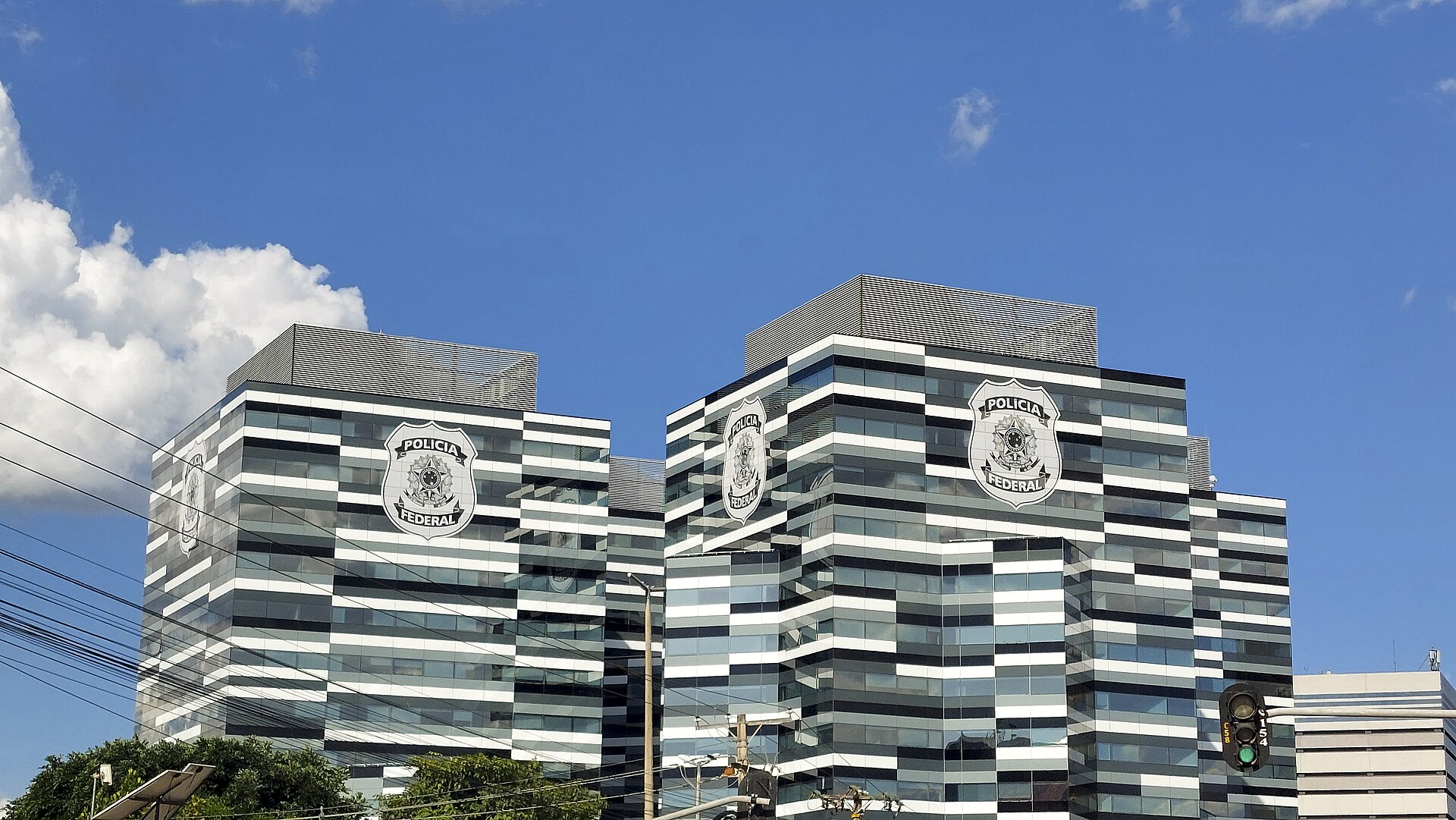
Rio: a criminal group with a political wing
The biggest of the five is Operation Fora de Ordem, run jointly by the Federal Police and the Rio de Janeiro state prosecutor’s office (MPRJ). Agents served 23 search warrants, issued by Rio’s specialist organised-crime court, in Nova Iguaçu, in the Baixada Fluminense, and in the city of Rio itself. The target is the militia commanded by a man known as Juninho Varão, active in the Baixada since at least 2013.
The trigger was a report from COAF, Brazil’s financial intelligence unit, flagging unusual movements of more than R$350 million (about US$67 million) linked to the group. The Federal Police described a compartmentalised structure with command, financial, operational, territorial and political nuclei, and said there are signs of links to public officials.
One clarification worth making, because the two cases ran a week apart and both involve Rio: this is not the Sem Refino investigation, whose second phase on 14 August searched former governor Cláudio Castro over alleged fuel and tax fraud at the Refit refinery. Different targets, different money, no announced connection.
The quiet one: unlicensed dollars
Operation Câmbio Sombrio — the name translates as ‘shadow exchange’ — went after a group in São Paulo selling foreign currency outside the official banking channels. The Federal Police served four search warrants, put the volume at close to R$200 million (about US$39 million) and froze vehicles, a property and roughly R$10 million (about US$1.9 million) sitting in bank accounts.
This is the case that should interest expats most directly. Informal currency dealers are common, convenient and illegal, and the people who use them rarely know whose money they are standing next to. Use a licensed institution and keep the paperwork.
Invoices for goods that never existed
In the Federal District, the state economy secretariat (Seec-DF) spent 8 to 20 August dismantling what Brazilians call a noteira — a front company that exists only to issue invoices. This one, in the Águas Claras district, had issued around a thousand of them, covering roughly R$390 million (about US$75 million) in goods that never moved, so that other businesses could claim tax credits they had not earned. Across all three fronts of the operation the tax authority put the base at about R$453 million (about US$87 million).
The assessment against the shell company came to R$200.1 million (about US$39 million); the whole operation produced R$217.8 million (about US$42 million) in tax credits and fines. There is no catchy operation name here and it will get a fraction of the coverage of the Rio raid, but per hour worked it is probably the most efficient of the five.
Two employees, four states, R$50 million
Operation Rastro was led by the São Paulo civil police, with 37 search warrants served against 14 suspects across São Paulo, Minas Gerais, Roraima and Santa Catarina. The warrants were spread across 14 municipalities in the four states.
Investigators say the scheme used the access credentials of two Banco do Brasil employees, moved the money through three corporate account holders, then scattered the proceeds across a large number of accounts to make the trail hard to follow. The loss to the bank is put at R$50 million (about US$9.6 million). It is a reminder that the weakest point in a bank’s security is almost never the software.
Why Brazil police operations matter to foreign residents
The fifth case is the smallest in money and the hardest to read about. Operation Libricida, run by the Federal Police, investigated the diversion of roughly 20 tonnes of textbooks funded by the FNDE, the federal education fund. The books left a distribution centre in Teresina bound for schools in the interior of Piauí and Maranhão and never arrived. Three search warrants and one arrest warrant were served in Timon and Matões, in Maranhão, and a suspect was detained in Timon. The working theory is that the books were sold for paper recycling.
For anyone living in or investing in Brazil, the practical lesson from all five is about counterparties. Fake invoices, informal currency, credential misuse and diverted public goods are not exotic crimes here — they are ordinary business risks that show up in supply chains and in the contractor whose paperwork is a little too tidy. Ask for the CNPJ, check that invoices match real deliveries, and be sceptical of anyone who wants to be paid in a way that leaves no record.
Background: our how brazil taxes your us social security in guide.
Background: our buying property in brazil as a foreigner complete guide.
More: Brazil news, every day from The Rio Times.
Frequently Asked Questions
How much money did the Brazil police operations on 20 August involve?
Adding the four cases with published figures — R$350 million (about US$67 million) in Rio, R$200 million (about US$39 million) in the currency case, R$453 million (about US$87 million) across the Brasília invoice operation and R$50 million (about US$9.6 million) at Banco do Brasil — gives just over R$1 billion, or roughly US$200 million. The textbook case has no published value.
Is the Rio case connected to former governor Cláudio Castro?
No. Operation Fora de Ordem on 20 August targeted a militia in the Baixada Fluminense. The second phase of Operation Sem Refino on 14 August concerns alleged fuel and tax fraud at the Refit refinery. They are separate investigations with no announced link.
Should foreign residents in Brazil worry about using informal currency exchanges?
Yes. Operation Câmbio Sombrio targeted an unlicensed São Paulo operation handling close to R$200 million (about US$39 million). Using a licensed bank or broker costs a little more and keeps you out of an investigation you had nothing to do with.
Connected Coverage
Operation Sinon: Brazil Court Suspends Federal Police Officer Over Leaks
Sem Refino: Federal Police Search Ex-Governor Cláudio Castro Again in Rio Fuel-Fraud Case
Sources: Polícia Federal — press releases; Metrópoles — Banco do Brasil fraud; g1 Roraima — Operation Rastro warrants
This article was produced by The Rio Times’ automated newsroom system. How we use AI · Report an error · Editorial responsibility: Matthias Camenzind, Editor-in-Chief