“Brazil Has Potential to Become Green Finance Leader,” Sylvia Coutinho Says
RIO DE JANEIRO, BRAZIL – The president of Swiss bank UBS in Brazil, Sylvia Coutinho, believes that the country has every condition to play a global role in the issue of “green finance”. At a time when international and economic agents’ charges for sustainable environmental policies are increasing, she says that Brazil “has the largest environmental assets on the planet” and may be able to attract foreign investments if it knows how to capitalize on this opportunity.

Sylvia is optimistic about the possibilities of resuming the country’s economic growth. But she concedes that the coronavirus effect should reduce the pace of this rebound. She says UBS has already reviewed its projection for GDP growth in 2020 – from 2.5 percent “to something around” 2.1 percent. The main excerpts from the interview are given below.
What is your assessment of Brazil’s economic scenario?
Brazil is experiencing a somewhat classic cycle of economic rebound. This year, tentatively, would be the fourth year of a ten-year period of growth. Our perspective is that of ten years of sustained growth. And we hope that 2020 will be the first of these first four years of rebound, in which we see a little stronger growth. Despite, of course, the impacts caused by the coronavirus, which should knock growth down a little. We projected this year’s GDP growth to be around 2.5 percent. Now we’re looking at something like 2.1 percent.
How important are the reforms to this rebound?
One of the positive things when we look at Brazil is that it is one of the few markets that is facing the required reforms head-on. Obviously, the Welfare reform was a major milestone. So when looking around there are a number of markets, including developed ones, that are experiencing the same difficult reforms and are not succeeding.
Brazil is there, not only doing its homework, but there’s a sign that it’s going to keep doing it. Our view of a positive ten-year cycle also assumes that these reforms will continue to happen. Brazil remains in that famous Doing Business ranking (the best countries to do business in) with a very bad score. And we hope that, during this period, this will contribute to significantly improve the country’s position in the ranking.
The government is trying to reduce the state’s involvement and attract the private sector to investments. How do you perceive this?
Last year’s GDP figures, which will be announced in March, are estimated at around 1.0 to 1.1 percent. When you look at the resulting figure, it’s not as robust as you’d expect. But when you deconstruct that 1.0 percent, you had the State receding by about 0.6 percent and the private sector growing by 2.0 percent, which resulted in the 1.1 percent we will see in March. The result may have been less than what the market wanted. But, from a qualitative perspective, it is quite healthy. And more sustainable than previous growths, which were often artificially inflated by government actions and short-term consumption.
What else has drawn your attention?
Other actions that excite me greatly are what is happening in the infrastructure sector, in agribusiness, which, in addition to being driven by people who really understand the business, are reforming to become increasingly competitive globally. The Central Bank also has a strong agenda to increase competition. I would say that all this is converging towards greater structural growth in the economy.
Should the coronavirus epidemic hinder growth?
The external scenario actually kicked off the year in a very benign direction. Apart from the coronavirus and the situation in the Middle East, I would say that the cooling down of the trade war between China and the United States has calmed the markets, and we have gradually noticed a rebound in the hunger for emerging markets. Particularly when you think that you have developed markets out there with very low and often even negative interest rates.
Invariably, when you have a risk scenario where the markets abroad are calmer, you naturally have a capital flow that should come to the emerging markets, where growth is located, where there is a prospect of medium and long term growth, due in part to demographics. But the coronavirus has had a global impact and, as I said, it has already been reflected in the GDP growth forecast.
Do low interest rates make it easier for Brazil?
When we think of a more domestic day-to-day, short, medium and long terms, the average interest rate in Brazil over the past 20 years has been 13.1 percent. We expect it to be around 5.5 percent over the next ten years. This has several implications. We have never seen low interest rates and low inflation in the market for a longer period. And the Brazilian economy, traditionally, is little leveraged. We have followed the tradition of very high interest rates for so many years.
Let us take as an example the real estate credit market in Brazil. We have a market with enormous leverage potential, which is still in its infancy, even on account of the instruments to do so. I don’t think we have yet seen the effects of a low interest rate for an extended period on the Brazilian economy. This is also a very interesting point.
You mention the significance of reforms, but there are political obstacles in these negotiations between the government and Congress…
These scenarios I have mentioned assume that the reforms will continue. We estimate that there will be some way of having this dialogue constructively and that they will be able to pass some of these major reforms. Apart from the microeconomic proposals, which continue to progress as well.
The Central Bank has many aspects that can be addressed by the Executive. Despite some difficulties from time to time, we estimate that Brazil will continue to move forward constructively, passing the reforms. We have a very reformist Congress and a pressure to keep things moving so that growth does not slow down.
Has the pace of privatization been slower than expected?
This is not an easy agenda. I think all the players involved are moving forward very constructively on that agenda. But that was expected. I find it difficult to judge if it could be going at a much faster pace depending on the context in which they find themselves.
At the World Economic Forum in Davos, Brazil was called upon to have better environmental practices. And it became clear that a bad environmental policy could drive away investors. What is your assessment?
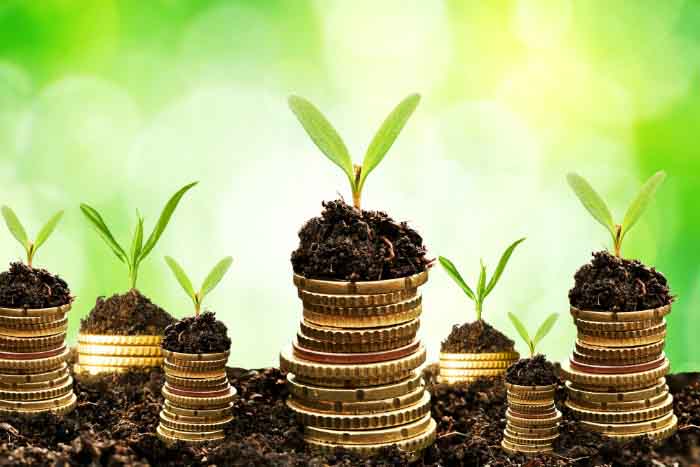
I believe Brazil has the potential to become the world leader in green finance. We have the largest environmental assets on the planet. Our entire infrastructure agenda is green. That’s the kind of capital we can attract. So this agenda is very critical. There is a tremendous global demand today for this whole ESG [environmental, social, governance] agenda, for sustainable investment. And it is capital that is seeking these environmental assets.
So it’s a tremendous opportunity. For the agribusiness sectors, for infrastructure, for all areas. The perception is that the government has agreed to this. I think there’s a whole discourse to improve our image. That green stamp is essential for our agribusiness. We grow with productivity and we have a native coverage stock that is one of the highest on the planet. We have to learn how to capitalize on our environmental assets.
Has the Brazilian government realized this?
I think so. But it’s not only Brazil. The whole world has.
Source: InfoMoney
More: Brazil news in English, every day from The Rio Times.
This article was produced by The Rio Times’ automated newsroom system. How we use AI · Report an error
Read More from The Rio Times