Brazil Court May Rule on Sentence Cut Law
Brazil’s top court says it may decide this year whether a law that shortens sentences for attacks on democracy can stand. First, one judge has to release the cases.

Politics: Brazil
Edson Fachin, president of Brazil’s Supreme Federal Court (STF), said on Tuesday 17 November 2026 that the court could rule this year on the Lei da Dosimetria. The law, whose name refers to how judges calculate a sentence, recalculates penalties for crimes against democratic rule, including the 8 January 2023 attacks in Brasília.
Former president Jair Bolsonaro, who is serving 27 years and 3 months, could benefit if the court lets the law stand. Readers abroad follow the case because Congress passed the law over a presidential veto, and the court has suspended its use in 8 January cases.
Brazil’s President Luiz Inácio Lula da Silva vetoed the bill in January 2026, but Congress overrode him in April. We covered that vote in an earlier report.
Key Facts
- Who. Edson Fachin leads Brazil’s Supreme Federal Court (STF); Justice Alexandre de Moraes handles the case.
- What. Fachin said the court may judge Law 15.402/2026 this year, once Moraes releases the cases.
- Why. The law can cut sentences for crimes against democracy; ex-president Jair Bolsonaro may benefit.
- Status. Moraes suspended the law on 9 May 2026; no court date is set.
- As of. 19 November 2026, 11:30 GMT.
Brazil’s top court says it may decide this year whether a law that shortens sentences for attacks on democracy can stand. First, one judge has to release the cases.
The Big Picture
The Senate gave final approval to the Lei da Dosimetria on 17 December 2025. Lula vetoed it in January 2026, and Congress overrode the vetoes in April 2026.
The law is numbered 15.402/2026, and the Presidency publishes its text. Its name refers to dosimetry, the step-by-step way a judge sets a sentence.
It unifies sentences and allows a reduction for acts committed in a “crowd context”. It can also lower sentences of people convicted over the 8 January 2023 attacks on government buildings in the capital.
On 9 May 2026 Moraes suspended the law’s application to criminal-execution cases tied to 8 January until the full court rules, the court said that day. He called the challenges a “fato processual novo e relevante”, a new and relevant procedural fact, and asked the Presidency and Congress for information within five days.
The law now sits between two powers, because Congress wrote it over a presidential veto and the court has suspended its use in 8 January cases. A ruling would decide whether the 8 January sentences are recalculated or stay as the court set them.
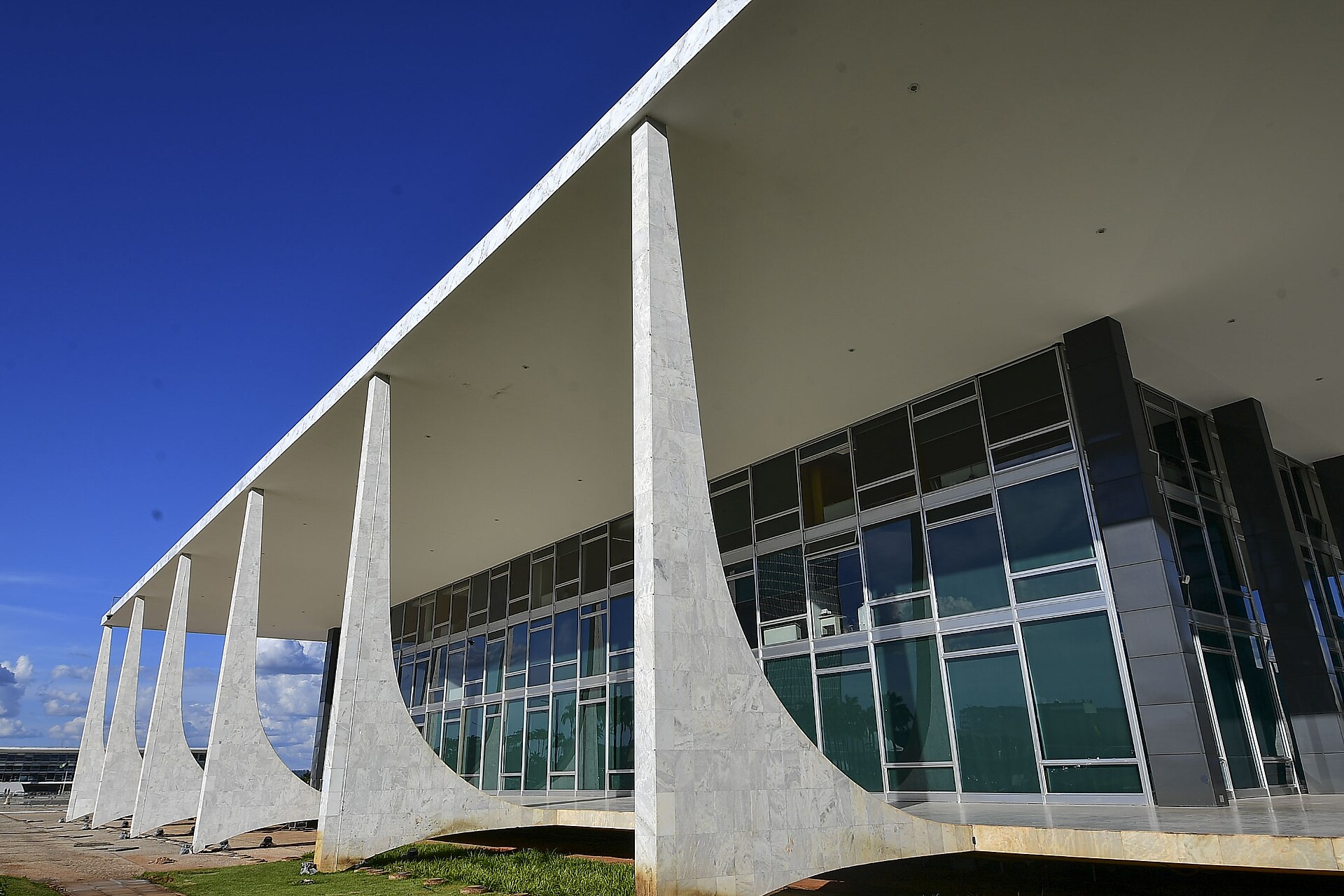
What Fachin and Congress Said
Fachin spoke to reporters on Tuesday 17 November 2026 after an event at the court for Black Consciousness Day, a national holiday on 20 November. He said the full court, the plenário, can judge the law’s validity this year, provided the rapporteur releases the cases.
Hugo Motta, president of the Chamber of Deputies, and Davi Alcolumbre, president of the Senate, met Moraes on 17 November. They asked him to release the cases so the full court can rule before the end of 2026, and stressed that a ruling matters.
A note from the two presidents said Moraes would reply as soon as possible. The challenges are direct unconstitutionality actions, known as ADIs, filed in May 2026 by the Brazilian Press Association (ABI) and the PSOL-Rede federation, a bloc of two left-wing parties, as ADI 7966 and ADI 7967.
Moraes is the rapporteur, the justice who leads the case, of these actions, at least two of which are named here.
Why It Matters
Bolsonaro is the best-known person the law could help. He is serving 27 years and 3 months under house arrest for leading an armed criminal organisation and a coup attempt.
The mechanism is direct: if the court upholds the law, it may lower sentences like his from that 27-year-and-3-month baseline, though estimates of the cut vary and the court has not confirmed one. If the court strikes it down, the sentences stay as the court set them.
For readers abroad, the case shows how far Brazil’s Congress has pushed against its top court over the legacy of 8 January 2023. Congress wrote the law over a veto, and the court has suspended its use in 8 January cases.
What to Watch
The first checkpoint is Moraes’s decision to release the cases. No date has been announced, so the date is not confirmed.
The second is the plenary agenda, which Fachin’s presidency sets after release; no date has been announced as of 19 November 2026. The cases have been pending since the challenges were filed in May 2026.
The Case For and Against the Law
The challengers, the Brazilian Press Association and the PSOL-Rede federation, ask the court to strike the law down in ADI 7966 and ADI 7967, filed in May 2026. Moraes suspended the law’s use in related cases on 9 May 2026.
The defenders are in Congress. In May 2026 the Senate and the Chamber of Deputies each told Justice Moraes in filings that they defend the law and ask the court to reject the actions, and Motta and Alcolumbre asked on 17 November for a ruling before year-end.
In Plain English
- Dosimetria: the way a judge calculates a sentence, step by step.
- Plenário: the full Supreme Federal Court, with all justices together.
- Rapporteur: the justice who leads a case and must release it for judgment.
- ADI: a direct action asking the court to declare a law unconstitutional.
- 8 January: the 2023 attacks on government buildings in Brasília.
What Is Not Known
No plenary date has been announced as of 19 November 2026. It is not known whether Moraes will release the cases this year.
The outcome of the actions is open, and so is how many convicts would benefit. Estimates of how much the law would cut Bolsonaro’s sentence vary, and the court has not confirmed a figure.
Frequently Asked Questions
What is the Lei da Dosimetria?
It is Law 15.402/2026, which recalculates sentences for crimes against democratic rule. It can also lower sentences of people convicted over the 8 January 2023 attacks.
Could Bolsonaro benefit?
The law may benefit him. He is serving 27 years and 3 months under house arrest.
When will the Supreme Federal Court rule?
Edson Fachin said on 17 November 2026 the full court may judge it this year. That depends on Justice Alexandre de Moraes releasing the cases, and no date is set.
Who challenges the law?
The Brazilian Press Association and the PSOL-Rede party federation filed ADI 7966 and ADI 7967 in May 2026. Congress defends the law.
Sources
Supremo Tribunal Federal · Presidency of the Republic (text of Law 15.402/2026) · Chamber of Deputies · Senate
Connected Coverage
Brazil news · Brazil Court Suspends Law That Would Cut Bolsonaro Sentence · Congress Overrides Lula Veto on Bolsonaro Sentence Law · Lula Vetoes Sentence-Reduction Bill That Could Have Helped Bolsonaro
This article was produced by The Rio Times’ automated AI newsroom. Editorial responsibility: Matthias Camenzind, Publisher and Editor-in-Chief. The Rio Times also runs Ask Rio Times, which answers from 100,000+ of our own articles, the daily Latin America Power Map, and prediction-market odds on elections and markets.. How we use AI · Report an error
Brazil runoff, Sunday, October 25: Brazil runoff date. Latest: Brazil runoff polls, Flávio 51%, Lula 49%.