Brazil Court Suspends Law That Would Cut Bolsonaro Sentence
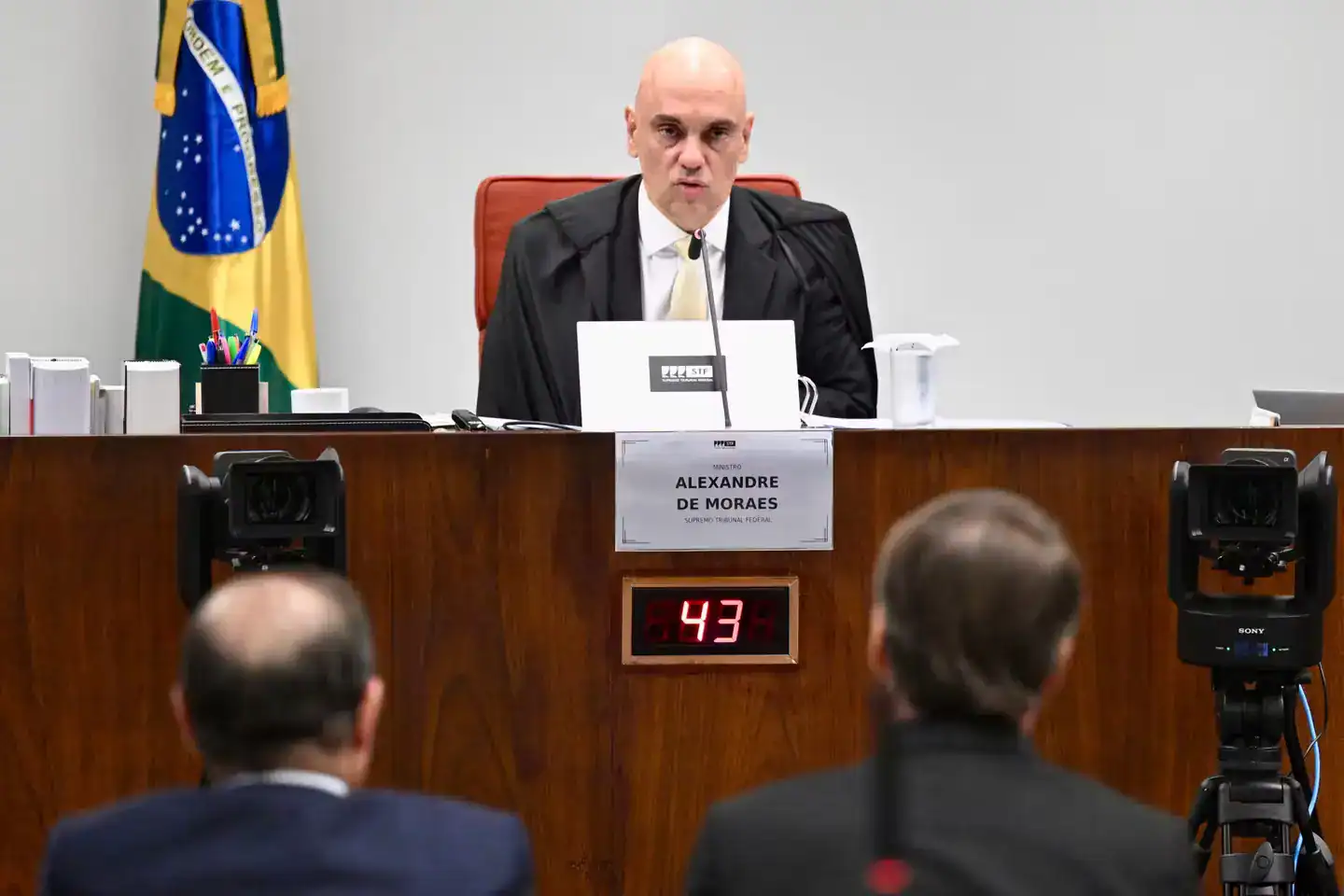
Brazilian Supreme Court Justice Alexandre de Moraes suspended on May 9 the application of the newly promulgated Dosimetria Law (Law 15.402/2026) only one day after Senate President Davi Alcolumbre signed it into force, freezing what would have been a major sentence-reduction window for former President Jair Bolsonaro and at least 190 January 8 convicts.
The law, passed after Congress overrode President Lula’s full veto on April 30 with 318 deputies and 49 senators, would have cut Bolsonaro’s 27 years and 3 months sentence by an estimated 5 years and reduced his closed-regime time from about 7 years to between 2 and 4 years.
Moraes, acting as relator of two Direct Unconstitutionality Actions (ADIs 7966 and 7967) filed Friday by the Brazilian Press Association and the PSOL-Rede federation, rejected ten reduction petitions and gave the Presidency and Congress five days to respond, in the most consequential legislative-judiciary confrontation of 2026.
Key Points
Key Facts
— Law 15.402/2026 promulgated May 8 by Senate President Davi Alcolumbre; suspended May 9 by Justice Moraes.
— Bolsonaro’s 27 years 3 months sentence could have fallen to about 22 years 1 month.
— Closed-regime time would have dropped from 7 to 2-4 years; semi-open progression by 2028-30 vs 2033.
— At least 190 January 8 convicts could benefit if STF upholds law; 1,402 total convicted to date.
— Lula veto overridden April 30 by 318 deputies and 49 senators; Alcolumbre promulgated May 8.
A 24-Hour Confrontation
The Rio Times, the Latin American financial news outlet, reports that the legislative-judiciary confrontation moved at speed: Congress overrode Lula’s January 8 veto on April 30 with 318 deputy and 49 senator votes, and Alcolumbre promulgated the text on May 8 after Lula let the 48-hour constitutional window expire. ABI and PSOL-Rede filed Direct Unconstitutionality Actions 7966 and 7967 the same Friday, drawing Justice Moraes as relator by lot. Within 24 hours, Moraes used the Nara Faustino de Menezes case (16 years 6 months) to suspend the law, rejecting ten parallel petitions and giving Brasília 5 days to respond.
What the Law Changes
The Dosimetria Law (PL 2.162/2023, authored by deputy Marcelo Crivella of Republicanos-RJ) modifies the Penal Code and the Penal Execution Law on three fronts. It applies formal concurrence so overlapping crimes from the same context cannot be summed and creates a 1/3 to 2/3 reduction for crowd-context crimes such as the January 8 attacks, excluding those who financed or led the action. It also lowers closed-regime progression thresholds to 16% of the sentence for non-violent crimes (down from 25% for first-time offenders) and 20% for repeat offenders (down from 30%).
Who Was on Track to Benefit
The Supreme Court has convicted 1,402 people for the January 8, 2023 attacks on the Three Powers’ headquarters in Brasília, of whom 431 received prison sentences, 419 alternative sentences and 552 entered non-prosecution agreements. Beyond former President Bolsonaro (27 years 3 months) the prominent names include former Defence Minister Walter Braga Netto (26 years), former Justice Minister Anderson Torres (24 years), former Navy Commander Almir Garnier (24 years), former General Augusto Heleno (21 years) and federal deputy Alexandre Ramagem (16 years). Reduction is not automatic; each defense must file a sentence-review petition with the STF for individual recalculation.
| Indicator | Value |
|---|---|
| Law number | Lei 15.402/2026 |
| Suspended by | Justice Moraes (May 9) |
| Constitutional actions | ADIs 7966 + 7967 (ABI + PSOL-Rede) |
| Bolsonaro current sentence | 27 years 3 months |
| Closed-regime cut | 7 years → 2-4 years |
| Congress override (April 30) | 318 deputies + 49 senators |
| January 8 convicts | 1,402 total / 431 prison |
Political Backdrop
The Dosimetria episode sits inside a wider Lula-Congress confrontation: on April 29 the Senate rejected Lula’s Supreme Court nominee Jorge Messias by 42 votes to 34 (the first such rejection since 1894, breaking a 132-year precedent), on April 30 Congress overrode the Dosimetria veto, and on May 8 Alcolumbre signed the promulgation after Lula let the deadline expire. Senator Flávio Bolsonaro called the Moraes suspension Judiciary interference over decisions approved by Congress, while ABI and PSOL-Rede argued the law was crafted to selectively benefit those convicted of trying to break institutional order. Lula’s defense rests on the constitutional review’s outcome, with the STF plenário positioned as the arbiter on January 8 punishment.
Connected Coverage
For more on Brazilian institutional dynamics, see our coverage of the Banco Central’s first dollar-futures intervention in 10 years and how Brazil’s April exports hit an all-time monthly record of $34 billion.
What Happens Next
- Five days: Presidency and Congress submit formal responses to Justice Moraes.
- STF plenário: Full court will judge the constitutionality of Law 15.402/2026.
- If upheld: Sentence reductions resume for at least 190 January 8 convicts.
More: Brazil news in English, every day from The Rio Times.
Frequently Asked Questions
What is Brazil’s Dosimetria Law?
The Dosimetria Law (Law 15.402/2026) modifies Brazil’s Penal Code and Penal Execution Law on three fronts: it applies “formal concurrence” so overlapping crimes from the same context cannot be summed, creates a 1/3 to 2/3 sentence reduction for crowd-context crimes (excluding leaders and financiers), and lowers closed-regime progression from 25% to 16% for first-time offenders and from 30% to 20% for repeat offenders. The text (PL 2.162/2023) was vetoed by Lula in January 2026; Congress overrode the veto on April 30 with 318 deputy and 49 senator votes, and Alcolumbre promulgated it on May 8.
Why did Justice Moraes suspend it?
Justice Alexandre de Moraes suspended the law on May 9 in the case of Nara Faustino de Menezes and 10 other cases, arguing the pending constitutional review actions (ADIs 7966 and 7967, filed by the Brazilian Press Association and the PSOL-Rede federation) created “a new and relevant procedural fact” affecting legal security. He gave the Presidency and Congress 5 days to file responses before the STF plenário decides whether Congress can use ordinary legislation to alter the practical effects of Supreme Court sentences. The plaintiffs argued the law selectively benefits those convicted of trying to break institutional order.
What does this mean for Bolsonaro?
Former President Jair Bolsonaro, sentenced to 27 years and 3 months for leading the January 8 plot, currently serves under house arrest for health reasons with formal closed-regime classification. Pre-Dosimetria projections from the Federal District Penal Execution Court put his semi-open-regime progression at about 2033, but under the new law the sentence could fall to roughly 22 years 1 month and closed-regime time could drop from about 7 years to between 2 and 4 years, putting semi-open progression as early as 2028-2030. Moraes’s suspension freezes both his and the other 190 cases pending STF plenário review.
How does this fit the broader Lula-Congress dynamic?
The Dosimetria episode is the second consecutive Lula defeat, following the Senate’s 42-34 rejection on April 29 of Supreme Court nominee Jorge Messias (first such rejection since 1894 in 132 years). The April 30 veto override and May 8 promulgation after Lula let the deadline expire compound the Palácio do Planalto’s articulation weakness, even after the May 7 Lula-Trump meeting in Washington agreed to resolve tariffs in 30 days. Senator Flávio Bolsonaro positioned the Moraes suspension as Judiciary interference in Congress sovereignty, setting a tense backdrop for the October 2026 election.
Updated: 2026-05-11T05:00:00Z by Rio Times Editorial Desk
This article was produced by The Rio Times’ automated newsroom system. How we use AI · Report an error
Read More from The Rio Times