Why Braskem’s Bondholders Now Want State-Run Petrobras to Put In Cash
Key Facts
Braskem, a pillar of Brazilian industry, is trying to restructure its debt without a full court-run reorganisation. Its bondholders have now rejected the company’s offer and want state-controlled Petrobras to put in fresh capital.
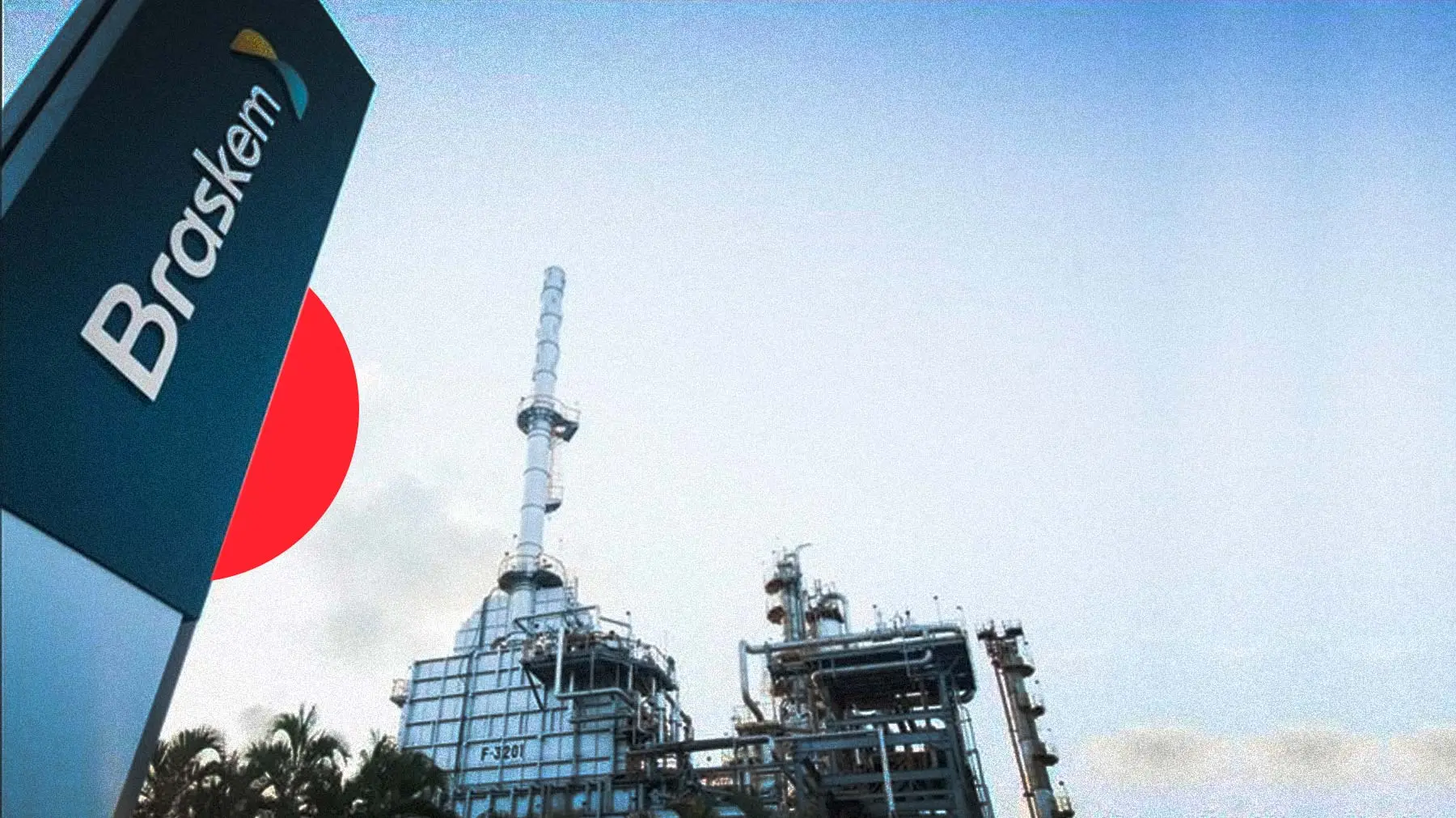
Bondholders of Braskem, Brazil’s largest petrochemical maker, have rejected the restructuring proposal it tabled in late August. Bloomberg reported on 17 September 2026 that they want Petrobras, the state-controlled oil company, to commit enforceable new capital.
Why This Matters Beyond Brazil
Braskem describes itself as the largest producer of thermoplastic resins in the Americas. Those resins, such as polyethylene, polypropylene and PVC, are the raw material for packaging, pipes and car parts.
The company was founded in 2002 and runs 39 industrial units in 11 countries. It says it is the leading polypropylene producer in the United States and sells to customers in over 71 countries.
Its distress therefore reaches supply chains and bond portfolios far outside Brazil. The process covers R$56.48 billion of unsecured financial claims, about US$10.9 billion.
Conversions here use 5.1521 reais to the dollar, the Banco Central PTAX rate for 17 September 2026. Standard and Poor’s, a credit rating agency, cut Braskem to default on 26 June 2026.
Fitch, another rating agency, moved the company to restricted default on 14 August 2026. The creditors’ demand also pulls in the Brazilian state, because the federal government is Petrobras’s controlling shareholder.
Any cash from Petrobras would come from a company whose largest owner is the taxpayer. The demand lands weeks before Brazil’s 4 October general election, in which President Lula is seeking a new term.
Live Company IntelligencePetroleo Brasileiro Petrobras SA ADR — the full investor dossier
What the Creditors Turned Down
The offer was presented in late August, days after Braskem filed for out-of-court recovery. It carried about US$2 billion of new money, according to people cited by Bloomberg.
Roughly US$1.25 billion would have bought back existing debt at up to half of face value. The remaining US$750 million was earmarked for working capital.
Braskem has not confirmed those figures publicly, and the case is docketed as 4113246-86.2026.8.26.0100. The report rests on unnamed people and has not been independently corroborated elsewhere.
Who Is Sitting Across the Table
The core creditor bloc is an ad hoc group of bondholders, meaning investors organised just for this negotiation. NeoFeed, a Brazilian business news site, reported that it includes Capital Group, AllianceBernstein, Elliott and Strategic Value Partners.
Bondholders hold about two thirds of the debt inside the process, Brazil Journal reported. Foreign banks hold most of the rest, among them Barclays, Santander and Citibank.
The filing lists 1,179 separate credit lines. That spread of holders makes a single negotiated answer harder to reach.
Who Owns Braskem and What Creditors Want From Petrobras
IG4 Capital, a Brazilian investment firm, holds 50.1% of the voting capital through its Shine I fund. IG4 took control in June 2026 after buying the stake of Novonor, the engineering group formerly known as Odebrecht.
Petrobras holds 47% of the voting capital and 36.1% of the total capital. Petrobras chief executive Magda Chambriard chairs the Braskem board.
Creditors want the shareholders to sign a commitment to put in capital that a court could enforce. Some told Bloomberg there is no deal without a capital injection.
The plan filed in August names Petrobras and IG4 as guarantors of last resort. That support is conditional on missed financial targets, not an automatic payment.
Petrobras has not agreed to the binding form creditors are asking for. Bloomberg reported that the company nonetheless wants to avoid a bankruptcy filing.
How a Brazilian Out-of-Court Recovery Works
Recuperação extrajudicial, or extrajudicial recovery, sits between a private workout and a full judicial reorganisation. A company negotiates with creditors first, then asks a court to ratify the result.
Under Law 11,101 of 2005, Brazil’s bankruptcy law, it may file with one third of affected claims signed up. It must then reach more than half before a judge can approve the plan.
Braskem filed on 24 August 2026 with adherence of 39.6%. The case went to the 2nd Bankruptcy and Judicial Recovery Court of São Paulo.
The court accepted the case on 28 August 2026. It ratified a 120-day freeze on executions and asset seizure orders.
Braskem has 90 days from the filing to show the majority. That points to 22 November 2026.
The Numbers Behind the Standoff
Intercompany claims of R$130.6 billion, about US$25.3 billion, sit outside the process. Leverage stood at 6.74 times earnings in the second quarter.
Gross debt was US$10.4 billion at the end of June. Second-quarter recurring earnings before interest, tax, depreciation and amortisation were US$1.04 billion.
A US$1 billion revolving credit facility matures in December 2026. Both rating actions are listed on Braskem’s own investor relations page.
What the Share Price Did
Braskem’s preferred shares closed at R$4.52 on 17 September 2026, about US$0.88. That was down 0.22% on the day, after an intraday low of R$4.38 (about US$0.85).
The report circulated around the close, so the session did not price it fully. The previous session had already been heavy.
The stock closed down 15.17% on 16 September after UBS BB, an investment bank, cut it to sell. The bank lowered its target from R$10.50 to R$3.75, or about US$2.04 to US$0.73.
Over twelve months the shares are down roughly 49%. Market capitalisation stood near R$3.6 billion, about US$699 million, at that 17 September close.
Mexico and Maceió, the Other Two Bills
Braskem Idesa, its Mexican joint venture, filed a prepackaged Chapter 11 in Texas on 18 August 2026. Chapter 11 is the US bankruptcy procedure, and prepackaged means creditors agreed the terms beforehand.
The venture is cutting senior debt from about US$2.5 billion to US$1.6 billion. Braskem committed US$476 million of new capital to that deal.
It keeps majority ownership of the reorganised company, with Grupo Idesa the largest minority holder. Management has targeted emergence within 60 to 90 days.
Separately, salt mining by Braskem caused ground subsidence in Maceió, in the state of Alagoas. More than 55,000 people were affected and whole districts were evacuated.
The company reports disbursements above R$4.2 billion, about US$815 million, on compensation. It still carried a provision of R$3.2 billion, about US$621 million, at the end of June.
Wider damage estimates for Maceió circulate in Brazil, but no official total has been published. Braskem says those commitments stay in force and sit outside the restructuring.
The Other Side of the Table
Braskem has not confirmed the terms Bloomberg described, and neither has Petrobras. Petrobras has not published a figure or a formal answer to the creditors’ demand.
Its conditional backstop in the August plan shows it is willing to stand behind Braskem in some form. Creditors argue that a conditional promise is not the same as money a court can compel.
What It Means If You Hold Braskem Shares or Bonds
Equity holders sit behind every creditor in this queue. The plan already contemplates converting part of the debt into Braskem shares.
Any such conversion dilutes existing shareholders, and its size is still unsettled. Bondholders face a different question, which is whether to hold out or sign.
Signing binds you to terms a court can then impose on holdouts. Holding out preserves leverage but raises the odds of a judicial reorganisation.
For suppliers and customers the process changes little on paper. Trade claims sit outside the filing and are being paid in the ordinary course.
Petrobras shareholders have their own exposure through the 36.1% stake. Any injection would be a use of cash that the market has not priced in.
What Is Not Yet Known
The size of any shareholder injection has not been fixed. Distressed funds have pushed for up to US$4 billion, Brazil Journal reported.
Whether Braskem reaches the majority by 22 November remains open. Missing that date would most likely push the case into judicial reorganisation.
The conversion ratio for any debt-to-equity swap is undecided. So is the question of collateral, which creditors have sought throughout.
Background: Brazil Cut the Fuel Tax and Petrobras Raised the Price on the Same Night.
Frequently Asked Questions
Why does the Braskem restructuring matter?
Braskem is the largest thermoplastic resin producer in the Americas, with plants in 11 countries. Its creditors now want state-controlled Petrobras to commit capital, which draws in the Brazilian state.
What is an extrajudicial recovery in Brazil?
It is a court-ratified restructuring negotiated privately with creditors first. A filer needs one third of affected claims to start and more than half for approval.
Has Petrobras agreed to inject capital?
Not in the enforceable form creditors are demanding. The August plan names Petrobras and IG4 as guarantors of last resort if financial targets are missed.
What happens if the deadline passes without a majority?
The out-of-court route lapses and judicial reorganisation becomes the likely path. That is slower and more costly, and it puts the court in charge of the timetable.
Sources: Investing.com on the Bloomberg report that creditors rejected the plan, Migalhas, the filing itself, court, claims and adherence, CNN Brasil on the court accepting the case and the 120-day freeze, NeoFeed on the ad hoc bondholder group and the impasse, Brazil Journal on the 90 days, the debt mix and creditor positions, Braskem investor relations, current Fitch and S&P ratings, Braskem second-quarter 2026 results, leverage and Maceió provisions, Braskem Idesa announcement of its prepackaged Chapter 11, Braskem, company profile, plants, countries and markets, C&EN, Novonor formerly known as Odebrecht, TipRanks, Brazil’s federal government as Petrobras’s controlling shareholder
This article was produced by The Rio Times’ automated newsroom system. How we use AI · Report an error · Editorial responsibility: Matthias Camenzind, Editor-in-Chief
LatAm Markets: Live Signals → — real-time movers, turnover leaders and FX across Latin America.
Brazil runoff, Sunday, October 25: Brazil runoff date. Latest: Brazil runoff polls, Flávio 51%, Lula 49%.