Botswana Diamond Economy Shudders as Debswana Revenue Plunges 49 Percent
Economy · Botswana
—The stakes. Diamonds fund roughly 30% of government revenue and about 70-75% of export earnings for Africa’s most stable economy.
—The date. A downturn that began in 2023 has worsened through 2024 and 2025, with Debswana planning only a tentative volume recovery in 2026.
—The numbers. Debswana rough sales dropped 49.2% in the first half of 2024 to US$1.29 billion from US$2.54 billion a year earlier.
—The response. Botswana’s new government is accelerating diversification into tourism, solar energy and financial services while renegotiating the De Beers partnership.
—The investor angle. A sovereign downgrade to BBB and a swelling diamond stockpile signal that the old diamond model is unlikely to restore past fiscal comfort.
Botswana is learning that six decades of diamond-based stability cannot shield it from a structural consumer shift. Lab-grown stones and weak global demand are forcing Africa’s best-governed economy to plan for a future where rough diamonds are no longer the default source of national income.
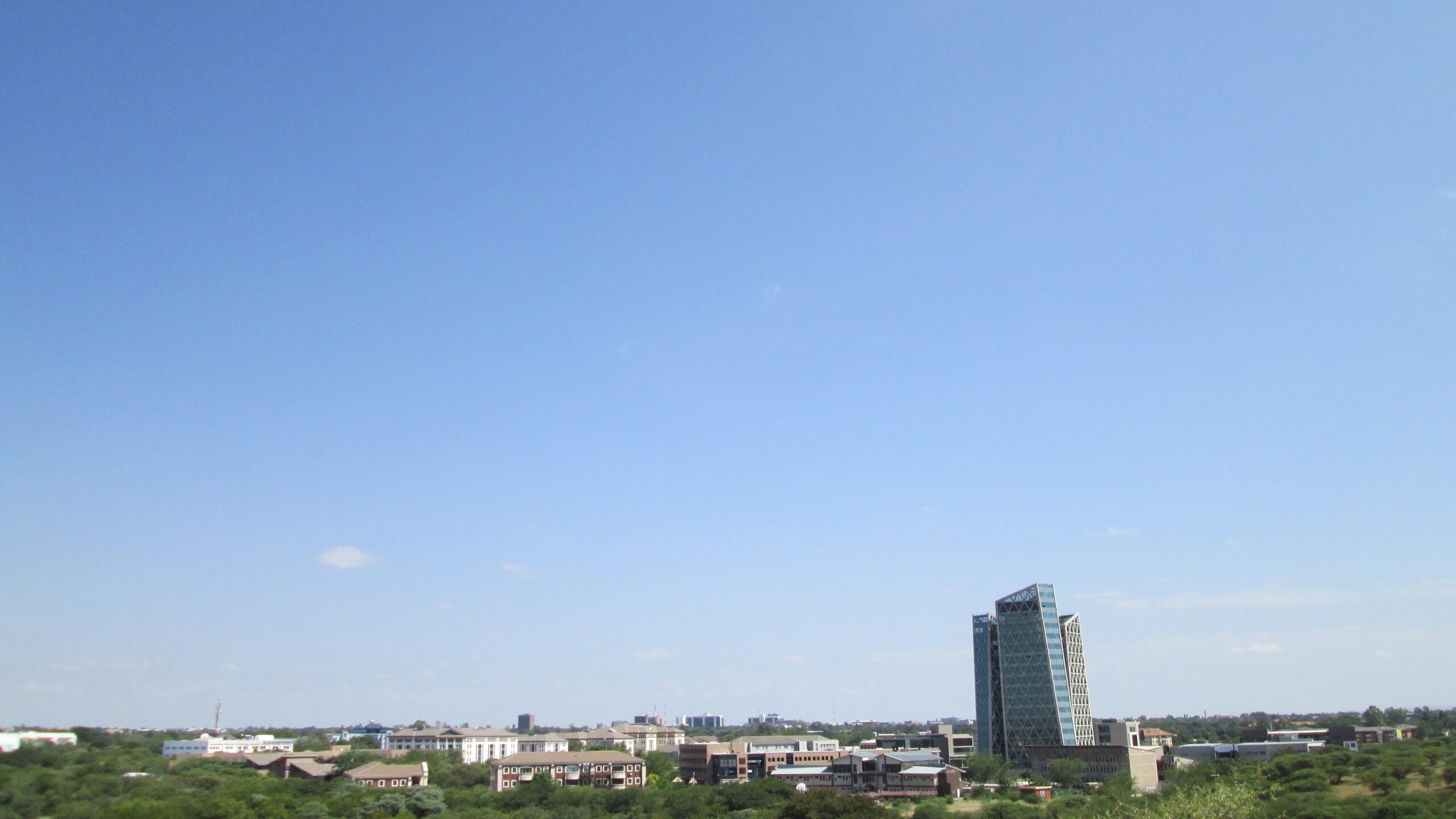
Six Decades of Diamond Stability
Botswana has long been described as the world’s top diamond producer by value. Diamonds have been the backbone of its development model for six decades.
The country is widely regarded as one of Africa’s most stable and well-governed economies. It has historically carried low public debt and maintained strong institutions.
Diamonds account for about 25-30% of GDP and roughly 30% of government revenue. They also provide around 70-75% of foreign exchange earnings, depending on the source and year.
Debswana Diamond Company is a 50-50 joint venture between the Government of Botswana and De Beers. Debswana accounts for roughly 90% of Botswana’s diamond sales.
That concentration has made the national budget unusually sensitive to global gem prices. It has also given Botswana a prosperity buffer that most African states lack, but it cannot remove the underlying dependency.
The Global Demand Shock
The current downturn began around 2023. Macroeconomic uncertainty, high interest rates and rising competition from lab-grown diamonds combined to depress natural diamond demand.
Rough diamond sales have fallen sharply. Bank of Botswana data show Debswana sales plunged 49.2% in the first half of 2024 to US$1.29 billion, down from US$2.54 billion in the same period of 2023.
The first quarter of 2024 was even more brutal. Rough diamond sales collapsed 48.3%, from approximately US$1.085 billion to US$560.9 million, as lab-grown alternatives eroded natural diamond demand.
By January 2026 Botswana warned of a lasting period of depressed prices. The country’s diamond stockpile was swelling while gem prices remained under pressure.
This is not a simple cyclical dip. Consumers are making structural choices, and natural diamond producers are being forced to adjust to a smaller market share.
Debswana Cuts Production
Debswana cut production by about 27% in 2024 to 17.9 million carats. That fell short of the prior target of 20.7 million carats.
The fourth quarter of 2024 showed the severity of the decline. Debswana output fell 31% to 4.2 million carats, compared with 6.1 million carats in the fourth quarter of 2023.
Production was cut further in 2025. Debswana announced output of about 15 million carats, with some reports placing the figure at 15.1 million carats.
Mining.com noted that Debswana reduced output by 16% in 2025. Botswana’s broader economy contracted for two consecutive years during this period.
For 2026 Debswana plans to increase output to 18 million carats. That is a tentative volume recovery, but it comes even as prices remain weak and inventories stay elevated.
A Fiscal Squeeze on a Model Economy
The revenue collapse is hitting the state directly. Government receipts from the diamond industry fell sharply alongside sales and production cuts.
S&P Global Ratings downgraded Botswana’s sovereign credit rating in 2025 to BBB-. The rating action cited sustained pressure from the global diamond downturn and weakening fiscal revenues.
A downgrade to BBB- keeps Botswana in investment grade, but only just. It signals that the country’s fiscal strength is no longer enough to offset commodity concentration risk.
Finance authorities have signalled tighter spending because of the diamond revenue slump. The government is now balancing fiscal discipline against the need to fund new non-diamond sectors.
The old model delivered decades of infrastructure and social investment. The new reality is a budget squeeze that forces choices between debt management and growth spending.
Stockpile Swelling and Price Depression
Botswana’s diamond stockpile has grown as sales have slowed. Reuters reported in January 2026 that the stockpile was swelling as the gem price slump persisted.
Rough stones are building up while buyers hold back. Mining Africa News reported a record 12 million carats in inventory by early 2026 as revenue sank.
Rapaport also flagged a slow recovery for Botswana as diamond inventory grew. The combined effect is pressure on both cash flow and future sales volumes.
Holding large inventories in a falling market creates accounting and pricing risk. It also reduces the incentive to ramp production quickly.
The planned 2026 output increase to 18 million carats therefore carries uncertainty. Debswana may produce more stones even if buyers are unwilling to absorb them at old prices.
Lab-Grown Competition Changes the Market
Lab-grown diamonds are no longer a niche product. They have lowered the price floor for natural stones and changed consumer preferences in major markets.
The decline in rough prices has persisted because demand for natural diamonds has not recovered. Botswana’s warning of depressed prices reflects a structural, not temporary, shift.
Natural diamonds still hold luxury positioning, but they now compete with cheaper manufactured alternatives. That competition is especially strong in the lower-value segments where Botswana produces large volumes.
Producers can cut output to support prices, but lab-grown supply continues to expand. The result is a prolonged period of weak pricing power for natural diamond miners.
For Botswana this means its dominant export can no longer be assumed to generate rising revenues. The national economic strategy must now assume continued price weakness for years.
De Beers Sales Talks
The government is engaged in renewed negotiations with De Beers over sales and ownership structures. Debswana’s structure as a 50-50 joint venture is at the centre of these talks.
Botswana wants a larger share of the value chain and more security from the partnership. The current downturn has made the existing terms less attractive to the state.
De Beers faces its own commercial pressure from weak natural diamond demand. The company has had to scale back marketing and adjust its production plans.
A new arrangement could change how rough stones are sold and how profits are shared. It could also affect future investment in Botswana’s diamond operations.
For investors, the outcome of these talks matters. A rebalanced deal could improve Botswana’s future diamond revenues, but it could also introduce new uncertainties for De Beers-linked assets.
Diversification into Tourism
The government is pushing tourism as a leading non-diamond revenue source. Botswana has an established high-value safari industry built on the Okavango Delta and wildlife reserves.
Tourism can generate foreign exchange and jobs without the same extraction industry volatility. The sector already serves an international market willing to pay for premium nature experiences.
The new diversification push aims to expand infrastructure and access to under-visited areas. It also seeks to increase local participation in a sector that has often been dominated by foreign operators.
Tourism revenues remain far smaller than diamond earnings. Replacing even a fraction of lost diamond income requires years of investment and marketing.
Still, tourism offers one of Botswana’s fastest paths to higher services exports. It also aligns with the country’s reputation for stability and conservation.
Solar and Financial Services Ambitions
Solar energy is a central pillar of the new diversification plan. Botswana has high solar irradiation and seeks to reduce dependence on imported electricity.
Renewable energy investment could create construction jobs and lower energy costs for businesses. It could also position Botswana as a regional power supplier.
Financial services are another priority. Botswana aims to attract investment funds, fintech firms and regional headquarters through its stable legal and regulatory environment.
The country’s longstanding good governance gives it an advantage over less predictable African markets. That reputation can be converted into services-sector growth if reforms are executed.
These sectors will not replace diamond revenues in the short term. But they offer investors non-diamond exposure to a country with credible institutions and a clear policy direction.
What It Means for Investors
Investors should treat Botswana differently from a typical commodity-cycle play. The diamond decline is structural, not merely a waiting game for demand recovery.
The sovereign downgrade to BBB- raises borrowing costs and signals higher fiscal risk. Bondholders and currency traders will price in weaker external revenues.
The De Beers talks add a layer of policy uncertainty. A favourable deal could help state revenue, while a prolonged negotiation could delay investment decisions.
Tourism, solar and financial services offer growth opportunities. These sectors are smaller and less proven, but they benefit from a government that now has little choice but to implement reforms.
The end of the diamond model does not mean Botswana will collapse. It means returns will increasingly depend on whether diversification can create new revenue streams before diamond income falls further.
The Big Picture
Background: our egypt growth outlook cut 5 percent inflation delays rate cuts guide.
Latest developments
- South Africa Mining Taxes Double to US$3 Billion — 7 October 2026
- South Africa Road Accident Fund Eyes US$0.18 Fuel Levy — 7 October 2026
- Eswatini Electricity Losses of US$15 Million Worry IMF — 7 October 2026
- What to Do in Gaborone in October 2026, From Gospel to a Night Run — 7 October 2026
This article was produced by The Rio Times’ automated newsroom system. How we use AI · Report an error · Editorial responsibility: Matthias Camenzind, Editor-in-Chief
City Guides in Botswana
Events, rents, safety and practical guides, city by city.
Read More from The Rio Times