Barbados Explained 2026: The Island, the Economy, the Republic and What to Watch
GUIDES · BARBADOS
Key Facts
- —Capital Bridgetown, on the sheltered southwest coast. Its historic centre and the old British Garrison are a UNESCO World Heritage Site. The whole island covers about 430 square kilometres (166 square miles), a little over half the land area of New York City.
- —Population About 282,600 people in 2025, according to the World Bank. That is fewer than Iceland’s 392,000, packed onto an island a fraction of Iceland’s size.
- —Currency The Barbados dollar, fixed at BDS$2 to US$1 since 5 July 1975, and still at that rate on 26 September 2026 (open.er-api.com). Halve any local price to get US dollars.
- —Language English is the official language, used in law, business and schools. Everyday speech is often Bajan, a local English-based creole.
- —GDP About US$8.0 billion in 2025, or roughly US$28,400 per person (World Bank). That is a little below Portugal’s US$32,100 per person.
- —Government A parliamentary republic since 30 November 2021. Prime Minister Mia Mottley runs the government; President Jeffrey Bostic is the ceremonial head of state.
Barbados explained for newcomers: a small, English-speaking Caribbean republic since 2021. It lives on tourism and finance, and ties its currency to the US dollar.
Barbados explained in one line: a stable island democracy of 282,000 people that lives on American and British visitors. For foreign readers it matters as a holiday destination, a remote-work base and a test of small-state debt reform.
What kind of country is this?
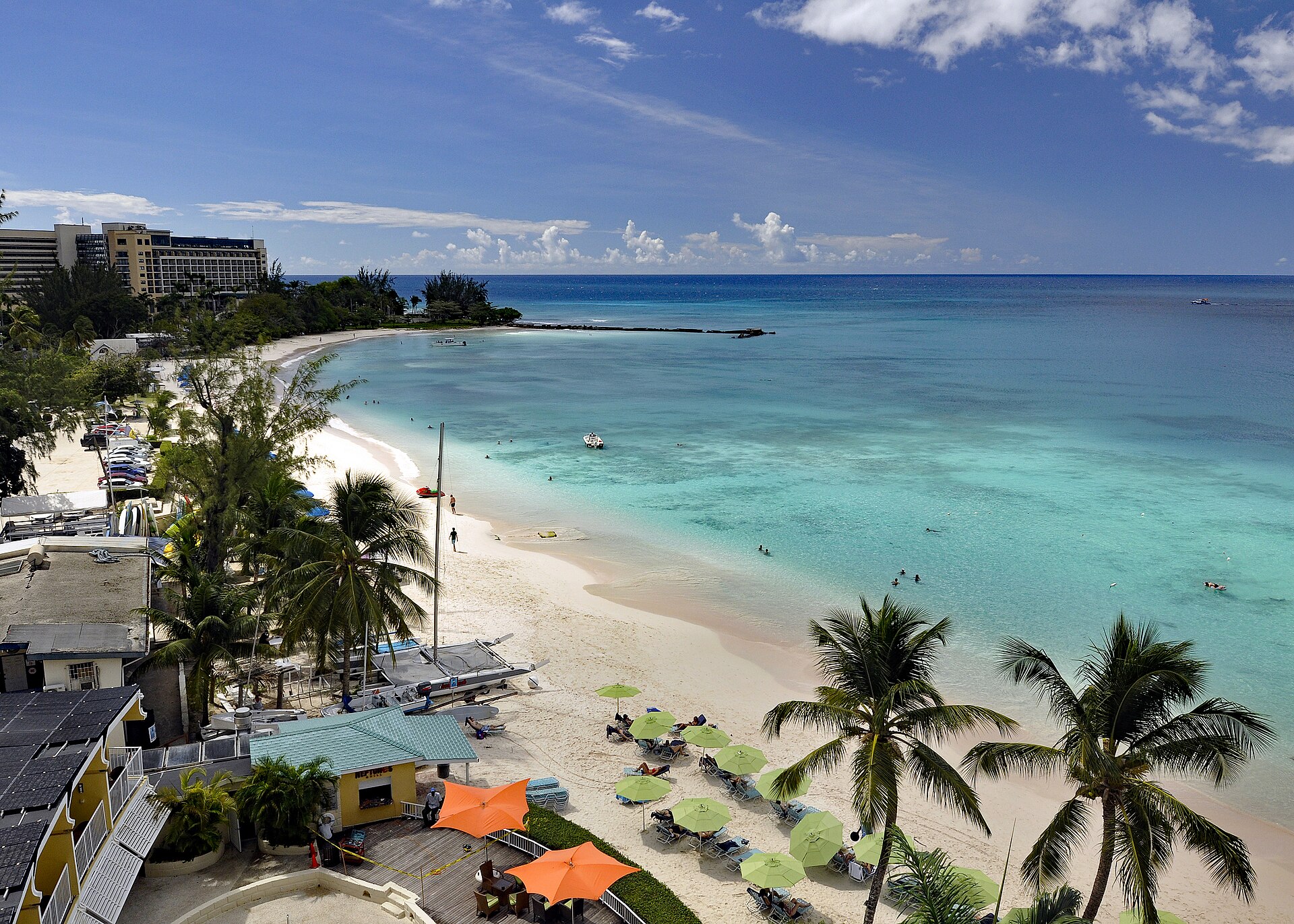
Barbados is the most easterly island of the Caribbean, set out in the Atlantic beyond the main chain of islands. It is flat compared with its neighbours and fringed by coral beaches on the west and south coasts. The east coast faces the open Atlantic and is wilder and less built up.
English settlers arrived in 1627, and for three centuries the island was a sugar colony built on the labour of enslaved Africans. Most Barbadians today descend from those enslaved people. That history is openly part of national life, including the celebrations planned for 2026.
Independence came on 30 November 1966 under the first prime minister, Errol Barrow. The British monarch stayed on as head of state for 55 years. On 30 November 2021 Barbados became a parliamentary republic, while remaining in the Commonwealth, the association of mostly former British territories.
Who runs Barbados and how
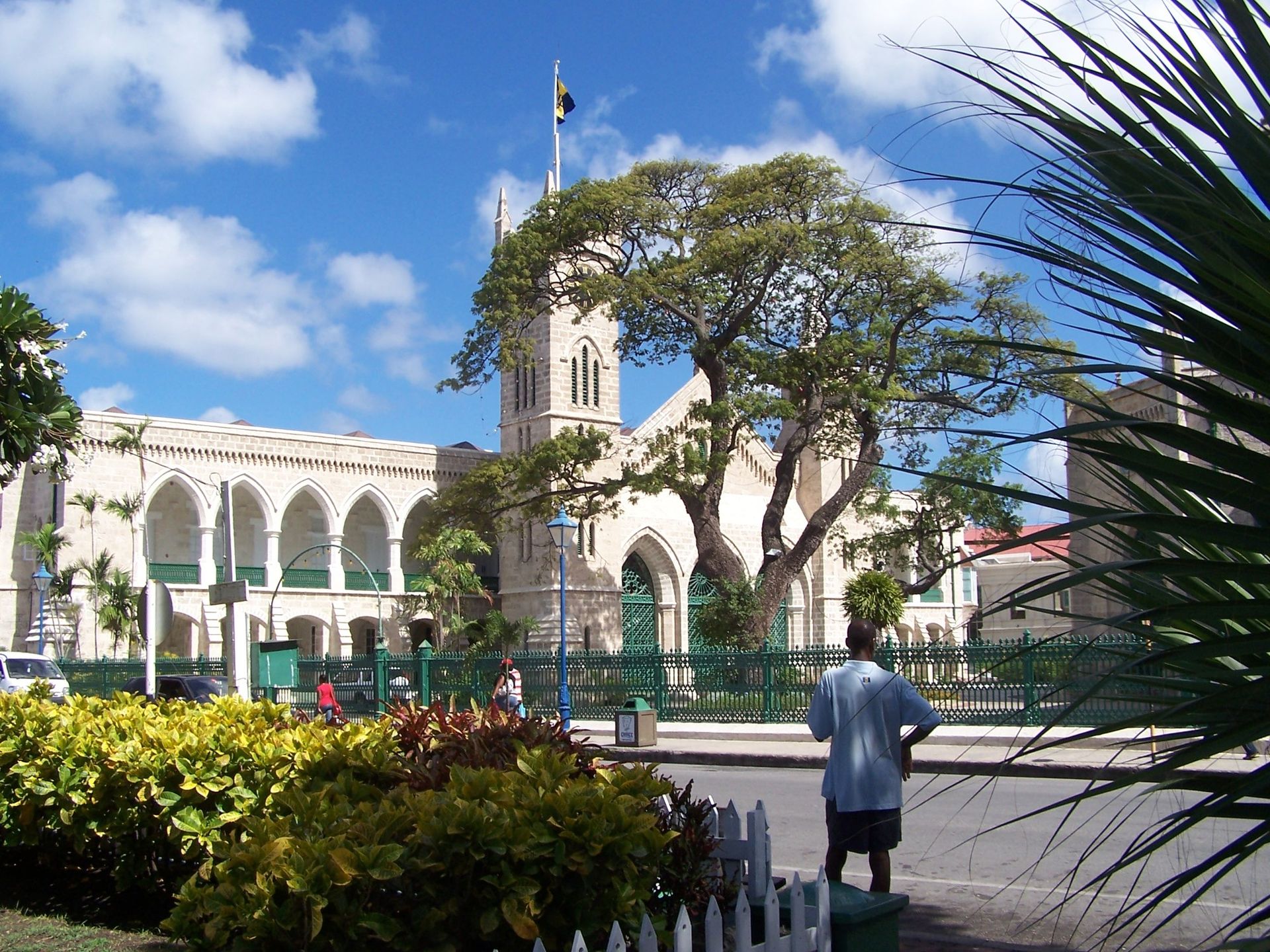
Barbados uses the British Westminster model. Power sits with the prime minister, who must command a majority in the elected House of Assembly. The House has 30 members, one per constituency. They are elected by first past the post, as in the UK House of Commons.
Mia Mottley of the Barbados Labour Party (BLP) has been prime minister since May 2018. She is the first woman to hold the post. Abroad she is best known for the Bridgetown Initiative, her campaign to reform how rich countries and lenders fund climate-exposed small states.
The most recent general election was held on Wednesday 11 February 2026. The BLP won all 30 seats for the third election in a row, after 2018 and 2022. It took 69.83 percent of the vote against 27.31 percent for the Democratic Labour Party (DLP), the Commonwealth Secretariat reported.
Turnout was about 41 percent of registered voters, a low figure by European standards. The DLP leader, Ralph Thorne, lost his own seat in St John. Barbados therefore again has no opposition members in the House and no formal Leader of the Opposition.
The head of state is the President, a ceremonial office like a European constitutional president. Jeffrey Bostic, a retired army lieutenant colonel and former health minister, became the second President on 30 November 2025. He succeeded Dame Sandra Mason, the first President, who took office when the republic was created.
Under the 2021 constitutional amendment, the President serves a four-year term and is elected by Parliament. The normal route is a joint nomination by the prime minister and the opposition leader. Otherwise a two-thirds vote of both chambers is needed.
The upper chamber is a 21-member appointed Senate: 12 government senators, two opposition senators and seven independents. With no opposition leader to advise him, President Bostic chose the two opposition senators himself on 20 February 2026. He named Ryan Walters of the DLP and Karina Goodridge, leader of the small Friends of Democracy party.
One change since the election matters for how power works. A constitutional amendment passed both chambers in late February 2026, clearing the Senate by 15 votes to three. An MP who resigns from, is expelled by or leaves their party must now give up the seat. A by-election follows. Critics, including political scientists quoted in Barbados Today, say it gives party leaders more power over MPs.
How the economy works
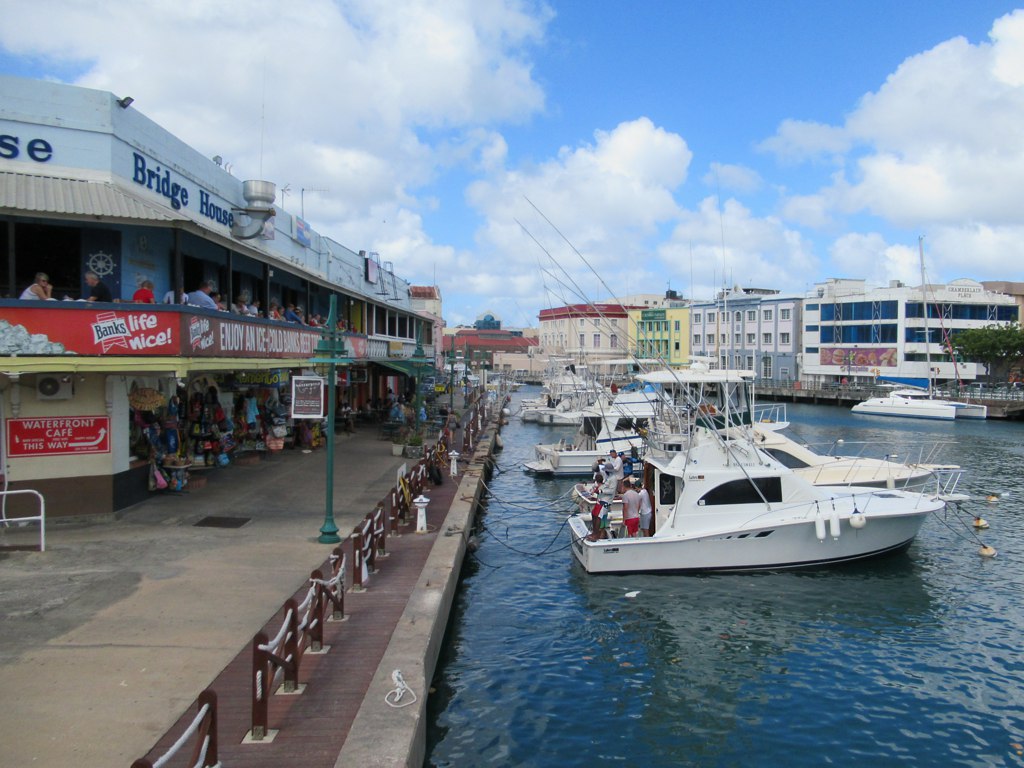
Barbados earns its foreign currency mainly from visitors. Tourism accounts for about half of the traded side of the economy, according to the Central Bank of Barbados. Outside tourism, the island earns from international business and financial services, rum and other manufacturing, and farming.
The island recorded 707,046 long-stay visitors in 2025, up from 696,531 in 2024, according to the Barbados Statistical Service. That is roughly two and a half visitors for every resident. The United States sent 241,571 of them and the United Kingdom 216,344, with Canada third on 87,026.
Cruise passengers add to the count. The Barbados Statistical Service counted 738,935 cruise passenger arrivals in 2025. Cruise traffic is heavily seasonal: December brought 90 ship calls, while July brought one.
The currency peg is the anchor of everything else. Since 1975 the Central Bank has guaranteed BDS$2 for each US dollar, and it needs foreign reserves to honour that promise. At the end of June 2026 reserves stood at BDS$3.1 billion (about US$1.55 billion), enough for 25.9 weeks of imports. The usual international benchmark is 12 weeks.
Public debt is the long-running problem. In 2018 the new Mottley government restructured the country’s debt. It launched the first Barbados Economic Recovery and Transformation plan, known as BERT, with IMF support. Gross public debt was BDS$15.1 billion (about US$7.55 billion) at the end of June 2026, equal to 93.7 percent of annual output.
That ratio is still high. The target is 60 percent of output by the fiscal year 2035/36. That is the same ceiling the European Union sets for its members. To get there it runs primary surpluses, meaning revenue exceeds spending before interest. The primary surplus reached BDS$537.5 million (about US$269 million) in April to June 2026.
On 22 June 2026 the IMF board approved a 36-month precautionary Stand-By Arrangement worth about US$257 million. Precautionary means the government does not plan to draw on it unless a shock hits. It supports the third plan, BERT 2026, which moves the focus from stabilising the economy to raising productivity.
What is happening right now
As of 26 September 2026, Barbados is counting down to a double anniversary. On 30 November it marks 60 years of independence and five years as a republic, promoted under the slogan “60 and 5”. Prime Minister Mottley has declared every Friday until then “Barbados Day”, with residents asked to wear the national colours.
The celebrations have been deliberately scaled back. In late June the prime minister said events would be compressed into three months. Public money would go to absorbing higher fuel costs instead. A new Barbados Diamond Anniversary Honour has been created. Nominations for it and the regular national honours closed on Friday 25 September.
The economy has slowed. Real output grew an estimated 1.4 percent in the first half of 2026, the Central Bank reported in late July. A year earlier the rate was 2 percent. It blamed conflict abroad, which raised freight and energy costs, and higher airfares that cut American visitor numbers.
The Central Bank now expects growth of about 2 percent for 2026. That is the bottom of its earlier 2 to 3 percent range. Unemployment was 6.1 percent at the end of March 2026. The 12-month average inflation rate was 1.4 percent, with prices rising 2 percent year on year in May.
The other open political project is a new constitution to replace the 1966 text. The prime minister said in June that the review commission’s final report had reached the President, ahead of a public consultation. She hoped to have it ready for November, or “soon thereafter”.
What to watch
Monday 30 November 2026 is the 60th anniversary of independence and the fifth of the republic. It also marks the official end of the Atlantic hurricane season, which runs from 1 June. A direct hurricane hit is a standing risk for every island economy in the region.
The Central Bank publishes a review of the economy after each quarter, and the January to September figures follow in the autumn. Watch whether growth reaches the 2 percent target. In July the bank said this needed about 2.5 percent growth in the second half of the year.
Airline seats are the leading indicator for tourism. For July to December 2026, planned seat capacity was 3 percent higher than a year earlier, the Central Bank said. Seats from Canada were up 13 percent and from the UK and Ireland 9 percent. Seats from the United States were down 8 percent.
The debt ratio and reserves are the fiscal gauges. Each IMF review under the Stand-By Arrangement will test whether the primary surplus stays on track toward the 60 percent debt target. A drawing on the arrangement would signal that a shock had hit.
Finally, watch the constitution. The draft is due to go to public consultation. After three 30–0 elections, its treatment of parties and the opposition will be closely read. The next general election is not due until 2031.
What this means for foreigners
Getting in is simple for most Western visitors. Citizens of the United States, Canada, the United Kingdom and the European Union do not need a visa for a holiday visit. The length of stay allowed depends on nationality, so check with the Barbados Immigration Department before a long trip.
The Barbados Welcome Stamp lets remote workers live on the island for 12 months while working for employers or clients abroad. The fee is US$2,000 for an individual or US$3,000 for a family. Applicants should expect to earn at least US$50,000 a year. Under the Remote Employment Act 2020, holders are treated as non-resident for Barbados income tax.
Money is easy to reason about because of the peg. A BDS$100 (US$50) restaurant bill is exactly US$50 before card fees, and that will not change unless the peg itself breaks. Much of what is sold is imported, so shipping costs feed into prices; the Central Bank noted higher freight costs in 2026.
Politics is calm and predictable by regional standards, and elections are peaceful. The practical drawback of a one-party parliament is thinner public scrutiny of decisions. For residency, tax, property, healthcare and living costs, the dedicated Rio Times guides below go into detail.
Connected Coverage
Moving to Barbados: Visas, Costs, Work Permits and Daily Life
Cost of Living in Barbados: What Expats Pay from Bridgetown to the West Coast
Healthcare in Barbados for Expats: Queen Elizabeth Hospital, Insurance and Costs
Retire in Barbados: Three Permit Routes, Only Permanent Residence Brings Free Hospital Treatment
Taxes in Barbados for Foreign Residents: 11.5% and 27.5% Bands, Welcome Stamp vs 182-Day Test
Barbados Lets Foreigners Own Beachfront Land, Central Bank Permitting
Barbados Remote-Work Visa Has Approval Only to December 2026
Barbados Returns to the IMF Fold After Mottley’s 30-Seat Sweep
Sources: Economic data and the exchange rate from the Central Bank of Barbados, the IMF programme from the International Monetary Fund, election results from the Commonwealth Secretariat and the Inter-Parliamentary Union, the Senate from the Parliament of Barbados, visitor numbers from the Barbados Statistical Service, and population and output from the World Bank. All accessed 26 September 2026.
- Central Bank of Barbados — Review of the economy, January–June 2026
- Central Bank of Barbados — Outlook for Barbados’ economy, updated July 2026
- Central Bank of Barbados — the peg to the US dollar since 5 July 1975
- IMF — 2026 Article IV consultation and Stand-By Arrangement for Barbados
- Commonwealth Secretariat — Barbados general election report, 11 February 2026
- Inter-Parliamentary Union — Barbados House of Assembly election, February 2026
- Parliament of Barbados — Members of the Senate 2026–2031
- Barbados Statistical Service — stay-over arrivals by market, 2025
- World Bank — Barbados population and GDP, 2025
- Barbados Tourism Marketing Inc. — 12-month Barbados Welcome Stamp
What Is Not Known
Whether the Welcome Stamp continues after 2026. Guides to the programme cite a Cabinet decision extending it to 31 December 2026. No extension beyond that date has been announced.
When the new constitution will be finished and what it will say. The review report exists, but its text has not been published and the consultation timetable is open.
Whether growth reaches 2 percent in 2026. The Central Bank itself lists weaker American demand, high freight and energy costs, and slow delivery of investment projects as risks.
How the political system adjusts to a parliament with no opposition. The Senate arrangement of February 2026 was a workaround chosen by the President, not a fixed rule. The anti-defection amendment has not yet been tested.
Frequently Asked Questions
Who is the President of Barbados in 2026?
Jeffrey Bostic, a retired army lieutenant colonel and former health minister, sworn in as the second President on 30 November 2025. The post is ceremonial. Day-to-day government is led by Prime Minister Mia Mottley.
When was the last election in Barbados and who won?
The general election was held on 11 February 2026. Mia Mottley’s Barbados Labour Party won all 30 seats in the House of Assembly for the third election in a row, with 69.83 percent of the vote.
What currency does Barbados use?
The Barbados dollar, fixed at BDS$2 to US$1 since 5 July 1975. The Central Bank of Barbados holds foreign reserves to guarantee that rate, so a local price halved gives the US dollar price.
Is Barbados still part of the Commonwealth?
Yes. Barbados removed the British monarch as head of state on 30 November 2021 and became a parliamentary republic, but it remains a member of the Commonwealth.
Can Americans work remotely from Barbados?
Yes, through the Barbados Welcome Stamp, a 12-month permit for people working for employers or clients abroad. It costs US$2,000 for an individual or US$3,000 for a family, and applicants should expect at least US$50,000 a year in income.
What does the Barbados economy depend on?
Mainly tourism, which is about half of the traded economy, plus international business and financial services. The island had 707,046 long-stay visitors in 2025, led by the United States and the United Kingdom.
This article was produced by The Rio Times’ automated newsroom system. How we use AI · Report an error
Read More from The Rio Times