A Bahia Coffee Festival Perks Up Salvador This Weekend
Key Facts
- Event dates August 15–16, 2026, at Trapiche Barnabé, Salvador.
- Ticket price R$ 35 (~US$ 7) for one day; R$ 60 (~US$ 12) for a two-day pass. Half-price entry is sold out.
- Opening hours 1pm–10pm.
- Exhibitors 70+ producers, roasters, cafeterias, cooperatives, and specialty brands.
- Lineup Debates, awards, and live music from Flor de Imbuia, Jad Venttura, and Sambadeiras de Cajazeiras.
- Admission Not free — tickets are required and sold in advance.
For the expat or nomad, this is a rare chance to taste Bahia’s emerging specialty coffee scene. It shows how a state known for beaches is building a reputation globally.
If you’re in Salvador this August, your morning coffee routine might feel like a chore. The Bahia coffee festival Salvador is your excuse to turn a weekend into a tasting adventure.
It happens on August 15 and 16, 2026, at Trapiche Barnabé. It’s not a free-for-all — you’ll need a ticket.
For the price of a couple of café lattes, you get access to more than 70 exhibitors. You also get live music and a deep dive into what Bahia’s coffee growers produce.
This isn’t a stuffy trade show. It’s a festival with a local pulse, designed for people who like their caffeine with context.
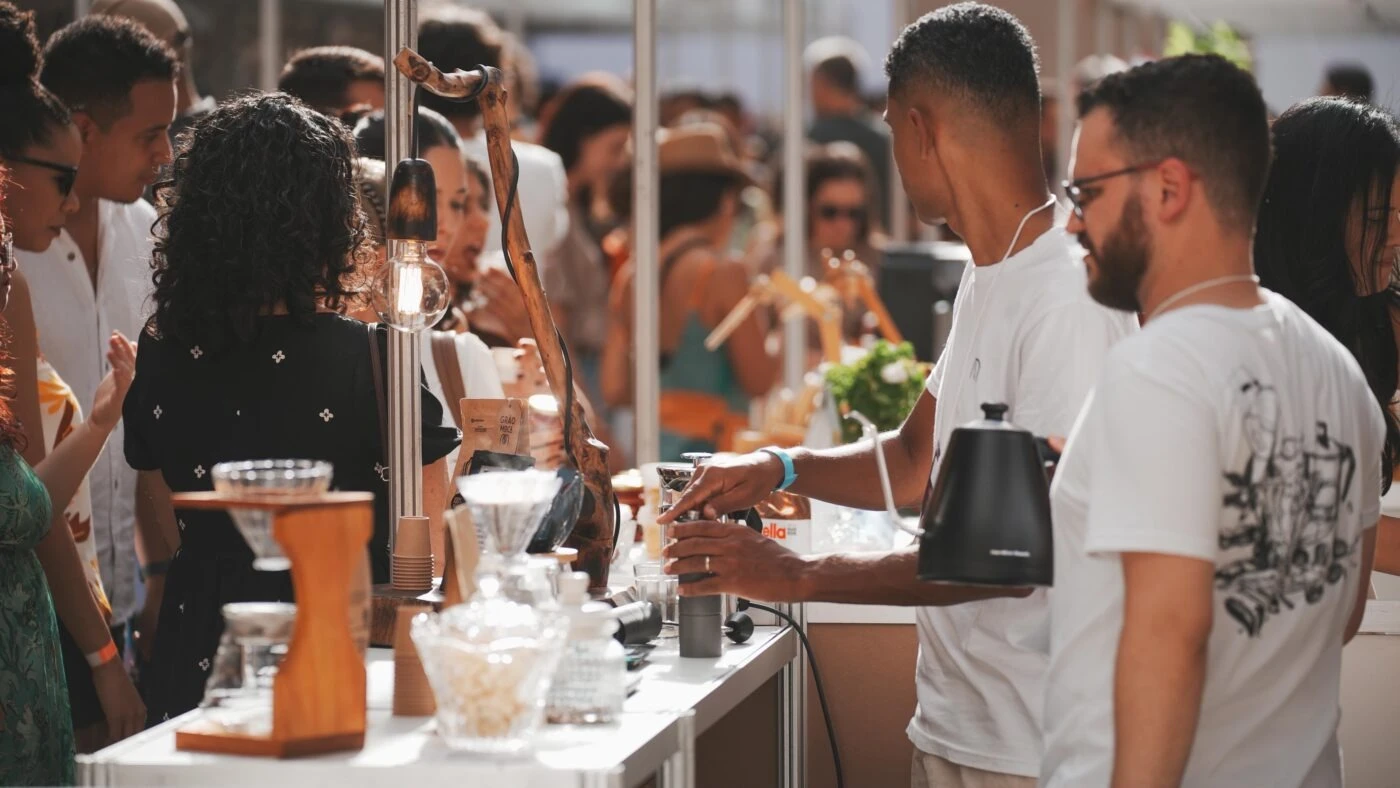
What to expect at Trapiche Barnabé
Trapiche Barnabé is one of Salvador’s most atmospheric event spaces. It’s a restored warehouse on the waterfront that hosts food and culture gatherings.
For this festival, the venue will be filled with coffee producers from across Bahia. You’ll also find roasters, cafeterias, cooperatives, and specialty brands.
You can wander from stall to stall and sample different beans. Ask questions directly to the people who grew them.
You might even pick up a bag or two to take home.
The hours are listed as 1pm to 10pm in most coverage. One source says it wraps up at 8pm.
If you’re planning your day, aim for the early afternoon to beat any crowd. That leaves you time to circle back to favorites.
The festival also includes debates and an awards ceremony. It’s not just about drinking — it’s about understanding what makes Bahian coffee distinct.
When you need a break from tasting, the music lineup keeps the energy local. You’ll hear Flor de Imbuia, Jad Venttura, and Sambadeiras de Cajazeiras.
Tickets, prices, and how to get in
This is not a free event. As of the latest available information, a one-day ticket costs R$ 35 (about US$ 7).
A two-day pass runs R$ 60 (roughly US$ 12). The half-price entry — usually for students, seniors, or other eligible groups — has already sold out.
Don’t count on that option. Tickets were being sold in advance.
Given the sold-out half-price tier, it’s smart to buy yours early. That way, you avoid a full sell-out closer to the date.
For expats and nomads, the math is easy. R$ 35 is less than you’d spend on a mediocre meal in Rio or São Paulo.
The two-day pass gives you double the time to explore without rushing. There’s no word yet on whether tickets will be available at the door.
Treat advance purchase as your safest bet. Check the festival’s official channels for the current sales link.
Look there for any updates on hours or programming.
Why this matters if you live in Latin America
Most people outside Brazil know the country for samba, football, and the Amazon. But coffee is a serious part of Brazil’s identity.
It’s the world’s largest producer, and Bahia is one of the states pushing quality over quantity. For someone living here, attending an event like this is a way to see past commodity-grade beans.
You’ll understand what’s happening at the farm level. You’ll meet smallholders who are experimenting with altitude, varietals, and processing methods.
It’s the same kind of innovation you’d find in Colombia or Costa Rica. Here, it has a distinctly Brazilian twist.
It also matters for practical reasons. If you’re a digital nomad, you’re probably working from cafés anyway.
Knowing which local roasters are serious about their craft can upgrade your daily cup. Knowing which beans travel well can upgrade your gift-giving game.
For investors or long-term expats, the festival is a snapshot of a sector growing in visibility. Specialty coffee in Brazil has been trending upward for years.
Bahia is a region to watch. You’re not just attending a weekend event.
You’re getting a read on a market that’s still under the radar for most outsiders.
Practical tips for your visit
Bring cash and a reusable cup if you have one. Some vendors may not take cards, and you’ll want to stay hydrated between tastings.
Wear comfortable shoes. The festival spans a large space, and you’ll be on your feet.
If you’re sensitive to caffeine, pace yourself. With 70+ exhibitors, it’s easy to overdo it in the first hour.
Start with lighter roasts. Then move to darker or more experimental brews later.
And don’t skip the debates. They’re a chance to hear producers talk about challenges like climate change and labor.
They also discuss export logistics — topics that directly affect the price and quality of your daily coffee. The music starts in the evening.
You can end your day with a show rather than a caffeine crash. If you’re coming from outside Salvador, check bus or ride-share options to Trapiche Barnabé in advance.
It’s accessible but not right in the historic center. Plan a little extra travel time.
Frequently Asked Questions
Is the Bahia coffee festival free?
No. Tickets cost R$ 35 (~US$ 7) for one day or R$ 60 (~US$ 12) for both days. Half-price entry has sold out.
Where exactly is Trapiche Barnabé?
It’s a waterfront event space in Salvador, Bahia. It’s a restored warehouse used for cultural and food events.
It’s located outside the historic center — plan for a short ride from most central neighborhoods.
What time does the festival open and close?
Most sources say 1pm to 10pm on both days. One publication lists 1pm to 8pm.
Check the festival’s official channels closer to the date to confirm.
Connected Coverage
Sources: Correio 24 Horas, A TARDE
This article was produced by The Rio Times’ automated newsroom system. How we use AI · Report an error
In depth
Read More from The Rio Times