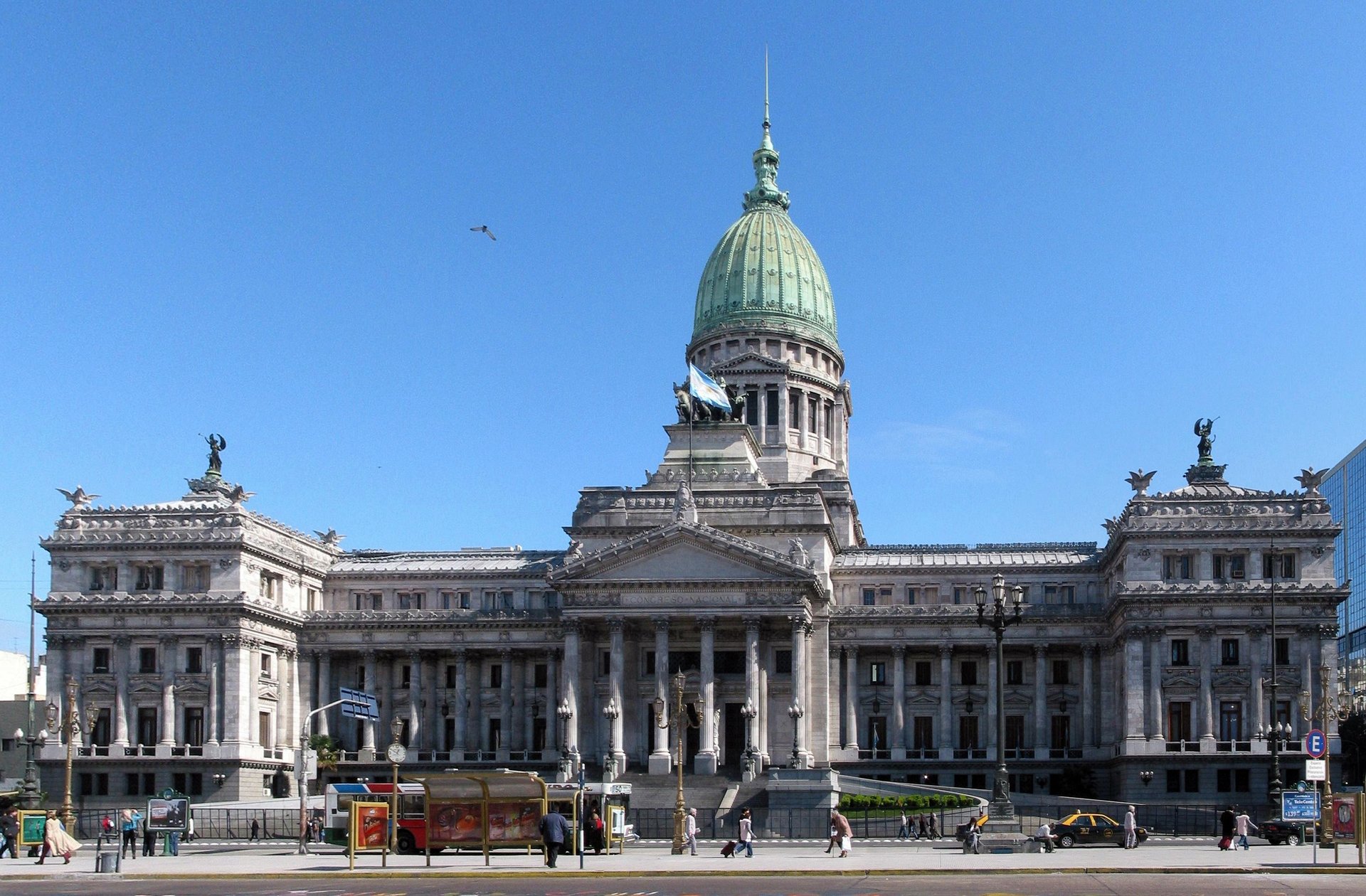
Argentina’s ruling bloc has dropped a contested voting plan from its bill to suspend party primaries, hoping to win the Senate votes it still lacks. Patricia Bullrich, who leads President Javier Milei’s bloc in the Senate, announced on Wednesday 18 November 2026 that the “colectoras”, joint lists that let several slates back one candidate, are out and D’Hondt, a formula that shares seats in proportion to votes, is back, Perfil, an Argentine news magazine, reported.
For US readers, the bill sets the rules for Argentina’s 2027 presidential race, the contest behind the political risk that the country’s central bank discussed on Tuesday, as our report on the central bank’s outlook explains. The government wants the full Senate to vote on Thursday 26 November, and it needs 37 votes, an absolute majority of the 72-seat Senate, to approve it, Perfil reported.
Key Facts
- Who. Patricia Bullrich, head of Milei’s Senate bloc, announced the change in committee.
- What. Suspends 2027 primaries, drops colectoras; ruling bloc reportedly has 8 of 10 needed signatures.
- Next. Committee signing due later Wednesday; Senate floor vote planned Thursday 26 November.
- Prediction markets. Polymarket, a prediction market, prices Javier Milei at about 44% to win in 2027 (12:56 p.m. ET).
- Power Index. Argentina ranks 4th of 14 in The Rio Times Latin America Power Index, with 60.2 points (November 2026 edition).
Argentina’s government gave up the joint-list option to unlock its bill suspending the 2027 party primaries, but it still has to find its tenth committee signature.
What Changed on Wednesday
Bullrich said the committee text no longer includes the article that allowed colectoras: “Escuchamos las distintas miradas y decidimos volver al sistema de un ciudadano, un voto” (“We listened to the different views and decided to return to the system of one citizen, one vote”). She said a deal with allied blocs eased the pressure that had stalled the bill, Perfil reported.
The text still suspends the PASO, Argentina’s mandatory open primaries, for 2027 only, and it cuts radio and television election advertising to 50%. It also lets local races use the single paper ballot when provincial and national elections fall on the same day, and it amends Article 71 of the Electoral Code to ease limits on commercial, cultural and social activity on election day.
Bullrich said the primaries are suspended, not abolished, so parties will pick candidates under their own charters until another system exists, El Argentino, a provincial news site, reported. The bill also keeps “Ficha Limpia”, a rule that bars candidates convicted of intentional crimes at second instance, meaning on appeal.
In Plain English
- PASO: compulsory open primaries held before general elections to narrow each party’s candidates.
- Colectoras: adhesion lists that let several separate slates back the same top candidate.
- D’Hondt: a formula that shares seats among parties in proportion to their votes. It is the system the ruling bloc says it prefers.
- Dictamen: the committee report a bill needs before the full Senate can vote on it.
The Big Picture: Why the Government Gave Way
The colectoras were the government’s bargaining chip with allied governors, but the allied dialogue blocs and the PRO, a centre-right party, reportedly rejected them, El Argentino reported. Andrés Gil Domínguez, a constitutional lawyer, argued they would be unconstitutional for senators under Article 54 of the Constitution, which gives each province three senators: two to the winning list and one to the runner-up.
Governors Alfredo Cornejo of Mendoza, Juan Pablo Valdés of Corrientes, Maximiliano Pullaro of Santa Fe and Leandro Zdero of Chaco are described as key to the suspension. Dropping the colectoras removes the issue that divided the ruling bloc from those allies, and the government now wants the committee to sign before the Senate’s last regular session of the year.
The bill needs at least 10 signatures from committee members to produce a report, called a dictamen, and the ruling bloc reportedly had 8 before the change, so it was still short of the tenth. On the floor, 37 votes, an absolute majority of the 72 senators, are needed to approve both the bill as a whole and each article.
Why It Matters for US Readers
Election rules decide how candidates are chosen and when the campaign starts, and Argentina’s central bank has tied the recent rise in country risk to politics. A gap of two signatures in committee and the 37-vote hurdle on the floor show how narrow the government’s room is, even with the colectoras gone.
The Case Against the Bill
Opposition critics found fault with the process rather than the colectoras alone. José Mayans, an opposition figure, questioned how the bill had been handled, and Fernando Salino, another critic, said of the final text: “No sabemos de qué estamos hablando” (“We do not know what we are talking about”), El Argentino reported.
What Prediction Markets Say
Traders on Polymarket, a crypto-based prediction market, price Javier Milei at about 44% to win Argentina’s 2027 presidential election. Axel Kicillof, the governor of Buenos Aires province, stands at about 30%, with about US$1.6 million traded across all candidate contracts in that market (as of 12:56 p.m. ET on 18 November 2026).
Why we show this: prediction markets turn real-money bets into a live probability that moves within minutes of the news, which is why investors, campaigns and newsrooms in the United States now follow them closely. We show them next to polls and official results, never instead of them.
What Is Not Known
It is not confirmed whether the tenth signature is secured or whether allied governors will deliver their senators on 26 November. Reports differ on the restart time of the committee, giving 16:00 and 16:30 local time.
What to Watch Next
The committee was due to sign its report later on Wednesday 18 November 2026. The full Senate session is planned for Thursday 26 November, the last session of the ordinary period, El Argentino reported.
Our earlier reports track how the bill got here: see Argentina Seeks to Suspend Party Primaries and Argentina Primaries Bill Paused at 21 of 37. Both are background, not sources for this report.
Frequently Asked Questions
What are colectoras in Argentina’s electoral reform?
Colectoras are adhesion lists that let several separate slates back one top candidate. The ruling bloc removed them from the bill on 18 November 2026.
What does the bill do to the PASO primaries?
It suspends the PASO, the mandatory open primaries, for the 2027 elections only. Bullrich said they are suspended, not abolished.
How many votes does the bill need?
The committee needs 10 signatures for a report, and the Senate floor needs 37 of 72 votes. A floor session is planned for 26 November.
What did Argentina return to instead of colectoras?
The text returns to the D’Hondt system, a formula that shares seats among parties in proportion to their votes. It is the system the ruling bloc says it prefers.
Connected Coverage
Argentina’s Bid to Scrap PASO Primaries Stalls in the Senate
Sources: Perfil, 18 November 2026; El Argentino, 18 November 2026.
This article was produced by The Rio Times’ automated AI newsroom. Editorial responsibility: Matthias Camenzind, Publisher and Editor-in-Chief. The Rio Times also runs Ask Rio Times, which answers from 100,000+ of our own articles, the daily Latin America Power Map, and prediction-market odds on elections and markets.. How we use AI · Report an error